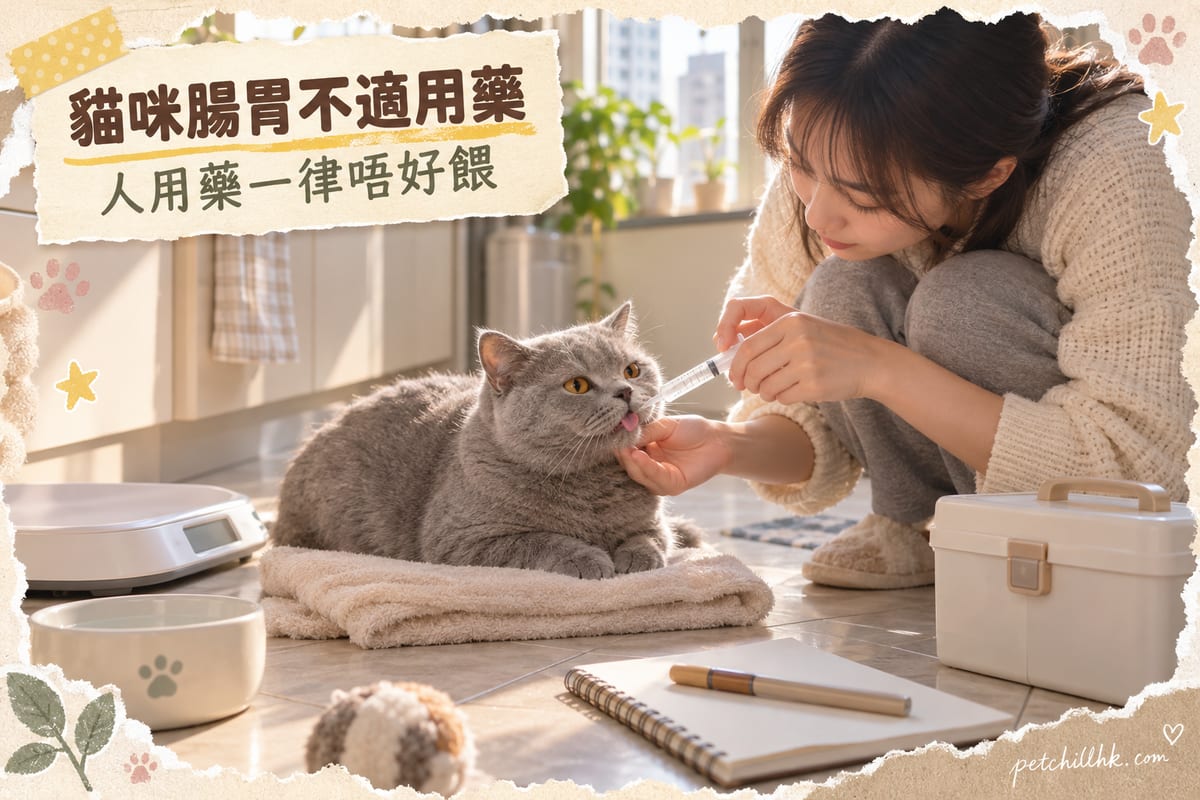
Quick answers
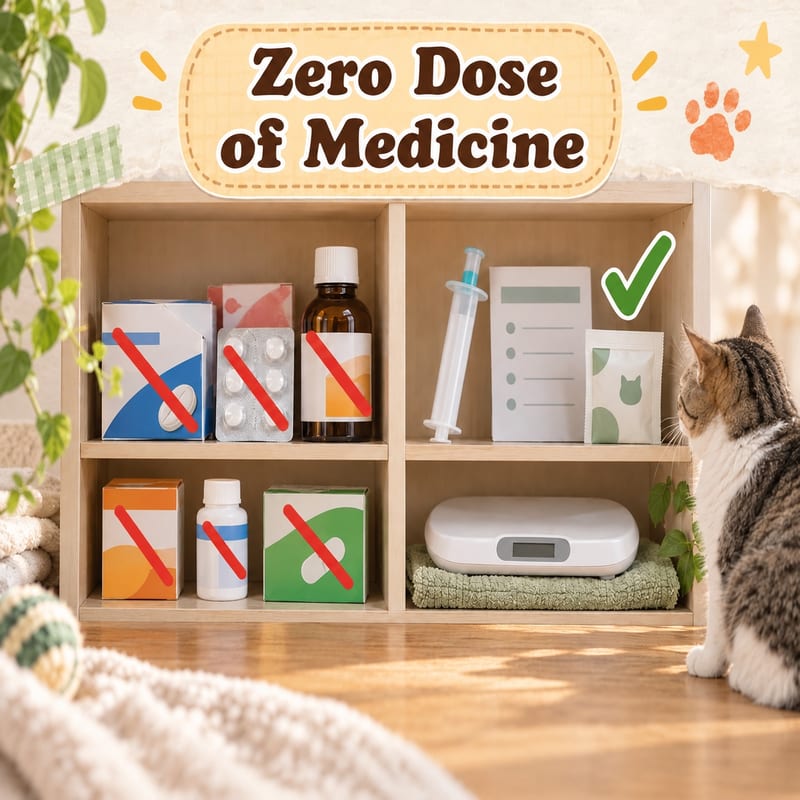
- When a cat has an upset stomach, there is no human medicine in the home kit that you can give on your own: ibuprofen, paracetamol, aspirin and loperamide are all "zero-dose" — not even a quarter tablet.
- A typical home medicine kit has 4 types of human medicine that should be locked away or removed: NSAID painkillers, stomach medicines and anti-diarrhoea liquids containing salicylates, gastrointestinal over-the-counter products containing camphor or phenols, and human anti-diarrhoea drugs.
- What you can actually keep at home is 4 types of non-drug items: a needleless feeding syringe, an electronic scale and record sheet, pet-specific probiotics, and a sensitive-stomach complete food.
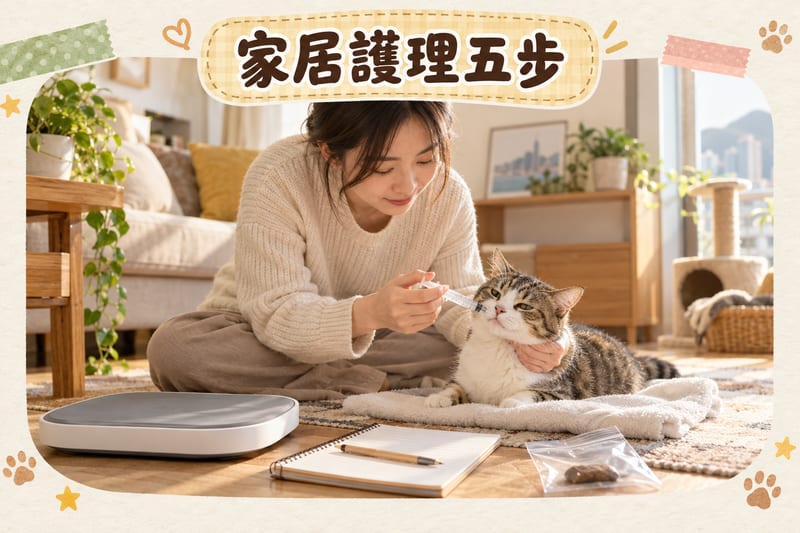
- Before going to the vet, you can do 5 steps of non-drug care: keep warm, hydrate, feed small frequent meals, record, and keep a fresh stool sample.
- Probiotics are supportive, not a drug; use pet-specific products, separate from antibiotics by about 2 hours, and ask the vet first.
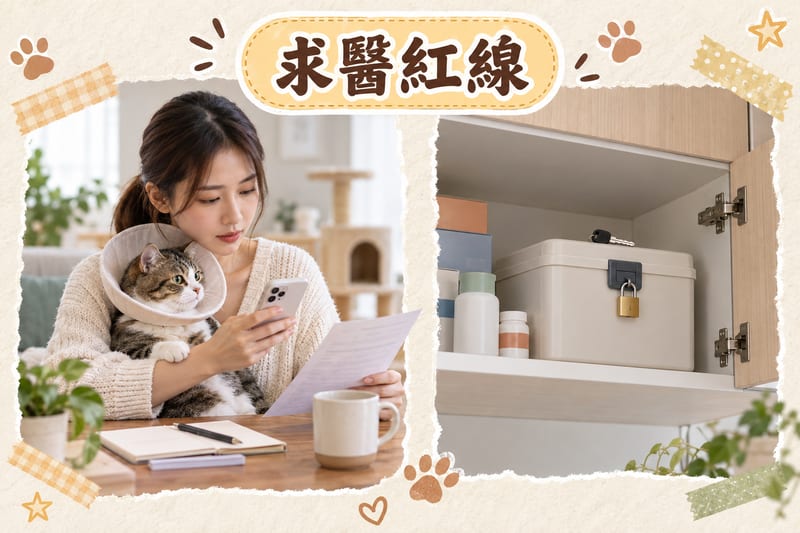
- 6 red lines for seeking help: repeated vomiting more than 2 times, diarrhoea lasting more than 24 hours, vomiting and diarrhoea together, blood in stool or black stool, complete refusal to eat for more than 24 hours, swallowing human medicine or lilies.
- For kittens (under 6 months) and senior cats over 10 years, the observation window is halved — if there is no improvement in 12 hours, go to the clinic.
The direct answer to "When a cat has an upset stomach, what common home medicines can be used?" is: a cat-specific "home medicine kit" basically does not exist. The anti-vomiting drugs, anti-diarrhoea drugs, deworming drugs and antibiotics that vets actually use are all prescription-only and must be decided by the vet based on cause and body weight; while the painkillers and anti-diarrhoea drugs in an ordinary home kit — such as ibuprofen, paracetamol, aspirin and loperamide — are high-risk or even fatal to cats. The correct approach is "zero-dose" — not halving, not cutting into small pieces, not "give one and see if it works", but not using them at all.
What can be kept at home and actually helps is a set of things that are not medicines: a needleless feeding syringe, a record sheet, pet-specific probiotics, a sensitive-stomach complete food, and a locked medicine box. Below we explain item by item which 4 types of human medicine must be locked away, the 5 steps of non-drug care you can do before the vet, the early signs and handling order for swallowing human medicine, and the 6 red lines for seeking help without delay. If you want to see the overall approach to gastrointestinal problems first, start with the Pet Digestive Health Guide.
The home medicine kit has two sides: what to keep and what to lock away
Many owners ask about "home medicines", but the real question should be "home supplies". When a cat has an upset stomach, none of the most valuable items at home are medicines: hydration, recording, samples and cleaning are all things you can do without drugs. Conversely, several types of seemingly harmless human over-the-counter medicines in the kit are extremely high-risk to cats and should be locked away or removed to prevent accidental ingestion — cases of cats jumping onto tables and biting open blister packs happen every year.
| Kit category | Common items | Can it be used on your own during a cat's upset stomach? | Reason |
|---|---|---|---|
| Hydration tools | 1ml to 5ml needleless feeding syringes, multiple water bowls, flowing water fountain | Yes, but plain water only | Dehydration is the most underestimated risk in feline gastroenteritis; water intake is the number most worth monitoring |
| Recording supplies | Electronic scale, record sheet, phone, zip-lock bags | Yes | Weigh at the same time daily, record vomiting and diarrhoea counts; the vet can use this directly |
| Pet-specific probiotics | Cat probiotic powder sachets | Ask the vet first | Supportive role, not treatment; does not help if the cause is parasites or a foreign body |
| Sensitive-stomach complete food | Sensitive-stomach adult cat food, gastrointestinal formula wet food | Confirm with the vet | Food changes generally need 7 to 10 days of gradual transition; changing food randomly during the acute phase can worsen diarrhoea |
| Human painkillers and antipyretics | Ibuprofen, paracetamol, aspirin | Absolutely not | Cats metabolise salicylates and paracetamol extremely slowly; can cause poisoning, acute kidney injury, liver damage |
| Human anti-diarrhoea drugs | Loperamide-type over-the-counter products | Absolutely not | Over-suppresses intestinal motility; kittens can develop central nervous system signs; severe cases can be fatal |
| Gastrointestinal OTC products containing camphor or phenols | Stomach ache liquids, menthol oil products | Absolutely not | Cat liver struggles to metabolise camphor and phenolic compounds; can accumulate to toxic concentrations |
| Stomach medicines or anti-diarrhoea liquids containing salicylates | Bismuth subsalicylate products | Absolutely not | Salicylates can cause gastrointestinal bleeding, anaemia and kidney damage |
| Petroleum-based laxatives | Liquid paraffin, some hairball oils | No | Forcible administration risks going into the trachea, causing aspiration pneumonia |
| Activated charcoal | Claimed to adsorb toxins | Do not use on your own | Should only be used under vet instruction; self-administration also risks aspiration |
| Human electrolyte drinks or sports drinks | Electrolyte water, glucose water | No | Sugar and sodium-potassium ratios are unsuitable for cats; the real rehydration method must be decided by the vet |
After reading this table, one sentence sums it up: everything in the kit that "can be kept" is not a medicine, and everything that "must be locked away" has drug activity. This distinction is not conservative; it is because cats' metabolic pathways differ from humans', and the safety margin is much narrower.
4 types of human medicine that are absolutely not allowed: the zero-dose rule
"Zero-dose" is a very firm statement: there is no safe lower limit, no "a little bit doesn't matter". There are three reasons. First, the weight gap — a 4 kg adult cat and a 60 kg adult differ by about 15 times; the absolute dose of one adult tablet converted to a cat is already many times over. Second, the metabolic gap — cats have low hepatic glucuronidation capacity; salicylates, phenols and paracetamol are metabolised extremely slowly, half-lives can be several times longer, and toxic concentrations accumulate easily. Third, symptom masking — an upset stomach is only a symptom; causes can range from a too-fast food change to a foreign body obstruction, pancreatitis or kidney disease, and giving drugs only turns off the fire alarm.
| Human medicine | Common label use | Main risk to cats | Can it be used on your own? |
|---|---|---|---|
| Ibuprofen and other NSAID painkillers | Pain, inflammation, fever | Gastrointestinal ulcers, gastrointestinal bleeding, acute kidney injury | Absolutely not, zero-dose |
| Paracetamol | Pain, fever | Methaemoglobinaemia, facial and paw swelling, liver damage; highly fatal to cats | Absolutely not, zero-dose |
| Aspirin and other salicylates | Pain, fever, anti-clotting | Half-life in cats can be longer than 30 hours; can cause bleeding, anaemia, central nervous system signs | Absolutely not, zero-dose |
| Loperamide-type anti-diarrhoea drugs | Stop diarrhoea | Over-suppresses intestinal motility; can cause central nervous system excitation or sedation; highest risk in kittens | Absolutely not, zero-dose |
As for the drugs vets actually use — anti-vomiting drugs such as maropitant, ondansetron and metoclopramide, deworming drugs, adsorbents, some antibiotics — all must be prescribed after a vet's diagnosis, with the dose calculated according to cause, body weight, liver and kidney function and degree of dehydration. These drugs should not be bought or used by owners at home; for details see Cat Anti-vomiting and Anti-diarrhoea Drug Risks Explained and Pet Medication Safety Guide.
5 steps of non-drug care you can do before the vet
The following 5 steps are the most practical part of this article; none involve giving medicine or any dose. If done carefully enough, the vet's assessment will be much faster.
- Keep warm. Cats with an upset stomach easily become hypothermic, especially after vomiting or diarrhoea. Prepare a dry towel or a low-temperature heating pad in a quiet corner, avoid direct air-conditioning; do not use a hairdryer on hot setting, and do not force-hold a cat that does not want to be held.
- Hydrate. Use a 1ml to 5ml needleless syringe to slowly drip plain water at the corner of the mouth, a few millilitres at a time, and try again after a while; also place several water bowls around the home and feed wet food with a little warm water. Do not give human electrolyte drinks, glucose water or sports drinks on your own; the sugar and sodium-potassium ratios are unsuitable for cats.
- Small frequent meals. If the cat is still willing to eat, split the daily portion into 4 to 6 meals, a little less each time. A cat should not be fasted for more than 24 hours — prolonged fasting increases the risk of fatty liver. Whether to switch to a gastrointestinal formula food or a single protein temporarily should be asked of the vet first.
- Record. Use a 1 to 7 scale for stool form, note the time, content, colour, presence of blood or hairballs for each vomiting and diarrhoea episode, and weigh at the same time daily. A weight loss of more than 5% within a week is already a signal to seek veterinary help immediately.
- Keep samples and clean. Use your phone to photograph vomit and stool; a fresh stool sample is best submitted within 24 hours, and short-term storage in the lower fridge is acceptable, but do not freeze because freezing destroys some parasite structures. In multi-cat households, separate litter boxes, clean daily, and wash hands after cleaning.
There are three things not to do during this process: give any human medicine on your own; induce vomiting on your own; stop or increase prescribed medication on your own because of new symptoms — if the cat is taking vet-prescribed medicine, call the clinic first.
What to do if human medicine or OTC drugs are swallowed?
This is the most urgent section of the article. A cat swallowing human medicine is an emergency and cannot be handled by "see if anything happens": the poisoning process of paracetamol and salicylates can have no obvious warning signs, and by the time colour, breathing or mentation changes appear, the most effective treatment window is often past.
The correct order is: one, immediately secure the bottle and packaging and take them to the clinic — the ingredients and dose are key for the vet to decide treatment; two, note approximately what time it was taken and how much; three, take photos; four, call the vet or go to the clinic immediately. Do not induce vomiting on your own, do not give milk, oil, salt water or so-called antidote remedies — these can cause greater harm to cats, including aspiration pneumonia from going into the trachea.
| Time frame | Possible signs | What to do |
|---|---|---|
| 30 minutes to 2 hours | Drooling, vomiting, abdominal pain and hunched posture, abnormal crying | Seek veterinary help immediately; do not observe |
| 2 to 12 hours | Gums or skin turning blue, rapid breathing, facial or paw swelling, lethargy | Emergency veterinary help; these are high-risk signs |
| 12 to 48 hours | Refusal to eat, weakness, black or tarry stool, markedly reduced urine output | Emergency veterinary help; do not wait until the next day |
| 1 to 3 days | Jaundice, difficulty breathing, extreme weakness, low body temperature | Emergency veterinary help; organ damage stage |
Note: different drugs and different doses can produce completely different signs, and no symptoms does not mean safe. So the criterion is not "are there signs" but "what was swallowed, how much, and when". If the cat already has vomiting and diarrhoea, the threshold for action should be even lower; for related judgement see Cat Vomiting Home Care Boundaries and Warning Signs of Blood and Mucus in Cat Stool.
Probiotics and gastrointestinal supplements: how to choose and use
Probiotics are one of the few supportive items that can be kept at home with relatively low risk, but they are supportive, not treatment, and cannot be used as medicine. For dysbiosis caused by a too-fast food change or antibiotics, probiotics are most likely to help; if the cause is parasites, foreign body obstruction, pancreatitis or kidney disease, probiotics alone will not solve the problem and will delay diagnosis.
When choosing a product, note 4 points: labelled for cats, not generic; packaging clearly states strains, CFU count and expiry date; storage method matches the label (some require refrigeration); ingredient list has no extra components risky to cats. When using, there are 3 practical points: separate from antibiotics by about 2 hours; water temperature for mixing or sprinkling on food should not exceed 40°C, as heat affects viability; ask the vet first, especially if the cat is on prescription medicine or has a chronic disease.
Here are examples of related products available in the store:
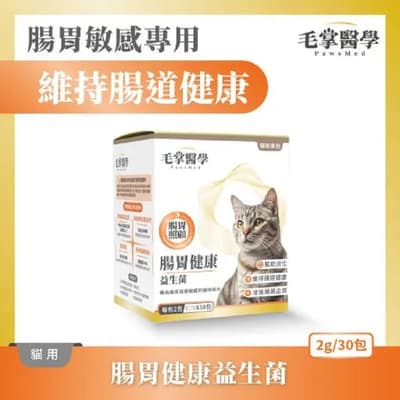
- Vet's Best Cat Digestive Health Probiotics 2g x 30 sachets — HK$141
- Japan PetLine Medyfas Cat Supplement Digestive Health Formula Chicken Flying Fish Flavour 6g×8 (PL-MFS-5) — HK$16
- Nature's Protection Cat Sensitive Digestion Adult Cat Food 400g (FD3510.4K) — HK$54
Prices and stock are subject to the online store's current listed price. Supplements are supportive and cannot replace veterinary diagnosis and prescription medicine; if you want to add any new product while the cat is on medication, ask the vet first because some ingredients interact.
6 red lines for seeking help
Not every upset stomach requires rushing to the clinic immediately, but the waiting limit differs for each situation. If any of the following 6 occurs, you should no longer observe or use medicine on your own.
- Repeated vomiting more than 2 times, or vomiting lasting more than 24 hours.
- Diarrhoea lasting more than 24 hours, or stool with fresh red blood streaks or black tarry appearance.
- Vomiting and diarrhoea occurring together, or persistent retching without producing vomit, abdominal bloating, drooling.
- Complete refusal to eat for more than 24 hours, or weight loss of more than 5% within a week.
- Lethargy, hiding in a corner, dry sticky gums, skin on the back of the neck tenting and slow to return (signs of dehydration).
- Swallowing human medicine, lilies, essential oils or dog spot-on products.
Two more thresholds to remember: a body temperature above 39.4°C is a level requiring immediate veterinary help; for kittens (under 6 months) and senior cats over 10 years, the observation window is halved — if there is no improvement in 12 hours, go to the clinic, because their dehydration and weight loss progress much faster.
One final reminder of home principles: lock the medicine kit, store human medicines separately from pet supplies, and check packaging and expiry dates regularly. When a cat has an upset stomach, what owners really need to do is record, hydrate, keep warm and seek veterinary help promptly — not look for medicine in the kit.
Further reading
- Pet Digestive Health Guide | Causes of vomiting, diarrhoea, soft stool and mucus stool + how to choose probiotics (2026)
- Cat Vomiting Home Care Boundaries | When to observe, when to see the vet immediately
- Can you give cat anti-vomiting and anti-diarrhoea drugs yourself? Common drugs and risks
- What warning signs are blood and mucus in cat stool? Common causes and management
In an emergency, contact a vet immediately; this article is for reference only and cannot replace veterinary diagnosis.
Information checked as of 2026-10-12Source: PetChill editorial team
 Almo Nature full guide →
 Fuji One full guide →