Quick answers
- A small amount of clear or pale yellow mucus on the outside of a formed stool usually clears within 1 to 2 days.
- If the mucus is jelly-like, so abundant that it coats the stool, or lasts more than 3 days, take a fresh stool sample to the vet.
- Track stool using a 1 to 7 scoring chart; 3 is ideal, and if it is 5 or above with mucus, record it.
- If a kitten or senior cat has mucus stool that does not improve within 24 hours, or if the mucus contains blood or is accompanied by vomiting, see a vet immediately.
- The 5 most common triggers: switching food too quickly, parasites, food intolerance, medication effects and environmental stress.
"Is it normal for a cat to have mucus when passing stool?" The answer depends on the situation. If it is just a thin layer of clear or pale yellow mucus on the very outside of the stool, and the stool itself is formed and your cat is eating and behaving normally, it is usually normal colonic mucus secretion—the large intestine secretes mucus to lubricate stool and isolate irritants, so a small amount of mucus does not necessarily mean illness. But the amount, colour and shape of the mucus, along with any accompanying symptoms, are key to judgement: jelly-like, blood-streaked, recurrent, or accompanied by loose stool, vomiting or weight loss are signals that need serious attention.
This article starts with the function of the colonic mucosa, then breaks down the 8 common causes of mucus stool one by one, provides a stool consistency chart and a list of danger signs, and teaches you 5 steps for home management and daily prevention. It is written for the real-life situations of Hong Kong cat owners and does not ask you to self-medicate; all decisions involving medication and prescription diets should follow your vet's instructions. For an overall framework on gastrointestinal problems, see Pet Digestive Health Guide.
What is mucus? First, the normal function of the colonic mucosa
The inner wall of the large intestine (colon) has a mucosal layer, and the goblet cells on it continuously secrete mucus. Mucus has three roles: first, it lubricates the stool so it passes smoothly through the intestine; second, it forms a physical barrier that separates bacteria and undigested residue in the gut, reducing direct irritation of the mucosa; third, mucus contains immunoglobulins and is part of intestinal immunity. So a very small amount of mucus on the stool surface is a normal phenomenon—often you may only see a thread of clear mucus at the end of defecation, and you might not even notice it.
The problem is "amount" and "frequency". When the large intestine is irritated—by inflammation, parasites, bacterial toxins, hard stool friction, or changes in food composition—the mucosa secretes more mucus to protect itself, so mucus goes from "invisible" to "clearly visible". Thus mucus stool is actually a symptom, not a disease: it tells you the large intestine is irritated by something, but what that something is requires further investigation.
Also, distinguish large intestine problems from small intestine problems. Small intestine problems (e.g. acute gastroenteritis, food sensitivity) mostly present as watery diarrhoea and frequent defecation, with mucus not necessarily obvious; large intestine problems (colitis, parasites, megacolon) are most likely to cause formed stool with mucus. This distinction is very useful for the vet's assessment, so when recording, write clearly: is the mucus coating formed stool, or is it watery diarrhoea mixed with mucus?
Another common misconception is that more mucus means poor gastrointestinal health and that the cat needs probiotics immediately. In fact, mucus only reflects the protective response of the large intestine, and the cause can range from switching food too quickly (benign) to parasites or colitis (needs treatment). Loading up on probiotics before the cause is clear mostly just delays seeking veterinary care.
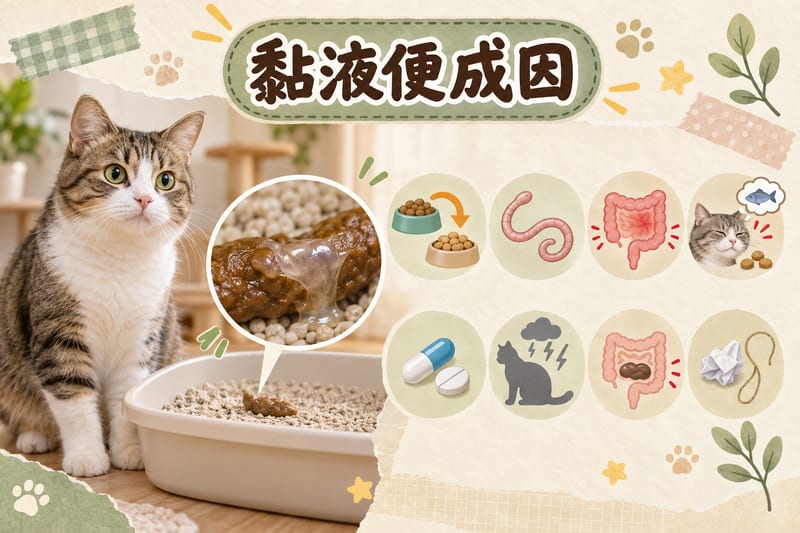
The 8 common causes of mucus stool
The same mucus stool can have very different causes and urgency. The table below helps you quickly locate the issue, but remember the table is only a guide and cannot replace a veterinary examination.
| Possible cause | Typical presentation | Common subjects and situations | Suggested action |
|---|---|---|---|
| Switching food too quickly or incorrect transition method | Mucus on the outside of formed or slightly soft stool, usually appearing 2 to 5 days after the food change | Any age, especially cats with sensitive digestion | Use a 7-day gradual transition, then observe for another 3 to 5 days |
| Intestinal parasites (Giardia, coccidia, roundworms, tapeworms) | Recurrent mucus, particularly foul odour, sometimes blood streaks or visible worm segments | Kittens, newly adopted cats, semi-free-roaming cats or those that have eaten raw meat | Bring a fresh stool sample for testing, deworm as instructed by the vet |
| Colitis or inflammatory bowel disease (IBD) | Large amounts of mucus, increased defecation frequency, sometimes jelly-like, gradual weight loss | Middle-aged to older cats, long-term recurrent cases | Requires veterinary assessment, possibly dietary trial or medication |
| Food intolerance or sensitivity | Appears 12 to 24 hours after eating a certain protein or treat | Any age, with a history of food sensitivity | Keep a diet diary, discuss elimination testing with the vet |
| Effects of antibiotics or other medications | Soft stool with mucus during medication, gradually improves after stopping | Cats currently on medication | Confirm with the vet; do not stop or add medication on your own |
| Stress and environmental changes | Appears after moving house, adding a new family member, or multi-cat conflict, usually lasting 1 to 3 days | Sensitive cats, multi-cat households | Increase resources and hiding places, maintain a stable routine |
| Constipation or megacolon | Hard stool scrapes the mucosa, mucus followed by a small amount of hard stool | Senior cats, insufficient water intake, heavy hairballs | Increase water and wet food proportion, consult the vet |
| Foreign body ingestion or hairball irritation | Mucus plus intermittent vomiting, sometimes part of the foreign body passed | Kittens, cats that like to chew strings and plastic bags | This is an emergency; see a vet as soon as possible |
Mucus stool related to food changes is the easiest to manage. The cat's gut microbiota needs time to adapt to new proteins and new formulas; if you switch entirely to the new food within one to two days, the colonic mucosa is easily irritated. The standard approach is a 7-day gradual transition: for the first 2 days, 70% old food and 30% new food; days 3 to 4, half and half; days 5 to 6, 70% new food; from day 7 onwards, fully switch to the new food. If mucus and loose stool appear during the transition, go back to the previous ratio, stabilise for 3 days, then continue.
Parasites are the second area to pay special attention to. Giardia and coccidia are very common in Hong Kong's humid environment, and kittens and newly adopted cats are at highest risk. Mucus stool from these infections is usually recurrent, smells worse than usual, and sometimes contains blood streaks. In such cases, probiotics alone will not help; you need to bring a fresh stool sample to the clinic for testing and then use medication as instructed by the vet. To learn about general deworming arrangements, see Cat Deworming Guide.
For recurrent, on-and-off mucus stool, consider colitis or inflammatory bowel disease. These cases usually involve more than just mucus: increased defecation frequency, gradual weight loss, and poor coat quality. Diagnosis requires the vet to rule out parasites, conduct dietary trials, and possibly imaging; owners cannot do this themselves, and should not rely on long-term self-medication to hold it off.
Stool consistency chart: from normal to dangerous
The most practical way to judge the severity of mucus stool is to look at both "stool form" and "mucus characteristics". The chart below is arranged from low to high risk.
| Stool form | Mucus characteristics | Possible meaning | When to act |
|---|---|---|---|
| Formed, picks up without falling apart | Almost no mucus, or a thread of clear mucus at the end | Normal state | No special action needed |
| Formed but with a thin layer of pale yellow mucus on the outside | Small amount, clear or pale yellow | Mild irritation, usually resolves within 1 to 2 days | Observe for 2 to 3 days, keep records |
| Formed but mucus noticeably thicker | Beige, semi-transparent, coating the whole stool | Large intestine irritation, parasites or food intolerance | If not improved in 3 days, test stool |
| Soft stool (score 5) mixed with mucus | Mucus evenly mixed into soft stool, more foul-smelling | Food change, dysbiosis, early colitis | Review diet, consider probiotic support |
| Jelly-like mucus, almost no stool | Transparent gel-like mucus clumps | Colitis, parasites, foreign body obstruction | See a vet the same day |
| Mucus with bright red blood streaks | Bright red on the stool surface, small to moderate amount | Bleeding at the end of the large intestine, parasites, anal gland problems | See a vet the same day |
| Mucus with black tarry stool | Black, fishy smell, tar-like | Upper gastrointestinal bleeding | Emergency, seek veterinary care immediately |
| Watery diarrhoea with mucus and vomiting | No form at all, frequent | Acute gastroenteritis, infection, foreign body | Emergency; kittens and senior cats immediately |
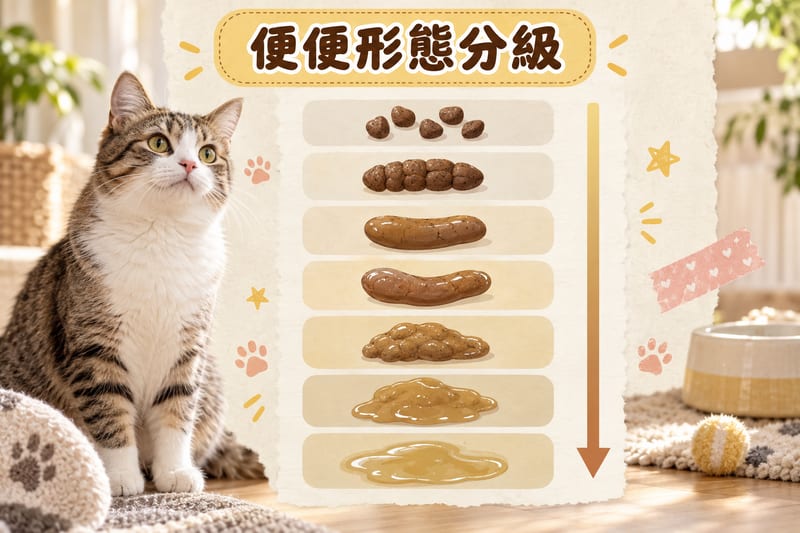
The biggest advantage of using the chart is tracking trends: gradually going from "formed with a little mucus" to "soft stool with thick mucus" usually reflects chronic intestinal problems and deserves more attention than a one-off jelly-like mucus.
A reminder: besides mucus, also pay attention to stool colour, odour, frequency, and whether your cat strains during defecation. If defecation frequency is noticeably reduced and there is no stool for more than 48 hours, that is a problem in another direction; see Cat Constipation Guide.
When to see a vet immediately: 6 danger signs
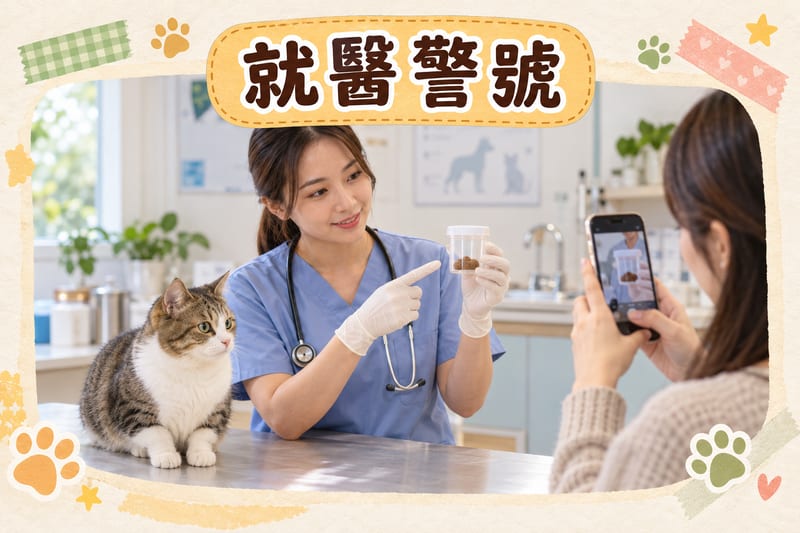
If any of the following occurs, do not wait to "observe for a couple more days". Contact your vet directly and bring stool photos and records.
- Jelly-like mucus stool. Transparent gel-like, almost no stool, usually reflects severe colonic inflammation, parasites or foreign body obstruction, and requires same-day examination.
- Mucus with blood. Bright red streaks indicate bleeding at the end of the large intestine; black tarry, fishy-smelling stool indicates upper gastrointestinal bleeding, an emergency.
- Diarrhoea with mucus lasting more than 24 hours. Water and electrolyte loss can be rapid, especially dangerous for kittens.
- Vomiting at the same time, especially more than twice a day. Vomiting plus diarrhoea is a classic dehydration combination and may also indicate a foreign body or infection.
- Lethargy, complete loss of appetite for more than 24 hours. Prolonged anorexia in cats carries a risk of fatty liver; do not wait for them to "eat when hungry".
- Kittens, senior cats, or cats with chronic disease. Cats with kidney disease, diabetes or inflammatory bowel disease have much lower tolerance, so the threshold should be lowered. For cases where vomiting is the main sign, see Cat Vomiting Guide.
Conversely, if your cat is eating and behaving normally, the amount of mucus is small, the stool is formed, and it appeared after a food change or environmental change, you can observe for 2 to 3 days and keep records, but the observation window should not exceed 3 days.
5 steps for home management: from recording to seeking veterinary care
If the situation is not an emergency, the following 5 steps are the most practical first-line approach.
Step 1: Keep a fresh stool sample. Collect it in a clean plastic bag or sample container; ideally send it for testing within 24 hours. Short-term storage in the lower part of the fridge is acceptable, but do not freeze, as freezing can damage some parasite structures and affect test accuracy.
Step 2: Take photos and record. Photograph the stool and mucus, record the time, frequency, consistency score (1 to 7), mucus colour and approximate amount, presence of blood streaks, and your cat's behaviour during defecation. Record for 3 consecutive days, and you will have information the vet can use directly.
Step 3: Review changes in the last 7 days. Have you changed food, added new treats, started new medication, or changed the environment? The sequence of these events and symptoms often holds the answer.
Step 4: Ensure hydration. Add a little warm water to wet food, place several water bowls around the home, or use a flowing water fountain to increase water intake. During diarrhoea, hydration is more important than any supplement.
Step 5: Clean and isolate. In multi-cat households, separate litter boxes, clean daily, and wash hands after cleaning; wash food and water bowls daily. Cysts of Giardia and other parasites can persist in the environment, so home cleaning is part of the defence line.
Two things to avoid during this process: first, do not self-administer human anti-diarrhoeal drugs or antibiotics; second, if your cat is on medication prescribed by the vet, do not stop it on your own because of mucus stool—ask the vet first.
Daily prevention: diet, deworming and choosing probiotics
The focus of prevention is not buying the most supplements, but getting the basics right: slow food transitions, timely deworming, adequate water intake, and a stable environment.
For diet, make the 7-day gradual transition a habit; treats and wet food pouches should also count as "new foods", and do not add several at once. For cats with sensitive digestion, discuss switching to a food labelled for sensitive digestion or digestive care with your vet. Here are relevant products available at PetChill's online store:
- Vet's Best Cat Digestive Health Probiotics 2g x 30 sachets — HK$141
- Nature's Protection Cat Sensitive Digestion Adult Cat Food 400g (FD3510.4K) — HK$54
- Hills Prescription Diet Cat Food i/d Digestive Care 8.5lbs (8694) — HK$679 (available for pre-order)
Prices and stock are subject to the online store's current listed price.
The role of probiotics should be clear: they are supportive, not curative. Probiotics are most likely to help with dysbiosis caused by food changes or antibiotics; if the cause is parasites, a foreign body or colitis, probiotics alone will not solve it. Probiotics should generally be given about 2 hours apart from antibiotics; confirm the strain and dosage with your vet before starting. As for prescription diets (such as i/d digestive care), these are long-term dietary management tools and must be assessed and prescribed by a vet; they should not be fed long-term on your own.
For the environment, the number of litter boxes should ideally be "number of cats plus one", placed in separate locations away from food and water; provide enough high resting places and hiding spots so every cat has a route. For sensitive cats, any environmental change (moving house, adding a new family member, changing furniture) should be introduced gradually. Finally, adult cats are advised to have an annual health check, with more frequent checks after age 7; combining faecal examination with blood tests can catch many chronic intestinal problems at this stage.
Further reading
- Pet Digestive Health Guide: Causes of Vomiting, Diarrhoea, Soft Stool and Mucus Stool + How to Choose Probiotics (2026)
- Cat Vomiting Guide: Hairball or Illness? 6 Major Causes + First Aid, a Must-Read for Hong Kong Cat Owners
- Cat Constipation: No Stool for 48 Hours? Symptoms, Causes and Red-Line Timeline
- Cat Deworming Guide: Internal and External Deworming Options in Hong Kong, Frontline Usage and Schedule
For emergencies, contact a vet immediately; this article is for reference only and cannot replace veterinary diagnosis.
Information checked as of 2026-10-12Source: PetChill editorial team
 Almo Nature full guide →