
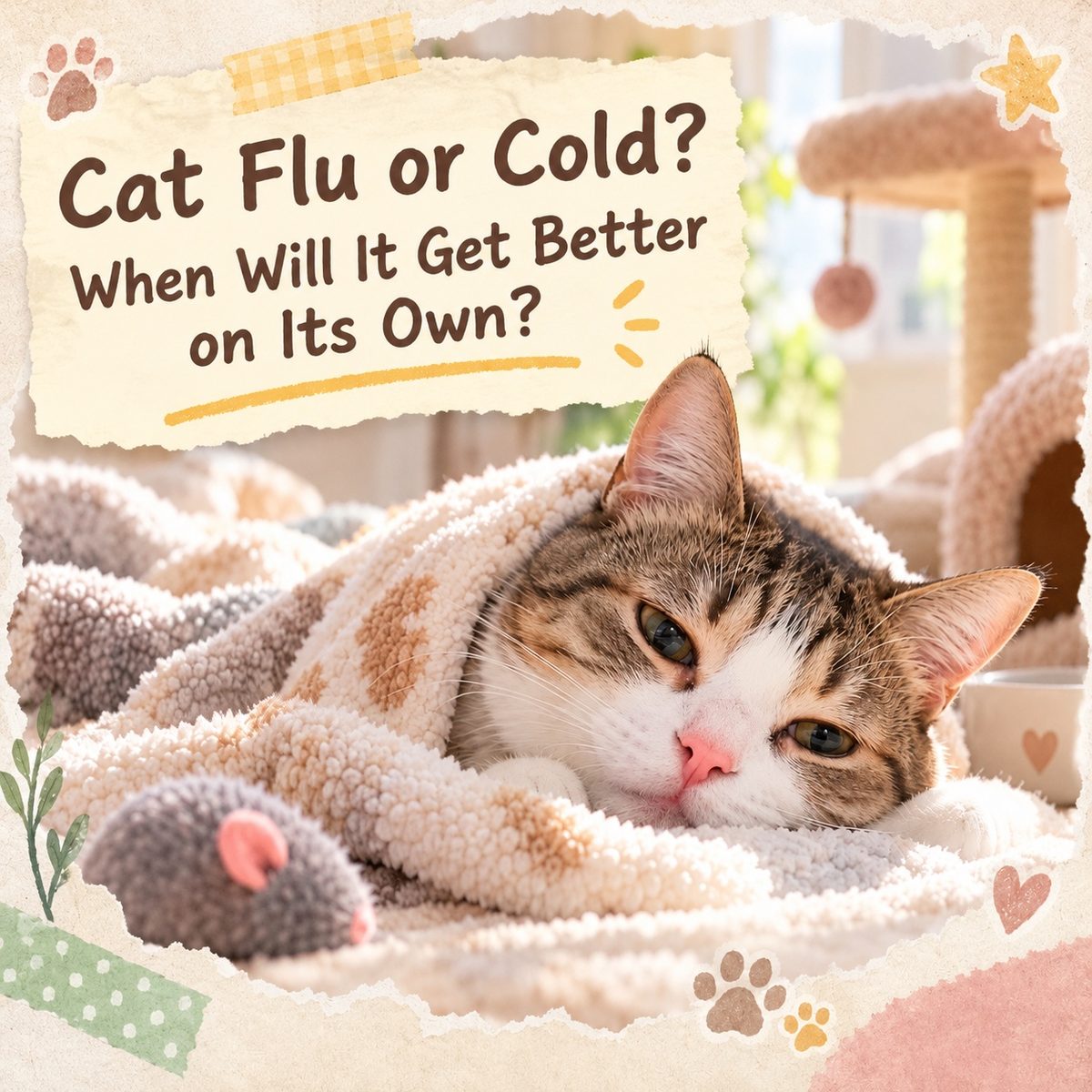
🤖 AI Summary
Cat flu = feline upper respiratory infection (URI), mostly caused by feline herpesvirus (cat nasal branch) and calicivirus — completely different from human colds, and cannot be transmitted from humans to cats. Mild cases can self-heal in 7 to 10 days, but kittens/unvaccinated cats can deteriorate into pneumonia.
• Red lines: not eating or drinking, thick yellow-green nasal discharge, eyes stuck shut, open-mouth breathing = see a vet immediately
• Herpesvirus lies dormant for life: relapses under stress, "curing it for good" is a wrong expectation
• Core vaccine (FVRCP) is the strongest line of prevention
Quick answer: Cat flu is a viral upper respiratory infection (URI), main pathogens: feline herpesvirus (FHV-1, commonly known as cat nasal branch) + calicivirus (FCV). Symptoms: sneezing, runny nose, watery eyes, eye and nasal discharge, reduced appetite. Mild cases self-heal in 7 to 10 days; red lines are not eating or drinking, thick yellow-green nasal discharge, fever, open-mouth breathing. Human colds do not infect cats, but transmission between cats is extremely high.
Table of contents
-
What is cat flu (URI)?
-
The two main viruses: cat nasal branch + calicivirus
-
Symptom self-check + how to tell apart from nasal allergy/foreign body
-
When will it heal on its own? Timeline
-
Red-green assessment table: when to see a vet
-
Five home care tips
-
Prevention: vaccines + environmental management
-
FAQ
What is cat nasal branch? Key points in 30 seconds (with symptom self-check table)
"Cat nasal branch" is the common Hong Kong cat owner term for upper respiratory infection caused by feline herpesvirus (FHV-1) — typical symptoms are concentrated in the nose and eyes, with so much discharge that it runs all over the face, hence "nasal branch". Three things to remember: it is a virus, not bacteria; it lies dormant for life and relapses under stress; it does not infect humans.
The 30-second symptom self-check table is below. If two or more items match, start home care; if any red-line item matches, see a vet immediately:
| Symptom | Commonness | Red line? |
|---|---|---|
| Continuous sneezing | Very common | No |
| Clear nasal discharge → yellow-green thick discharge | Common | Turning thick = red line |
| Watery eyes, eye discharge, eyes stuck shut | Common | Stuck shut and unable to open = red line |
| Nasal congestion, cannot smell food | Common | Refusing food = red line |
| Oral ulcers (more common with calicivirus) | Common | No, but needs medical attention |
| Fever, extremely low energy | Moderate | Red line |
| Open-mouth breathing, rapid breathing | Uncommon | Critical |
One-line summary: The course of cat nasal branch depends on two things: "the virus + secondary bacteria". There is no specific drug for the virus itself; what the vet does is manage secondary infections, support nutrition and the respiratory tract, and let the cat win on its own. So "will it eat" is the most critical indicator of the whole treatment course.
How much does it cost to see a vet for cat nasal branch? Hong Kong fee reference table
Hong Kong veterinary fees have no unified standard; the same test can differ twofold between clinics. The table below is a reference range summarised from publicly listed fees of several clinics in Yau Ma Tei, Tseung Kwan O and Eastern District; actual charges are subject to clinic quotations:
| Item | Reference price (HK$) | Remarks |
|---|---|---|
| Basic consultation (daytime) | 350–420 | Covers consultation and basic examination only |
| Night/emergency consultation | 550–1,100 | Late-night emergency mostly from 1,100 |
| Upper respiratory PCR test | 1,200–2,500 | Tests for herpesvirus/calicivirus/chlamydia |
| Blood test (CBC + biochemistry) | 700–1,500 | Assesses inflammation and dehydration |
| Antibiotic course (7–10 days) | 300–800 | Targets secondary bacterial infection |
| Eye drops/antiviral eye ointment | 200–600 | Essential for corneal ulcer cases |
| Hospitalisation (per day) | 800–2,000 | Needed for severe dehydration, food refusal cases |
| Nebulisation treatment (per session) | 200–500 | Relieves nasal congestion |
| Subcutaneous fluids | 300–600 | Commonly used for dehydration |
The most commonly underestimated item is the PCR test. Many owners think "just looking at symptoms is enough", but upper respiratory infection can be a mix of herpes, calici, chlamydia and Bordetella, with different treatment directions; if a cat has recurrent episodes, one PCR is usually more cost-effective than repeated trial medication.
Cat nasal branch home care schedule (do it step by step over 48 hours)
This schedule is for mild first-onset cases with normal energy and appetite, to be used with the "Five home care tips" in this article:
| Time | What to do | What to watch |
|---|---|---|
| Every morning | Clean eye and nasal discharge (saline cotton) | Colour turning from clear to thick = worsening |
| 2–3 times daily | Bathroom steam for 10–15 minutes | Whether nasal congestion loosens |
| Every 8 hours | Record food intake (phone alarm) | Two consecutive meals refused = see a vet |
| Daily | Warm wet food to release aroma and stimulate appetite | If it can smell it, it will eat |
| Daily | Change water, monitor water intake | Dehydration snowballs |
| Daily | Keep warm and quiet, avoid draughts | Measure temperature regularly if you have a thermometer |
| Every two days | Weigh | Loss over 5% = see a vet |
| Days 3, 7, 10 | Review progress | Not improving by day 10 = see a vet |
Never do: Give human cold medicine on your own (paracetamol is highly toxic to cats), use human eye drops indiscriminately, or think "starve it for a few meals to cleanse the stomach". A cat that eats nothing at all for over 24–48 hours is already at risk of fatty liver.
When must you see a vet immediately for cat nasal branch? Red flag list
If any of the following appears, do not wait for the timeline, go to the vet immediately:
- ⛔ Complete food refusal for over 24 hours (kittens need handling at 12 hours) — fatty liver risk
- ⛔ Open-mouth breathing, rapid breathing — sign of pneumonia
- ⛔ Thick yellow-green nasal/eye discharge — secondary bacterial infection
- ⛔ Eyes stuck shut and unable to open, cloudy cornea — corneal ulcer
- ⛔ Extremely low energy, hiding, unresponsive to calls
- ⛔ Persistent vomiting or diarrhoea
- ⛔ Any symptoms in kittens, senior cats, or cats not fully vaccinated
One hard fact: a kitten's course can jump from "sneezing" to "not eating or drinking" within a few hours. So "observe for another day or two" only applies to adult cats with normal energy and appetite.
Four most common misconceptions about cat nasal branch
| Misconception | Actual situation |
|---|---|
| Cat nasal branch is bacterial, antibiotics will helps manage it | The culprit is a virus; antibiotics only tackle secondary bacteria |
| Once recovered it is cured for good, no relapse | Herpesvirus lies dormant for life, relapses under stress |
| It infects humans, human colds infect cats | Human and cat viruses are different species and do not cross-infect; the battle is cat to cat |
| Taking lysine prevents it | Recent research evidence is insufficient; mainstream vet guidelines no longer recommend routine use |
How to tell cat nasal branch apart from nasal allergy, foreign body, dental problems?
It is also "sneezing and runny nose", but the causes can be completely different. The table below helps you triage quickly (the vet still makes the final judgement):
| Feature | Cat nasal branch (URI) | Nasal allergy/foreign body | Dental problems |
|---|---|---|---|
| Sneezing | Frequent + all symptoms together | Sudden bursts, no fever | Occasional |
| Discharge | Bilateral, clear turning thick | Mostly unilateral clear nasal discharge | No nasal discharge |
| Accompanied by | Fever, tiredness, not eating | Normal energy and appetite | Bad breath, drooling, difficulty eating |
| Course | 7–10 days or recurrent | Improves once trigger removed | Continuously worsening |
Long-term unilateral thick nasal discharge mostly points to tooth root abscess/nasal polyp/foreign body, requiring imaging tests.
Cat nasal branch recovery period and relapse management
Herpesvirus lies dormant for life, so "curing it for good" is a wrong expectation; what you can do is lengthen the time between relapses.
| Stage | Time | Key tasks |
|---|---|---|
| Acute phase | Days 1–10 | Clean discharge, maintain eating, see a vet if necessary |
| Recovery phase | 2–4 weeks after recovery | Top up nutrition, gradually resume routine, monitor weight |
| Stable phase | Long term after recovery | Reduce stress, stable environment, FVRCP boosters on time |
| Relapse phase | Variable | Treat eye and nasal symptoms early on sight, do not wait for worsening |
Three keys to relapse management: reduce stress (extra company around moving house, new members), vaccines (FVRCP boosters on time), environment (ventilation, regular disinfection of food and water bowls). Most carrier cats can go many years without an outbreak.
Cat nasal branch prevention: SOP for multi-cat households and new cats entering the home
Herpesvirus is extremely contagious; one cat catching it can spread through the whole house. Below is a practical prevention workflow:
| Step | What to do | Timing |
|---|---|---|
| 1 | Isolate new cat in a separate room | First 10–14 days after entering the home |
| 2 | Separate food bowls, water bowls, litter box | Throughout isolation period |
| 3 | Wash hands and change clothes after contact with sick cat | After every contact |
| 4 | Disinfect environment (food bowls, litter scoop) | Once daily |
| 5 | Ventilation, maintain humidity 50–60% | Long term |
| 6 | All cats receive FVRCP boosters on time | Once a year |
| 7 | Isolate immediately if symptoms appear + notify vet | Immediately |
Epidemic Prevention Supplies Checklist (Keep at Home):
- Saline solution (for cleaning eyes and nose)
- Cotton wool / cotton buds
- Pet-specific nebuliser or steam machine
- Diluted bleach (1:49, for wiping the environment)
- Separate litter box and food bowls (for isolation)
- Feliway pheromone diffuser (stress relief)
- Record-keeping paper / phone notes (food intake, weight, symptoms)
One iron rule of epidemic prevention: A virus-carrying cat can look completely normal on the outside. So "looks fine" cannot be a reason not to isolate — isolating for 10–14 days is the most basic cost, far lower than the medical bills of the whole household of cats falling ill together.
What is cat flu (URI)?
The formal name for cat flu is Upper Respiratory Infection (URI), one of the most common infectious diseases in cats — especially kittens, newly adopted cats, and multi-cat households.
To be clear first: cat flu is completely different from human flu — it is not transmitted to you (human influenza viruses do not infect cats), but is caused by cat-specific viruses. "Cat flu" is just a conventional name, because the symptoms resemble human flu: sneezing, runny nose, watery eyes, fatigue.
But "flu-like" does not mean "minor" — URI can be a fatal threat to kittens, and for adult cats it is a recurring long-term problem.
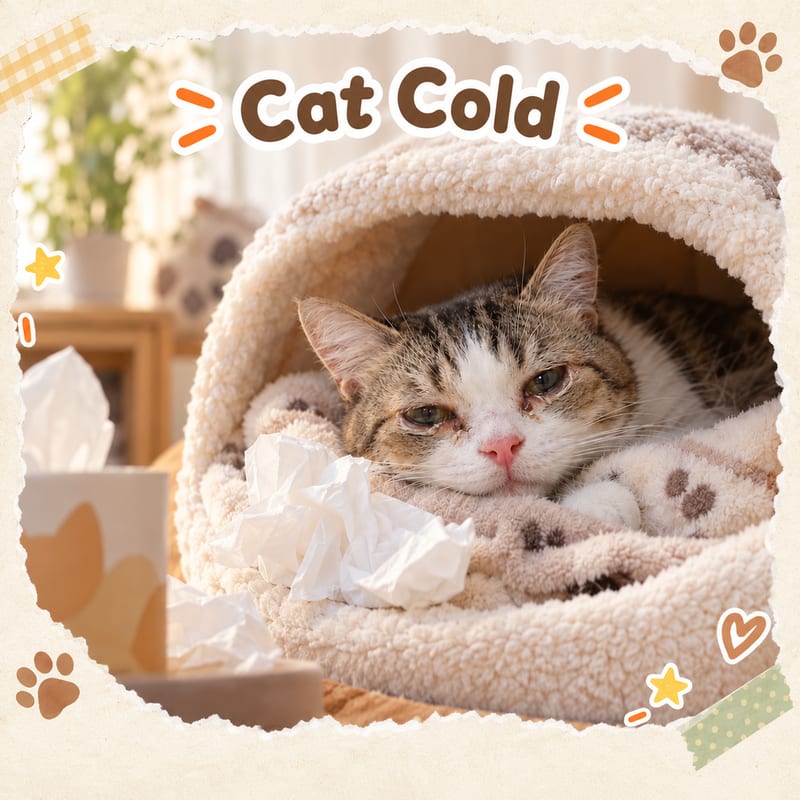
The two major viral culprits: feline rhinotracheitis + calicivirus
Feline herpesvirus (FHV-1) — commonly known as "feline rhinotracheitis"
- The number one pathogen of URI, attacking the eyes and upper respiratory tract
- Typical symptoms: sneezing, conjunctivitis, watery eye and nose discharge
- Most important characteristic: lifelong latency — after recovering from the initial infection, the virus hides in the ganglia, and recurs when the cat is stressed, ill, or has low immunity (usually mainly eye symptoms)
- In other words: there is no such thing as "curing it for good" with feline rhinotracheitis; the key is controlling recurrence
Feline calicivirus (FCV)
- The second major pathogen, attacking the oral cavity and respiratory tract
- Typical symptoms: oral ulcers (tongue, gums), sneezing, runny nose
- Some strains cause limping; chronic carriers shed the virus long-term and infect other cats
And bacterial accomplices: after the virus damages the respiratory defences, bacteria such as chlamydia and bordetella take the opportunity to invade, making the discharge thicker and worsening the condition — this is why vets consider antibiotics.
Symptom self-check + how to distinguish from nasal allergies/foreign bodies
Typical URI symptom combination:
- Sneezing (frequent, in bouts)
- Runny nose (turning from clear to thick is a sign of worsening)
- Watery eyes, red and swollen eyes, lots of discharge
- Nasal congestion (can't smell food → doesn't want to eat — cats rely on smell to stimulate appetite)
- Mild fever, low energy, excessive drooling (calicivirus oral ulcers)
How to distinguish from other problems:
| Cat flu URI | Nasal allergies/foreign bodies | Dental problems | |
|---|---|---|---|
| Sneezing | Frequent + other symptoms all present | Sudden bouts of sneezing, no fever | Occasional |
| Discharge | Bilateral watery eye/nose → thick | Mostly unilateral clear nasal discharge | No nasal discharge |
| Accompanied by | Fever, fatigue, not eating | Energy and appetite normal | Bad breath, drooling, difficulty eating |
Long-term unilateral thick nasal discharge should raise suspicion of tooth root abscess/nasal polyp/foreign body — requires veterinary imaging.
When will it resolve on its own? Timeline
| Period | Typical progression |
|---|---|
| Days 1 to 3 | Sneezing, clear nasal and eye discharge appear — start home care for mild cases |
| Days 4 to 7 | Symptoms gradually subside after peaking; energy and appetite should be maintained |
| Days 7 to 10 | Most mild cases recover — discharge disappears, energy fully returns |
| Beyond 10 days | Not improving/recurring — see a vet to rule out bacterial infection, complications |
| Worsening at any time | Yellow-green thick discharge, not eating, open-mouth breathing — don't wait for the timeline, see a vet immediately |
Important: "Resolving on its own" only applies to mild cases in adult cats with normal energy and appetite. Kittens, senior cats, unvaccinated cats, cats with chronic illness — the course can deteriorate rapidly, and a vet should be seen early once symptoms appear.
Red-green assessment table: when to see a vet
| Situation | Assessment | Action |
|---|---|---|
| Occasional sneezing, clear nasal discharge, eating and playing as usual | 🟢 Observe | Home care + monitor for 1 to 2 days |
| Bouts of sneezing + watery discharge, appetite slightly reduced | 🟡 See a vet ASAP | Book a vet within 1 to 2 days |
| Yellow-green thick nasal/eye discharge | 🔴 See a vet | Possible bacterial infection, needs treatment |
| Not eating or drinking, extremely low energy, fever | 🔴 Emergency | See a vet immediately (especially dangerous for kittens) |
| Open-mouth breathing, rapid breathing | 🔴 Critical | See a vet immediately — sign of pneumonia |
| Eyes stuck shut and can't open, oral ulcers | 🔴 See a vet | Corneal ulcer/calicivirus assessment |
One hard number: a cat that completely stops eating for more than 24 to 48 hours is already at risk of fatty liver — not eating due to flu is not "let it go hungry for a bit", it needs active management (see PetChill's dedicated fatty liver article).
Five home care tips
-
Steam therapy — run hot water in the bathroom to create steam, sit with the cat inside for 10 to 15 minutes, two or three times a day, to help clear nasal congestion (don't shower the cat directly, just sit together in the steam room)
-
Clean discharge — dip cotton wool in warm saline solution, gently wipe away eye and nose discharge several times a day; nasal congestion makes cats stop eating, so keeping the nose clear is a prerequisite for appetite
-
Smell to stimulate appetite — nasal congestion stops cats from smelling food so they don't eat: warm up wet food (slightly warm, not boiling) to release aroma, use tuna water/prescription nutritional paste to entice
-
Keep warm and quiet — heating pad (adjustable temperature, covered with a towel), rest in a draught-free corner; in multi-cat households isolate food and water bowls to reduce transmission
-
Hydration — flowing water fountain, add water to wet food, monitor water intake — dehydration makes the condition snowball
Never: give human cold medicine on your own (paracetamol is highly toxic to cats, even one tablet can be fatal), use human eye drops indiscriminately, or think about "sweating it out" — cats don't work that way.
Prevention: vaccines + environmental management
- Core vaccine FVRCP — covers herpesvirus (FVR) + calicivirus (C) + panleukopenia (P), the most effective line of prevention; vaccinate kittens on schedule, regular boosters for adult cats
- Isolate new cats — isolate new cats for 10 to 14 days when they enter the home (see PetChill's new cat integration SOP), virus-carrying cats can look completely normal
- Stress reduction — herpesvirus recurs under stress: give extra company and reassurance around moving, new family members, and boarding
- Environmental hygiene — in multi-cat households regularly disinfect food bowls and litter scoops; good ventilation
- Observe adopted kittens — the early adoption period is a high-incidence period for URI, treat symptoms early
This article is for reference only and cannot replace veterinary diagnosis. If you have health concerns, please consult a registered veterinarian.
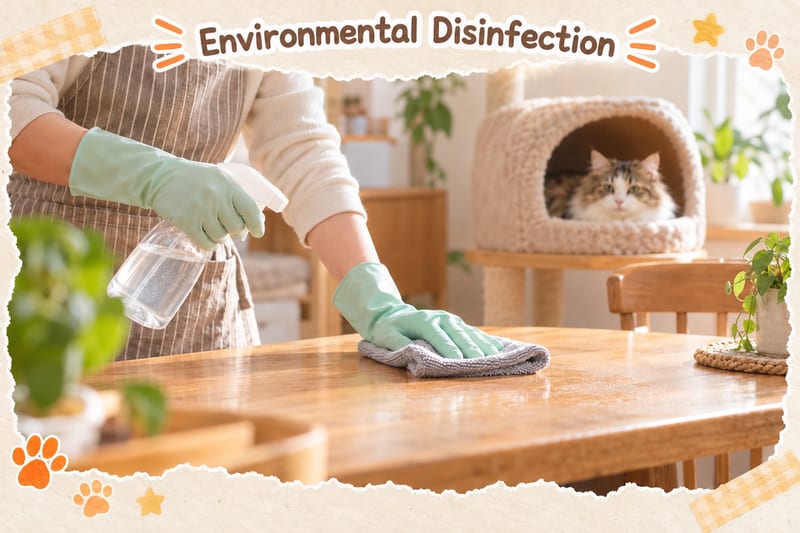
Hong Kong small-flat practical guide: URI home care 48-hour strategy
Hong Kong homes are small, so it's even more of a headache when a cat gets sick. Below is a 48-hour action plan designed specifically for 300–500 sq ft flats, using all five tips already covered in the article, grounded in the Hong Kong setting.
Hours 1–12: Isolation + appetite
- Isolation spot: the bathroom is the most practical. Put in a heating pad (under $100 at pet shops), water bowl, litter tray, turn on the exhaust fan to keep air flowing but don't blow it directly at the cat. Stick a memo note on the door to remind family members not to open the wrong door.
- Appetite method: nasal congestion stops cats from smelling food. Heat the main meal can in a water bath for 5 seconds (slightly warm is enough), add two teaspoons of tuna water; if the cat is willing to lick, it means the sense of smell hasn't completely failed.
Hours 12–24: Steam + cleaning
- Steam session: run hot water 10 minutes before your shower to create steam. Sit with the cat on a bathroom stool, turn off the lights, play a low-volume podcast, and let it relax. Twice a day, no more than 15 minutes each time, to avoid overheating.
- Discharge cleaning: buy saline solution from Watsons, gently wipe eyes and nose with a cotton bud. Throw away immediately after use, don't reuse. Reward with a small treat right after wiping to build a positive association.
Hours 24–48: Monitor the red lines
- Appetite timer: set a phone alarm to check every 8 hours. If the cat completely stops eating for two consecutive meals, contact the vet immediately. On weekends you can go to a 24-hour emergency clinic (such as Kowloon Animal Hospital, CityU Veterinary).
- Breathing observation: film a 30-second video on your phone to see if there's open-mouth breathing. Keep the video so you can WhatsApp it to the vet, saving time and consultation fees.
Extra for multi-cat households
- Zoned management: sick cat uses the bathroom, healthy cats stay in the living room. Put separate water fountains and litter trays on each side, wipe down once a day with 1:49 bleach. Rinse with clean water after wiping to avoid residue.
- Stress reduction: plug in a Feliway diffuser (available at pet shops), add 15 minutes of interactive play daily, to burn off the healthy cats' energy and reduce anxiety caused by isolation.
Remember: Hong Kong weather swings hot and cold, and air-conditioned rooms have low humidity. Remember to put out a damp towel or use a humidifier to keep humidity at 50–60%, so the illness won't keep coming back.
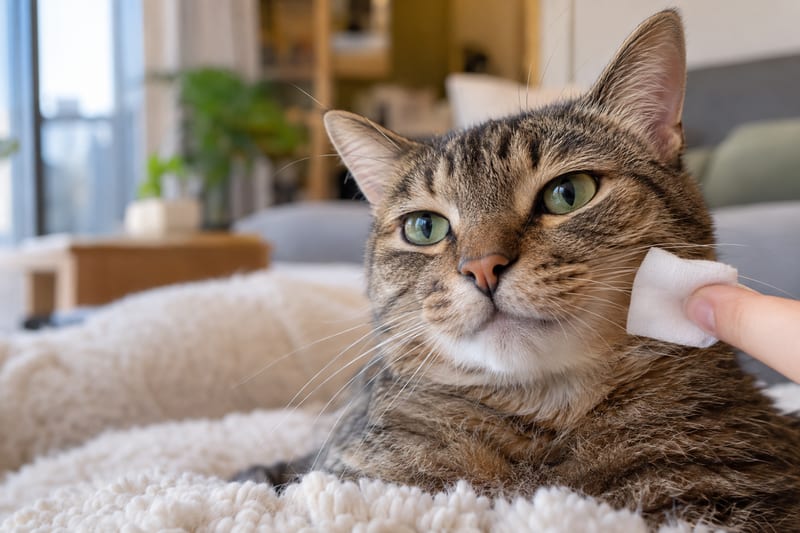
Stages of eye and nose discharge: what clear → yellow-green means
The colour and thickness of the discharge are important clues for judging how the illness is progressing:
| Stage | Discharge characteristics | Commonly seen in | Suggested action |
|---|---|---|---|
| Early | Clear and watery, small amount | Early viral infection (herpes/calicivirus) | Home care + observation, clean daily |
| Middle | White mucus, increasing amount | Ongoing viral infection, inflammation of the nasal mucosa | Book a vet, step up cleaning and hydration |
| Late | Yellow-green purulent, thick and sticky | Secondary bacterial infection | See a vet within 24 hours, antibiotics usually needed |
| Severe | Yellow-green purulent + completely blocked nose, loss of smell | Severe infection, possible pneumonia | Seek medical help immediately (high risk of refusing food) |
Key point: When discharge turns from clear to yellow-green, it usually means the viral infection has become a secondary bacterial infection — this is the dividing line where a vet needs to step in.
Is L-lysine useful? Breaking down the controversy
Many cat owners have heard that "cats with cat flu need L-lysine", but this claim is still controversial in the veterinary field:
- Traditional theory: L-lysine is thought to inhibit replication of feline herpesvirus (FHV-1), so it has long been used as a supplementary supplement.
- Recent evidence: Multiple studies have not consistently shown that L-lysine clearly helps prevent or treat feline herpesvirus infection, and some studies have found no effect at all.
- Current advice: Long-term high-dose supplementation on your own is not recommended. If a vet considers it necessary after assessment, they will recommend the dosage and course based on the cat's condition.
More importantly: L-lysine cannot replace vaccines, cannot replace antibiotics (for bacterial infections), and cannot replace adequate nutrition and hydration. The key care for upper respiratory infections is keeping the airways clear and making sure the cat is willing to eat and drink.
Frequently asked questions
Q: Will cat flu (upper respiratory infection) get better on its own? A: Mild cases (a little nasal discharge, normal energy and appetite) may indeed improve on their own. But upper respiratory infections can be caused by feline herpesvirus, calicivirus or bacteria, and kittens, senior cats and cats with weak immunity can develop severe cases, including pneumonia and corneal ulcers. So it is not recommended to ignore it completely; it is best to have a vet assess it.
Q: Why is "not eating" so dangerous for cats? A: A blocked nose means the cat cannot smell the food, and cats rely heavily on smell to eat — if they can't smell it, they don't want to eat. When a cat completely refuses food for more than 24 hours, the liver breaks down large amounts of fat and accumulates it, triggering fatty liver, a potentially fatal complication. So "a cat with cat flu not eating" is a signal to raise your alert level.
Q: Can I give a cat human cold medicine or nasal decongestants? A: Absolutely not. Many human cold medicines contain paracetamol (Acetaminophen/Paracetamol), which is highly toxic to cats — even a very small dose can be fatal; other ingredients such as pseudoephedrine can also speed up a cat's heart rate and raise blood pressure. Any medication must be prescribed by a vet.
Q: Can it spread to other cats or dogs? A: Upper respiratory infections can spread to other cats and are a common outbreak problem in multi-cat households, so isolate the cat immediately and separate litter boxes and food bowls. Dogs are generally not affected by feline herpesvirus, but some bacterial pathogens (such as Bordetella) can spread across species, so cats with respiratory symptoms should avoid contact with other pets.
Q: Do steam or nebulisation help? A: They help. Run hot water in the bathroom to create steam and take the cat in to sit for 10–15 minutes (do not rinse the cat directly with water); this can help thin nasal secretions and temporarily relieve a blocked nose. At the same time, clean eye and nose discharge daily with saline to keep the airways clear.
Q: When do kittens/senior cats need to see an emergency vet immediately? A: Seek medical help immediately if there is difficulty breathing, open-mouth breathing, complete refusal to eat for more than 24 hours, extremely low energy or abnormal body temperature. Kittens and senior cats can deteriorate rapidly within a few hours, so you should not wait until the next day.
Q: What PetChill products can help with upper respiratory care? A: 【PetChill HK】offers highly palatable mousse cans, tools for warming wet food (to enhance aroma), saline cleaning cotton, pet-specific nasal aspirators, nebulisation/steam supplies and stress-reducing cat beds, with self-pickup service available at the Fo Tan, Yuen Long and Fanling stores.
Sources
- International Cat Care — Cat flu: upper respiratory infection — Common pathogens, symptoms and care principles of feline upper respiratory infection
- International Cat Care — Feline calicivirus (FCV) — Symptoms of calicivirus infection, oral ulcers and management of severe cases
Disclaimer
This article is general pet health information and cannot replace veterinary diagnosis or treatment. There are many types of pathogens that cause upper respiratory infections, and medication (including antibiotics, antivirals and eye drops) must be prescribed by a registered vet based on the diagnosis. Never give human cold medicine on your own. If a cat shows difficulty breathing, open-mouth breathing, refusal to eat for more than 24 hours or extremely low energy, please go to a 24-hour emergency animal hospital immediately.
Hong Kong veterinary fee reference (published on clinic official websites)
- Hong Kong Leo Animal Medical Centre (LAMCVET, Yau Ma Tei): Basic consultation fee $350|Night consultation fee $600|Emergency consultation fee $600|Referral consultation fee $600 (official fee schedule)
- Creature Comforts (East District Animal Hospital/Tseung Kwan O Veterinary Clinic): Tseung Kwan O from $420|East District daytime (8am–9pm) from $370|Evening (9pm–12am) from $550|Late-night emergency (12am–8am) from $1,100|Home visit service from $1,050 (official information)
The consultation fee only covers the consultation and basic examination; blood tests, imaging, medication, hospitalisation, etc. are charged separately and must be quoted by the clinic according to the actual situation. Prices are subject to the clinic's latest announcement; this article is for reference only.
Medication and fee disclaimer
This article is general pet health information and cannot replace veterinary diagnosis or treatment. Every cat's condition, medical history and medication contraindications are different, and any assessment of symptoms and treatment plans (including medication types, dosages and course length) must be decided by a registered vet after an in-person consultation. If a cat shows the red-line symptoms mentioned in this article, please go to a veterinary clinic or 24-hour emergency animal hospital immediately. The fee information in this article is excerpted from the clinics' official websites; prices may be adjusted at any time and are subject to the clinics' latest announcements.
Further reading
- Full article index
- PetChill pet supplies
- Comparison of 12 cat breeds' personalities and prices →
- Common diseases, preventive care, veterinary information →
- Complete guide to cat ringworm symptoms, treatment and prevention in Hong Kong →
- Must-read for Hong Kong cat owners: white foam, yellow water, coffee-coloured, red — when to see a vet →
- Cat symptom self-check guide (quick check of 12 major symptoms + red-line triage table) — compare the severity of 13 common symptoms at once
📌 Key summary
- ✅ Cat flu is a cat-specific virus and is not transmitted from humans to cats
- ✅ Mild cases can recover on their own in 7–10 days, provided the cat keeps eating and drinking
- ❌ Feline rhinotracheitis cannot be "eradicated"; it recurs when stress is high
- ❌ Not eating for more than 24–48 hours can cause fatty liver — don't wait
- ✅ The FVRCP vaccine is the strongest line of prevention; both kittens and adult cats should be vaccinated
 Feline Natural full guide →
 Fuji One full guide →


 Wellness Core full guide →