Quick Answers
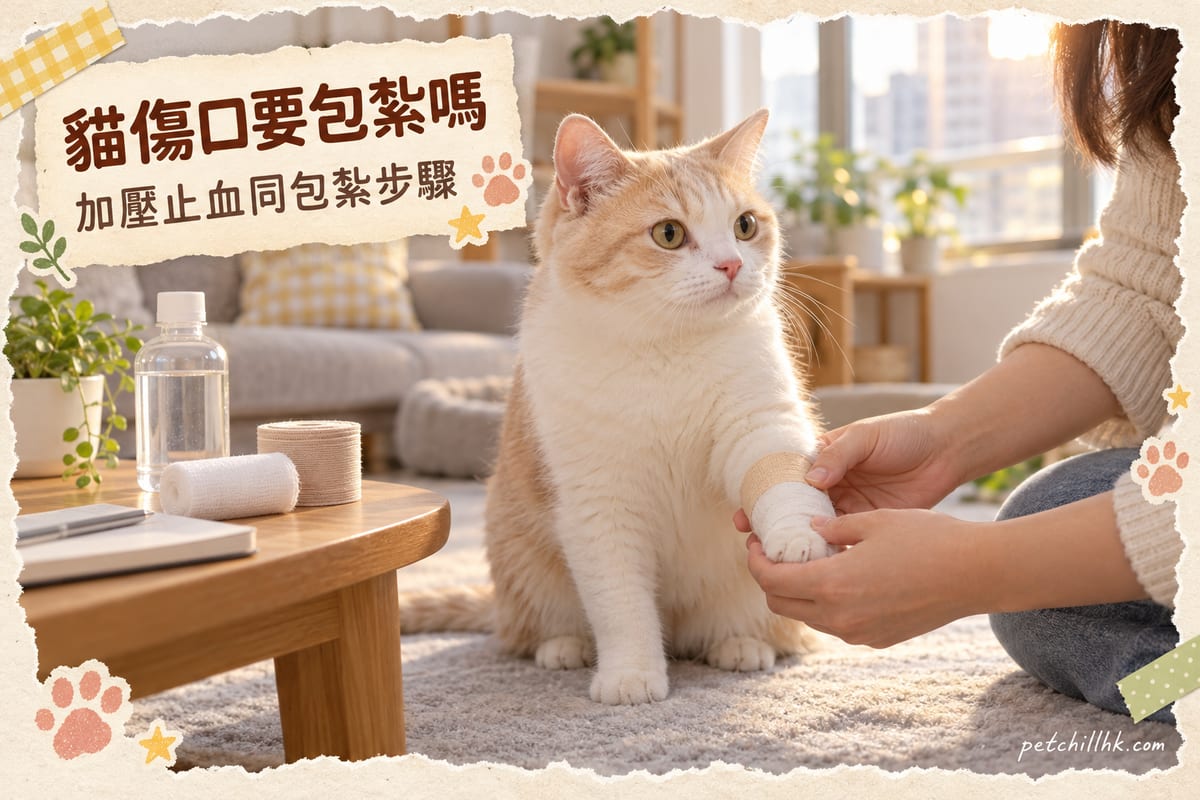
- Not all wounds need bandaging: superficial grazes (less than 1 mm deep) just need cleaning and keeping dry; prolonged wrapping traps moisture instead.
- Situations that do need bandaging include when the veterinarian specifies bandaging, when there is a drainage tube, or when the wound is prone to friction; always follow veterinary instructions.
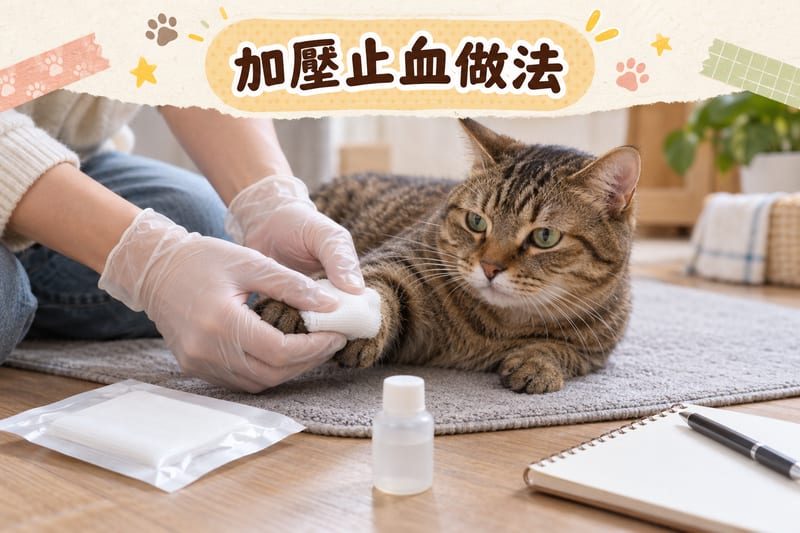
- For bleeding wounds, first apply pressure to stop bleeding: press continuously with clean gauze for 5 to 10 minutes without lifting to check.
- There are 4 situations you cannot handle yourself: bleeding continues after 10 minutes of pressure, deep wounds exposing subcutaneous tissue or bone, yellow-green pus with odour, or rectal temperature above 39.4°C.
- Deep flushing, debridement and suturing all require anaesthesia; pre-anaesthetic assessment must be done by a veterinarian. Adult cats generally fast for 6 to 8 hours for food and 2 to 4 hours for water.
- Bandage tightness standard: you should be able to fit 1 to 2 fingers (about 1.5 to 2 cm) between bandage and skin.
- Within 5 minutes of bandaging, check the paw below the bandage: if swollen, cold, purple, or the cat keeps shaking its paw, remove immediately and consult the veterinarian.
Does a cat's wound always need bandaging? It depends. Superficial grazes and small cuts that have stopped bleeding only need cleaning, keeping dry and preventing licking—no need for prolonged wrapping. But if there is uncontrolled bleeding, a deep wound exposing subcutaneous tissue, pus with odour, or fever, you must not bandage at home and should hand the cat to a veterinarian the same day. One more point many overlook: deep flushing, debridement and suturing all require anaesthesia, which carries risks; pre-anaesthetic assessment can only be done by a veterinarian—it is not something you can solve by buying a roll of gauze at home.
Why be especially careful? Because bandaging itself carries two opposite risks. Too loose, the gauze slips and the cat may swallow it whole; too tight, it constricts blood vessels and tissue, causing the paw below to swell and become cold, and tissue hypoxia makes things worse faster. Sealing the wound also creates a warm, moist environment—if bacteria are already present, you are essentially keeping them warm. So whether to bandage, how to bandage, and how often to change are three decisions that should be made by the veterinarian based on wound depth and location. This article explains each: which wounds can be handled at home, which require immediate veterinary care, the bandaging steps under veterinary instruction, materials and common mistakes, anaesthesia risks, and finally the red-line checklist. To first grasp the overall framework of skin and wound problems, see Pet Skin Health Complete Guide.
1. To Bandage or Not? First Identify the Wound Type
Deciding whether to bandage depends not on wound size but on three things: depth, cause, and signs of infection. The table below lists common situations and the first step you can take at home; for any 'cannot handle yourself' case, the only home action is to stop bleeding, cover the wound, and get to the clinic as soon as possible.
| Wound Type | Typical Appearance | Can You Handle at Home? | First Step at Home |
|---|---|---|---|
| Superficial graze | Shallow scrape of epidermis, slight blood-tinged fluid, depth less than 1 mm | Initial cleaning possible, but do not bandage tightly yourself | Gentle rinse with saline (follow veterinary instructions), keep dry, use cone to prevent licking |
| Small cut that has stopped bleeding | Clean edges, intact dry scab, no odour | Mainly observe; do not suture yourself | Photograph daily to record size, use cone |
| Cat bite, deep scratch | Only 2 small holes of 3 to 5 mm on surface, swelling after 24 to 72 hours | Cannot handle yourself | Do not squeeze, do not seal; book veterinarian same day |
| Deep laceration | Wound gaping, fat or muscle visible, continuous oozing | Cannot handle yourself | Apply pressure with clean gauze, go to clinic immediately |
| Pus, odour | Yellow-green or grey-white pus, surrounding redness and swelling, warm to touch | Cannot handle yourself | Do not squeeze pus; see veterinarian same day |
| Foreign body remaining | Glass, nail, fish bone visible in wound | Cannot handle yourself | Do not pull out yourself; stabilise surroundings and seek veterinary care immediately |
Cat bites are the most easily underestimated. The surface wound from teeth is tiny, but bacteria have been pushed under the skin, and swelling and pus often only appear after 24 to 72 hours. If such a wound is left until surface pus appears, debridement and drainage are often already needed, making the course much longer. Also note: infection is not judged by area but by four indicators: colour, speed of swelling, odour of discharge, and the cat's body temperature. To distinguish normal healing from infection, see How to Tell Normal Wound Healing from Bacterial Infection in Cats.
2. Stopping Bleeding Comes First: Correct Pressure Technique
Bleeding is the top priority, but 'stopping bleeding' is not the same as 'bandaging'. The only goal is to use steady pressure to help blood vessels close while avoiding new damage. The following four points are general first-aid principles; if any cannot be done, or bleeding continues after 10 minutes, go straight to the clinic.
- Prepare materials: clean gauze, clean towel, disposable gloves. If no gauze, a clean towel can be used; do not casually use tissue paper or cotton wool—fibres stick to the wound when dry.
- Apply continuous pressure for 5 to 10 minutes: press the wound with palm or finger pads, steady pressure, do not lift to check 'if it has stopped'. Each lift tears away the newly formed clot, and the pressure time must restart.
- Add gauze, do not replace gauze: if gauze becomes soaked with blood, add another piece on top; do not remove the original piece.
- Still need veterinary assessment after bleeding stops: bleeding stopping does not mean all is well. Deep vessel bleeding may only pause temporarily and ooze again; whether nerves and tendons are damaged cannot be judged at home.
Some methods should not be used: tourniquets, rubber bands or cords tightened around limbs, sprinkling styptic powder or Chinese medicine powder into the wound, pouring alcohol or hydrogen peroxide into the wound, or applying hot water. These can cause tissue necrosis or mask the wound condition, making it harder for the veterinarian to assess. For ongoing bleeding, the correct action is to maintain pressure and go to the clinic immediately; subsequent management is decided by the veterinarian.
3. Six Bandaging Steps Under Veterinary Instruction
The following steps are a general demonstration; which materials to use and how often to change must always follow veterinary instructions. If your veterinarian has already taught you a method, follow that and do not mix two methods.
- Confirm materials: cleaning solution specified by the veterinarian, sterile gauze, elastic bandage, breathable tape. Do not apply cotton wool directly to the wound.
- Wash hands and wear gloves: wash hands before and after each gauze change to reduce introducing bacteria into the wound.
- Cover the wound: fold gauze to sufficient size, covering at least 2 cm beyond the wound edge, to prevent the bandage from rubbing directly on the wound.
- Wrap from distal to proximal: wrap from the paw towards the body, each turn overlapping half of the previous, with even pressure; do not tie a knot in the middle, and do not cross over the inner side of joints.
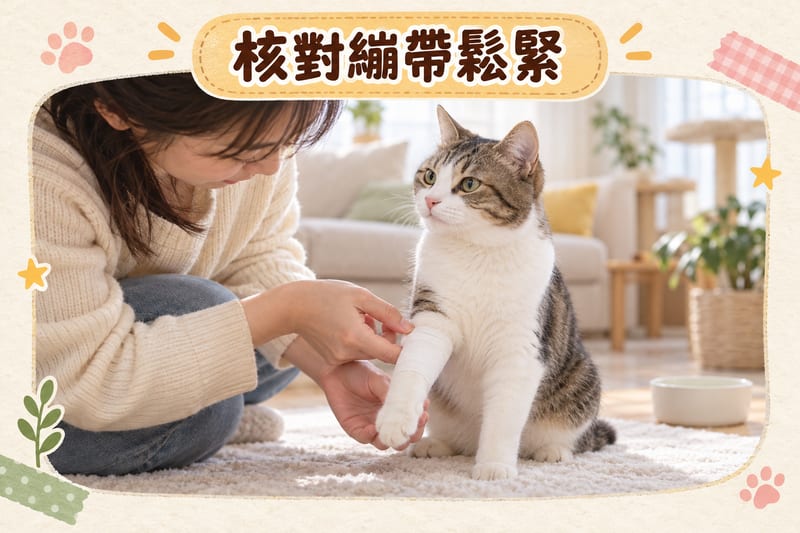
- Check tightness: you should be able to fit 1 to 2 fingers (about 1.5 to 2 cm) between bandage and skin.
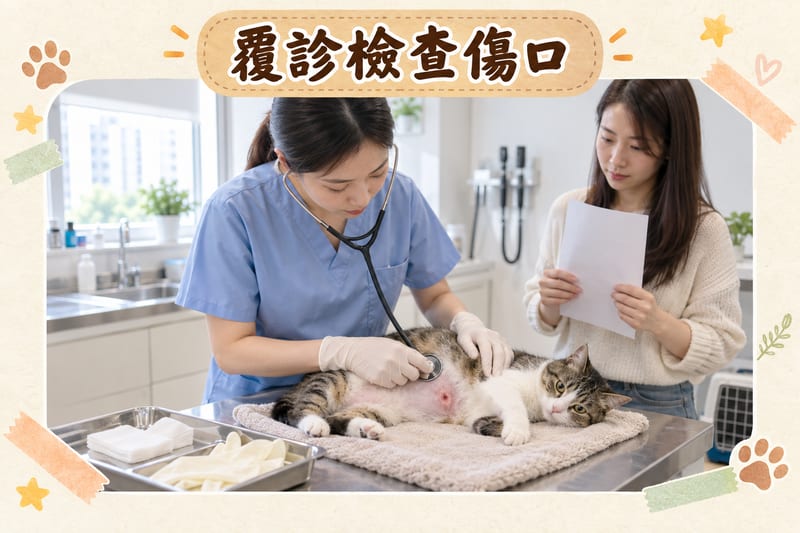
- Recheck immediately after bandaging: wait 5 minutes, check whether the paw below the bandage is swollen, cold, or purple, and whether the cat keeps shaking its paw or biting the bandage. If any occurs, remove immediately and consult the veterinarian for adjustment.
Gauze change frequency is generally 1 to 2 times daily, or immediately when soaked or urine-stained; actual frequency follows veterinary instructions. At each change, record wound size, colour and odour of exudate, and bring everything to follow-up. If there is a drainage tube, the tube position and gauze fixation must follow the veterinarian's method; do not modify it yourself. After bandaging, cats usually need an anti-lick cone because the gauze may be licked wet or bitten loose.
4. Materials Comparison and Five Common Mistakes
| Material | Use | Note |
|---|---|---|
| Sterile gauze | Direct contact with wound, absorbs exudate | Do not reuse; change when soaked or soiled |
| Elastic bandage | Fixes gauze, provides even pressure | Do not apply directly to wound; leave 1 to 2 fingers of slack |
| Breathable tape | Fixes outermost layer | Do not stick to wound or hair roots; tear in direction of hair |
| Post-surgical protective suit | Prevents licking, aids fixation | Change when wet; does not cover head, neck, paws or tail base |
| Cotton wool, rubber bands, human plasters, human ointments | Not recommended for home use | Cotton fibres stick to wound, rubber bands constrict circulation, sealed plasters trap bacteria |
Five most common mistakes:
- Bandaging too tight: paw swells, becomes cold, purple; tissue hypoxia, severe cases necrosis.
- Bandaging too loose: gauze slips, or even swallowed whole by the cat.
- Cotton wool directly on wound: fibres stick when dry, and removing later causes further injury.
- Sealing the entire wound with plaster: wounds need to breathe; sealing traps moisture and bacteria.
- Opening to check every few hours: each opening interrupts healing; unless gauze is soaked or odorous, frequent changes are unnecessary.
Also pay attention to the source of scratches caused by itchy skin. If the cat scratches itself due to itching, bandaging alone will not solve the problem; the veterinarian must investigate whether it is parasites, allergy or fungus. See Cat Ringworm: Complete Guide to Symptoms, Treatment and Prevention.
5. Anaesthesia Risks: What You Must Know Before Bandaging
Flushing deep wounds, debridement, suturing, placing drainage tubes and removing foreign bodies all require sedation or general anaesthesia. The reason is not 'convenience' but that a cat in pain will struggle; forcing it down may enlarge the wound and may cause bites to people. Anaesthesia carries some risk, but the risk is not unassessable—pre-anaesthetic checks are precisely to bring risk into a controllable range.
| Risk Factor | Why Note |
|---|---|
| Over 7 years old | Liver and kidney function and cardiopulmonary reserve decline; blood tests and even cardiac checks are generally recommended |
| Heart disease, heart murmur | Anaesthetic drugs affect blood pressure and rhythm; cardiac status must be assessed first |
| Kidney disease, diabetes | Drug metabolism and fluid balance are harder to control; protocol needs adjustment |
| Obesity | Excess fat affects drug distribution and breathing; anaesthesia time may be prolonged |
| Flat-faced breeds (Persian, Exotic Shorthair) | Shorter, narrower airways; higher respiratory-related risk |
| Upper respiratory infection, nasal congestion | Respiratory monitoring during anaesthesia is more difficult; infection usually needs treatment first |
| Fasting time too short or too long | Too short risks aspiration; too long burdens young and old cats |
Before anaesthesia, fasting is generally 6 to 8 hours for food and 2 to 4 hours for water; actual hours are instructed by the veterinarian based on age and condition, and must not be shortened or lengthened yourself. The veterinarian may also require blood tests, X-rays or cardiac ultrasound. Recovery time after anaesthesia ranges from 30 minutes to several hours; mild unsteady gait or poor appetite within 24 hours is common. But if lethargy persists beyond 24 hours, breathing is rapid, body temperature drops below 37.5°C, or vomiting continues, notify the clinic immediately. If the cat has chronic illness or is on medication (including steroids, anticoagulants), you must inform the veterinarian beforehand; do not stop or add medication yourself.
6. Red-Line Checklist: Situations Where You Must Not Bandage at Home
If any of the following occurs, do not observe further or search online for answers:
- Uncontrolled bleeding: bleeding continues after 10 minutes of pressure, or blood sprays, soaking through several layers of gauze in a short time.
- Deep wound: fat, muscle or bone visible, or wound gaping more than 1 cm.
- Pus and infection: yellow-green or grey-white pus, odour, redness and swelling expanding more than 1 cm within 24 hours, or red lines spreading up the skin.
- Fever: rectal temperature above 39.4°C, with lethargy, rapid breathing or continuous vomiting.
- Complete anorexia: no food or water for over 24 hours.
- Foreign body remaining: glass, nail, fish bone still in the wound, or tissue turning black or grey.
- Cat bite: even if only two small holes on the surface, it requires same-day veterinary attention.
- Chronic illness or on medication: kidney disease, heart disease, diabetes, or currently taking steroids or anticoagulants.
Daily supplies reference during wound care (for price and stock reference only; not a treatment recommendation):
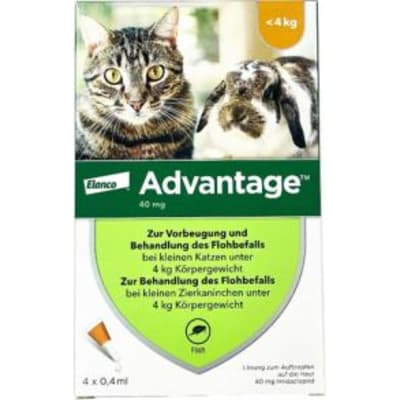
- Elanco (Bayer) Advantage for Cats Spot-On under 4kg 1 box of 4 pipettes (BAC40) — HK$180
- Instinct Cat Food Raw Natural Grain-Free Ultimate Protein Skin & Coat Chicken + Cod Recipe 10lb (658863) — HK$799
- Instinct Cat Food Raw Natural Grain-Free Ultimate Protein Skin & Coat Chicken + Cod Recipe 3.3lb (658504) — HK$339 (available for pre-order)
Prices and stock are subject to the online store's current listed price. Advantage spot-on is a medicated flea product; apply only to skin under fur between the shoulder blades, not to open wounds or broken skin. Usage, frequency and minimum age/weight must follow the packaging label and veterinary instructions; do not increase frequency yourself. Skin and coat formula cat food can serve as daily nutritional support, but nutrition does not replace veterinary treatment; during treatment, changing food is not recommended to avoid confusing gastrointestinal reactions with wound changes.
Further Reading
- Pet Skin Health Complete Guide | Itching, Hair Loss, Rashes, Fungus at a Glance (2026) — Classification framework from itching and hair loss to rashes, with symptom comparison and home care timetable.
- How to Tell Normal Wound Healing from Bacterial Infection in Cats? Symptom Comparison — See the difference in signs between normal healing and bacterial infection, and judge when to return for a visit.
- Cat Ringworm | Complete Guide to Symptoms, Treatment and Prevention in Hong Kong — When itching, hair loss and dandruff recur, how to rule out fungal problems and avoid spreading to the whole household.
- Cat Hairball Complete Guide | Hong Kong Long-haired Cat Care, Hairball Prevention and Danger Signs — Understand the boundaries for judging common home care problems and when to seek veterinary care.
For emergencies, contact a veterinarian immediately; this article is for reference only and cannot replace veterinary diagnosis.
Information checked as of 2026-10-12Source: PetChill Editorial Team
 Instinct full guide →
 K9 Natural full guide →
 Feline Natural full guide →