Quick answers
- White fur turning yellow is most often pigment from tears, saliva and urine that stays damp and oxidises, not a problem with the hair itself.
- The core of home care is one word: dry. Spend 5 minutes daily wiping eyes, mouth, paws and toe webs.
- Bathe generally every 4 to 6 weeks; bathing too often strips skin oils and makes the coat yellower and duller.
- Lather-to-rinse time should be 1:2 — if shampoo stays on for 2 to 3 minutes, rinse for 4 to 6 minutes.
- Dry with medium-low heat at a distance of 20 to 30 cm; damp hair left trapped is a breeding ground for yeast and bacteria.
- Pigment already deposited in the hair shaft won't wash out; only trimming the tips and letting new hair grow will help.
- If yellowing comes with odour, itching, hair loss or darkened skin, see a veterinarian within 2 weeks.
Nine times out of ten, a white dog's coat turning yellow isn't because it isn't washed "clean enough". The most common situation is this: under the eyes, around the mouth, on the chest, inner front legs and abdomen, the coat is constantly damp from tears, saliva or urine, and the pigment in them (porphyrins) oxidises, leaving reddish-brown or rusty-yellow marks on white fur. On top of that, sebum oxidation, UV, shampoo residue and minerals in tap water can all turn a bright white coat yellow.
The good news is that most white-dog yellowing is cosmetic, and with home care and correct bathing you'll usually see improvement in 4 to 8 weeks. But some cases are signals of skin or internal problems, such as yeast infection, persistent licking from allergies, or even jaundice from liver or gallbladder issues. Below we go through the causes, a 3-minute self-check, a daily routine, bathing and shampoo choice, diet, and what to do in Hong Kong's humid weather, and finally when to see a veterinarian immediately.
1. Five main causes of a white dog's coat turning yellow
To solve the problem, first know which type it is. These five categories cover almost every case, and the approach is completely different for each.
Type 1: Pigment staining from tears and saliva: Tears and saliva contain porphyrins, which are harmless in themselves, but when they stay on white fur and oxidise they turn reddish-brown. Excessive tear production, narrow tear ducts, ingrown eyelashes and environmental allergens (dust mites, second-hand smoke) all make a dog's eyes water more. This type of yellowing is usually symmetrical under both eyes — the so-called "tear stains".
Type 2: Persistent licking plus dampness: When a dog licks its paws, groin or lips, it's usually not a habit but itching. When skin stays damp for long periods, Malassezia (yeast) and bacteria multiply, the coat turns yellow-brown, feels greasy and smells. These cases won't be solved by washing alone; the source of the itching must be addressed.
Type 3: Urine staining: Male dogs that lift a leg to urinate, dogs with long belly hair or dogs that drink a lot can easily get urine on the lower abdomen and inner hind legs; dried urine pigment leaves a pale yellow patch.
Type 4: Sebum oxidation and UV: Dogs with active oil production have sebum on the coat surface that oxidises and is yellowish in itself; UV speeds up oxidation further, turning white coats ivory-yellow, most noticeably on the back and around the ears.
Type 5: Shampoo residue, water quality and age: If rinsing isn't thorough, surfactants and dirt left on the coat turn yellow; minerals in tap water (iron, copper) can also leave pale yellow deposits. Also, as dogs age, the keratin structure of the hair changes and white coats naturally become more yellow.
| Cause | Most common location | Appearance | What to do |
|---|---|---|---|
| Tear/saliva pigment staining | Under both eyes, around mouth, chest | Symmetrical rusty lines, normal hair texture | Dry daily, shorten hair around eyes, address the cause of tearing |
| Persistent licking plus dampness | Paws, toe webs, groin, around lips | Yellow-brown and greasy, odour, reddened skin | Investigate the cause of itching first; don't rely on shampoo alone |
| Urine staining | Lower abdomen, inner hind legs | Large pale yellow patches, worst near the urethral opening | Shorten belly hair, dry immediately after walks |
| Sebum oxidation and UV | Back, around ears, tail | Even ivory-yellow, oily surface | Appropriate cleaning frequency, balanced fatty acids |
| Shampoo residue/water minerals | Whole body or missed rinse areas | Pale yellow, "never looks white no matter how much you wash" | Dilute properly, rinse twice as long, dry thoroughly |
| Yeast or bacterial infection | Ear canals, toe webs, skin folds | Yellow-brown greasy, sour smell, thickened and darkened skin | Diagnosed by a veterinarian, treated with appropriate medication |
| Age and internal factors | Whole body, mucous membranes | Coat turns pale yellow, or whites of eyes and gums yellow | Persistent or accompanying symptoms need blood tests |
For an overall view of itching, hair loss and rashes from a skin perspective, see the Pet Skin Health Guide.
2. Three-minute self-check: staining, or a skin or health problem?
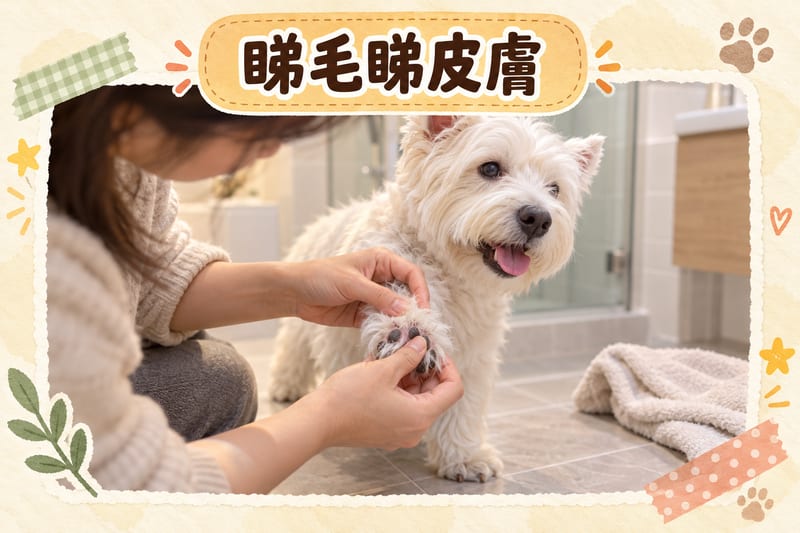
Most white-coat yellowing is cosmetic, but "yellow" comes in two natures: one is staining on the surface of the hair, the other is a problem with the skin or mucous membranes themselves. Use the following seven points to tell them apart in 3 minutes.
| Observation | Leans towards staining (cosmetic) | Leans towards health problem |
|---|---|---|
| Distribution | Under eyes, around mouth, lower abdomen, paws — matches damp areas | Symmetrical hair loss, circular bald patches, recurring ear inflammation |
| Skin surface | Normal skin colour, no redness or flakes | Redness, flakes, crusts, thickened and darkened skin |
| Odour | Mild doggy smell that disappears after drying | Distinct sour or musty smell that lingers after wiping |
| Coat texture | Hair still smooth, only colour changed | Hair brittle, breaks easily, greasy or matted |
| Accompanying behaviour | Normal energy and appetite, not particularly itchy | Constantly licking paws, rubbing face, scratching ears, waking at night from itching |
| Change after washing | Lighter after washing, gradually yellows again over 2 to 3 days | Yellow again within a day of washing, or even redder with each wash |
| Whites of eyes and gums | Normal pink | Yellow (jaundice) — an emergency signal |
Cases leaning to the left column usually improve with home care in 4 to 8 weeks; those leaning to the right need a veterinarian appointment promptly. The last row deserves special emphasis: yellowing of the sclera (whites of the eyes), gums or inner ear flap is a typical sign of jaundice, completely different from coat staining, and needs immediate medical attention.
If your dog has the combination of "itching, paw licking, coat turning yellow", the most likely suspect is atopic dermatitis; Dog Atopic Dermatitis Explained has a complete guide to differentiating itching and managing humid weather.
3. Daily 5-minute brightening routine
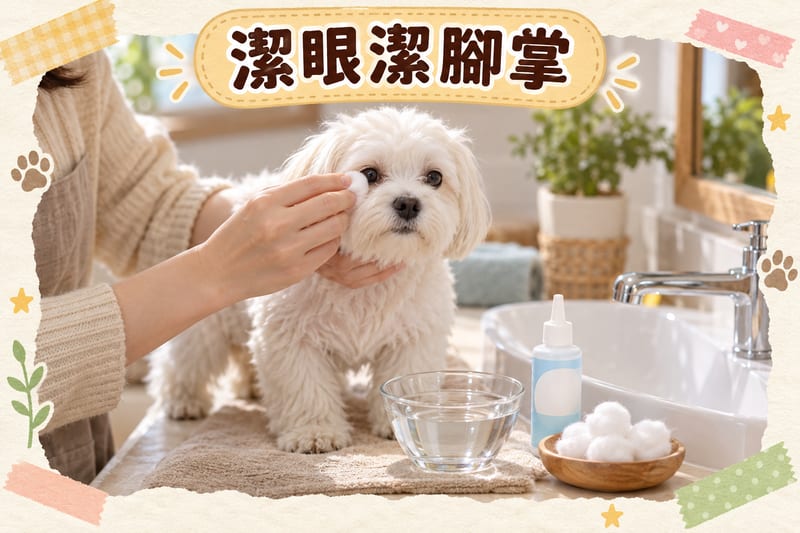
The first step to brightening isn't buying shampoo — it's "don't get wet again". Do the following five steps once a day, about 1 minute each; use one cotton ball per spot, and never wipe one eye then the other with the same ball.
- Clean eyes: Moisten cotton with water or pet-specific eye cleaner and wipe gently in one direction from the inner to the outer corner, one cotton ball per eye. Don't use the same cotton ball for both eyes, and don't press on the eyeball.
- Wipe mouth and chin: After meals and drinks, dry the corners of the mouth, chin and lip folds with a dry towel — this is where saliva staining is worst.
- Wipe paws and toe webs: After a walk, wipe all four paws first, then dry each toe web. Damp toe webs are a yeast favourite, and white paws usually start turning yellow between the toes.
- Check ears, groin and tail base: Lift the ear flap to check for dark earwax and odour, feel the lower abdomen and inner thighs for redness — once infection sets in at these spots, the surrounding white fur turns yellow-brown.
- Change to a clean bed and dry the body: Sleeping on damp fur means trapping moisture against the skin all night; after walks in the rain or swimming, absorb water with a towel then dry, don't let it air-dry.
For tools, keep individually wrapped cotton balls, a super-absorbent towel, pet-specific eye cleaner and a comb. Grooming isn't just for looks — it removes dust and dried saliva fragments from the coat; the four pillars of grooming, diet and hydration in the Cat Coat Care Guide apply to dogs too.
4. Correct bathing: frequency, water temperature, shampoo and drying
A white dog getting yellower with each wash is usually not because the shampoo is poor, but because the washing method is wrong.
| Item | Recommended | Common mistake |
|---|---|---|
| Frequency | Every 4 to 6 weeks; every 3 weeks if very active outdoors or high sebum | Weekly, or even every two days |
| Before washing | Comb out knots first, then wet the whole body | Putting matted hair straight into water, making it tighter |
| Water temperature | 37 to 38°C, feels slightly warm not hot | Using hot water, stripping oils and drying the skin further |
| Shampoo | Dilute as instructed, apply to back first then limbs | Pouring neat shampoo onto the coat, too concentrated and irritating |
| Contact time | Rinse after 2 to 3 minutes | Leaving it on for 10+ minutes to "soak in" |
| Rinsing | Rinse for about twice the lathering time, until no slippery feel remains | A quick rinse, leaving residue that yellows the coat |
| Drying | Medium-low heat, 20 to 30 cm away, brush while drying | High heat close to the skin, or stopping when half dry |
| Eye and ear protection | Put cotton in ears before washing, avoid eyes throughout | Water and foam getting into ears, causing ear infection |
Rinsing is key: Surfactants left on the coat keep attracting dust and oil from the air, making white fur yellow. The test is simple: if the coat still feels "slippery" all over, it isn't rinsed clean; properly washed hair should feel slightly rough.
Drying is equally key: In Hong Kong's humid climate, half-dry hair can stay damp at room temperature for hours, and skin that stays damp breeds yeast, turning the coat yellow and smelly. Use a hairdryer on medium-low heat, parting the undercoat with a comb as you dry, paying special attention to armpits, groin, toe webs and behind the ears.
Don't overlook the "won't wash out" fact: Once pigment has oxidised and deposited in the hair shaft, no amount of washing will turn it white again. The right approach is to trim the stained tips with grooming scissors and let new hair grow; for the eye area, it's best to leave it to a groomer. Coat colour is determined by pigment, and forcibly "washing white" is impossible; the relationship between pigment and genes is covered in Cat Coat Colour and Personality, and the same applies to dogs.
5. Choosing a brightening shampoo: ingredients and what to avoid
Pet shampoos labelled "brightening" or "de-yellowing" work in roughly three ways: cleansing types use mild ingredients to wash away oil and dirt; optical neutralising types add blue-purple conditioning pigments or optical brighteners to make white coats look whiter; conditioning types add moisturising and soothing ingredients to reduce itching from dryness.
- Choose: Products based mainly on mild surfactants, containing moisturisers such as glycerin, with oatmeal or aloe for soothing, not strongly scented, and with a pH suited to canine skin.
- Avoid: Human shampoo and conditioner (dog skin differs from human skin, and their cleansing power and fragrance are too strong), any product claiming to "bleach", products containing bleaching agents such as hydrogen peroxide or sodium perborate, and whitening products of unknown origin.
- Discipline in use: Dilute as instructed, keep contact time within the product's limit, avoid eyes and ear canals, and use no more than once every 2 to 4 weeks. If the skin is already red, broken or smelly, don't use a brightening shampoo to mask the problem.
- Manage expectations: Blue-purple conditioning is optical neutralisation that makes the coat look less yellow, but it doesn't change deposited pigment — don't expect "snow white after one wash".
Veterinary medicated shampoos (containing antifungal or antibacterial ingredients) are a different matter and must be used as prescribed by a veterinarian based on diagnosis, not bought as ordinary brightening shampoo; if your dog is on medication or ointment for a skin infection, ask your veterinarian about bathing frequency and products first.
6. Internal factors: diet, water and skin health
Skin and coat are the body's outermost structures; whether the diet is right shows in coat colour and texture within two to three months.
- Enough protein: Hair is mainly protein; long-term deficiency makes the coat pale, brittle and slows skin repair.
- Balanced fatty acids: The ratio of Omega-3 to Omega-6 affects the skin barrier and inflammatory response. Fish oil ingredients are often used to support skin and coat; dosage should follow the product label and veterinary advice, and don't increase it yourself.
- Trace elements: Minerals such as zinc are involved in skin repair, but excess is also harmful; don't self-prescribe long-term high-dose supplements.
- Adequate water: Insufficient water makes skin and coat dry; use a flowing water fountain, add wet food, or add a little warm water to dry food.
- Suspected food allergy: If there's also itching, recurring ear inflammation or soft stool, your veterinarian may suggest an 8 to 12 week dietary elimination trial, strictly following instructions with no sneaky treats.
Below are in-store products related to skin and coat support; prices and stock are subject to the online store's live prices:
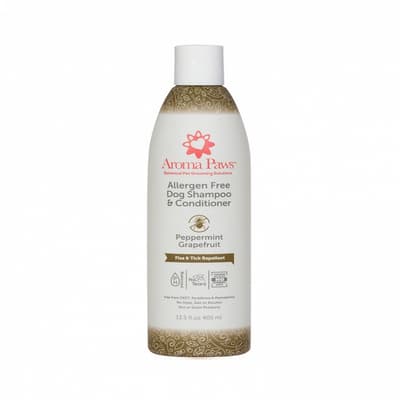
- Aroma Paws Anti-Tick & Flea Sensitive Shampoo 13.5oz (for dogs) (AP304) — HK$138 (stock 0, available to pre-order)
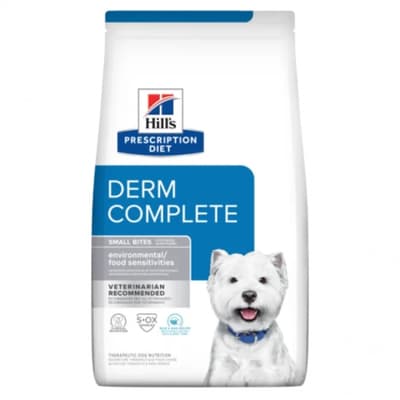
- Hills Prescription Diet Dog Food Derm Complete Skin & Food Sensitivities Small Bites 1.5kg (605802) — HK$304 (stock 0, available to pre-order)
- Hills Prescription Diet Dog Food Derm Complete Skin & Food Sensitivities Small Bites 6.5lbs (605804) — HK$564 (stock 0, available to pre-order)
Prices and stock are subject to the online store's live prices.
Two points to note. First, the two prescription diets above are veterinary prescription products and should not be fed long-term on your own; they must be assessed by a veterinarian first, and the course and follow-up completed as instructed. Second, shampoo and food are tools to support skin and coat health and won't directly "wash white" already stained hair — expectations should be placed on long-term skin health.
7. Practical tips for Hong Kong's humid weather
In spring and summer, Hong Kong's humidity stays high, and indoor humidity during the "returning south" damp spell can exceed 80%. This environment is particularly unfriendly to white-coated dogs, because a persistently slightly damp skin surface is ideal for yeast and bacteria.
- Dry immediately after walks in the rain: When you get home, wipe all four paws and toe webs first, then the abdomen and chest, and finally dry the whole body.
- Control indoor humidity: Use a dehumidifier or air-conditioning dry mode, keeping indoor humidity below 60% where possible, especially where the dog sleeps.
- Wash bedding: Wash beds, towels, harnesses and leads in hot water every 1 to 2 weeks; these fabrics accumulate oil and skin flakes.
- Don't sleep damp: After swimming, bathing or a walk in heavy rain, always dry the dog before it gets on the bed or into the crate.
- Watch for dryness in air-conditioned rooms: Long periods of air-conditioning dry out the skin; use a humidifier or reduce direct cold air exposure.
8. When to see a veterinarian
If any of the following occurs, don't rely on home care alone:
- Yellowing with a distinct odour that returns soon after wiping
- Constant paw licking, face rubbing, ear scratching, or waking at night from itching
- Reddened, thickened or darkened skin, or circular bald patches
- Eye or nasal discharge that is heavy, thick, or yellow-green
- Markedly increased drinking and urination, weight loss, or poor energy and appetite
- Yellowing of the whites of the eyes, gums or inner ear flap (jaundice) — an emergency, seek medical help immediately
A veterinarian will usually start with skin tests (tape impression, hair pluck microscopy, Wood's lamp) to rule out fungus, yeast and parasites, then blood tests as needed. Drug types and doses must be decided by the veterinarian; don't buy medication yourself or stop treatment midway.
Further reading
- Pet Skin Health Guide | Itching, hair loss, rashes and fungus at a glance (2026) — locate skin problems in three steps, with a symptom comparison table and care timeline.
- Dog Atopic Dermatitis Explained | The culprit behind itching + managing Hong Kong's humid weather — why paw licking turns brown-red and ears flare up repeatedly, and how to stop the itch.
- Cat Coat Care | Shine, shedding and hairballs — the four pillars of protein, grooming, hydration and skin health.
- Cat Coat Colour and Personality | What genes reveal — coat colour is determined by pigment and genes and won't change with cleaning.
In an emergency, contact a veterinarian immediately; this article is for reference only and cannot replace veterinary diagnosis.
Information checked as of 2026-10-12 · Source: PetChill editorial team