Quick answers
- Iodine tincture is iodine dissolved in alcohol, commonly labelled 2% iodine with about 47% v/v alcohol; povidone-iodine is an aqueous povidone-iodine solution labelled 10% w/v, i.e. about 1% available iodine. The two numbers cannot be compared directly because the iodine in povidone-iodine is bound to a carrier and released slowly.
- There are 5 main differences in usage: whether dilution is needed, application tool, contact time, after-care, and tolerance of dirt.
- Povidone-iodine contact time is generally 30 seconds to 1 minute; scrub types must be rinsed off thoroughly with water, while solution types can simply be wiped dry.
- Broken skin and mucous membranes: iodine tincture is never used; povidone-iodine is also only under veterinary instruction and must be diluted to 1% or below. See the comparison table for 7 skin conditions below.
- Daily cleaning does not need iodine: wiping the body, paws, outer ear flap, and around the eyes with water or pet wet wipes achieves 0 bottles of antiseptic.
- Cats need further narrowing: a 3 kg cat and a 25 kg dog given the same drop of solution have about an 8-fold difference in exposure per unit body weight, plus grooming will lead to ingestion.
- Red lines: if a wound's redness and swelling expand within 24 hours, if it is still oozing pus after 3 days, if the animal refuses food for more than 24 hours, or if body temperature exceeds 39.4°C, see a veterinarian immediately.
The answer to "What are the differences in how iodine tincture and povidone-iodine are used when cleaning pet skin?" can be compressed into one sentence: iodine tincture is an alcohol-based form, used undiluted, evaporates quickly, and is more irritating; povidone-iodine is an aqueous form, usually needs dilution first, is left on for 30 seconds to 1 minute, and is less irritating. The actual divergence is not just the solvent but the whole operational procedure—from dilution, application tool, contact time, to whether rinsing is needed afterwards and whether a cone is needed; the two are different.
The question "which is more suitable for daily cleaning"—honestly, neither is suitable. Both iodine tincture and povidone-iodine are topical antiseptics; their function is to kill microorganisms on the skin surface, not to wash away dirt, oil, or dander. Daily pet cleaning does not need antiseptics: wiping the body, paws, and outer ear flap with water or pet wet wipes is enough. The scenarios where iodine preparations are truly needed are very narrow, and the prerequisite depends on a veterinary diagnosis. Below, we will compare section by section the ingredient concentrations, the 5 usage differences, the applicability to 7 skin conditions, the difference in absorption between cats and dogs, and the 5-step procedure and record-keeping according to veterinary instructions.
First, a principle that runs through this article: disinfection is not cleaning. If the wound surface has pus, blood, oil, or crust, the iodine cannot reach the underlying skin at all, and the effect will be greatly reduced. So the correct order is always "first clean away dirt, then disinfect", not pouring iodine directly on. To first establish an overall approach to skin problems, you can start with the Pet Skin Health Hub.
What are iodine tincture and povidone-iodine? Differences in ingredients, concentration, and form
Iodine tincture (commonly called iodine alcohol) is iodine and potassium iodide dissolved in an alcohol solution. Commercially available human iodine tincture is commonly labelled 2% iodine, and the alcohol content can be as high as 47% v/v, so it feels cool and stings when applied, and evaporates quickly. The advantage of alcohol is that it dries quickly; the disadvantage is that it irritates inflamed tissue and new tissue, so veterinarians generally do not recommend owners use iodine tincture on pets' open wounds themselves.
Povidone-iodine is an aqueous solution of iodine combined with polyvinylpyrrolidone. This carrier slowly releases free iodine, so the concentration of free iodine in contact with the skin at any one time is lower, and it is less irritating; it is the type more commonly used by veterinarians. Note that the concentration on the packaging can be written in two ways: one says "povidone-iodine 10% w/v", the other says "available iodine 1%"; these are two expressions of the same product, not "10% is ten times stronger than 1%".
In addition, the form itself affects usage. On the market there are solution, ointment, and pre-surgical scrub containing surfactants. Scrub is for brushing the skin and must be rinsed off with water after use; it cannot be left on the skin. Solution types can be wiped dry. The scrub used in veterinary clinics is not the same as household povidone-iodine, and should not be copied.
| Comparison item | Iodine tincture (iodine alcohol) | Povidone-iodine (aqueous povidone-iodine) |
|---|---|---|
| Main ingredients | Iodine, potassium iodide, alcohol (some products about 47% v/v) | Povidone-iodine, water |
| Common commercial labelling | About 2% iodine | About 10% w/v, i.e. about 1% available iodine |
| Release method | Immediate, alcohol drives rapid evaporation | Carrier slowly releases free iodine |
| Irritation | Higher, obvious stinging on broken skin | Lower, more commonly used by veterinarians |
| Dilution before use | Generally not diluted, only for intact skin | Mostly diluted as instructed by veterinarian before use |
| Staining | Dark brown, easily stains light-coloured fur and fabric | Pale yellow-brown, still stains light-coloured fur |
| Main limitation | Alcohol irritates inflamed tissue, not used on open wounds | Large-area or long-term use requires consideration of skin absorption |
The concentrations in the table are only common commercial labelling; different brands, origins, and forms can vary. Always refer to the packaging of the product you have and your veterinarian's instructions.
Differences in usage when cleaning skin: 5 practical distinctions
The same task—"apply iodine to the skin"—has completely different operational steps for the two. Below is a step-by-step comparison to help you understand why a veterinarian would specify one rather than the other.
| Step | Iodine tincture (iodine alcohol) | Povidone-iodine (aqueous povidone-iodine) |
|---|---|---|
| 1. Dilution before use | Generally used undiluted, so only on intact skin | Mostly diluted first with water or saline; common clinical practice is to dilute to 1% or below, colour like weak tea |
| 2. Application tool | Cotton swab or gauze to pick up, do not touch directly with hands | Cotton ball or gauze to pick up; do not put used cotton back into the bottle |
| 3. Contact time | Alcohol evaporates quickly, generally wait for it to dry naturally, no rinsing needed | Leave for about 30 seconds to 1 minute, then rinse or wipe dry as instructed by veterinarian |
| 4. After-care | Do not bandage tightly; prevent pet from licking | Scrub type must be rinsed thoroughly with water; solution type can be wiped dry |
| 5. Tolerance of dirt | Organic matter (pus, blood, oil) greatly reduces efficacy | Also reduced, so both must be cleaned before disinfection |
From the table, we can summarise 5 practical differences: whether to dilute, application tool, contact time, whether rinsing is needed after application, and reduced efficacy on surfaces with a lot of dirt. Together, these 5 points explain why "iodine tincture is not suitable for broken skin, while povidone-iodine can be used but must be diluted and contact time controlled".
A very common misconception to clarify: thinking that the higher the concentration and the more frequently applied, the better. The fact is the opposite: too high a concentration of antiseptic irritates the skin, and applying too frequently disrupts the normal skin flora and new tissue, making wounds harder to heal. So even if a veterinarian does tell you to use povidone-iodine, follow the frequency and course length exactly; do not increase on your own.
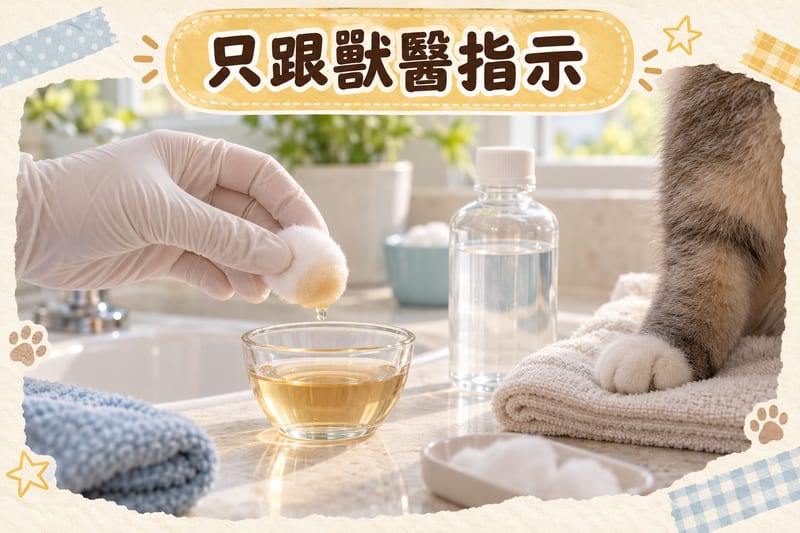
Which skin conditions can it be used on? Comparison of 7 situations
The following comparison table is the most practical part of this article. Note two things: first, the applicable scope of iodine tincture is narrower than that of povidone-iodine; second, neither can be used by owners on their own decision as to where.
| Skin condition | Iodine tincture | Povidone-iodine | Explanation |
|---|---|---|---|
| Intact skin (pre-operative local disinfection, done by veterinary team) | Not recommended for own use | Can be used under veterinary instruction | This type of disinfection is handled by the clinic; follow discharge instructions at home |
| Superficial abrasion (clean, no oozing, smaller than a HK$1 coin) | Not used | Only under veterinary instruction, thin application after dilution | Prerequisite is that the veterinarian has diagnosed and the animal cannot lick it |
| Already purulent, foul-smelling, persistently oozing, deep puncture wound (e.g. cat bite) | Not used | Not used | Two small holes on the surface, bacteria already sealed under the skin; wiping the surface is useless, see a veterinarian |
| Mucous membranes (eyes, mouth, nostrils, genitals) | Absolutely not used | Not used | Only for veterinary-specific preparations used by veterinarians under specific procedures |
| Deep ear canal | Not used | Not used | Daily cleaning only wipes the visible part of the outer ear flap; if there is a lot of earwax, foul odour, or frequent head shaking, see a veterinarian |
| Large-area skin or long-term daily use | Not used | Not used | Total exposure will increase greatly; the veterinarian must decide the area and course |
| Thyroid disease, kidney disease, pregnant/nursing, young cats and dogs | Not used | Not used | Weaker clearance and metabolism; must be assessed by a veterinarian before use |
If a pet has itchy skin, hair loss, red rash, or dander, the focus is not "which antiseptic to buy" but to find out the cause. Causes can be food or environmental allergies, fleas or mites, fungal or bacterial infections, endocrine diseases, or even excessive licking due to joint pain—the treatment is completely different. Self-application of iodine not only does not help but also masks the original colour and condition of the skin, making it harder for the veterinarian to judge during examination. For related investigation directions, refer to the Dog Skin Care Guide and the Cat Skin Diseases Guide.
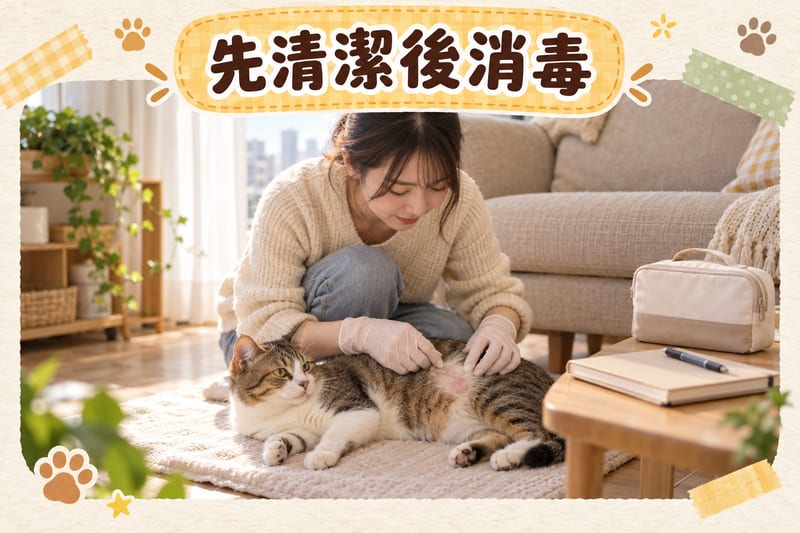
Differences between cats and dogs: why cats need further narrowing
The same practice that may not cause immediate problems in dogs needs to be narrowed for cats, for five reasons:
- Grooming frequency: Cats spend a lot of time grooming every day, especially areas that have been wiped; ingestion of topical products is the norm rather than the exception. Dogs mainly lick their paws and affected areas, so exposure is relatively concentrated.
- Skin structure: The stratum corneum of cats is thinner than that of dogs, so irritants and iodine penetrate relatively easily.
- Weight ratio: A 3 kg cat and a 25 kg dog, using the same area and the same drop of solution, have about an 8-fold difference in exposure per unit body weight.
- Thyroid iodine load: Iodine is a raw material for synthesising thyroid hormones. Veterinary literature has reported that after topical povidone-iodine on dogs' skin, serum iodine levels rise and thyroid function can be affected for several days; cats are similarly sensitive to iodine intake, so large-area, long-term, or frequent use is not appropriate, and areas they can lick should be avoided.
- Metabolism and medical history: Young cats and dogs have immature skin barriers; animals with thyroid problems, kidney disease, or known iodine sensitivity must be assessed by a veterinarian before use.
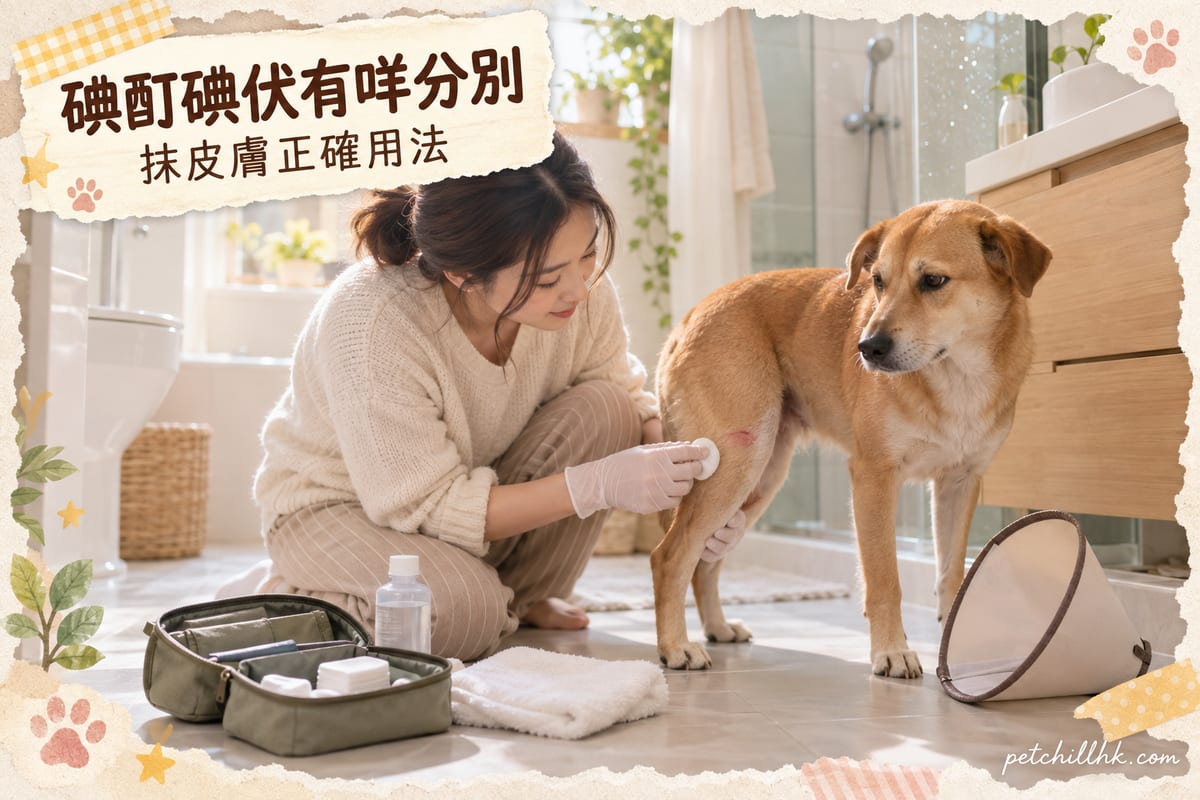
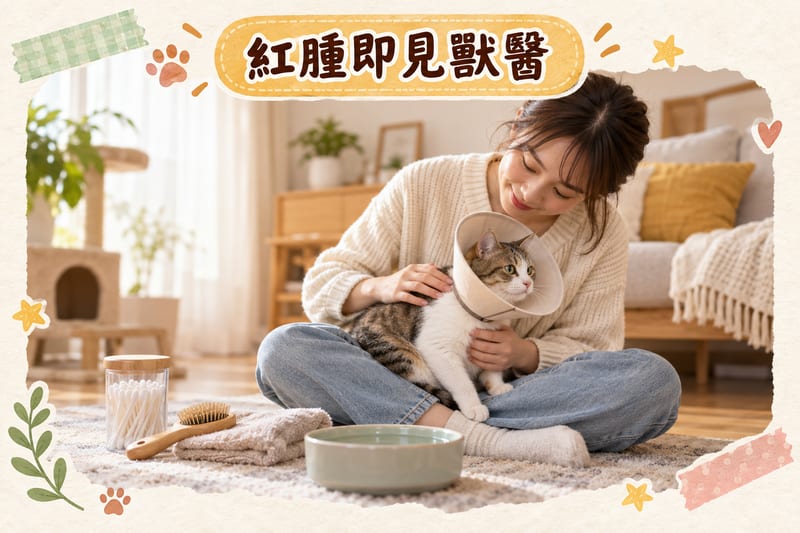
A practical approach: if a veterinarian does prescribe an iodine preparation for a cat, ensure it cannot lick it after use, usually by putting on a soft cone or recovery suit until the skin surface is completely dry and the veterinarian says it can be removed. Do not use a hair dryer on hot air to "dry faster", and do not immediately let it go grooming—these two are the most common mistakes owners make.
By the way, there are other "natural" skin care remedies circulating, such as diluted vinegar water. Such practices also lack sufficient clinical evidence to support treating infections, and should not be used in combination with iodine preparations, because acid-base and chemical reactions may increase irritation. To understand the evidence for such remedies, see the Evidence Analysis of Apple Cider Vinegar for Pet Skin.
5-step safety procedure following veterinary instructions
If a veterinarian has diagnosed and specified the use of an iodine preparation for local cleaning, the procedure can be simplified into 5 steps. Remember: dosage, dilution ratio, frequency, and course length are all decided by the veterinarian; the following are only precautions for execution.
- Confirm diagnosis and instructions. Clearly ask the veterinarian: which form to use (solution/ointment/scrub), whether to dilute, how many times a day, for how many days, when to stop. Do not start on your own without instructions.
- Clean away dirt first. As instructed by the veterinarian, use saline or a slightly damp cotton ball to wipe from the outside of the dirt towards the centre, avoiding spreading dirt to surrounding skin. If dirt is not cleaned away, the effect of iodine will be greatly reduced.
- Correct dilution and container. Dilute with water or saline as required; do not use metal containers; prepare and use the diluted liquid the same day, do not keep overnight, and do not pour back into the original bottle to avoid contaminating the whole stock.
- Apply, leave, after-care. Use a cotton ball or gauze to pick up, apply a thin layer, leave for about 30 seconds to 1 minute; scrub type must be rinsed thoroughly with water, solution type can be wiped dry.
- Prevent licking and record. Immediately put on a cone or recovery suit; do not let it lick immediately; take photos at the same time and under the same lighting every day, record the area, oozing, demeanour, and appetite, and show them directly to the veterinarian at the follow-up.
During care, the foundation of the skin is still diet and environment. Ensure your pet eats a complete food that meets standards or a veterinary-prescribed diet, maintains essential fatty acid intake, and keep the environment clean. Related products available in the store to consider:
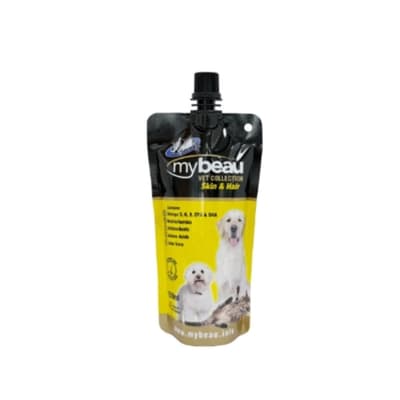
- Mybeau Skin & Hair New Zealand Nutritional Jelly Series Skin & Coat Formula 150ml — HK$192
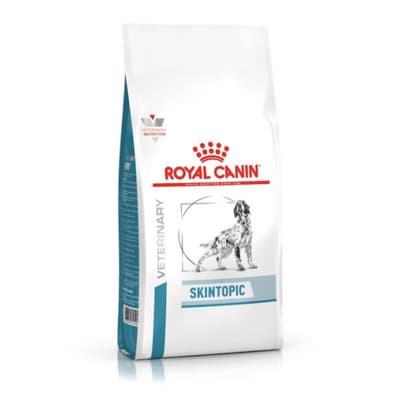
- Royal Canin Veterinary Diet Royal Canin Dog Food SKINTOPIC Adult Atopic Dermatitis 2kg (3111400) — HK$349 (available for pre-order)
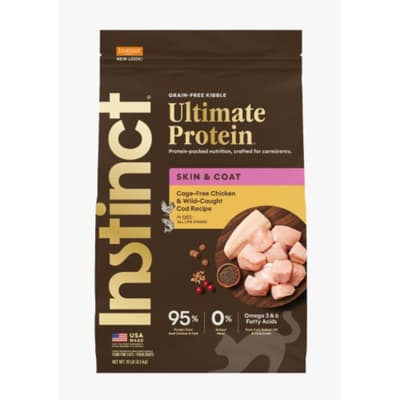
- Instinct Cat Food Raw Instinct Grain-Free Ultimate Protein Series Skin & Coat Chicken + Cod Recipe 10lb (658863) — HK$799
Prices and stock are subject to the online store's current listed price. Prescription diets are in the veterinary prescription category and should not be fed long-term on your own; consult your veterinarian before use. Nutritional supplements should also be discussed with your veterinarian first if your pet is on medication or has a chronic disease.
5 most common mistakes and red lines for seeking medical help
Mistake 1: Using iodine tincture on open wounds. Alcohol stings immediately; when an animal feels pain, it will lick and bite, causing repeated injury to the wound, and alcohol irritates new tissue, slowing healing. Mistake 2: Using povidone-iodine stock solution on a large area. Using a solution labelled 10% directly has a higher concentration than common clinical use; a large area increases total skin absorption and ingestion, and cats are especially sensitive. Mistake 3: Guessing dilution without instructions. "Add a little water" is not the same as the correct ratio; a wrong concentration can irritate the skin, and too strong may cause burns. Mistake 4: Increasing frequency daily and long-term use. Using antiseptics too frequently disrupts normal skin flora and makes wounds harder to heal; course length should follow the veterinarian's instructions. Mistake 5: Using both together or mixing with other cleaners. Do not use multiple antiseptics at the same time, and do not mix with hydrogen peroxide, bleach, or chlorhexidine-containing products, as they may cause irritating reactions or neutralise each other.
If a pet licks or swallows an iodine preparation, immediately wipe off the residue on the skin with water, keep the packaging (show the veterinarian the ingredients and concentration), and then contact the veterinarian. Do not induce vomiting on your own, and do not "wait and see". Drooling, vomiting, noticeably poor appetite, and skin redness and swelling are all signals to seek veterinary help immediately.
If any of the following occurs, do not continue to observe or self-medicate; make an appointment with a veterinarian directly:
- Bleeding cannot be stopped after pressing for 5 to 10 minutes, or blood soaks through multiple layers of gauze.
- The wound area expands by more than 1 cm within 24 hours, or redness and swelling spread outward from the wound edge.
- After the 3rd day, it is still oozing, has yellow-green pus or a foul odour, and feels noticeably hot.
- The animal's body temperature exceeds 39.4°C, refuses food for more than 24 hours, is lethargic, or hides in a corner.
- Foreign objects or subcutaneous tissue are visible in the wound, or tissue turns black or grey, and the animal cries in pain continuously or refuses to walk.
Animals are naturally good at hiding pain; often by the time the owner sees "not eating", the infection has been ongoing for several days. Rather than agonising over which antiseptic to buy, do the two most valuable things first: put on a cone to prevent licking and biting, and record changes daily.
Further reading
- Pet Skin Health Hub | Itching, hair loss, rash, fungus all in one (2026)
- Dog Skin Care Guide | Hong Kong shedding, skin diseases, flea prevention all in one
- Cat Skin Diseases Guide | Hong Kong flea allergy, mange, ringworm symptoms + prevention all in one
- What are the benefits of apple cider vinegar for pet skin? Usage and safety notes
For emergencies, contact a veterinarian immediately; this article is for reference only and cannot replace veterinary diagnosis.
Information checked as of 2026-10-12Source: PetChill editorial team
 Royal Canin full guide →
 Instinct full guide →