Quick answers
- The main active ingredient in apple cider vinegar is acetic acid; common products in Hong Kong are labelled 4% to 6%, with a pH of about 2 to 3, which is much more acidic than dog and cat skin (about pH 6 to 7.5).
- There is currently not enough clinical evidence to support apple cider vinegar treating fungal or parasite infections; there is also not a single clinical trial on dog or cat skin proving it works, so it cannot replace prescription medication from a veterinarian.
- Laboratory (in vitro) studies show that acetic acid has an inhibitory effect on some bacteria and yeasts, but the concentrations used in the laboratory (generally far higher than 1:3) and the contact times are very different from actual wiping on the skin, so it cannot be treated as a treatment effect.
- If you are going to use it, it must be diluted: beginners start with 1 part vinegar to 10 parts water (1:10), and for routine rinsing on intact skin use at most 1 part vinegar to 3 parts water (1:3); never use concentrated vinegar or the undiluted liquid directly.
- Cats are generally not recommended to use it; the ear canal, around the eyes, the mouth, the private parts, and open wounds — these 4 types of location must never be wiped with vinegar.
- Before use, do a 24-hour small-area test; if redness, swelling, hair loss, or constant scratching appears within 48 hours after use, stop immediately and see a veterinarian.
- Symptoms such as itching, hair loss, rash, and dandruff should first be diagnosed by a veterinarian; wiping with vinegar can at most be supportive care for 1 to 2 weeks with the veterinarian's agreement.
"What benefits can apple cider vinegar bring to a pet's skin health?" The most honest answer is: the benefits are limited, and there is no clinical evidence to support treating fungal and parasite infections. Only two things genuinely hold up. First, the antibacterial and anti-yeast activity of acetic acid is seen at the laboratory petri dish level and has not been verified on living skin. Second, the physical action of rinsing with diluted vinegar water can carry away surface dirt, dandruff, and some allergens — an effect that can be achieved just as well with water plus a mild pet shampoo.
Many online claims that "vinegar can kill bacteria, kill fleas, and treat fungal infections" mostly originate from human folk remedies or from laboratory data being over-interpreted. Pet skin structure differs from human skin, and the pH also differs, so applying it directly carries no small risk. This article will break down the evidence for 6 common claims one by one, list safe dilution ratios and a 5-step application process, explain clearly the 8 situations where it must never be used, and the 5 most common mistakes. The goal is not to tell you not to use it, but to let you know when you should not use it and which symptoms mean you should stop immediately.
Apple cider vinegar's composition, pH, and common uses
Apple cider vinegar is made by fermenting apples, and the main active ingredient is acetic acid. Most products sold in Hong Kong are labelled 4% to 6%, and some products marketed as "concentrated" or "raw vinegar" have higher concentrations. Besides acetic acid, there are trace amounts of malic acid, citric acid, and minerals, but the amounts are extremely low and not enough to support any therapeutic claim.
The pH is the point that needs the most attention. Apple cider vinegar is about pH 2 to 3, which is strongly acidic; the acidic environment on the surface of dog and cat skin is generally closer to neutral, about pH 6 to 7.5, which is different from human skin (about pH 5). The skin surface has a barrier made up of sebum and keratinocytes; long-term application of a strong acid may wash away sebum and disrupt barrier function, with the result that the skin becomes drier, itchier, and more susceptible to invasion by bacteria and yeasts. This is also the main reason the veterinary profession generally does not recommend using vinegar on the skin on your own.
The most common folk uses are as follows, from lowest to highest risk:
- Wiping the body to remove odour — wiping the body with diluted vinegar water between baths, claimed to remove dog odour.
- Rinsing the paws — wiping the paws and between the toes with vinegar water after the dog comes back from a walk.
- Wiping the belly, armpits, and hocks — targeting areas that tend to stay damp.
- Foot soaking — soaking the paws in diluted vinegar water, claimed to deal with problems between the toes.
- Adding to drinking water — claimed to improve skin and coat "from the inside out"; this use carries the highest risk.
- Wiping the ears or ear drops — the highest risk, may damage the ear canal and eardrum.
This article explicitly does not recommend the 5th and 6th uses. For drinking, acetic acid irritates the stomach and intestines and erodes tooth enamel, cats are especially sensitive to acid, and there is no clinical evidence to support a benefit for the skin; for the ear canal, the eardrum and ear canal skin are very fragile, and applying any liquid that is not prescribed by a veterinarian on your own may turn a problem from otitis externa into a middle ear problem.
6 claims about apple cider vinegar for pet skin: how much evidence is there?
There is a clear gap between folk claims and the available evidence. The following compares them one by one, to help you judge which are acceptable supportive care and which are folk remedies that should be abandoned outright.
| Folk claim | Available evidence | Editorial conclusion |
|---|---|---|
| Can fight bacteria and fungal infections | Laboratory (in vitro) studies show acetic acid has an inhibitory effect on some bacteria and yeasts; but there are no clinical trials on dog or cat skin, and the concentrations and contact times are very different from actual use | Cannot replace prescription antifungal medication or antibiotics; skin infections must be diagnosed by a veterinarian |
| Can kill fleas and mites | No clinical evidence supports efficacy against fleas and mites on pets; and diluted vinegar water has a short contact time and simply cannot deal with eggs hidden in hair follicles and the environment | Cannot replace proper flea and parasite products, and cannot interrupt a treatment course |
| Can stop itching and relieve allergies | No controlled studies support this; skin that is already damaged or inflamed, when exposed to a liquid of pH 2 to 3, may instead worsen stinging and redness | Itching requires finding the cause (allergy, parasites, infection, joint pain), not wiping with vinegar |
| Can balance the skin's pH | Dog and cat skin is itself closer to neutral (about pH 6 to 7.5); wiping with a strong acid lowers the pH rather than "balancing" it | Not recommended as routine care; the risk of skin barrier damage outweighs the benefits |
| Can improve coat colour and remove body odour | No research supports a change in coat colour; the deodorising effect mainly comes from the rinsing action and drying, not from the vinegar itself | Water plus a mild pet shampoo is sufficient; thorough drying after washing is more important |
| Adding to drinking water can improve the skin | No clinical evidence; excessive amounts can cause gastrointestinal upset and vomiting, and long-term drinking may erode tooth enamel, with cats especially sensitive | Not recommended to add to drinking water; any oral supplement should be discussed with a veterinarian first |
A pattern can be seen from the table: all the "effective" evidence stays at the laboratory petri dish level, while the data at the actual-use level are mostly reports of irritation and risk. So the current mainstream position in the veterinary profession is — apple cider vinegar is not a treatment tool, at most it can be a cleaning aid with the veterinarian's agreement, and only when the skin is intact.

When can it be used? 8 situations where it must never be used
There are three prerequisites for "can be used", all indispensable: the skin is intact without damage, the veterinarian has already ruled out pathological causes, and the vinegar water has been correctly diluted. If any one is not met, it should not be applied. The following comparison table can serve as a checklist before use.
| Situation | Can it be used? | Reason |
|---|---|---|
| Skin intact, rinsing with the veterinarian's agreement | Yes (must be diluted) | It is only a cleaning aid and must not be treated as treatment |
| Purely wanting to reduce body odour, no skin abnormality | Yes (start at 1:10) | Rinsing and drying are effective in themselves; the lower the concentration, the safer |
| Already scratched raw, has wounds, oozing, or scabs | No | Acetic acid irritates wounds, delays healing, and increases the risk of infection |
| Suspected fungal, bacterial, or parasite infection | No | It delays diagnosis and treatment, and the infection can spread and be transmitted |
| Ear canal, around the eyes, mouth, private parts | No | Mucous membranes are fragile and can cause severe pain and burns; in the ear canal it may damage the eardrum |
| Cats | Generally not recommended | Grooming will lead to ingestion, and the risks of skin irritation and accidental ingestion are higher than in dogs |
| Puppies, kittens, senior dogs, sick or pregnant pets | Not recommended | The skin barrier is weaker and tolerance is poorer; folk remedies should not be tried on your own |
| Currently using veterinarian-prescribed topical medication (ointment, spot-on, wash) | No | May alter drug efficacy, wash away the medication, or cause chemical reactions; ask the veterinarian |
One point needs to be made clear: many owners wipe with vinegar because they see the pet itching or losing hair but have not figured out the cause. The cause of skin problems can be food or environmental allergies, fleas or mites, fungal or bacterial infections, endocrine diseases, or even excessive licking caused by joint pain. The management of these conditions is completely different. Wiping with vinegar not only does not help but also masks the skin's original state, making it harder for the veterinarian to judge during examination. To learn about the investigation directions for common skin problems, see Dog Skin Care Guide and Cat Skin Diseases Guide.
Hong Kong's climate is also a variable. The average humidity is high all year round, fungal and bacterial infections are themselves very common, and when the skin is damp for long periods the barrier is already under pressure; applying a strong acid at this time will only make things worse. If your pet belongs to a skin-sensitive breed, see Humid Weather × Skin-Sensitive Breeds Care to learn about environmental control practices.

Safe dilution ratios and the 5-step application process
If your veterinarian agrees to use diluted vinegar water as a cleaning aid, you must follow the concentration. The lower the dilution ratio, the safer; too high a concentration is the most common cause of problems. The ratios recommended in this article are all mixed with water (room-temperature drinking water).
| Use | Dilution ratio (vinegar:water) | Notes |
|---|---|---|
| First trial, sensitive skin | 1:10 | Do a 24-hour small-area test first, then consider expanding the area |
| Routine body wiping, rinsing paws | 1:3 | Leave for 1 to 2 minutes, then rinse off with water and dry thoroughly |
| Cleaning the environment or items (not on the pet) | 1:1 | Wipe and then rinse once with water; wait until dry before letting the pet contact |
| Directly applying concentrated vinegar or undiluted liquid | Must not be used | Can cause stinging, redness, and even chemical burns; absolutely must not be used |
| Mixing into veterinarian-prescribed ointment, spot-on, or wash | Must not be used | May alter drug efficacy or cause chemical reactions; must ask the veterinarian first |
5-step application process:
- Get a diagnosis first. If the skin has itching, hair loss, rash, or dandruff, the first step is to see a veterinarian, not to buy vinegar. Only after the veterinarian has ruled out infection or confirmed that supportive care is acceptable should use be considered.
- Do a 24-hour test. Choose an intact area of skin (for example, a small patch on the back), wipe a small amount of the 1:10 dilution, and observe for 24 hours. If redness, swelling, pain, or constant licking and biting appears, stop using it.
- Dilute and store correctly. Mix with water and put it in a glass or PET plastic container; acetic acid reacts with metal, so do not use metal bowls or tools with a metal sprayer insert. Keep the diluted liquid in the refrigerator and use it within 24 to 48 hours; do not mix a large bottle at once.
- Rinse clean after wiping or spraying. Leave it on for no more than 1 to 2 minutes, then rinse off with room-temperature water, dry with a towel, and then dry with a hair dryer on low heat. Air-drying without blow-drying actually favours fungal growth.
- Observe and record. In the next 48 hours, watch for new rash, hair loss, odour, or increased scratching and biting, and record the frequency. The recommended frequency is no more than once a week, and continuous use should not exceed 1 to 2 weeks; if there is no improvement, stop and see a veterinarian.
Three safety rules: never use concentrated vinegar or the undiluted liquid, never mix with cleaning agents such as bleach or hydrogen peroxide (may produce irritating gases), and never use on damaged skin or mucous membrane areas.
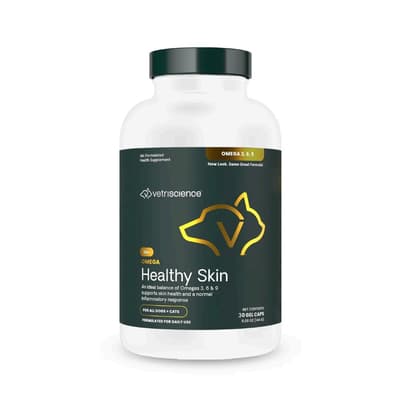
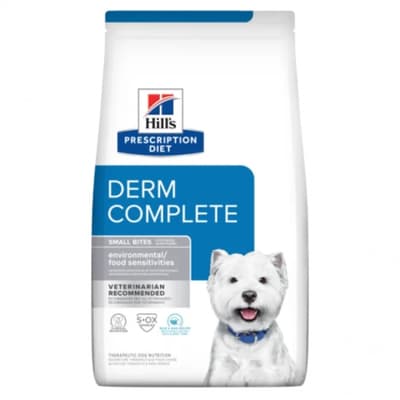
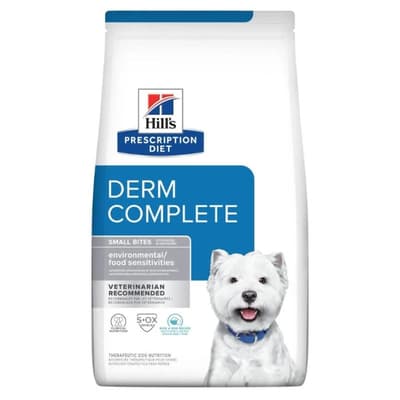
The foundation of skin care is still diet and environment. Make sure your pet eats complete food that meets standards or a veterinarian-specified prescription diet, maintains essential fatty acid intake, and at the same time do a good job of environmental cleaning and flea control. Care products you can consider in the store:
- VetriScience Skin Health Fish Oil 3,6,9 Capsules for Cats and Dogs 30 capsules (09IT367.030) — HK$118
- Hills Prescription Diet Dog Food Derm Complete Skin and Food Sensitivities Formula Small Bites 1.5kg (605802) — HK$304 (available for pre-order)
- Hills Prescription Diet Dog Food Derm Complete Skin and Food Sensitivities Formula Small Bites 6.5lbs (605804) — HK$564 (available for pre-order)
Prices and stock are subject to the live prices on the online store. Prescription diets are in the veterinary prescription category and should not be fed long-term on your own; please consult a veterinarian before use. For supplements, products such as fish oil should also be discussed with a veterinarian first, especially if the pet is taking medication or has a chronic illness.
The 5 most common mistakes and risks
Mistake one: applying the undiluted liquid directly to the skin. This is the most dangerous practice. Undiluted apple cider vinegar has a pH of about 2 to 3; applied to the skin it stings immediately, the pet licks and bites, and redness and peeling may follow, with chemical burns in severe cases. On areas already scratched raw, the pain and burn risk are even higher. Mistake two: treating it as medicine and delaying seeing a veterinarian. Fungal and mite infections do not heal on their own and are highly contagious. "Trying it for two days" with vinegar often delays until the infection has spread after 1 to 2 weeks, making the treatment course longer instead. For any skin problem, getting a diagnosis first is the most basic step. Mistake three: pouring it into the ear canal or wiping the ears. Acetic acid irritates the ear canal skin, and if the eardrum is perforated, liquid entering the middle ear can cause more serious problems. Ear canal cleaning should use veterinarian-prescribed or specified ear cleaning solutions, not vinegar from the kitchen. Mistake four: adding it to drinking water for long-term drinking. Acetic acid irritates the stomach and can cause vomiting and reduced appetite; long-term contact may also erode tooth enamel. Cats are more sensitive to sour tastes and gastrointestinal irritation, and forcibly adding it to water sometimes makes cats drink less, which instead increases urinary system risks. Skin and coat health depends on a balanced diet, not on drinking vinegar. Mistake five: washing too frequently or increasing the concentration more and more. Some owners, seeing no immediate effect, increase the frequency or raise the concentration, and as a result wash away sebum and make the skin drier and itchier, creating a vicious cycle. The correct approach is to maintain a low concentration and low frequency and record the effects; if there is no improvement after 1 to 2 weeks, that is the signal to stop and seek medical help. Besides the five points above, also watch for cross-reactions: if the pet is using veterinarian-prescribed topical medication (ointment, spot-on, wash) or oral medication, you must ask the veterinarian before wiping with vinegar, because acetic acid may alter drug absorption or increase irritation. In addition, do not stack multiple folk remedies at the same time (vinegar, essential oils, baking soda); the burden on the skin will increase substantially.

Frequently asked questions
What benefits can apple cider vinegar bring to a pet's skin health? The benefits are mainly cleaning and odour removal, not treatment. Acetic acid has an inhibitory effect on some bacteria and yeasts in laboratory conditions, but there are no clinical trials on dog or cat skin; the genuinely useful part is that rinsing with diluted vinegar water can carry away surface dirt and some allergens. There is currently not enough clinical evidence to support apple cider vinegar treating fungal or parasite infections, so it cannot replace prescription medication from a veterinarian.
How should apple cider vinegar be diluted before wiping a pet's skin? It must be diluted, and the undiluted liquid must not be used. For first use, start with 1 part apple cider vinegar to 10 parts water (1:10); if the skin is intact and the veterinarian agrees, for routine rinsing use at most 1 part vinegar to 3 parts water (1:3). After wiping or spraying, wait 1 to 2 minutes, then rinse clean with water and dry, and observe for redness, swelling, hair loss, or constant scratching within the next 48 hours.
Can apple cider vinegar treat fungal, flea, or mite infections? No. Fungal infections (such as ringworm), mite infestations, and flea infestations all need to be diagnosed by a veterinarian, then treated with prescription antifungal medication, antibiotics, or proper deworming products. There is currently not enough clinical evidence to support apple cider vinegar treating fungal or parasite infections; relying on vinegar alone may delay treatment by 1 to 2 weeks or more, allowing the infection to spread to other areas and even to other pets and family members.
Can cats have apple cider vinegar wiped on their skin? Generally not recommended. A cat's skin structure and liver metabolism differ from a dog's, and cats constantly groom themselves, so vinegar wiped on the body will eventually be ingested; the pH of acetic acid is around 2 to 3, which is quite irritating to cat skin. Skin problems in cats (such as flea allergy or ringworm) require targeted treatment, and the risks of self-applying vinegar outweigh the benefits. If you really want to try, you must ask a veterinarian first.
When should apple cider vinegar not be used, and when should a veterinarian be seen immediately? There are 5 situations where you should stop using it immediately and seek medical help: the skin has wounds, oozing, or scabs; redness and swelling spread within 24 hours; the pet scratches or licks constantly until the skin breaks; an unusual odour or heavy hair loss appears; and energy and appetite clearly worsen. In addition, vinegar must never be wiped in the ear canal, around the eyes, in the mouth, or on the private parts, and it is not recommended for puppies, kittens, senior dogs, or sick pets to use it on their own.
Further reading
- Complete Guide to Cat and Dog Skin Health | Itching, Hair Loss, Rash, and Fungal Infections at a Glance (2026)
- Complete Guide to Dog Skin Care | Hong Kong Shedding, Skin Diseases, and Flea Prevention in One Go
- Complete Guide to Cat Skin Diseases | Hong Kong Flea Allergy, Sarcoptic Mange, and Ringworm Symptoms + Prevention at a Glance
- Humid Weather × Skin-Sensitive Breeds Care | The Skin Defence Battle at 80% Humidity in Hong Kong
In an emergency, contact a veterinarian immediately; this article is for reference only and cannot replace veterinary diagnosis.
Information checked as of 2026-10-12Source: PetChill editorial team
 Fuji One full guide →