
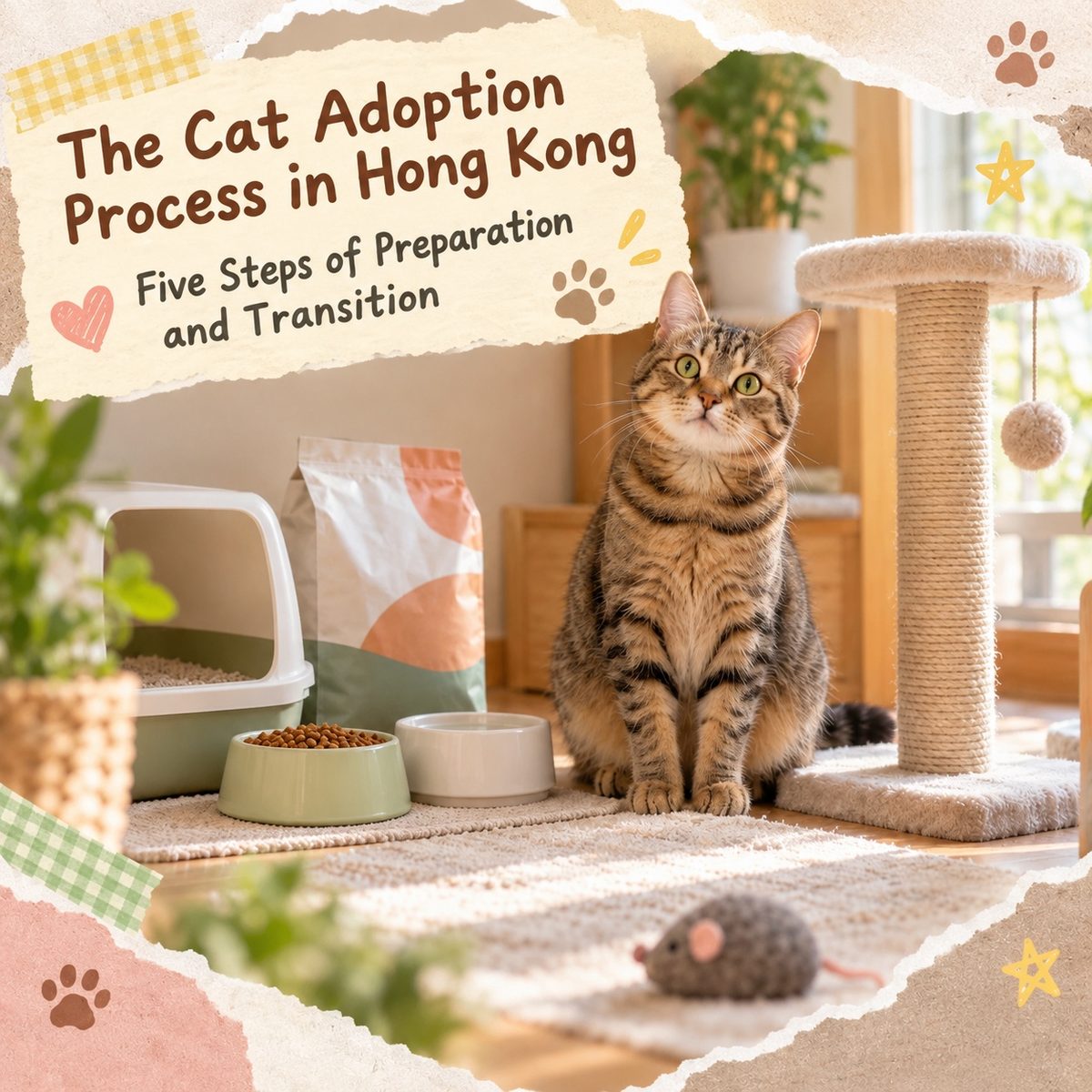
Quick answer: The safest way to adopt a cat in Hong Kong: first pick the SPCA, cat volunteers or an adoption group, follow the five steps of "see the cat → apply → home visit → sign the agreement → bring the cat home", make sure window screens are installed and litter box and food bowls are ready before picking up the cat, set up a safe room for the first two weeks so it can adjust, then arrange a vet check — and you're all set.
The key to adopting a cat in Hong Kong is: choose the right channel (SPCA, cat volunteers, adoption groups), follow the five steps of "see the cat → apply → home visit → sign the agreement → bring the cat home", and have the litter box, cat food and window screens ready before bringing the cat home. This article covers the process, things to note and a preparation checklist all in one go.
Where can you adopt a cat in Hong Kong?
There are three main adoption channels:
- SPCA (Hong Kong Society for the Prevention of Cruelty to Animals) — the largest animal protection organisation in Hong Kong, with the most cats available for adoption and the most complete process; most already include neutering, microchip and vaccinations
- Cat volunteers / adoption groups — Facebook adoption groups and individual foster families; the cats' backgrounds are clearer and you can learn about their personalities directly
- Other stray cat rescue organisations — different organisations have their own adoption schemes with different terms, so compare them one by one
Each organisation has different application requirements, home visit methods and fees. Read the terms carefully before applying, and don't apply to several at once and take up resources.
For a list of recognised adoption organisations in Hong Kong and their contact details, see Adopt Don't Shop Hong Kong: A List of Government-Recognised Animal Adoption Organisations.
The five-step cat adoption process
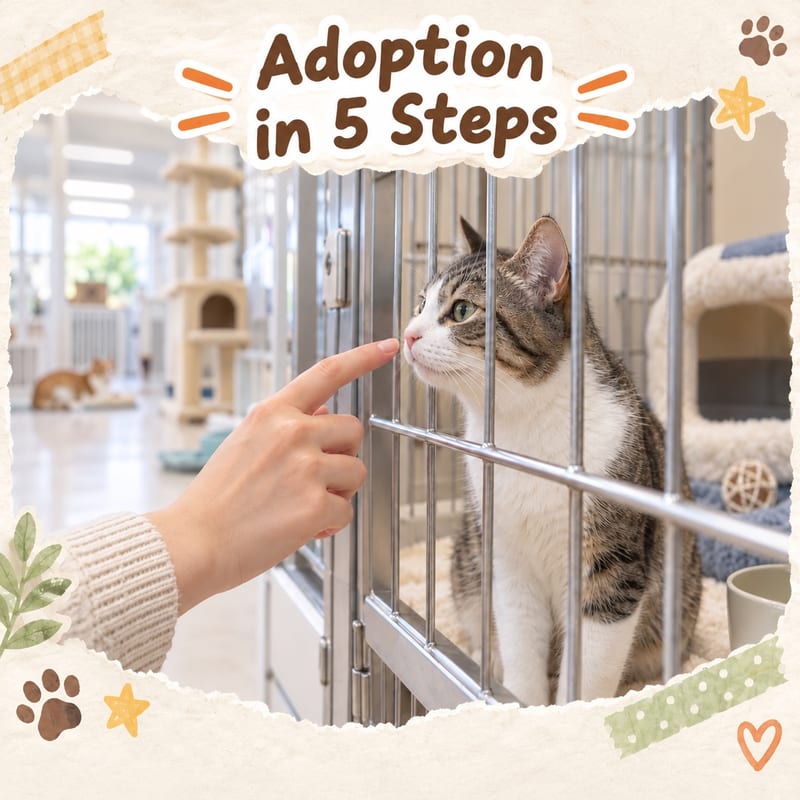
- See the cat — browse cat profiles online and arrange a time to meet in person to learn about their personality
- Apply — fill in the application form, stating your living environment, family members and pet-keeping experience
- Home visit / interview — the organisation assesses whether your home is suitable for a cat, for example whether windows are screened
- Sign the adoption agreement — confirm your responsibilities as an adopter; some organisations follow up on how the cat is adjusting
- Bring the cat home — prepare a carrier or cat bag and pick up the cat in a ventilated, shaded environment
Adopting not only helps stray cats but is also a complete process — most already include neutering, microchip and vaccinations, which is reliable and saves you a sum on medical expenses.
What should you prepare before adopting?
Basic supplies checklist:
- Litter box + cat litter — place in a quiet spot, not near food or water
- Cat food — ask the organisation what the cat is currently eating and feed the same food for the first one or two weeks before gradually switching
- Water bowl, food bowl — shallow bowls are less likely to press on the whiskers
- Cat bed / den — give the cat a fixed resting spot
- Cat scratcher — provide from day one to protect your furniture
- Carrier or cat bag — needed on the day you pick up the cat
Home preparation:
- Window screens — prevent the cat from escaping; the most important item
- Safe environment — put away fragile items, electrical cords and plants toxic to cats
- Budget — daily (food, litter) plus medical (vaccinations, check-ups, emergencies)
Learn about the cat's personality before adopting: whether it is shy, whether it gets along with other pets. Choosing a cat that fits your lifestyle is better than just looking at appearance.
Window screens: must be sorted before picking up the cat
Hong Kong has many high-rise homes, so window screens are absolutely essential — a cat escaping often ends in death or serious injury. Check openable windows, fly screens and gaps beside the fridge top; cats can squeeze through very narrow gaps. The correct order is: install the window screens first, then bring the cat home. Don't believe "it's well-behaved and won't jump".
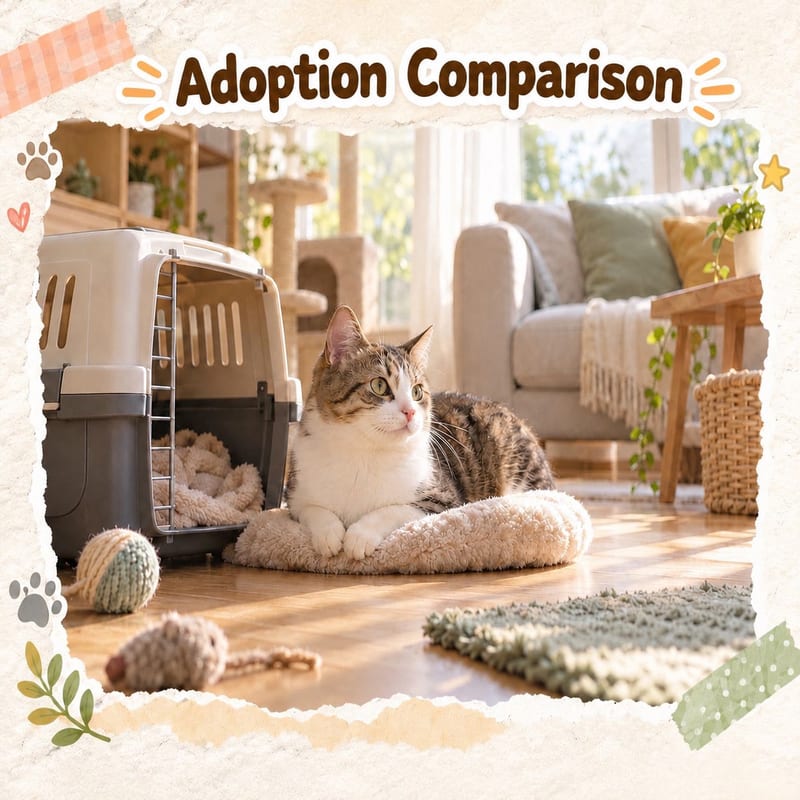
What is the difference between adopting and buying a cat?
| Adoption | Buying a cat | |
|---|---|---|
| Cost | Lower (often includes neutering/microchip/vaccinations) | Higher (buy from a breeder) |
| Cat | Mostly adults, personality known | Mostly kittens, personality not yet settled |
| Health | Mostly checked and vaccinated | You have to arrange verification yourself |
| Meaning | Helps a stray cat find a home | Supports breeding |
"Adopt don't shop" is not just a slogan: adult cats already have settled personalities, so there's no guessing; organisations have done health checks, so transparency is actually higher. If you want to start with a kitten, you can also ask adoption groups — there are often kittens or mother cats waiting for foster homes.
The first two weeks at home: how to handle the transition
- Set up a "safe room" — keep the cat in a small room for the first few days with a litter box, water, food and a cardboard box; don't let it roam the whole flat as soon as it arrives
- Don't force it — if it hides, don't pick it up by force; let it explore on its own
- Isolate from other pets — isolate and observe the new cat for one to two weeks first, then gradually swap scents
- Fixed routine — feed at set times and scoop the litter daily to help the cat build a sense of security faster
When to see a vet? If the cat completely refuses food for more than a day, has persistent diarrhoea, is lethargic, or keeps straining in the litter box but cannot urinate (urethral blockage is an emergency), contact a veterinarian immediately — don't wait for it to get better on its own during the transition.
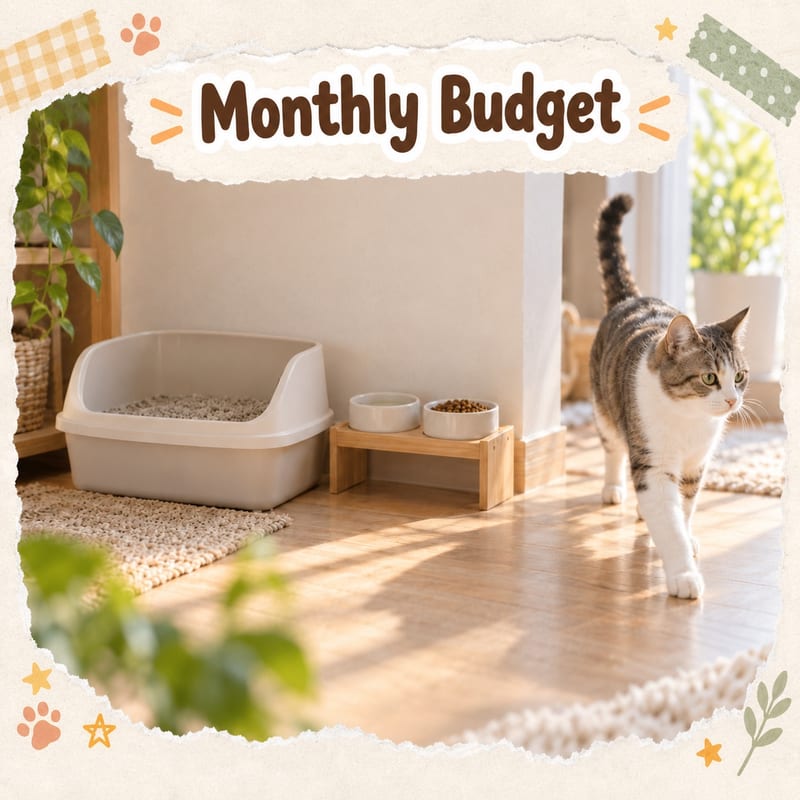
Adoption costs and medical budget
Adoption itself doesn't cost much, but you need to think through the ongoing costs in advance:
| Item | Frequency | Notes |
|---|---|---|
| Cat food + treats | Monthly | Choose food suited to age and health status |
| Cat litter | Monthly | For indoor-only cats, usage depends on the number of cats |
| Vaccine boosters | Yearly | F3 + rabies; ask your vet for the schedule |
| Parasite prevention | Monthly/quarterly | Recommended regularly even for indoor-only cats |
| Neutering | One-off | Most adoption organisations have already done it |
| Medical reserve | Always keep | For emergencies and illness; set aside a separate sum |
Don't skimp on medical check-ups to save money; cats are very good at hiding pain, and annual check-ups are how early problems are found.
Identity and legal matters after adoption
- Update microchip details — adopted cats usually already have a microchip; remember to transfer the registration to your name and make sure the contact details are correct
- Licences and documents — in Hong Kong only dogs need a licence; cats do not. But keep the microchip registration and vaccination records safe; they are useful for cross-border moves and insurance claims
- Terms of the adoption agreement — some organisations require that the cat not be transferred casually and must be returned to the organisation rather than resold; read carefully before signing
What if you can't adjust after adoption?
If it really doesn't work out (the cat is extremely fearful, has severe inappropriate urination, is aggressive, or a family member is allergic):
- Find the cause first — nine times out of ten it's an unfinished stress period or a health problem; give enough time and see a vet
- Ask the organisation for help — notify the adoption organisation; they have a foster network, so don't abandon the cat yourself
- Never rehome it privately — it breaches the agreement terms and may also put the cat in the hands of unsuitable people
What you can do starting today
- List your living environment, time and budget, and be clear about what kind of cat suits you
- Keep an eye on the latest cat profiles from the SPCA and a few adoption groups; when you see one you like, book a visit
- Install window screens and prepare the litter box and cat bag before applying
- Ask the organisation what food the cat is currently eating and for its vaccination and neutering records
- Give the cat time to adjust after bringing it home, and arrange a vet check in the first month
- Set aside an emergency medical budget — check-up expenses are most likely in the first six months with an adopted cat
To choose the right cat food and supplies for your new family member, you can first refer to PetChill's cat food reviews and new owner supplies guide.
This article is for reference only; consult a registered veterinarian for any problems.
Related product recommendations
When you start keeping a pet for the first time, you need to prepare basic equipment and complete food all at once. Here are related products available at PetChill:
- Fuji One Natural Minimal Daily 3.0 Tofu Cat Litter Lavender 6L - Original Import (Fuji One) — tofu litter is flushable and low-dust
- Fujihime no Awayuki 3.0 Natural Purifying Soy Milk Tofu Cat Litter Original 18L - Original Import (random old/new packaging) (Fujihime no Awayuki) — tofu litter is flushable and low-dust
See more: Fuji One brand guide
Product prices and latest offers are subject to the product page; this article is for reference only.
Further reading
- New pet owner →
- Domestic cat (Hong Kong cat) →
- New owner supplies checklist →
- New pet owner course →
PetChill new owner team — Hong Kong's most authoritative pet knowledge platform
Practical checklist for small Hong Kong flats: even 300 sq ft works
Hong Kong homes are generally small, but that doesn't mean you can't keep a cat. As long as you follow these practical steps, a 300 sq ft flat can still be comfortable and safe for a cat.
Space allocation
- Safe room — use the master bedroom or walk-in closet; put the litter box, water, food and a cardboard box there first, keep the door closed for the first three days so the cat can adjust, then gradually open up the living room.
- Vertical space — install a two-tier cat tree or put cushions on top of a bookcase; the cat can look down from above and save floor space.
- Storage — put fragile items, medicines and electrical cords in drawers or plastic boxes to prevent the cat eating them by mistake; choose non-toxic plants such as cat grass and Boston fern.
Window screen test
- Materials — buy stainless steel window mesh and Velcro from Taobao; DIY cost is about $150–$200 and takes an hour; if you rent, use removable Velcro so it leaves no trace when you move out.
- Check points — the top of the air-conditioner, the bathroom vent window and the kitchen exhaust fan are the easiest places to miss; remember to add fine mesh or plastic boards to seal them.
Noise and neighbours
- Nighttime zoomies — play with the cat for fifteen minutes with a laser pointer before bed, then put down food; after burning off energy it will be quieter at night.
- Scratcher placement — put it in the corner of the living room wall so the cat can scratch as soon as it stretches, reducing the chance of scratching the sofa and fewer neighbour complaints.
Shared facilities
- Litter box in the bathroom — if you only have one bathroom, choose a covered litter box plus activated carbon deodorising pads and scoop the litter twice a day so the smell doesn't reach the living room.
- Open kitchen — use a baby gate to separate the cat when cooking to prevent it jumping on the stove; the gate can be folded away and doesn't take up space.
Quick budget (monthly)
| Item | Small-flat tip | Approx. |
|---|---|---|
| Cat food | Choose small packs to keep it fresh | $200 |
| Cat litter | Tofu litter has less dust | $120 |
| Window screen consumables | Replace Velcro every six months | $30 |
| Miscellaneous | Toys, deodoriser | $100 |
| Total | $450 |
Remember, small space is not a problem; with good planning it can actually make the cat feel more secure. Install window screens first, then set up a safe room, and finally play with the cat at fixed times every day — even a small flat can raise a happy, chubby cat.
📌 Key summary
- ✅ Five-step adoption process: see the cat, apply, home visit, sign the agreement, pick up the cat
- ✅ Must-haves before picking up the cat: window screens, litter box, cat bag, and ask the organisation about the food
- ❌ Picking up the cat before installing window screens can turn into a tragedy
- ❌ Forcing to hold the new cat during the transition causes more stress
- ✅ Set aside an emergency medical budget; unexpected expenses are most likely within the first six months
 Fuji One full guide →


 Fuji Cat full guide →


 K9 Natural full guide →



