
Quick answer: The core of cat eye care is daily observation, cleaning with a warm damp cloth, and wiping from the inner corner outwards. Flat-faced breeds (Persians, Exotic Shorthairs) have a special tear duct structure and need their tear stains cleaned daily. If you see yellow-green discharge, persistent redness and swelling, or a visible third eyelid, see a veterinarian promptly. Conjunctivitis, keratitis and feline viral rhinotracheitis are the three most common eye diseases; vaccinating on schedule and keeping the environment clean are the most effective preventive measures.
The basic structure and function of a cat's eyes
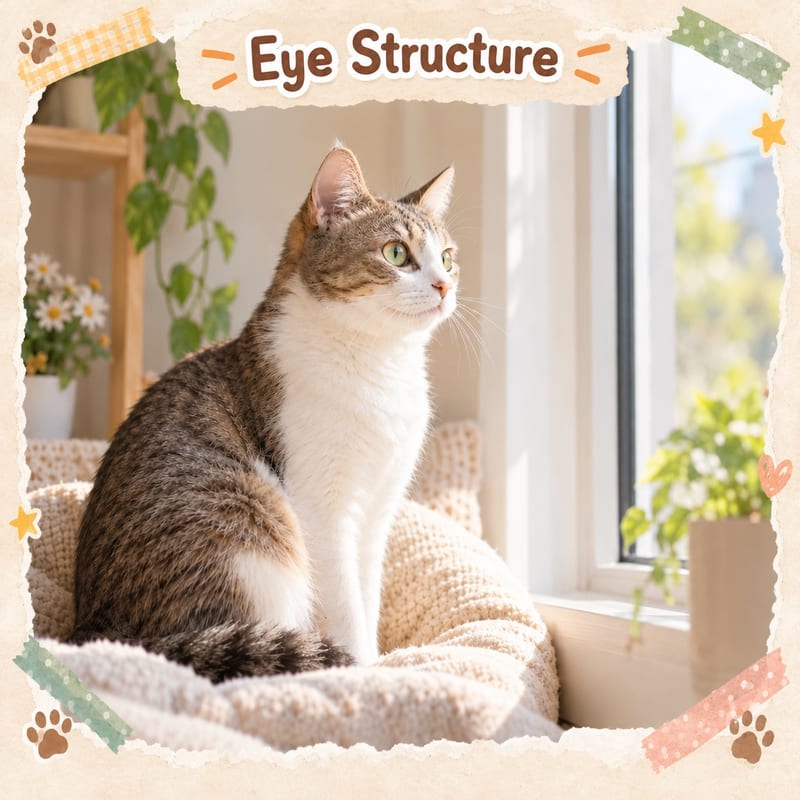
A cat's eye structure differs from a human's in several obvious ways. First, cats have a third eyelid (also called the nictitating membrane) at the inner corner of the eye. It is normally hidden inside the inner corner, and it shows when they are unwell or their eyes are irritated. If your cat's white third eyelid stays visible, that is an important signal to take them to a veterinarian.
Second, a cat's pupils can contract or dilate dramatically with changes in light, which gives them excellent vision in dim conditions. But precisely because a cat's eyes are so finely built, problems can have serious consequences, so daily care must never be neglected.
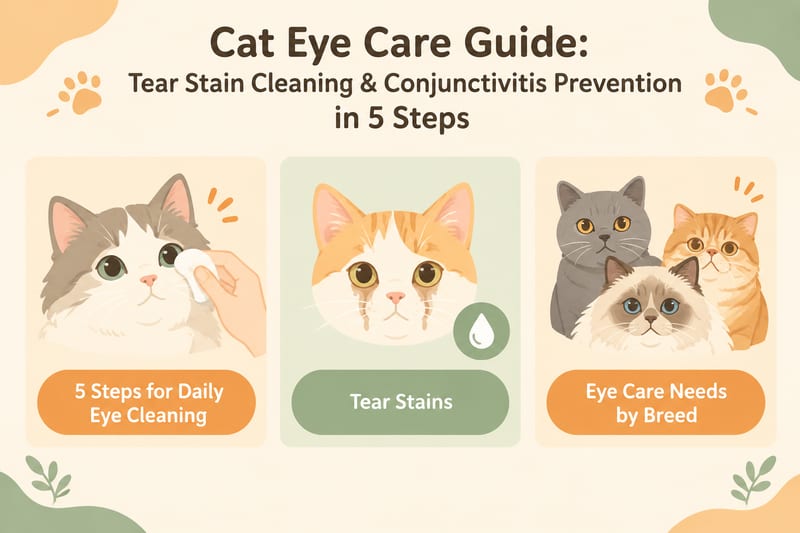
The 5 steps of daily eye cleaning
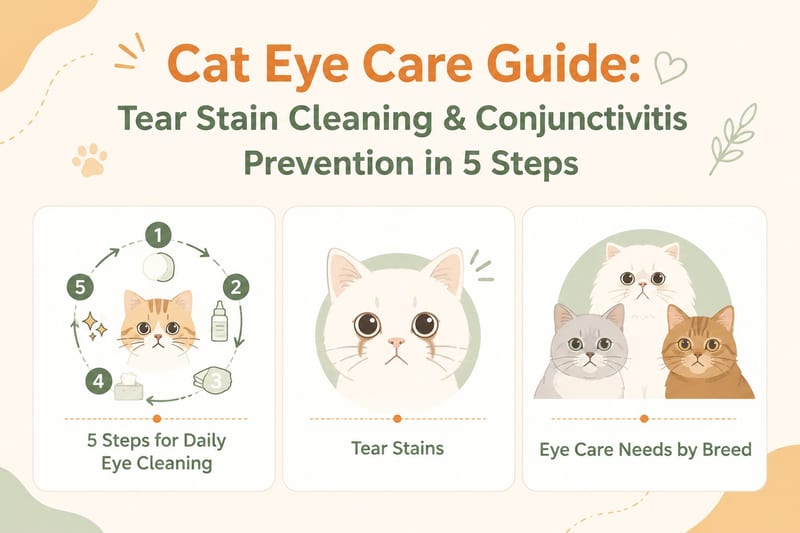
Cleaning your cat's eyes regularly is the most basic part of care. Here are the correct steps:
Step 1: Prepare your tools
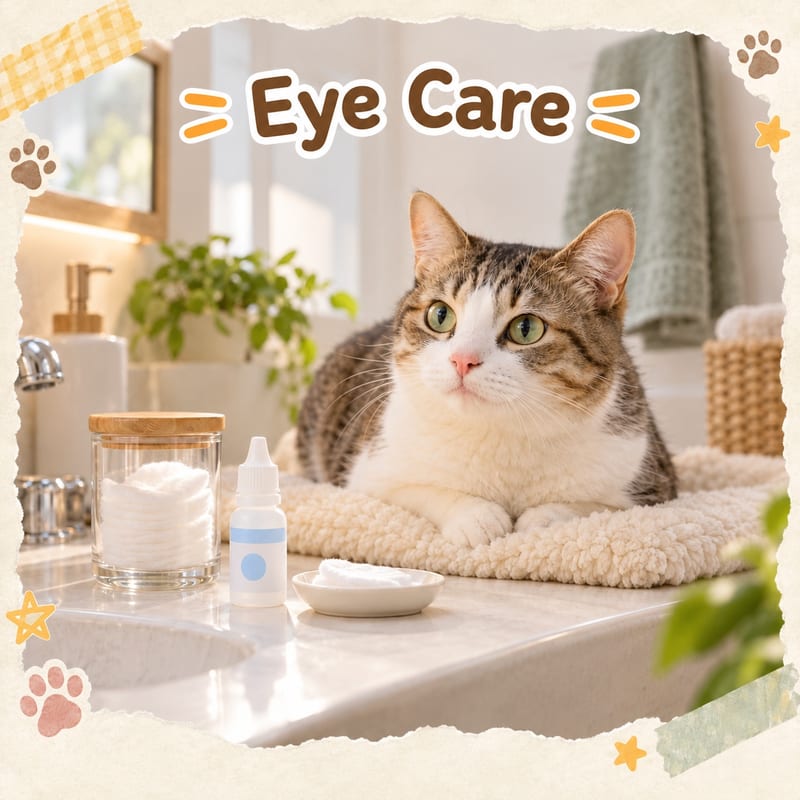
Prepare a clean cotton cloth or gauze (avoid gauze with too coarse a texture, which can scratch the eye) and a bowl of warm water. Wet wipes are not recommended, as their chemical ingredients may irritate a cat's eyes. Pet-specific eye cleaning solutions are available; choose an alcohol-free, fragrance-free formula for safety.
Step 2: Hold your cat still
Hold your cat gently from behind the head to prevent sudden struggling. If your cat resists, you can wrap the body in a towel and leave only the head out. Building a cleaning habit takes patience; at first, use treats to help your cat relax.
Step 3: Wipe gently
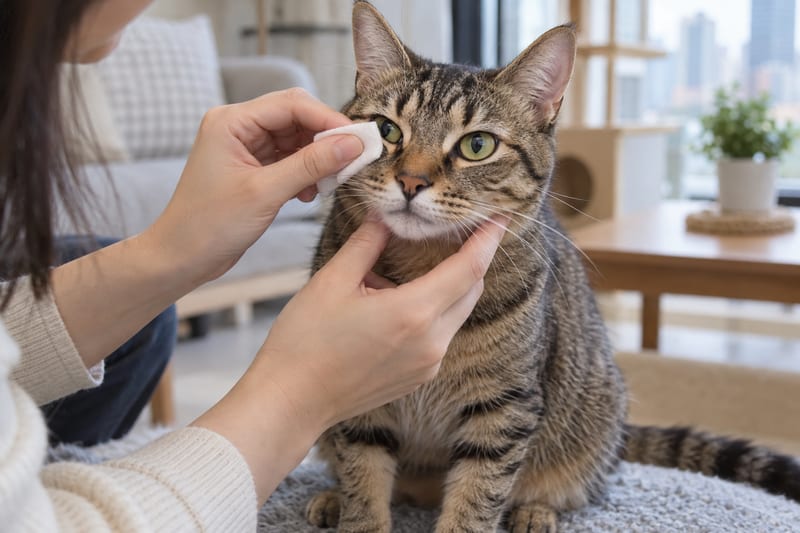
Soak the cloth in warm water and wring it out slightly, then wipe gently from the inner corner of the eye towards the outer corner. This direction matters: it avoids pushing dirt into the tear duct. Use a separate cloth for each eye to avoid cross-infection.
Step 4: Deal with crusted discharge
If there is hardened eye discharge, do not pull it off! Hold the damp cloth gently over it for a few seconds to soften it, then wipe it away slowly. Pulling can tear the skin around the eye and even cause inflammation.
Step 5: Observe and record
After cleaning, look closely at your cat's eyes: is there redness? Is the discharge clear, white or yellow-green? Is the cat rubbing its eyes often? This information is very helpful when you see a veterinarian later.
Suggested frequency: Healthy cats need cleaning only 1-2 times a week; flat-faced breeds (such as Persians) may need daily cleaning.
Comparison of common cat eye diseases
| Eye disease | Main symptoms | Common causes | Severity | Management |
|---|---|---|---|---|
| Conjunctivitis | Red, congested eyelids, watery eyes, increased discharge | Bacterial/viral infection, allergies, foreign objects | Moderate | Vet-prescribed antibiotic eye drops, keep clean |
| Keratitis | Light sensitivity, cloudy eye, heavy tearing | Injury, infection, dry eye | Relatively high | See a veterinarian immediately; delay can damage vision |
| Feline viral rhinotracheitis | Sneezing, runny nose, increased discharge | Feline herpesvirus infection | Moderate | Supportive care, prevent with on-time vaccination |
| Blocked tear duct | Severe tear stains, wet eye corners | Congenital structure in flat-faced breeds, inflammation | Low to moderate | Daily cleaning; vet can flush the duct in severe cases |
| Glaucoma | Swollen eyeball, dilated pupil, pain | Raised intraocular pressure | High | Emergency veterinary care; can cause blindness |
Tear stains: why do they appear and how do you deal with them?
Tear stains are the brownish-red marks below the inner corner of a cat's eye, mainly caused by the following:
Common causes
- Blocked tear duct: Flat-faced breeds have naturally short or curved tear ducts, so tears cannot drain properly and overflow the eye
- Diet: Artificial colours and preservatives in food can worsen tear stains
- Environmental irritation: Dust, smoke and strong wind all irritate a cat's eyes and make them water
- Eye infection: Conditions such as conjunctivitis increase discharge
How to improve them
-
Clean daily: Wipe the stained area gently with a warm damp cloth and keep it dry
-
Adjust the diet: Choose natural cat food with no additives to reduce artificial ingredients
-
Keep the environment clean: Clean the cat litter regularly and reduce dust and irritants in the air
-
Ask a veterinarian: If the staining stays severe or smells, see a veterinarian promptly for a check-up
Eye care needs by breed
Because of differences in facial structure, eye care needs vary a lot between breeds:
- Flat-faced breeds (Persian, Exotic Shorthair, Himalayan): shorter tear ducts, need daily tear stain cleaning, higher risk of eye infection
- Normal-faced breeds (British Shorthair, American Shorthair): cleaning 1-2 times a week is enough; watch for abnormal discharge
- Long-haired breeds (Maine Coon, Ragdoll): hair around the eyes easily irritates them, so trim overlong hair around the eyes regularly
- White cats: Some white cats may have congenital hearing or vision problems and need closer monitoring of eye health
Daily observation checklist
Spend 1 minute a day checking the following to catch eye problems early:
- Are the eyes clear and bright, with no cloudiness or discolouration?
- Is the amount of discharge normal (a small amount of clear or white is normal)?
- Is there frequent pawing at the eyes or blinking?
- Are the two eyes symmetrical, with no difference in size?
- Is there redness, swelling, hair loss or crusting around the eyes?
- Is the third eyelid visible?
Preventing common cat eye diseases
Conjunctivitis
Conjunctivitis is one of the most common eye diseases in cats. Symptoms include redness and congestion on the inside of the eyelids, watery eyes and increased discharge, and cats rub their eyes constantly because of the itch. Causes can be bacterial infection (such as chlamydia), viral infection (such as feline herpesvirus), allergies or foreign objects in the eye. Prevention includes cleaning the eyes regularly, avoiding contact with infected cats, and vaccinating on schedule.
Feline viral rhinotracheitis
This is what people call "cat flu", and it causes sneezing, a runny nose and increased eye discharge at the same time. It spreads through sneezes and saliva, so multi-cat households need to be especially careful about isolation and prevention. On-time 3-in-1 or 5-in-1 vaccination is the most effective prevention.
Keratitis
Symptoms of keratitis include light sensitivity, a cloudy eye and heavy tearing. If your cat still squints in bright light, be highly alert. Keratitis needs prompt treatment; delay can damage vision.
Choosing eye supplements: ingredients, timing and vet advice
"Which eye supplement does a veterinarian recommend?" is a very common question, but the answer is not a brand name. A veterinarian's approach is to diagnose first (for example dry eye, tear staining, corneal problems, cataracts or retinal degeneration), then decide whether a supplement is needed, which ingredient, and for how long. Supplements are supportive in most cases and cannot replace prescription medicine or surgery. The table below summarises the direction of common ingredients and points to note, so you can follow it when you talk to your veterinarian at a follow-up visit.
| Common ingredient | Direction of effect | Commonly found in | Points to note |
|---|---|---|---|
| Omega-3 (EPA/DHA) | Anti-inflammatory, supports tear production | Fish oil, algae oil formulas | High doses may affect clotting; tell your veterinarian before surgery |
| Taurine | Essential for cats; deficiency can cause retinal degeneration | Cat-specific formulas | Cats must get it from food; dogs can make it themselves, so formulas are not interchangeable |
| Vitamin A | Vision and corneal health | Combination formulas | Toxic in excess; do not increase the dose yourself |
| Vitamin E | Antioxidant | Combination formulas | Follow the labelled dose when used with other antioxidants |
| Lutein, zeaxanthin | Concentrated in the macular region of the retina, antioxidant | Dedicated eye formulas | Most research is in humans; pet doses are decided by a veterinarian |
| Anthocyanins (blueberry, bilberry) | Antioxidant, supports capillaries | Natural-source formulas | Supportive only; not a treatment |
| Hyaluronic acid | Supports tear film moisture | Dry-eye related formulas | Dry eye must be diagnosed by a veterinarian; do not rely on supplements alone |
How to choose: four checkpoints. 1. The label has a full ingredient list and the dose per tablet, not just "proprietary formula"; 2. It clearly states the species it is for (cat, dog or both), because needs for ingredients such as taurine differ; 3. It has a batch number and expiry date for traceability; 4. The claims on the packaging are conservative — if it claims to "helps manage cataracts" or "definitely clear all tear stains", pause, because such claims go beyond what a supplement should say.
When to start and how long to give it. Usually after a veterinarian's diagnosis, alongside existing treatment, give it for 4 to 8 weeks and then assess whether it helps; during that time record three things: the colour and extent of tear stains, the daily amount of discharge, and the number of times the cat rubs its eyes. Only with records can you tell whether the supplement is helping or whether it was just a change in weather, season or environment.
Ask first if used with medication. If a cat or dog is also taking prescription medicine (such as steroids, antibiotics or pressure-lowering eye drops), tell your veterinarian before starting any supplement, because ingredients may interact. If redness and swelling worsen, light sensitivity, cloudiness or vision changes appear, do not increase the dose — see a veterinarian immediately.
Do not mix with human products. The doses of human lutein, vitamin A or multivitamins can be several times too high for cats and dogs; some human products also contain xylitol or other additives risky for pets. If you supplement, choose a pet formula labelled for the species, and always follow your veterinarian's instructions on how much and for how long. Daily cleaning and observation habits matter just as much; you can start with the complete guide to daily pet care.
The correct way to apply eye drops
When a veterinarian prescribes eye drops for your cat, many owners struggle with how to give them. Here are practical tips:
-
First clean the discharge around your cat's eyes with warm water
-
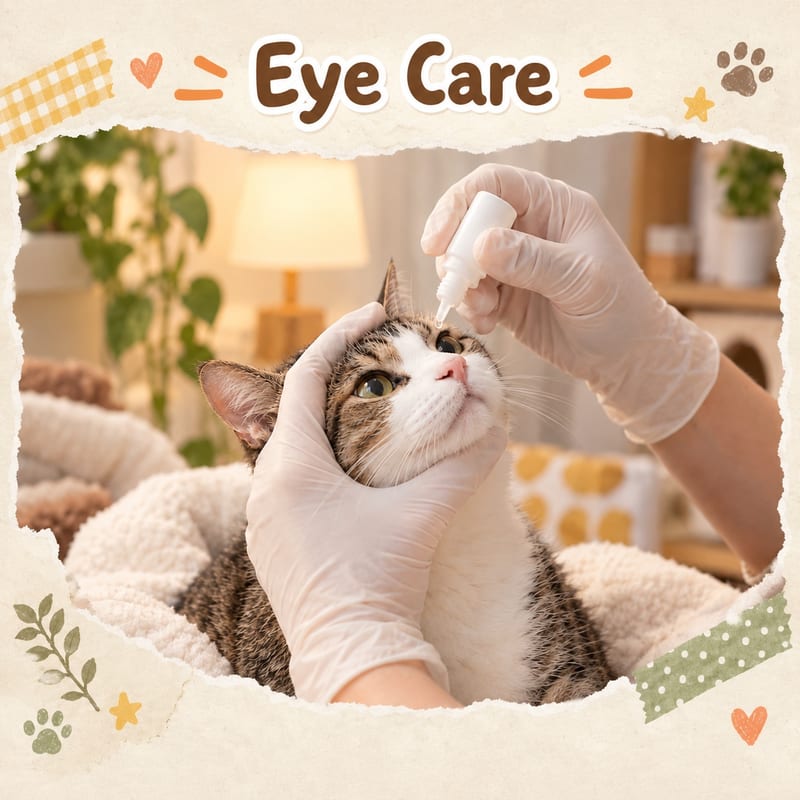
Hold the cat from behind the head and gently pull down the lower eyelid
-
Drop the medicine onto the inside of the lower eyelid (not directly onto the eyeball)
-
Gently close the cat's eyelids so the medicine spreads evenly
-
For eye ointment, after closing the eye you can gently massage around the eye to help it spread
Tip: If your cat struggles a lot, ask a family member to help hold it, or use the towel-wrap method. Remember to give a treat after the medicine to build a positive association.
🟢🟡🔴 Traffic-light triage: when an eye problem needs a veterinarian now
| What you observe | 🟢 Monitor at home + book a vet | 🟡 See a vet within 24 hours | 🔴 Emergency now |
|---|---|---|---|
| Eye discharge | Small amount of clear or light brown gunk | Yellow-green pus, large amount | Large amount of pus, blood-stained |
| Eye appearance | Slightly moist | Whites of the eye red, swollen | Eyeball clearly bulging, cornea cloudy and white |
| Eye opening | Normal | Frequently squinting, watery eyes | Cannot open at all, third eyelid protruding |
| Itching and pain | Occasionally wipes face with a paw | Frequently paws at eyes, rubs face on furniture | Severe pain, resists having head touched |
| Energy and appetite | Normal | Slightly irritable, eating less | Refuses food, lethargic, fever |
| Vision | Normal | Walks more cautiously, bumps into objects | Clearly blind, abnormal pupil size |
| Accompanying signs | None | Sneezing, runny nose | Difficulty breathing, severe nasal congestion |
| Kittens | Adult cat, mild symptoms | Kitten with eye discharge | Kitten's eyelids stuck together, cannot open |
Frequently asked questions
Q: Is eye gunk in the corner of my cat's eye normal? A: A small amount of light brown eye gunk is mostly normal, especially after waking up. But if the colour turns yellow-green, the amount clearly increases, or the whites of the eye turn red, there may be an infection and a veterinarian should check it. Flat-faced breeds (such as Persians) have naturally problematic tear duct structure and are more prone to watery eyes and tear stains, but still need regular checks.
Q: Can I give my cat human eye drops? A: Absolutely not. Human eye drops contain preservatives, steroids or vasoconstrictors that can irritate or even damage a cat's eyes. If a cat has a corneal ulcer (a surface injury), steroid-containing drops can make the ulcer worsen rapidly and can lead to blindness. Cat eye drops must be prescribed by a veterinarian after diagnosis.
Q: How do I put eye drops in my cat's eyes? A: First wipe away eye discharge gently with clean gauze or cotton soaked in saline (from the inner corner outwards). Support the cat's chin with one hand so the head tilts slightly up; with the other hand, drop the medicine into the conjunctival sac above the eyeball (not directly onto the cornea), then let go gently so the cat blinks. Never let the nozzle touch the eyeball.
Q: Will my cat's eye problem clear up on its own? A: Some mild cases (such as mild conjunctivitis) can settle by themselves, but eye problems in cats can worsen very quickly. Corneal ulcers, herpesvirus infection and foreign-body injuries can cause permanent scarring or even blindness if treatment is delayed. So if you see redness, squinting or a change in discharge colour, get it checked promptly.
Q: How can I tell if an eye problem is linked to a respiratory infection? A: Feline herpesvirus and calicivirus (the causes of cat flu) often cause conjunctivitis and respiratory signs together, so increased eye discharge is often accompanied by sneezing and a runny nose. If both appear together, it is related to upper respiratory infection and both should be checked and treated together.
Q: How do I prevent eye problems day to day? A: Check the eyes regularly (once a week, looking for redness, swelling or changes in discharge colour), keep the home clean to reduce dust irritation, vaccinate as advised by your veterinarian (this can reduce the severity of herpesvirus-related eye disease), keep cats away from sharp plants or irritating chemicals, and trim facial hair regularly (to stop it poking the eyes).
Q: Which PetChill products help with eye care? A: PetChill HK offers pet-specific saline, eye cleaning cotton pads, sterile gauze, pet-safe cleaning products and nutritional supplements, with self-pickup available at the Fo Tan, Yuen Long and Fanling stores.
Q: Is a lot of eye discharge normal in cats? A: A small amount of clear or pale white discharge is normal and can be wiped away daily with a warm damp cloth. If the discharge suddenly increases, turns yellow-green, or comes with redness and watery eyes, it may be a sign of infection, so see a veterinarian promptly.
Q: How do I deal with tear stains on a flat-faced cat? A: Flat-faced breeds such as Persians and Exotic Shorthairs have naturally short tear ducts, so tear stains are very common. Wipe gently from the inner corner outwards with a warm damp cloth every day and keep the area dry. Avoid cat food containing artificial colours. If the staining stays severe or smells, ask a veterinarian to check whether the tear duct is blocked.
Q: Can I use human eye drops on my cat? A: Absolutely not. The ingredients, pH and concentration of human eye drops may not suit cats, and some ingredients (such as preservatives) can harm a cat's eyes. Any eye drops must be prescribed by a veterinarian and used as directed.
Q: When should I take my cat to the veterinarian? A: Seek veterinary care promptly if the discharge turns yellow-green, the eye is clearly red and swollen, the third eyelid stays visible, the cat keeps rubbing or squinting, the eye looks cloudy or has white patches, or one or both eyes swell suddenly. Early treatment prevents the condition from worsening.
Q: What does it mean if my cat's third eyelid is showing? A: The third eyelid (nictitating membrane) may occasionally peek out when a cat is sleepy or relaxed, but if it stays visible or shows on both sides, it usually means the cat is unwell — possibly dehydration, pain, eye infection or another illness. Take the cat to a veterinarian for a check-up as soon as possible.
Sources
- International Cat Care — Runny eyes — common causes and management principles for watery eyes and eye discharge in cats
- International Cat Care — Chlamydia infection in cats — symptoms and treatment of conjunctivitis caused by feline chlamydia infection
- International Cat Care — Blindness in cats — causes of vision loss in cats and situations needing immediate care
Disclaimer
This article is general pet health information and cannot replace veterinary diagnosis or treatment. The causes of cat eye disease (infection, ulcers, foreign bodies, glaucoma, retinal problems and so on) must be confirmed by a veterinarian through an eye examination. Never use human eye drops on your own — steroid-containing drops used on a corneal ulcer can cause blindness. If your cat cannot open its eyes at all, the cornea turns white, the eyeball bulges or vision is suddenly lost, go to a 24-hour emergency animal hospital immediately.
Hong Kong veterinary fee reference (published on clinic websites)
- Hong Kong Leo Animal Medical Centre (LAMCVET, Yau Ma Tei): basic consultation $350 | night consultation $600 | emergency consultation $600 | referral consultation $600 (official fee schedule)
- Creature Comforts (East District Animal Hospital / Tseung Kwan O Veterinary Clinic): Tseung Kwan O from $420 | East District daytime (8am–9pm) from $370 | evening (9pm–12am) from $550 | late-night emergency (12am–8am) from $1,100 | home visits from $1,050 (official information)
Consultation fees cover only the consultation and basic examination; blood tests, imaging, medication and hospitalisation are charged separately and quoted by the clinic according to the actual situation. Prices are subject to the clinic's latest announcement; this article is for reference only.
Disclaimer
This article is general pet health information and cannot replace veterinary diagnosis or treatment. Every cat's condition, medical history and medication contraindications are different, and any assessment of symptoms and treatment plan (including drug type, dose and course length) must be decided by a registered veterinarian after an in-person consultation. If your cat shows any of the red-line symptoms in this article, go to a veterinary clinic or 24-hour emergency animal hospital immediately. The fee information in this article is taken from the clinics' official websites; prices may change at any time and the clinics' latest announcements prevail.
Further reading
- Cat symptom self-check guide (12 major symptoms quick reference + traffic-light triage) — compare the severity of each symptom at a glance
- Home care for feline upper respiratory infection — cat flu often comes with conjunctivitis
- Complete guide to cat skin diseases — skin and eye problems can occur together
- Complete guide to ringworm — ringworm rarely affects the eyes, but facial infection can spread around the eyes
- What to do about cat dehydration — sunken eyes are one sign of dehydration
📌 Key points
-
✅ One minute of observation a day: clarity, amount of discharge, how often the cat rubs its eyes
-
✅ Always wipe from the inner corner outwards to avoid pushing dirt into the tear duct
-
✅ Flat-faced breeds have short tear ducts; wipe tear stains daily so colour does not build up
-
❌ Never use wet wipes; chemical ingredients easily irritate cat eyes
-
❌ Do not pull off crusted discharge; soften it with a damp compress first, then wipe gently
-
❌ Do not drop eye medicine straight onto the eyeball; the inside of the eyelid is safer
-
✅ Spend 1 minute a day observing your cat's eyes to catch problems early
-
✅ Wiping from the inner corner outwards with a warm damp cloth is the safest way to clean
-
✅ Flat-faced breeds need daily tear stain cleaning — no skipping
-
✅ On-time vaccination can prevent eye disease caused by feline viral rhinotracheitis
-
❌ Do not use human eye drops on your cat; the ingredients may be harmful
-
❌ Do not delay if discharge turns yellow-green or redness and swelling persist — see a veterinarian promptly
-
❌ Pulling off crusted discharge can damage the skin around the eye; soften it with a damp compress first
 Feline Natural full guide →
 K9 Natural full guide →
 Fuji One full guide →

