
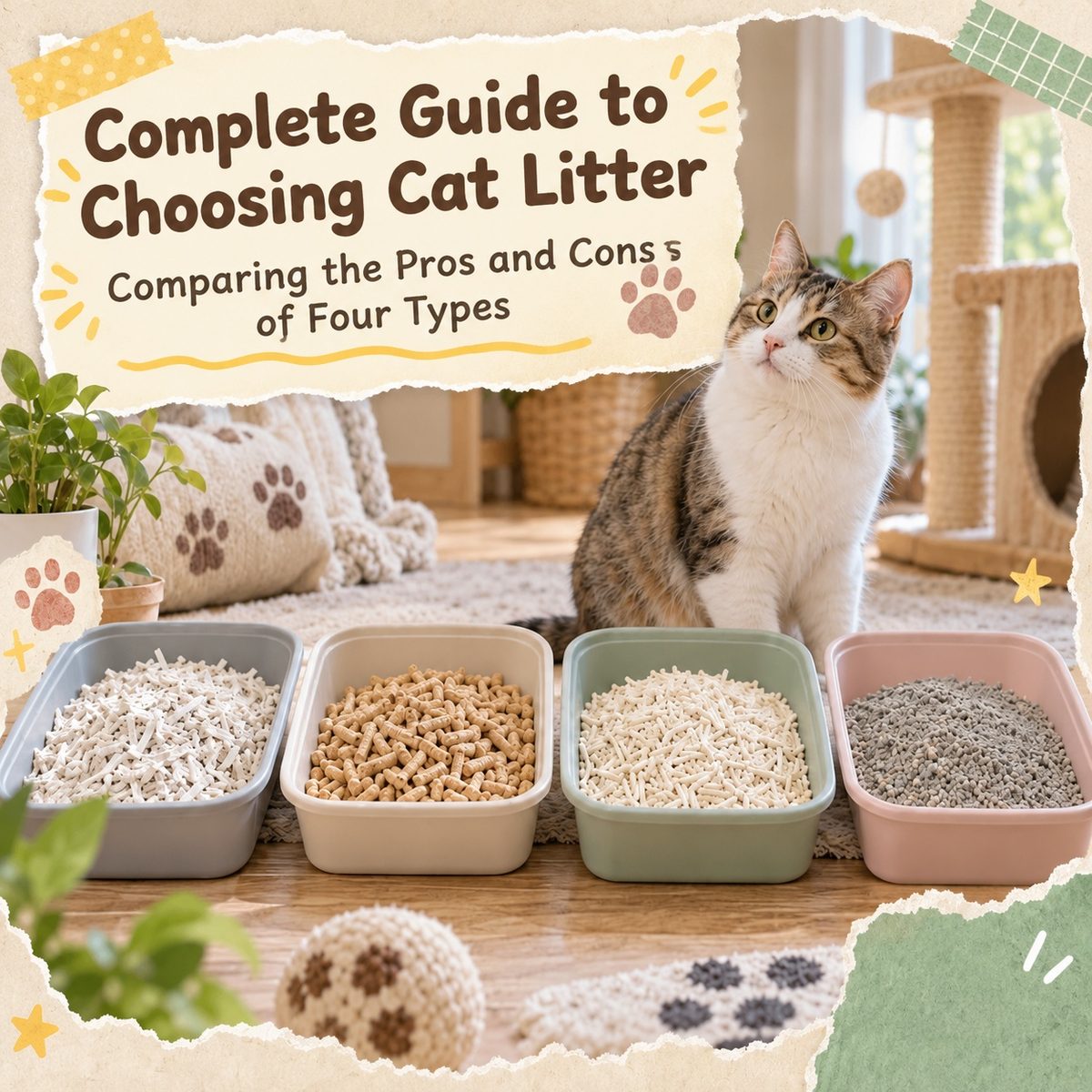
Quick answer: There is no single "best" cat litter—it depends on your cat's paw feel, the ventilation and dust issues in Hong Kong's small flats, and how often you're willing to clean the box. Buy a small bag to try first, scoop the litter daily, and change the whole box every two weeks for a reliable routine.
One of the most headache-inducing daily problems for cat owners is choosing the right cat litter. The market offers many types—paper, wood, tofu and clay—each with different characteristics. If you choose the wrong litter, your cat may express dissatisfaction by "not using the toilet" or "going outside the box". Today, let PetChill walk you through the pros and cons of each type and help you find the best litter for your feline friend!
Comparing the Four Main Cat Litter Types
Clay Litter (Bentonite)
Clay litter is the most traditional type and the one most cats are used to. Its main ingredient is natural bentonite mineral, and its granular texture is closest to the sand and soil cats would encounter when eliminating in the wild.
Pros:
- Strong clumping: urine forms hard clumps quickly, making cleaning easy
- Excellent odour control: effectively locks in smells
- Most cats accept it naturally
Cons:
- Very heavy, making it hard to carry and change
- Relatively expensive, with higher long-term cost
- Prone to dust, which may affect cats' respiratory health
- Not flushable; must be disposed of as regular rubbish
Tofu Litter
Tofu litter has become increasingly popular in Hong Kong in recent years. Made from natural okara (soybean residue), it's a hot choice for eco-conscious cat owners.
Pros:
- Lightweight and easy to carry
- Strong absorbency; urine clumps into solid pieces
- Can be flushed directly down the toilet—convenient and eco-friendly
- Low dust, friendly to the respiratory system
Cons:
- Relatively expensive
- Has a distinct smell that some cats may dislike
- Improves poorly and can attract bugs if not stored properly
- Clumping strength slightly weaker than clay
Wood Litter (Wood Pellet)
Wood litter is made from compressed wood shavings and has a natural wood scent—another eco-friendly option.
Pros:
- Good odour control; natural wood fragrance suppresses smells
- Strong absorbency
- Lightweight and easy to carry
- Low dust
Cons:
- Light texture scatters easily; cats can track it out when digging
- Turns to powder after absorbing urine, requiring more frequent changes
- Some cats dislike the woody texture
Paper Litter
Paper litter is made from recycled paper pulp and is the lightest, gentlest option.
Pros:
- Ultra-lightweight, zero burden to carry
- Urine causes it to clump, making cleaning easy
- Some odour control effect
- Gentlest on cats' paws
Cons:
- Scatters easily; more dust when cleaning
- Weaker clumping strength
- Odour control slightly inferior to other types
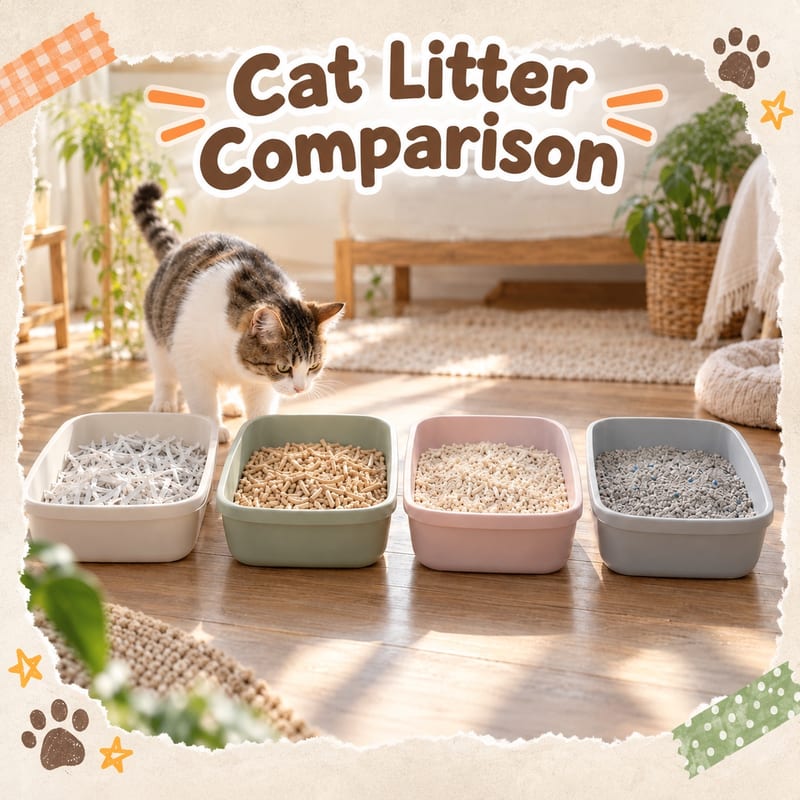
| Litter Type | Clumping | Odour Control | Weight | Flushable | Dust |
|---|---|---|---|---|---|
| Clay | Strong | Strong | Heavy | No | High |
| Tofu | Medium | Medium | Light | Yes | Low |
| Wood | Medium | Strong | Light | No | Low |
| Paper | Weak | Weak | Lightest | No | Medium |
How to Choose the Right Litter: 3 Key Considerations
1. Observe Your Cat's Preferences
Every cat has unique preferences. Some are very sensitive to litter texture, and a sudden change may make them refuse to use the box. It's best to buy a small pack to try and observe your cat's reaction. If your cat hesitates to step in or shakes its paws frantically after using the box, it probably doesn't like that litter.
2. Consider Hong Kong's Living Environment
Living spaces in Hong Kong are generally small, and litter boxes are usually kept indoors. If you're sensitive to smells, choose clay or wood litter with strong odour control. If you live in a subdivided flat or small unit, low-dust tofu litter is more suitable because dust accumulates easily in cramped spaces.
3. Calculate Long-Term Costs
Don't just look at the price per bag; consider frequency of use and consumption. Clay litter may have a higher unit price but may be used more sparingly; paper litter is cheaper per bag but used up quickly. Compare monthly total expenses to find the most cost-effective choice.
Litter Box Training: Essential Steps for a New Cat
When a new cat comes home, the first thing is to show it where the toilet is. Here are practical training steps:
Step 1: Choose the right location
Place the litter box in a quiet, well-ventilated spot away from the food bowl. Cats instinctively avoid eliminating near where they eat. Also, once the location is set, don't move it often because cats hate change. If you live in a high-rise, remember to install window screens as well; see the cat high-rise fall prevention guide to ensure both the litter box area and windowsills are safe.
Step 2: Guide your cat to recognise it
Gently place your cat in the litter box and let it feel the texture. If your cat is nervous, gently hold its front paws and make a digging motion so it understands this is the "toilet".
Step 3: Seize the moment
After eating, waking up, or playing are the times cats are most likely to need the toilet. Take your cat near the box at these times and let it walk in on its own.
Step 4: Be patient
If your cat eliminates in the wrong place, never hit or scold it! That will only make it more fearful. The correct approach is to put the waste into the litter box so your cat learns by scent that "this is the toilet".
Litter Cleaning and Changing Frequency
Keeping the litter box clean is key to getting your cat to use it consistently. Here are the recommended cleaning frequencies:
- Daily: Scoop clumps and waste at least 1-2 times
- Weekly: Top up with new litter to maintain proper depth (5-7 cm recommended)
- Every 2-4 weeks: Completely empty old litter and wash and disinfect the box
- When changing litter type: If switching litter types, do it gradually—first mix new litter into the old at a 7:3 ratio, then gradually increase the proportion of new litter; the whole process takes about 1-2 weeks
Cleaning tip: When washing the litter box, avoid disinfectants containing phenol or coal tar, as these chemicals are harmful to cats. Warm water with a small amount of pet-specific cleaner is sufficient. For daily care, remember to brush your cat regularly; see the cat grooming and brushing guide to help protect your cat's skin and coat health.
Cat Not Using the Litter Box? Possible Reasons
If your cat suddenly refuses to use the litter box or eliminates elsewhere in the home, it could be due to:
-
Litter box too dirty: Cats are very clean animals; if the box is too dirty, they'd rather hold it in.
-
Wrong litter type: A sudden change in litter type may be unacceptable to your cat.
-
Health issues: Cystitis, urinary tract infections and other diseases can make elimination painful, and cats associate the pain with the litter box.
-
Stress factors: Moving house, a new family member, or environmental changes can cause stress-related elimination.
If you've ruled out the above and your cat continues to eliminate inappropriately, especially with vomiting or lethargy, take it to the veterinarian as soon as possible. For general vomiting causes, see the cat vomiting guide to distinguish hairballs from illness.
PetChill's Reminder
There is no absolute "best" cat litter—only the best choice for your cat. We recommend buying a small pack to try first and observing your cat's reaction and acceptance. Remember, keeping the litter box clean and its location stable is the biggest secret to getting your cat to use the toilet reliably!
To learn more about daily cat care, keep following PetChill's latest articles!
Hong Kong Small Flat Practicalities: Choosing Litter and Placing the Box
Hong Kong property is expensive, and litter boxes are often placed in bedrooms or living room corners. Here are some practical points to note:
1. Air circulation If your flat lacks cross-ventilation, choose clay or wood litter with strong odour control and add a small air purifier. Although tofu litter is flushable, it has a bean smell; those sensitive to odours can choose an unscented formula.
2. Prevent litter tracking In small flats, it's easy to step on litter on the floor. Buy a high-sided litter box and add a litter mat; wood and paper litter are light and track easily, so a semi-enclosed box is recommended.
3. Waste disposal In housing estates, the rubbish room may only open twice a day. After daily scooping, bag clay litter in thick bags to prevent leakage; tofu litter can be flushed immediately, but remember to flush small amounts each time to prevent blockages.
4. Space-saving placement In subdivided flats, consider a drawer-type litter cabinet, hiding the box under the TV stand with a cat hole in the door—saves space and contains litter. Remember to allow at least 1.5 times your cat's body length for it to turn around.
5. Neighbour complaints If you live in a tong lau (walk-up), place the box against a wall and stick soundproof foam on the wall to reduce late-night digging noise. Scoop twice daily to prevent odours drifting into the corridor.
Finally, Hong Kong's humid weather means it's best to store bought litter in sealed containers with moisture absorbers to prevent tofu litter from breeding bugs and wood litter from moulding. Remember, a comfortable cat and no neighbour complaints—that's true "Hong Kong cat-keeping success".
Further Reading

 Fuji One full guide →

