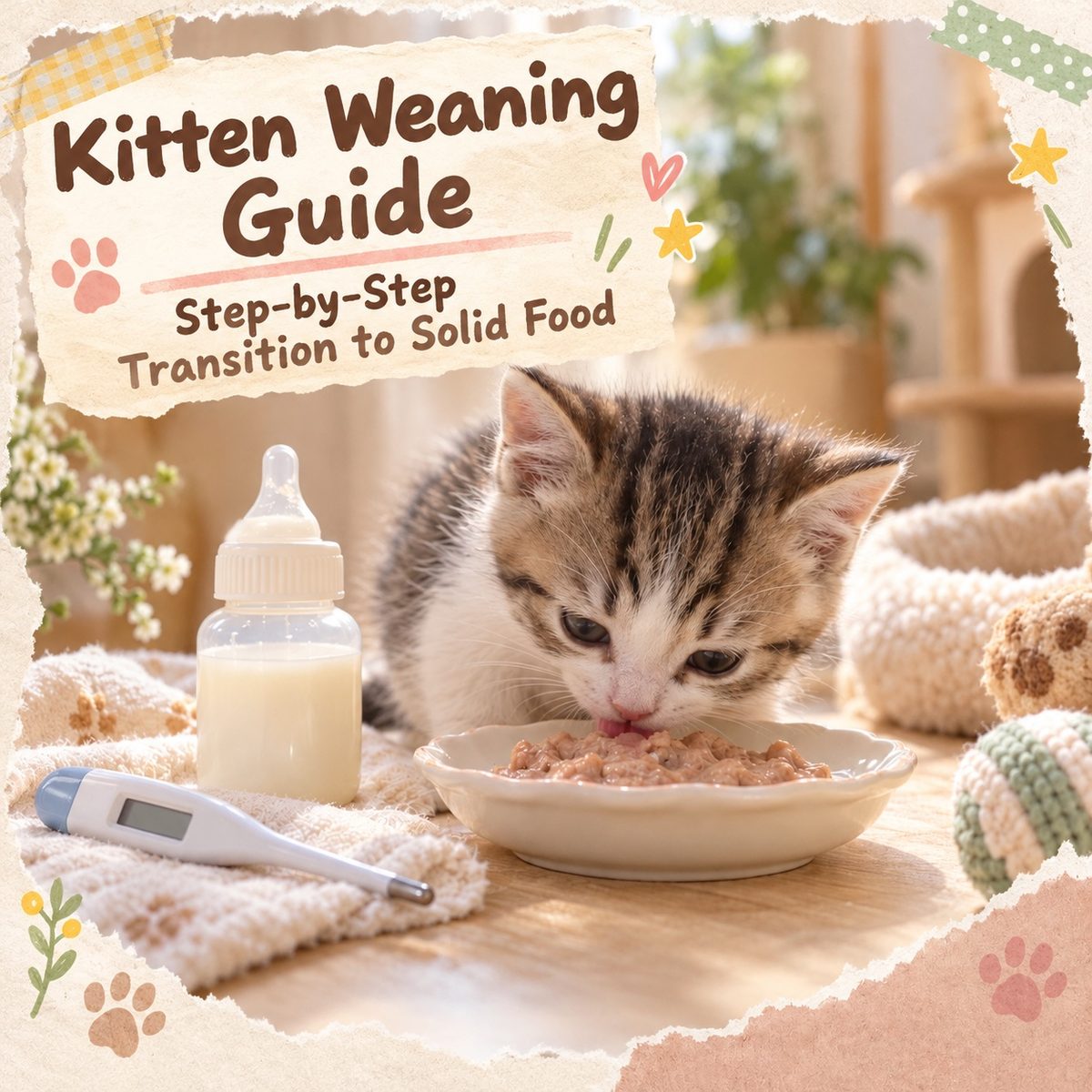
Quick answer: Kitten weaning timeline — start mushy weaning food at 4 weeks (crushed dry food with warm water at 1:3), complete weaning at 6-8 weeks, and move to fully solid kitten food after 8 weeks. Never feed cow's milk at any stage (it causes diarrhoea); for hand-feeding, use kitten-specific milk formula warmed to 38°C. Remember: weaning is a gradual process, not stopping milk overnight.
The natural weaning timeline
The book The Complete Book of Cat Breeding records it clearly: the mother cat's milk supply starts running short from week 6 and is completely gone by week 10 at the latest. Kittens, meanwhile, can eat solid food from week 4 — so nature itself has designed a 4-10 week transition period.
There are reasons the mother cat refuses to nurse: the kitten's sharp milk teeth hurt her when feeding, plus the claws scrabbling on her belly. So weaning isn't a human decision — it's a process both mother and kitten are ready for.
| Age in weeks | Stage | Feeding approach |
|---|---|---|
| 0-3 weeks | Milk only | Mother's milk / kitten milk formula |
| 3-4 weeks | First tastes | Mostly milk + a little mushy weaning food |
| 4-6 weeks | Transition | Weaning food ratio gradually increases, milk decreases |
| 6-8 weeks | Weaning complete | Mainly weaning food, with plenty of fresh water |
| After 8 weeks | Done | Solid kitten food + water |
How to make weaning food (book recipe)
My First Cat Care Book gives a very practical ratio:
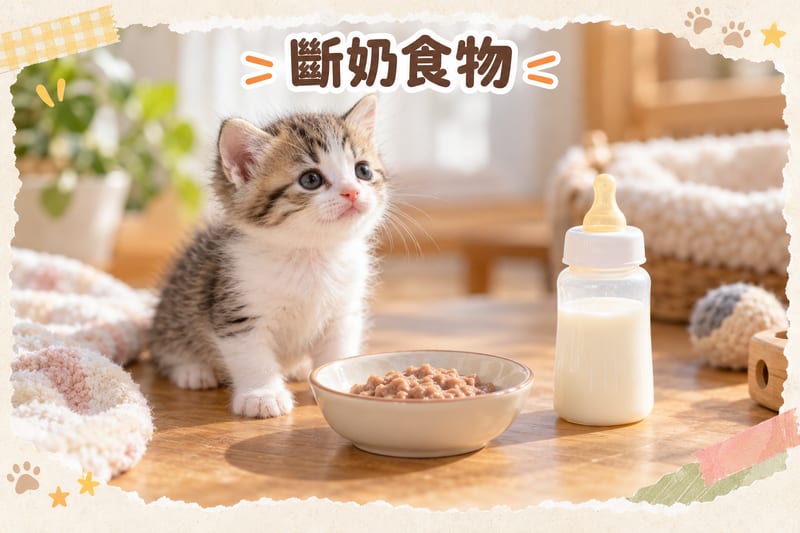
- Dry food version: crush kitten dry food, 1 part food : 3 parts warm water, soak and mash into a paste
- Wet food version: dilute wet food with warm water at the same 1:3
The trick is "start thin, then gradually reduce the water": give a paste at weeks 3-4, reduce the water every few days, and by about week 6 it's close to solid, so by week 8 the kitten can eat dry food directly. Hong Kong's hot weather makes mushy food spoil quickly — make it fresh each time and throw away leftovers; don't leave it out more than half an hour.
If there's no mother cat: full hand-feeding guide
For Hong Kong street kittens or orphaned bottle-fed kittens, you have to step in:
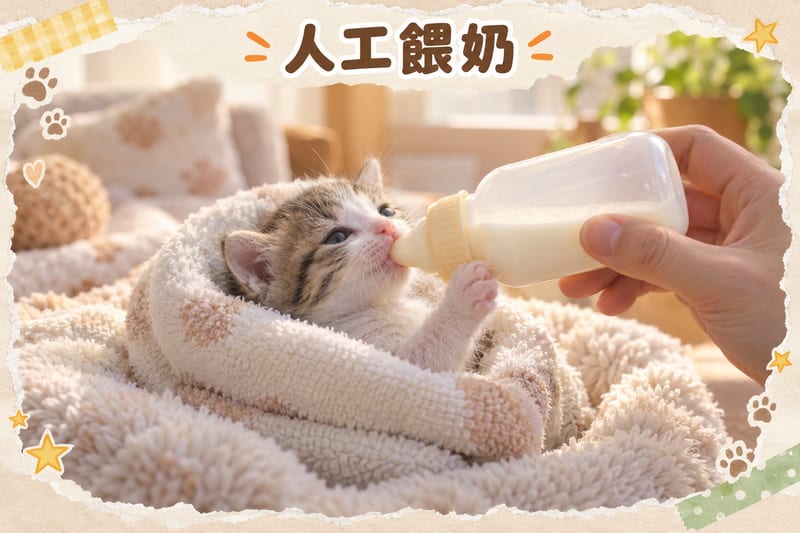
- Use kitten-specific milk formula, warmed to about 38°C (test by dripping on your wrist — gently warm, not hot)
- Position: let the kitten lie on its belly (mimicking the angle it would nurse at), using a bottle with a small teat
- Amounts: newborns take 3-5 ml every 2 hours; at around 250 g body weight, change to 5-6 feeds a day of 6-8 ml each
- Toileting help: after each feed, gently wipe around the anus with warm water-soaked gauze or cotton wool to mimic the mother's licking and stimulate urination and defecation; clean up afterwards
- Weigh daily: a kitchen scale accurate to 1 g is enough; a daily gain of 10-20 g is healthy
The book also reminds us: at this stage you must help with warmth too — bottle-fed kittens under 1 month can't regulate their own body temperature, and in Hong Kong's air-conditioned rooms in summer you need to watch they don't get cold.
The cow's milk myth: why you can't feed it
The image of "a cat drinking milk" is classic, but it's wrong. The Complete Book of Cat Breeding explains: digesting milk lactose requires lactase, and this enzyme is only produced when lactose is present in the body — after weaning, a cat's body stops making it. So:
- ❌ Human cow's milk → diarrhoea
- ❌ Suddenly giving cow's milk during weaning → risk of dehydration (diarrhoea in kittens can become serious fast)
- ✅ Kitten-specific milk formula
- ✅ Lactose-free milk (occasionally)
- ✅ Yoghurt (very low lactose, occasional small amounts)
Common weaning mistakes in Hong Kong
| Mistake | Consequence | Correct approach |
|---|---|---|
| Switching food the moment you take the kitten in | Digestive upset, food refusal | Ask what it was eating before; wait at least 1 week before switching |
| Weaning food too hot or too cold | Won't eat / digestive irritation | Gently warm (about 38°C to the touch) |
| Giving a large amount at once | Can't digest it, diarrhoea | Split into 4-5 small feeds a day |
| Still using a bottle at 3 months | Transition too slow | Move to a saucer after 8 weeks |
| Feeding cow's milk | Diarrhoea | Kitten-specific milk formula |
Sample daily schedule during weaning
At the stage where hand-feeding and weaning food run in parallel (4-6 weeks), Hong Kong cat owners can arrange it like this:
- 07:00: milk (or milk-paste mix)
- 10:00: weaning paste
- 13:00: milk
- 16:00: weaning paste
- 19:00: milk-paste mix
- 22:00: milk
- Overnight: newborns to 3 weeks need a feed every 2 hours (including the middle of the night); from 4 weeks the night gap can be stretched
After each feed, remember the toileting help (gently wipe the anus with warm water gauze) and wash the equipment straight away. By 6-7 weeks, gradually reduce the number of milk feeds and make the paste thicker; after 8 weeks you can move fully to a kitten-food meal schedule — see Kitten Feeding Schedule.
This stage is also the run-up to vaccinations — once weaning is complete and the kitten is settled, you can book the first health check and vaccine; for the timeline see Kitten Vaccine Schedule. For the full first-year schedule, see Kitten First-Year Checklist.
Common mistakes when mixing formula
The mistakes hand-feeding owners make most often:
- Water too hot: scalds the mouth; test by dripping on the inside of your wrist — gently warm is right (about 38°C)
- Mixed too strong or too weak: follow the ratio on the formula tin exactly; don't adjust it yourself
- Left standing too long: once mixed, don't leave it at room temperature for more than an hour; in Hong Kong's summer, mix and feed immediately
- Bottle teat hole too big: milk flows too fast and the kitten chokes; a bottle-fed kitten's teat hole should be small enough that "when inverted it only drips slowly"
After each feed, note the amount and time; together with daily weighing you have a complete feeding record, so you can explain things clearly if you need to see a vet. The book reminds us of one more thing: don't rush weaning — rather than pushing the pace and causing diarrhoea, take an extra week and finish steadily.
Linking to the next stages
Once weaning is complete (8 weeks), the kitten moves into the kitten-food stage: 3-5 meals a day, portioned by body weight, until switching to adult food at 10-11 months. For the full schedule and daily gram amounts, see Kitten Feeding Schedule; for the overall growth milestones see Kitten Month-by-Month Guide.
Handling common situations during weaning
Situation 1: Won't eat the paste. Try smearing a little paste on the side of its mouth so it licks the taste; or mix milk and paste together (more milk than paste at first) and increase the paste ratio daily. Temperature is key — bottle-fed kittens usually reject cold paste; gently warm (about 38°C) is right.
Situation 2: Diarrhoea after eating. The most common causes are eating too much at once or paste that's too thick. Go back a step (make it thinner, add an extra feed) and observe for a day or two. If diarrhoea lasts more than 24 hours, see a veterinarian — dehydration in kittens can become serious fast.
Situation 3: Only wants milk, won't eat food. Gradually reduce the number of milk feeds, but never stop suddenly. The mother cat's milk is gone by week 10 at the latest, so there's a natural deadline; if hand-feeding, after 8 weeks change milk to 1-2 "top-up" feeds a day and give only paste and food the rest of the time — it'll switch over within a few days.
Situation 4: Weight stalls. Daily weighing is the most important thing during weaning (method: Kitten Weight Chart Guide). If there's no gain for two days, first check the portion and texture; if there's no improvement, see a veterinarian.
Safety and environment during weaning
At this stage kittens start exploring, so household hazards need sorting out early: for a checklist on cables, string and plastic bags see Kitten Home Safety Guide. Also, a kitten that is still weaning must not be left home alone — the book says to arrange for someone to care for it; Hong Kong owners who work can consider leaving the kitten at a friend's home or hiring someone to feed it at home.
Weaning is the first big hurdle in a kitten's growth. Once it's done, the road ahead is much smoother: vaccinations complete at 8 weeks, socialisation at 3 months, teething at 4 months — one after another, all with a timeline to follow. Take it slowly; there's no rush.
References
- Agriculture, Fisheries and Conservation Department (Hong Kong Government) — Pet Care Information
- Veterinary Surgeons Board of Hong Kong
- The knowledge points in this article are compiled from cat encyclopaedia books (see publication details at the end) and public veterinary guidelines
Related products (available in Hong Kong)
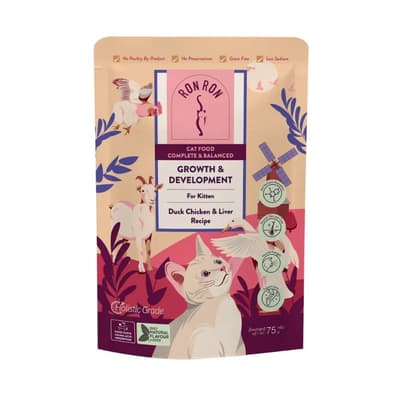
- RONRON Kitten Complete Wet Food, Duck, Chicken & Chicken Liver 75g (reference price HK$8.5) — wet food for the weaning period; small portions suit kittens
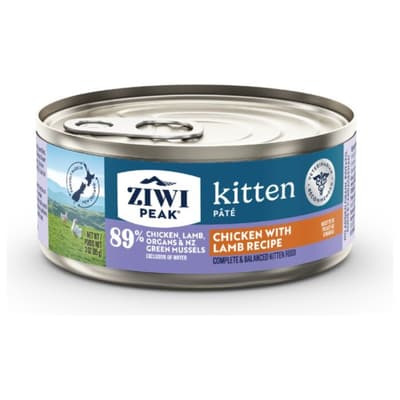
- ZiwiPeak Kitten Can, Chicken with Lamb 85g (reference price HK$34) — high-meat recipe
- WELLNESS CORE Grain-Free Kitten Growth Formula 250g (reference price HK$40) — crush the dry food to make weaning paste
Key points
- ✅ Start mushy weaning food at 4 weeks, complete weaning at 6-8 weeks, fully solid after 8 weeks
- ✅ Weaning food ratio: 1 part food : 3 parts warm water, gradually reducing the water
- ✅ Hand-feeding at 38°C; newborns 3-5 ml every 2 hours
- ❌ Don't feed cow's milk; don't switch food the moment you take the kitten in
- 📌 Daily weighing is the only reliable progress indicator
The above is for reference only and cannot replace veterinary diagnosis and treatment. If a kitten shows any abnormality, seek veterinary care as soon as possible; consult your veterinarian on feeding, vaccination, neutering and other arrangements.
 ZiwiPeak full guide →