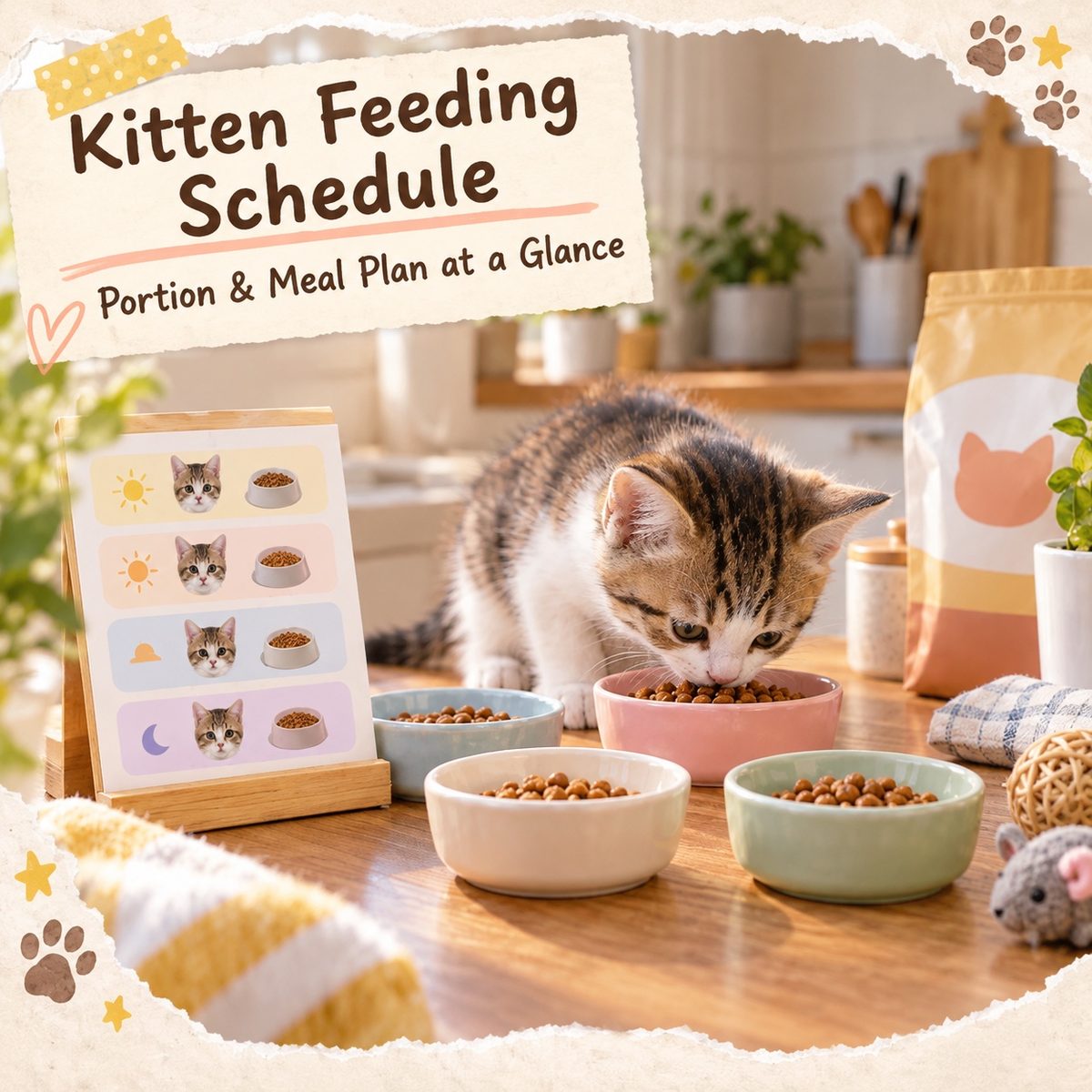
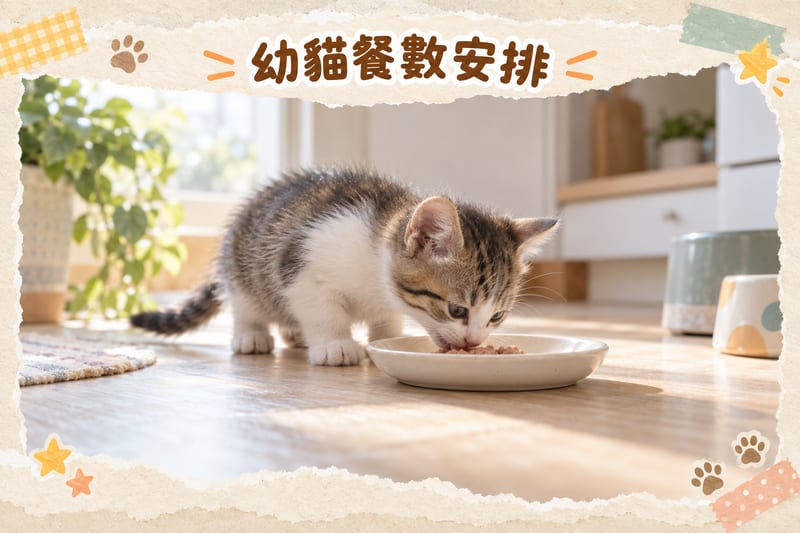
Quick answer: Core kitten feeding rules—3-5 meals a day at 2 months, small frequent meals; 2 meals a day after switching to adult food at 10-11 months. Portions by weight: for 0-4 months, about 50g of dry food per day for a 1kg cat. Transition over 7 days (75/25→50/50→100). Kittens cannot go long without eating—it can cause low blood sugar.
Why kittens need 'small frequent meals'
The book My First Cat Book explains: a kitten's digestive organs are not yet fully developed; feeding too much at once means they can't finish it, and it can even cause diarrhoea and discomfort. So for a newly acquired kitten, divide the daily food into 4-5 portions.
Another key point many Hong Kong cat owners don't know: kittens can develop low blood sugar if they go too long without eating. Kittens can't just have 'two meals and done' like adult cats; especially under 3 months, don't leave too long between meals.
Feeding frequency schedule (by age)
| Age | Meals per day | Notes |
|---|---|---|
| 4-7 weeks (weaning) | 4-5 | Mushy weaning food; see Kitten Weaning Guide |
| 2 months | 3-5 | Start eating kitten food |
| 3-5 months | 3-4 | Gradually reduce meals |
| 6-9 months | 3 | Morning, noon, evening |
| 10-11 months | Switch to adult food, 2 meals a day | Morning and evening; replace high-calorie kitten food with adult food |
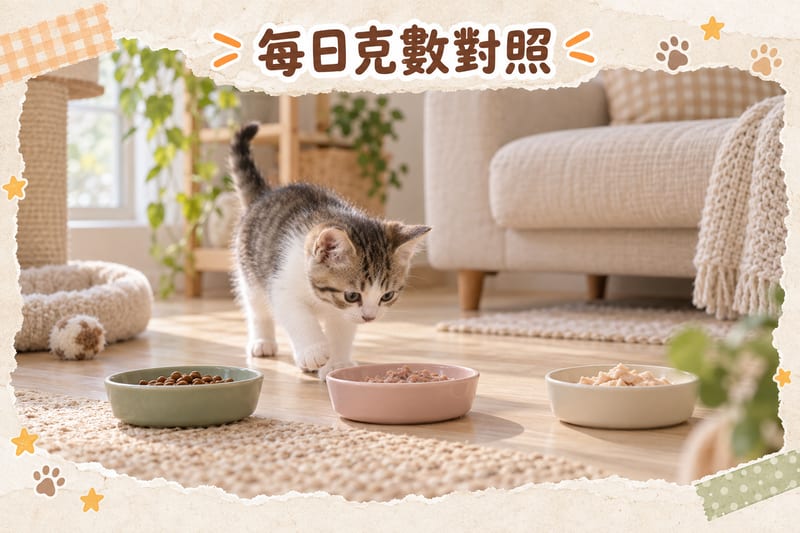
Daily portion chart (book data, unit: grams)
Kittens (0-12 months):
| Weight | 0-4 months | 4-6 months | 7-12 months |
|---|---|---|---|
| 0.5 kg | 30 | 25 | — |
| 1 kg | 50 | 40 | 35 |
| 1.5 kg | 70 | 55 | 45 |
| 2 kg | 85 | 70 | 55 |
| 3 kg | 115 | 95 | 75 |
| 4 kg | 140 | 120 | 95 |
Adult cat reference (1-6 years): about 35g for 2kg, about 45g for 3kg, about 60g for 4kg.
Three rules for use:
- This is a dry food reference amount; wet food has high moisture, so adjust portions according to the packaging.
- The amount stated on the food bag is authoritative; this table is for a sanity check.
- If the cat licks the bowl frantically after eating = not enough, add one-tenth next time; if lots is left = reduce a little.
Verifiable formula (calorie conversion, calculate daily grams yourself)
Want to calculate once to cross-check the table above? Three formulas commonly used by veterinary nutritionists:
- RER (Resting Energy Requirement, kcal) = 70 × body weight(kg) to the power of 0.75
- Daily calories DER = RER × 2.0–2.5 (multiply by 2.5 for under 4 months; by 2.0 for 4-12 months)
- Daily dry food grams = DER ÷ food calorie density (kitten dry food is generally 3.8–4.2 kcal/g; check the packaging nutrition label for kcal/kg divided by 1000)
Example (1 kg kitten, 0-4 months): RER = 70 × 1 = 70 kcal; DER = 70 × 2.5 = 175 kcal; 175 ÷ 4.0 ≈ 44g. This is about 10% different from the table's '50g for 1kg'—within normal range, because wet food and treats also contribute some calories.
Example (3 kg kitten, 4-6 months): RER = 70 × 3^0.75 ≈ 160 kcal; DER = 160 × 2.0 = 320 kcal; 320 ÷ 4.0 = 80g (table says 95g, again within the upper deviation range).
The formula is an estimate for cross-checking; it cannot replace the food bag label and veterinary advice. Adjust slightly based on trends after each weighing—more important than sticking to one number.
Five feeding points (from the book)
- Quiet, fixed place: a corner with no disturbances, feed at the same time every day.
- Use kitten-specific food: kibble size and nutritional value differ from adult food; if they can't eat it, soften with warm water.
- Small portions: divide the daily amount into 4-5 portions.
- Remove the bowl on time: food left out oxidises and cats dislike it; also trains routine.
- Keep the water bowl full: always have clean water next to the food bowl; pay extra attention in Hong Kong summers.
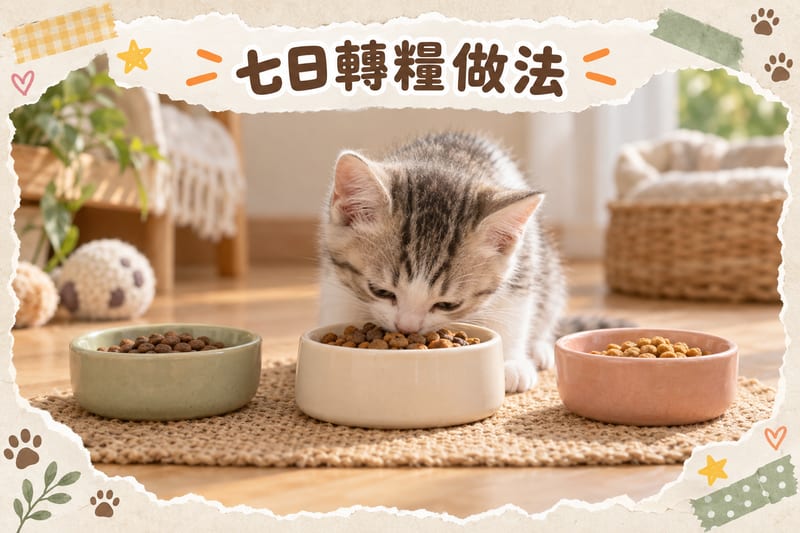
How to transition food (7-day gradual method)
Whether switching from 'the food they were on before' to your chosen food when you first get them, or switching from kitten to adult food at 10-11 months, the method is the same:
| Days | Old food | New food |
|---|---|---|
| Days 1-3 | 75% | 25% |
| Days 4-6 | 50% | 50% |
| Day 7 onwards | 0% | 100% |
The book reminds: when taking in a kitten, first ask what food they were eating, how much per day, and how many meals—changing food immediately may worsen the cat's condition; wait at least 1 week before starting the transition.
Complete food, complementary food, treats—how to tell
According to the book, based on the Japan Pet Food Fair Trade Association classification:
- Complete nutrition (staple): balanced nutrition, can be the sole diet; for kittens in the first year, use 'kitten-specific'.
- General food (complementary): incomplete nutrition, only as a 'side dish'—long-term use as staple causes malnutrition.
- Treats: for rewards, don't overfeed, causes obesity.
When choosing food, check the 'purpose' label on the packaging (it must say 'complete nutrition for kittens' to be a staple). More food selection tips: Complete Kitten Food Guide and Best Kitten Food Recommendations.
Feeding schedule for working owners (Hong Kong tested)
Most Hong Kong cat owners have to work; here's a feasible schedule:
- 06:30 before leaving: breakfast (largest meal)
- 13:00 lunch break: automatic feeder dispenses (small portion)
- 19:00 back home: dinner
- 23:00 before bed: supper (small portion) + 10 minutes play
That's 3-4 meals a day, perfectly fitting work hours. Choose an automatic feeder with a 'small portion dispensing' function; before buying one, you can pre-portion the lunch portion in small dishes and keep in the fridge (wet food), ask family to help, or add it on days you finish work early.
Dry and wet food ratio
The book divides cat food into staple (complete nutrition), complementary, and treats; when choosing, look for the 'complete nutrition for kittens' label. Common mixed feeding methods among Hong Kong cat owners:
- Dry food as main: convenient, works with automatic feeders, high calorie density suits kittens.
- One wet meal a day: hydration (kittens have low thirst drive; this habit is useful for future urinary health).
- Treats: rewards only, no more than 10% of total calories per day.
Note that once a can of wet food is opened, it spoils quickly in Hong Kong's heat: refrigerate leftovers immediately, warm up before the next meal (don't serve cold).
Transition from weaning to kitten food
The transition from mushy weaning food to regular kitten food happens at 6-8 weeks; if the kitten you take in is already weaned, start directly with 'the food they were eating', then after 1 week use the 7-day gradual method to switch to your chosen food. Weaning details: Kitten Weaning Guide.
What to check if appetite suddenly drops
A kitten's appetite isn't the same every day, but a sudden obvious drop should be investigated in order:
- Teeth problems: 4-7 months teething causes gum pain, they'll eat less dry food—switch to wet food or soften to see if it improves (Kitten Teething Guide).
- Food problems: how long since opening? Hong Kong is humid; dry food opened over a month ago easily oxidises and loses flavour, cats may refuse it.
- Bowl problems: bowls not washed often have oily residue; if the cat's whiskers touch the sides (bowl too small or deep), they may not want to eat.
- Environment: moving house, new pets, renovation noise can affect appetite.
- Illness: if all above are ruled out and they still won't eat, or accompanied by vomiting/lethargy—see a veterinarian.
Further assessment of abnormal appetite: Early Warning Signs of Chronic Disease in Cats.
How to calculate water intake
Besides food, water is important for kittens. The book Cat Family Medicine Encyclopedia reminds that cats are not naturally big drinkers. Practical tips:
- Keep the water bowl filled with clean water next to the food bowl (the book suggests another bowl should be filled with water).
- In Hong Kong summer, place one or two extra water bowls in different rooms.
- Wet food itself helps with hydration—one wet meal a day for kittens is a habit worth building.
- A sudden large increase in water intake (water level drops quickly, urine clumps become larger and more numerous) is not a good sign—it's a signal for a check-up.
Food storage (Hong Kong humid days)
Hong Kong humidity is 70-90% year-round; dry food absorbs moisture and oxidises quickly after opening:
- After opening, use a sealing clip + airtight container, best to finish within a month.
- Large bags are more economical, but kittens eat slowly; if opened too long it loses flavour and they may refuse it—buying medium-small bags is more practical during the kitten stage.
- After opening a can of wet food, keep in the fridge for at most one day; warm before feeding.
- Wash the airtight container monthly; don't pour old food on top of new (old food at the bottom keeps cycling and spoiling).
The feeding chart looks complicated, but just remember three principles: small frequent meals, measure by weight, and transition over seven days. Do these three, and your kitten won't have diarrhoea, won't be malnourished, and won't deviate in development. And the portion for each meal should be fine-tuned with weighing records—if they lick the bowl clean, add a little; if they leave some, reduce a little; in two weeks you'll find their 'just right' portion.
References
- Agriculture, Fisheries and Conservation Department (Hong Kong Government) — Pet Care Information
- Veterinary Surgeons Board of Hong Kong
- The knowledge points in this article are compiled from cat encyclopedia books (see publication details at the end) and public veterinary guidelines.
Related products (available in Hong Kong)
- WELLNESS CORE Grain-Free Kitten Growth Formula Trial Pack 250g (reference price HK$40) — good for trying flavours.
- Nulo Freestyle Grain-Free Kitten Dry Food Chicken + Cod 12lb (reference price HK$600) / Turkey + Duck 12lb (reference price HK$600)
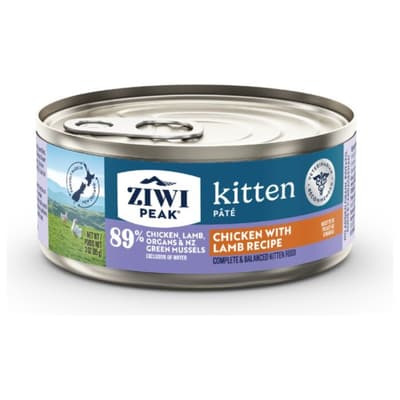
- ZiwiPeak Kitten Canned Food Chicken with Lamb 85g (reference price HK$34) — wet food for hydration.
Key summary
- ✅ 3-5 meals a day at 2 months, small frequent meals; kittens cannot go long without eating (risk of low blood sugar).
- ✅ Portions by weight: about 50g dry food per day for a 1kg kitten (0-4 months).
- ✅ Transition over 7 days; when taking in a kitten, first ask what they were eating.
- ❌ Don't free-feed, don't feed human food, don't leave the food bowl out all day.
- 📌 Use with the Kitten Weight Chart and weigh daily, so portion adjustments are based on data.
The above is for reference only and cannot replace veterinary diagnosis and treatment. If your kitten shows any abnormalities, seek veterinary care as soon as possible; consult your veterinarian for feeding, vaccination, neutering and other arrangements.
 Wellness Core full guide →
 ZiwiPeak full guide →
 Fuji One full guide →