Quick answer: The three biggest killers for kittens at home are strings, cables, and plastic bags. Protection mantra: store all strings and threads, unplug cables + hide behind furniture + cover with plastic tubing, don't leave plastic bags on the floor. Kittens should not be left home alone for long periods; weaning kittens even more so. Rather than remedying afterwards, do a room-by-room check now.
Why kittens are especially at risk
The book Cat Family Medicine Encyclopedia puts it plainly: "curiosity" is part of a cat's personality; they will "get into trouble" when you're not looking. Kittens have two additional factors: they want to bite everything (especially during teething) and they are small (they can squeeze into gaps you'd never guess). Things adult cats ignore, kittens will explore.
So home protection is not something to "do when they're older"; it must be done before bringing a kitten home.
Killer 1: Strings (ingestion can cause intestinal damage)
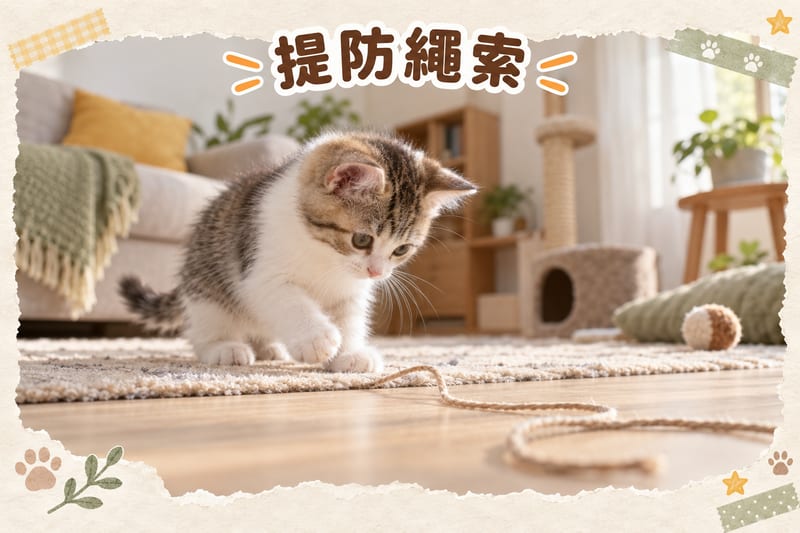
The book warns: string-like foreign bodies cause more serious harm to cats than you might imagine. List of dangerous items:
- Rope balls, yarn balls (many cat toys have strings! Put them away after play)
- Rubber bands, hair ties
- Sewing thread, dental floss
- Curtain cords, blind pull cords
- Gift ribbons
If you see a string protruding from the anus: never pull it. The book explains: you don't know the condition inside the intestines; pulling can make the injury worse. Correct approach: if the string is too long, trim it shorter, then take the cat to the hospital for examination.
Killer 2: Cables (chewing through can cause electric shock)
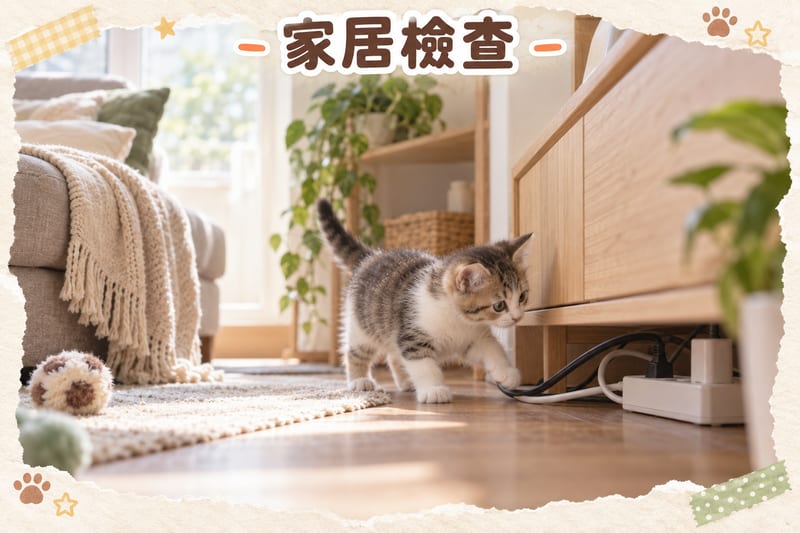
The book records a real clinical case: a dog chewed through a cable, suffered electric shock causing cardiac and respiratory arrest, and could not be saved on arrival. Cables are light and move with a swipe—perfect toys for cats. Three-step protection:
- Unplug unused plugs immediately
- Tidy excess cables or hide them behind furniture so the cat cannot find them
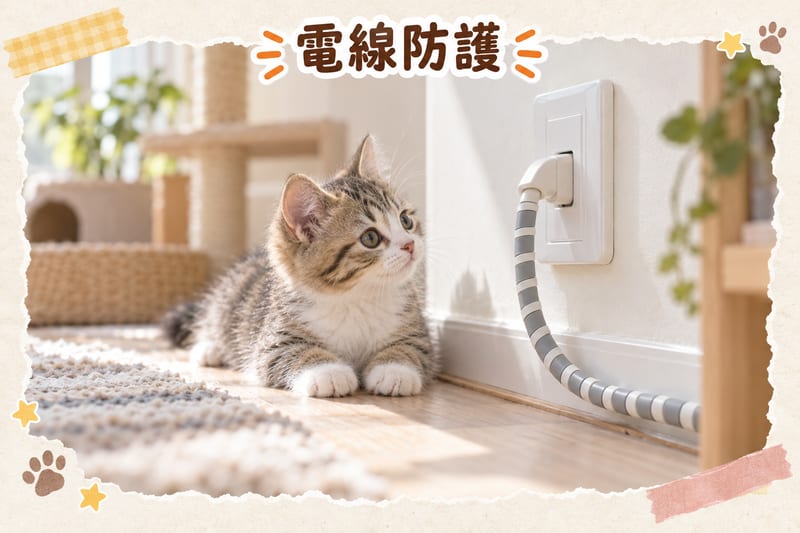
- Cover necessary cables with thicker plastic tubing; if they can't bite through, they won't get shocked
Hong Kong supplement: don't leave extension cords on the floor; put away fan cables and charging cables after use. The urge to chew is strongest during teething—watch closely during these months; chew toys can distract them (see Kitten Teething Guide).
Killer 3: Plastic bags and small items
The book names: plastic bags are a favourite of pica cats. Plastic bags, cling film, small plastic pieces must all be stored in cabinets, not left on tables. Also:
- Kitchen: food scraps, chicken bones, fish bones (bin must have a lid)
- Medications: many human medications are toxic to cats; keep in a cabinet
- Plants: lilies are highly toxic to cats (even pollen can cause kidney failure). Hong Kong people love buying lilies—homes with cats should not have lilies. Other toxic plants should be researched before buying.
Kitten home alone: arrangements and bottom line
The book's principle is clear: avoid leaving kittens home alone as much as possible; ideally someone should be home. Weaning kittens, sick cats, and elderly cats cannot be left alone; arrange for someone to care for them.
If an adult cat needs to be left alone for a day or two, the book suggests:
| Item | Action |
|---|---|
| Water | Multiple water bowls in different locations; or a circulating water fountain |
| Food | Dry food can be left out (won't spoil); timed feeder is better |
| Litter | Prepare an extra litter box (cats will hold it if dirty) |
| Room temperature | Adjust to human comfort level; air-conditioning in summer, pet heat pad in winter |
| Dangerous areas | Lock doors to rooms where trouble can happen; leave living area doors open |
Hong Kong home room-by-room checklist
- Kitchen: stove (cats can burn themselves jumping up), bin with lid, bleach in cabinet
- Bathroom: toilet lid always closed (kittens may fall in), bathroom door closed
- Living room: cable protection, window grilles/screens (must-have in Hong Kong high-rises! Cats won't "know not to jump"), gaps under sofa
- Bedroom: wardrobe doors closed (cats can suffocate if trapped inside), rubber bands and hair ties in a box
- Balcony/window: screens are a must, not an option
Toxic plants and foods: common Hong Kong list
Recognised high-risk items for cats by the book and veterinary community, common in Hong Kong homes:
- Lilies: highly toxic—petals, pollen, leaves, even the water they were in can cause acute kidney failure in cats. Homes with cats should not have lilies; think twice before buying flowers for someone with cats
- Alliums: onions, garlic can damage cat red blood cells
- Chocolate, coffee, tea: caffeine is toxic to cats
- Grapes/raisins: can cause acute kidney failure (also in dogs); see Cat Grapes Kidney Failure Guide
- Human medications: painkillers, cold medicine are often fatal to cats; keep in cabinet
- Bleach, cleaning agents: after mopping, let the floor dry completely before letting the cat walk; don't let them lick it
If you suspect your cat has eaten something toxic, don't wait for symptoms—call the vet immediately and explain what was eaten, when, and how much.
Window screens: a hard bottom line for Hong Kong cat owners
In Hong Kong high-rises, "will the cat jump?" is not the question—the question is when. Cats chase birds, insects, and reflections and will dash at windows. All openable windows and balcony doors must be screened, including small windows in kitchen and bathroom. This is a must-do before bringing a kitten home, not "later". For understanding kidney emergencies, see Cat Kidney Disease Guide.
Safety when going out and moving house
Once home protection is done, going out is another challenge:
- Vet visits: always use a cat carrier, don't just carry them—any sound on Hong Kong streets can make a cat struggle free. For an outing checklist, see Preparing for a Vet Visit Checklist
- Moving house: on moving day, confine the cat to a room that is cleared last; let them out after moving; in the new home, let them stay in one room for the first few days, then gradually expand
- Renovation: during renovation, the cat is best staying at a friend's place—dust, noise, strangers coming and going are all stress and danger sources for kittens
Adapting to new environments and socialisation techniques go hand in hand; see Kitten Socialisation Guide; for the first-year schedule: Kitten First Year Checklist.
Monthly safety check routine
Protection is not a one-time job; kittens learn new "troublemaking skills" every month. Do a quick monthly check:
- Get down to cat eye level and scan the whole home (they see a different world from you)
- Check window screens for looseness
- Check cable tubing for bite marks
- Check under sofa and cabinet gaps for "toys" they've stashed (rubber bands, plastic pieces)
- Check medicine cabinet and cleaning cabinet doors are closed
Ten minutes is all it takes for peace of mind. Combine with the monthly milestones in Kitten Month-by-Month Guide to make it a monthly routine. Once the habit is formed, even when they grow up and curiosity wanes, you'll continue to benefit—many adult cat home accidents are actually things not properly checked when they were young.
Do home safety once, then a ten-minute monthly check is enough. The three most important things—strings, cables, plastic bags—you can start today. A kitten's curiosity is its most endearing trait; your protection is what allows it to be safely cute.
References
- Agriculture, Fisheries and Conservation Department (Hong Kong Government) — Pet Care Information
- Veterinary Surgeons Board of Hong Kong
- This article's knowledge points are compiled from cat encyclopedia books (see publication details at the end) and public veterinary guidelines
Related products (available in Hong Kong)
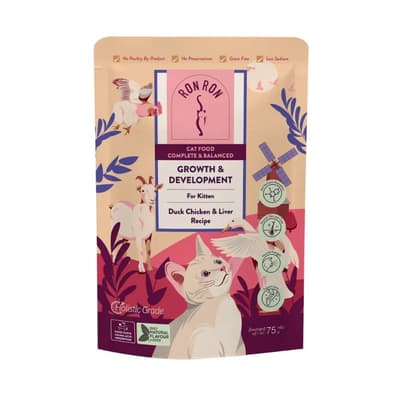
- RONRON Kitten Complete Wet Food Duck Chicken Chicken Liver 75g (reference price HK$8.5) — a good partner for timed feeding when left home alone
- WELLNESS CORE Grain-Free Kitten Growth Formula 250g (reference price HK$40)
Automatic litter boxes can reduce the problem of "cat urinates outside because litter box is too dirty"; for comparison see Automatic Cat Litter Box Guide.
Key summary
- ✅ Strings, cables, plastic bags: store away, cover, put in cabinets
- ✅ Window screens must be installed; lilies not allowed indoors
- ✅ Kittens should not be left home alone for long periods; if left alone, prepare multiple water bowls + multiple litter boxes + timed feeding
- ❌ If you see a string at the anus, don't pull; trim and go to the vet
- 📌 Protection before bringing the cat home, not after an accident
The above content is for reference only and cannot replace veterinary diagnosis and treatment. If a kitten shows any abnormality, seek veterinary care as soon as possible; consult your veterinarian regarding feeding, vaccinations, neutering, and other arrangements.