
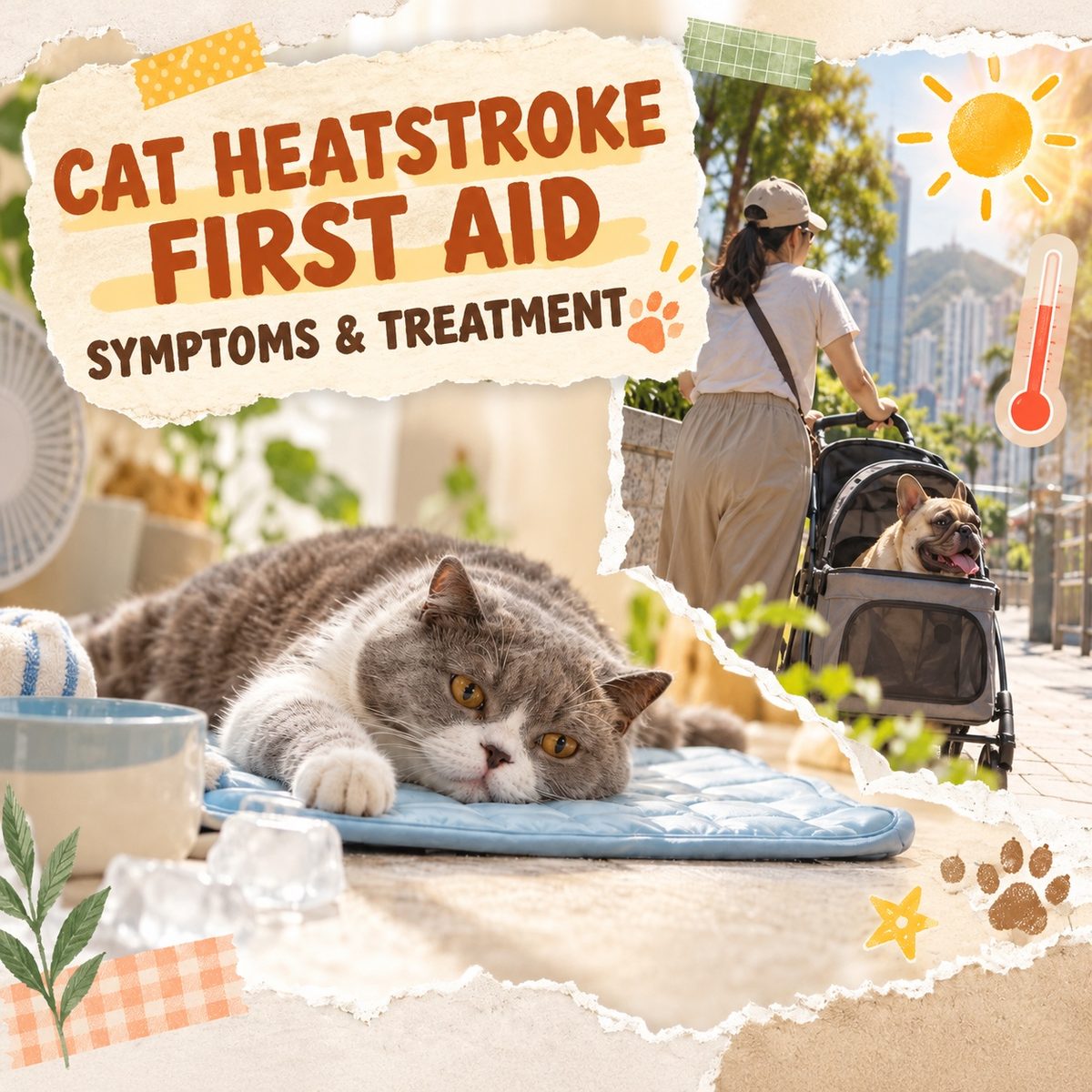
Quick answer: Hong Kong summers are hot and humid, and cats and dogs have no sweat glands. Leaving them in a car under the sun can raise the temperature above 50°C within half an hour, which is enough to be fatal. Once you see 'excessive panting + drooling + hot skin + unsteady walking', cool them down immediately with cool water, offer small sips of water and take them to a vet — do not wait.
Cats and dogs have no sweat glands and rely on panting to lose heat. Hong Kong summers (temperatures often above 30°C plus high humidity) are a real life threat to them: inside a car parked in the sun, the temperature can soar above 50°C within half an hour, which is enough to be fatal. If you see 'excessive panting + drooling + hot skin + unsteady walking', cool them down immediately with cool water (not ice water), offer small sips of water, and take them to a vet — heatstroke is a race against time, do not wait.
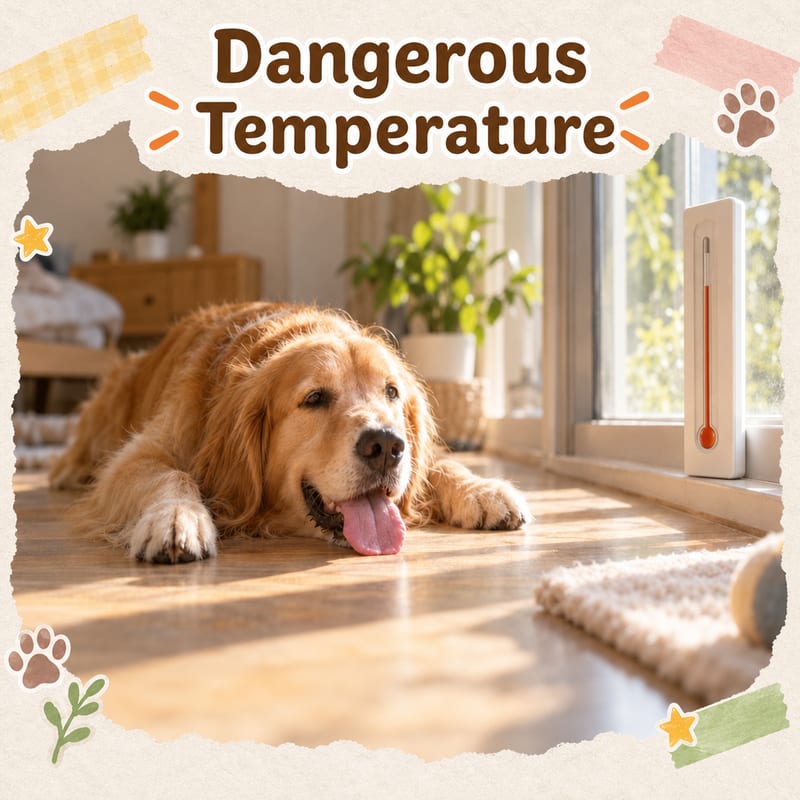
What temperature is dangerous? Remember these numbers
- 28–30°C + high humidity: cats and dogs are already struggling, especially long-haired, flat-faced, obese and elderly individuals
- 11am–4pm outdoor ground: asphalt road temperature can be much higher than air temperature and can burn paw pads
- Inside a parked car: even if you 'just get out for 5 minutes' or 'leave a window gap', the temperature inside can quickly soar above 50°C — this number far exceeds the limits of cats' and dogs' thermoregulation and is fatal
- Normal body temperature vs heatstroke: normal body temperature for cats and dogs is about 38–39°C; excessively high body temperature triggers a systemic inflammatory response and organ failure
Remember one thing: what you think is 'hot but bearable' is already a danger zone for your pet.
What are the symptoms of heatstroke in cats and dogs?
Cats and dogs have limited cooling ability (no sweat glands, rely on panting) and are prone to heatstroke. Warning signs from mild to severe:
- Excessive panting — panting non-stop, heavy panting, cannot stop even at rest
- Drooling — saliva suddenly increases a lot, thick and stringy
- Fast heartbeat, hot skin — ears and belly feel hot to the touch
- Weakness, unsteady walking — walking as if drunk, unwilling to move
- Vomiting/diarrhoea, sometimes with blood
- Collapse/seizures — already a severe stage
⚠️ Important: heatstroke in cats and dogs is a fatal emergency. If you see any combination of 'excessive panting + drooling + hot skin + unsteady walking', cool them down and take them to a vet immediately. Heatstroke worsens over time and can cause organ failure — do not delay, do not guess.
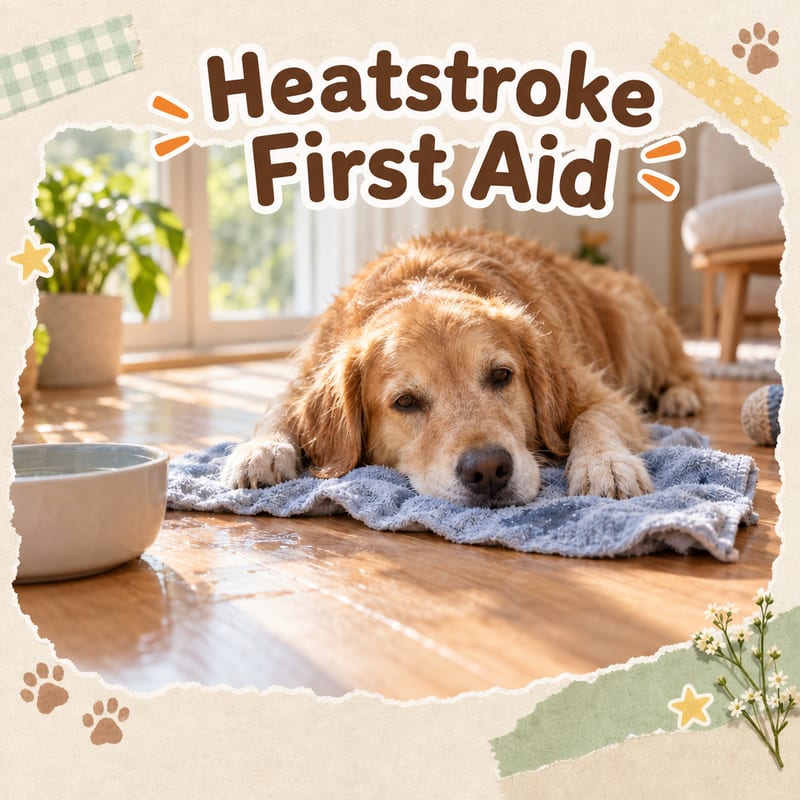
Four steps of heatstroke first aid (memorise the steps)
- Move to a shaded area — go into an air-conditioned room or near a fan, immediately away from the heat
- Cool with cool water — use cool water (not ice water) to soak the whole body, apply wet towels to the neck, armpits and groin, and change them frequently. Ice water causes blood vessels to constrict, which actually slows heat loss and may induce shock
- Offer small sips of water — let them drink slowly on their own, do not force a large amount at once, and do not force water down their throat to avoid aspiration into the lungs
- Take to a vet immediately — even if they seem to recover, go. In the hours to days after heatstroke, complications such as clotting problems and kidney damage may occur, requiring veterinary monitoring
During cooling, it is best to change wet towels several times. The goal is to cool gradually, not to finish in one minute — cooling too quickly is also dangerous.
Which cats and dogs are most prone to heatstroke?
| High-risk group | Why dangerous |
|---|---|
| Flat-faced dogs (French Bulldogs, Pugs) | Nasal structure naturally poor at cooling |
| Long-haired, obese cats and dogs | Thick fat and fur trap heat |
| Puppies/kittens and seniors | Weak thermoregulation |
| Individuals with heart/kidney disease, asthma | Cannot cope with heat stress |
| Cats and dogs in non-air-conditioned environments | High risk in Hong Kong tong lau rooftop huts and east-facing balconies |
If your pet falls into any of the above categories, obesity is an underestimated risk factor: the fat layer traps heat and cannot dissipate it, plus the cardiopulmonary burden, making the risk of heatstroke significantly higher than in normal-weight individuals. In addition, cats and dogs on certain medications (e.g. some cardiac drugs, antihistamines) have affected cooling mechanisms; during medication, ask your vet whether activity levels need adjusting in summer.
If your pet falls into any of the above categories, double up on summer precautions: do not skimp on air-conditioning, and narrow the outdoor time further.
How to prevent heatstroke in pets?
- Avoid going out in the blazing sun — in Hong Kong summer, avoid walking dogs from 11am to 4pm; go early morning or at night
- Constant supply of cool water — place several water bowls and bring water when out
- Shaded areas — keep an air-conditioned room or a ventilated shaded corner at home for them to sleep
- Never leave them in the car — not even for a minute; do not think a window gap makes it safe
- Ventilated pet carriers — place cat carriers in shaded areas, do not leave them in the boot under the sun
- Moderate grooming — do not shave completely (the fur layer actually insulates); just comb out the undercoat
- Cooling mats and water fountains — for families reluctant to keep the air-conditioning on all day, use cooling mats and flowing water fountains to supplement heat loss
7-second test before going out
Before going downstairs, place the back of your hand on the asphalt or pavement for 7 seconds: if it is too hot and you pull your hand away, the ground temperature is already enough to burn paw pads — do not take the dog out. Other details:
- Bring water and a folding water bowl, let them drink every 15–20 minutes
- Walk in shaded routes, avoid radiant heat near roads
- Use a harness rather than a collar to reduce pressure on the trachea (especially important for flat-faced dogs)
- After the walk, wipe the belly and paws with a wet towel to cool down and check the paw pads
When to see a vet immediately?
If any of the following occurs, do not observe, do not wait — go to a clinic immediately (at night, go to a 24-hour emergency):
- Extreme panting, open-mouth breathing, uncontrollable drooling
- Skin hot to the touch, unsteady walking, unusually lethargic and difficult to wake
- Vomiting, seizures, collapse
- Gums purple or unusually pale
- No improvement after 10–15 minutes of cooling
Continue cooling on the way to the vet: turn on the air-conditioning in the car, apply cool wet towels to the sides of the neck, armpits and groin. At the clinic, say directly 'suspected heatstroke' — this is a condition that needs priority treatment, no need to queue and wait.
Summer indoor cooling checklist
You can help your pet cool down without keeping the air-conditioning on all day:
- Window insulation: apply heat-insulation film to west-facing windows and draw curtains — this can significantly lower room temperature
- Fan with ice: place a bottle of ice water in front of a fan for cooler airflow (mind electrical cords and fan blade safety)
- Cooling mats and pillows: place gel cooling mats in their usual sleeping spots; they will find them
- Wet towel sleeping spot: lay a wrung-out wet towel on the bed for evaporative cooling, change frequently
- Combing to reduce undercoat: daily combing to remove loose undercoat is more effective natural cooling than shaving
- Flowing water: install a water fountain to increase water intake, and place water bowls in several locations
One-minute test before walking
Before setting off, place the back of your hand on the ground for 7 seconds: if it is too hot and you pull your hand away, the pavement will burn paw pads — better to use a pet stroller or walk on grass in the shade. After returning home, feel the paw pads: redness, heat, constant licking are early signs of burns; rinse to cool and watch for blisters.
After heatstroke, care during recovery
Even if cooling is successful and the vet says there is no major concern, the 48–72 hours after heatstroke are an observation period: watch for vomiting again, bleeding gums, reduced urine output, fluctuating energy — these may be signs of clotting or kidney complications. During this period, feed light, easily digestible food, ensure plenty of water, and follow the vet's instructions for follow-up checks; do not assume complete recovery just because they seem lively.
Even if there are no obvious problems, it is recommended to have a vet check once to rule out organ damage.
What you can do starting today
- Make 'never leave pets in the car' a family rule
- Adjust dog-walking times to early morning or night, avoiding 11am–4pm
- Add an extra water bowl at home, consider buying a water fountain and cooling mat
- Save the phone number and route to a 24-hour emergency clinic on your phone
- For flat-faced, long-haired, obese and elderly individuals, keep them in an air-conditioned environment as much as possible in summer
How to choose summer products? PetChill's summer pet product guide helps you from cooling mats to water fountains, for a comfortable summer.
This article is for reference only and cannot replace professional diagnosis; consult a registered veterinarian if in doubt.
Further reading
📌 Key summary
- ✅ 28–30°C + high humidity already makes cats and dogs struggle; flat-faced, long-haired, obese and elderly are more at risk
- ✅ Inside a car, temperature can rise above 50°C in 5 minutes — fatal level
- ✅ Four steps of heatstroke first aid: move to shade → cool with cool water → offer small sips of water → take to vet immediately
- ❌ Never use ice water; vasoconstriction actually slows heat loss
- ❌ Never leave pets in the car; even a window gap is useless
 Fuji One full guide →

