

Quick answer: During shedding season, remember the three-word rule: "brush, supplement, check." Brush daily or every other day to reduce loose fur flying around, add an appropriate amount of fish oil to support coat health and shine, and check for redness or bald patches on the skin while brushing. If you notice localised bald spots, itching or skin abnormalities, see a vet immediately — don't mistake skin disease for normal shedding.
Cats and dogs shed twice a year (spring and autumn). Heavy shedding during shedding season is normal, but some shedding needs attention. This article covers the shedding season timetable, daily brushing methods, nutritional support such as fish oil, home de-furring, and which types of hair loss are abnormal and require a vet visit.
When do cats and dogs shed?
Most cats and dogs shed twice a year:
| Time | What happens | Home reality |
|---|---|---|
| Spring (around Mar-May) | Shed thick winter coat, grow thinner coat | Heaviest shedding, "snowing" level |
| Autumn (around Sep-Nov) | Grow warm winter coat | Undercoat noticeably thickens |
Hong Kong note: Local temperature differences are smaller, so shedding season may be longer and less obvious, but spring and autumn are still the peak. Cats and dogs kept indoors with air conditioning year-round have stable light cycles and temperature, so they may shed slowly all year round and not follow the clock.
Tip: Heavy shedding during shedding season is normal — the thick winter coat exits and the thin coat enters. Rather than waiting for fur to pile up, increase brushing frequency one or two weeks in advance.
How to handle shedding during shedding season?
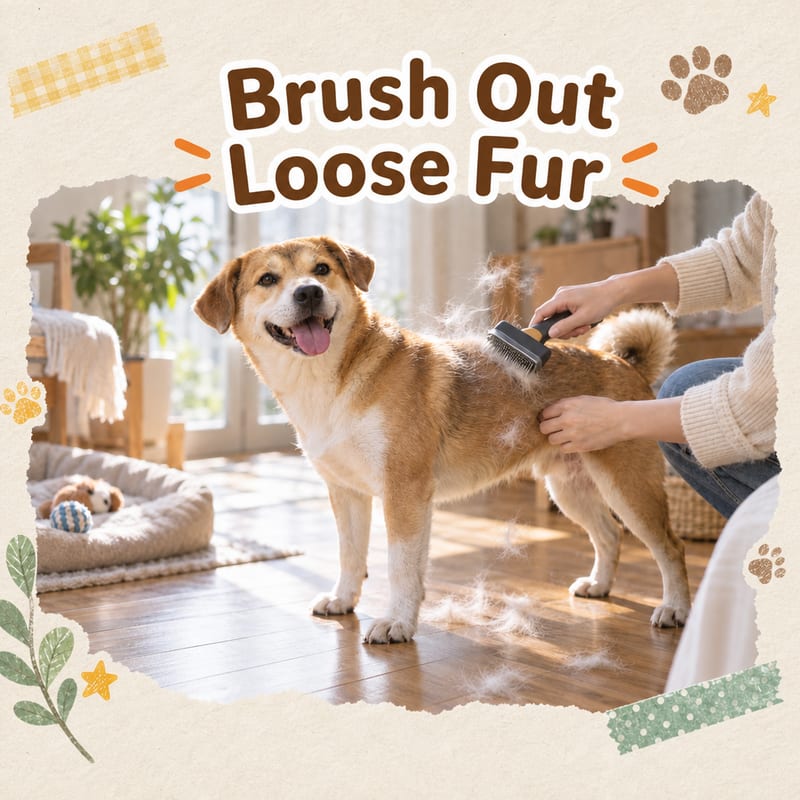
- Brush frequently — During shedding season, brush daily or every other day to remove loose dead fur, directly reducing fur on the floor and clothes. Especially important for long-haired cats and double-coated dogs (corgis, Shiba Inus, golden retrievers): use a slicker brush first to loosen the undercoat, then a comb to smooth it out; for specific techniques see brushing guide and cat coat care.
- Feed fish oil — An appropriate amount of Omega-3 (fish oil) supports skin and coat health and adds shine; ask your vet about dosage before changing food or adding supplements, and don't overdose on your own.
- Watch the skin — Shedding should be "even all over." Check the skin for red spots, ringworm patches or lumps while brushing.
- Clean the home — Vacuum cleaner (a rubber brush head is more effective at picking up fur), lint rollers, washable blankets on furniture — tackle both the source and the environment.
What is abnormal shedding?
Normal shedding: even hair loss all over the body, heavy volume but healthy skin, no itching. Abnormal shedding (pay attention):
- Localised baldness — patchy hair loss exposing skin, possibly ringworm (fungus) or follicle problems
- Itching — constant scratching and biting, possibly allergies or parasites
- Red skin, flaking, scabbing — signs of skin disease
- Symmetrical hair loss, dull coat colour — nutritional deficiency or endocrine problems
- Sudden heavy hair loss with poor energy and appetite — a sign of stress or illness
Hong Kong's hot and humid climate means shedding season overlaps with peak fungus and flea season, making it easy to mistake skin disease for "normal shedding." The dividing line is simple: normal shedding has no bald spots, no itching, and normal skin colour; if any one of these three fails, it needs attention.
Common questions about shedding season
Do I need to shave the coat to help them cool down? Generally not recommended to shave cats and dogs completely bald: fur regulates temperature, blocks sunlight and protects against insects; shaving bald makes them prone to sunburn and skin damage from heat. Brushing out the undercoat is the right approach. What if the cat has more hairballs? During shedding season cats swallow more fur; increase brushing frequency and provide cat grass or hairball support. If vomiting is frequent or appetite is poor, see a vet. What happens to swallowed fur? A small amount is harmless and passes through; only long-term heavy ingestion (especially in long-haired pets) carries a risk of intestinal blockage.
When to see a vet?
- Localised baldness, round bald patches (suspected fungus, which can spread to humans)
- Constant scratching, biting at one spot
- Skin red and swollen, oozing, scabbing, heavy dandruff
- Hair loss together with decreased appetite, low energy, weight changes
- Household members or other pets start shedding and itching too
⚠️ Fungus (ringworm) can spread to humans and other pets. If infection is suspected, reduce contact and get a diagnosis as soon as possible — don't wait to apply human medication. This article is for reference only; consult a registered vet for any concerns.
Shedding strategies for different coat types
- Short-haired cats and dogs (mixed breeds, British Shorthair): Shedding volume is actually not small, just no undercoat to tangle; a rubber brush / latex massage brush is a godsend — a few dollars each, and the collected fur peels off in one piece.
- Double-coated dogs (corgis, Shiba Inus, golden retrievers): The undercoat comes off in clumps; use an undercoat rake and gently pull along the direction of the coat, finishing with a comb. During peak shedding, add an extra warm bath to help loosen it, but always dry completely afterwards.
- Long-haired cats (Persian, Maine Coon): Double risk of shedding and matting; brush daily. Lift the fur under the armpits and belly to check; if you find meatball-like clumps, don't pull hard.
- Curly / low-allergen coats (poodles, bichons): Shedding is not obvious but hair keeps growing and tangles easily; the focus is regular grooming and trimming rather than removing dead fur.
Brushing also massages the skin and promotes blood circulation — for senior dogs it's a daily mini-check: feeling for lumps, broken skin or parasites (flea dirt, ticks) means early detection and early treatment.
Nutrition and water both affect shedding
Skin and coat health starts from within: insufficient protein makes the coat dull and brittle; an appropriate amount of Omega-3/6 (fish oil, flaxseed) supports the skin barrier; and the thing Hong Kong cat owners most easily overlook is water — long-term insufficient water intake leads to dry skin and more shedding. Wet food ratio, water fountains, multiple water bowls — these are the foundation of shedding season, just like brushing. Ask your vet about supplement dosage first; too much fish oil can cause soft stools.
Home de-furring practical checklist
- Brushing beats vacuuming: Dead fur on the brush won't fly all over the house; brush in the bathroom or on the balcony for quickest cleanup.
- Vacuum with rubber brush head: Use a power brush head on hard carpet, a rubber squeegee on fabric sofas; dampen the broom slightly — it picks up fur better than dry sweeping.
- Clothes pre-treatment: Run a lint roller over clothes before they go in the basket, or add half a cup of white vinegar to the wash to help soften fur so it rinses away; clean the filter weekly.
- Use "smooth-surface blankets" on beds: Fur floats on silky bed covers and wipes off easily; cotton fleece covers are fur collectors — put them away during shedding season.
- Air purification is a bonus: An air purifier can reduce floating fur and dust mites, helpful for people with sensitive noses, but don't expect it to replace brushing.
Remember one thing: fur flying everywhere usually isn't because your cat or dog is shedding too much, but because brushing frequency can't keep up with shedding speed. Start with five minutes a day, and after two weeks the fur on the floor will noticeably decrease.
The chain of problems between shedding season and allergies
What's most easily overlooked during shedding season is hairballs and dust-mite-related issues: cats swallow too much dead fur and may show dry heaving, constipation or poor appetite — mild cases can be helped with cat grass or hairball products, severe cases need a vet. For humans, the flying fur and dander is a real challenge for people with rhinitis and asthma; vacuuming frequency needs to keep up, and brushing should be left to non-sensitive family members. Also, shedding season overlaps with skin allergy season; if you notice your pet shedding while itching until the skin breaks, remember: allergies and shedding can exist at the same time — don't treat it as either-or.
What you can do starting today
- Check the calendar: is it spring or autumn shedding peak now? If so, increase brushing to once a day.
- Prepare two brushes: a slicker brush to loosen the undercoat, a comb to finish; collect the fur and put it in a rubbish bag after brushing.
- After confirming with your vet, add fish oil to your pet's diet and observe coat colour changes over four weeks.
- Check the skin while brushing: part the fur to look at the skin, and photograph any red spots or bald patches with the date.
- Put washable blankets on furniture and wash them together with bed covers once a week.
Besides brushing tools for shedding season, how do you choose cat grass, hairball products and vacuuming supplies? The PetChill product guide has all the reviews. Further reading: Pet Seasonal Care, Pet Grooming Course.
📌 Key summary
- ✅ Spring and autumn are the peak shedding seasons for cats and dogs; indoor air conditioning in Hong Kong makes the cycle longer
- ✅ Daily brushing + fish oil + home vacuuming — a three-pronged approach to reduce flying fur
- ❌ Shaving the whole body doesn't help cooling; it makes sunburn and heat damage to the skin more likely
- ❌ Localised baldness, redness, swelling and itching are not normal shedding — see a vet immediately
- ✅ Check the skin while brushing to catch lumps or parasites early