
Quick answer: To protect your cat or dog's skin during Hong Kong's rainy season, the key is to run the dehumidifier all day, brush daily, dry them immediately when back home, and wash beds frequently. If you see redness, swelling or hair loss, see a vet right away—don't delay.
In one sentence, Hong Kong's rainy season and muggy spring for cats and dogs: moisture is an accomplice to skin disease and parasites—dermatitis, mould, rashes, itching and fleas are all more common in damp seasons; the solution is to keep the environment dry with a dehumidifier + brush frequently + dry pet beds + dry fur after outings, and see a vet if you notice redness, oozing, hair loss or broken skin. Here's the breakdown.
Why is humidity an accomplice to cat and dog skin problems?
From the muggy spring to the summer rainy season in Hong Kong (roughly April to September), indoor humidity stays high for long periods. For cats and dogs, dampness is more than just "uncomfortable":
- Skin barrier damage—fur stays damp and stuffy for long periods, making skin prone to inflammation: dermatitis, mould infections, heat rash and itching are all common.
- Parasites breed faster—flea eggs and mould spores hatch and grow faster in warm, damp environments; carpets and under sofas are breeding grounds.
- Ear canal problems—drop-eared dogs and damp environments are a high-risk combination: ears become stuffy, smelly, and head shaking are all symptoms.
- Coat quality deteriorates—humidity makes fur tangled and matted; matted fur traps more heat and moisture, creating a vicious cycle.
Long-haired cats and dogs, sensitive-skinned pets, and young or senior pets are most noticeably affected by humidity—these groups need moisture-proof measures in advance, don't wait for skin problems to appear.
Five practical moisture-proof steps (in order of importance)
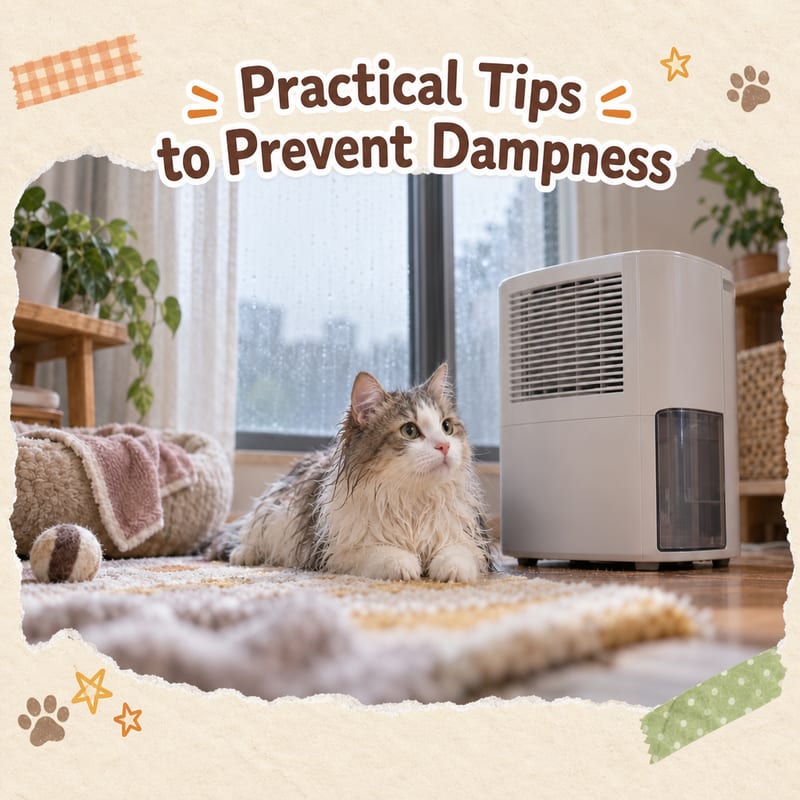
- Run a dehumidifier—bring indoor humidity down and all problems decrease together. Keep it running during the muggy spring and rainy season; aim for a home with no condensation and no sticky floors.
- Brush frequently—brush daily or every other day to remove undercoat and tangles, letting the skin breathe and stay dry. Don't keep long-haired dogs and cats with too thick an undercoat during the rainy season.
- Keep pet beds dry—wash bed covers weekly, dry thoroughly in the sun or tumble dry; have two sets in rotation during the damp season, and use a moisture-proof mat underneath. For placement principles, see the pet bed buying guide.
- Dry immediately after outings—after a walk in the rain, dry the paws, belly and armpits before letting your dog sleep; sleeping wet all night can quickly cause skin problems.
- Check ears—check once a week for smell, redness or head tilting; drop-eared dogs especially need the area around the ears wiped dry after getting wet in the rain.
| Step | Tool/Method | Frequency |
|---|---|---|
| Dehumidify | Dehumidifier + hygrometer | Keep on during rainy season, aim for 50-60% |
| Brushing | Pin brush + detangling comb | Daily or every other day |
| Bedding | Two sets of removable covers | Wash and tumble dry weekly, rotate |
| Drying | Quick-dry towel | Immediately after every outing |
| Ears | Pet ear cleaning solution | Check weekly; wipe drop-eared dogs after rain |
| Bathing | Pet-specific shampoo | About once every two weeks, dry thoroughly |
What to do if dampness causes itchy skin?
If your cat or dog has started scratching and itching, follow this order:
- Change the environment first: turn on the dehumidifier, replace damp sleeping areas with dry mats, and wash and dry all carpets and beds in the home.
- Clean the skin: use gentle, pet-safe bathing products; avoid water that is too hot, and dry completely after washing—half-dry is a big no-no.
- Deworm at the same time: fleas peak in damp seasons; check for "flea dirt" (black specks that turn red when wet) and use flea products regularly.
- Don't use human medication: ingredients in human ointments can be toxic to cats; don't apply anything before confirming it's safe.
- Observe for improvement: if there's no improvement after 1-2 weeks of thorough moisture-proof measures, or if itching worsens, don't delay.
⚠️ Avoid: thinking "a couple of baths will fix it" when you see skin problems. Mould infections and allergies are treated completely differently; the wrong approach can let the problem spread.
Why do fleas explode in the damp season?
Fleas don't generate on the body; they come from the environment: carpets, sofa seams and bed corners at home are their hatcheries, and warm, damp conditions shorten the egg-to-adult cycle, so flea control in the rainy season is often less effective than in dry seasons. The key to flea prevention isn't just applying medication to pets; it also includes vacuuming the environment (dispose of the dust immediately), washing and drying pet beds and carpets. If you see "dirt" falling off your pet after scratching, or it turns red when wet, that's a sign of flea faeces—treat both the environment and the pet.
Daily routines to maintain even in the rainy season
Moisture-proofing doesn't mean keeping pets cooped up all day:
- Dogs still need daily walks—choose times when the rain is light, put on a waterproof coat, and dry immediately on return.
- Cats need an outlet—use interactive toys on rainy days to make up for exercise, keeping mood and weight stable.
- Food also needs moisture protection: seal dry food after opening, don't leave too much in the bowl for long periods, as it spoils easily in the damp season.
When to see a vet?
If any of the following occur, see a registered veterinarian as soon as possible:
- Persistent scratching leading to hair loss, broken skin, bleeding
- Skin redness, swelling, oozing, crusting, or circular bald patches (suspected mould)
- Ear odour, dark discharge, prolonged head shaking or ear scratching
- Itching affecting sleep and appetite
- No improvement or worsening after 1-2 weeks of moisture-proof care
- Multiple pets or household members itching in succession (to rule out contagious issues)
Mould can be transmitted to humans and other pets; if infection is suspected, reduce contact, get a diagnosis promptly, and remember to wash hands after caring for a sick pet.
Extra care for drop-eared dogs and long-haired cats
- Drop-eared dogs (Cocker Spaniels, Dachshunds, Golden Retrievers, etc.): ear flaps are closed and poorly ventilated; after rain, besides drying the body, wipe the ear flaps dry and use a pet ear cleaning solution weekly; if head shaking or red, hot ears persist, it's not just a cleaning issue—see a vet.
- Long-haired cats (Persians, Maine Coons): damp undercoat tangling is the start of a vicious cycle; increase brushing to daily during the rainy season, focusing on armpits, belly and tail base; don't pull hard on existing tangles—use a detangling comb or take to a groomer.
- Sensitive-skinned pets: besides moisture-proofing, keep an itch diary (time, location, what was eaten); it's far more useful than verbal description when seeing the vet.
- Home humidity target: set the dehumidifier to 50-60% constant humidity; a hygrometer costs a few tens of dollars, worth placing one on each floor.
Bathing timing and the golden rule of drying
The rainy season doesn't mean you can't bathe your dog—after walking in the rain, dirty paws can be washed in moderation to prevent dermatitis. The key is the process: about once every two weeks (too frequent washes strip protective oils from the skin), lukewarm water, use a low-irritation pet-specific shampoo, and dry thoroughly all over, especially the four high-risk damp spots: undercoat, armpits, between toes, and behind the ears. Use a hairdryer on low heat, blowing against the fur direction, and finish only when it feels "dry and fluffy" rather than "dry on the surface"; sleeping half-dry overnight invites mould and eczema. Cats generally don't need water baths; for local dirt, wipe with a damp towel and brush through.
Rainy season equipment checklist (buy all at once)
- One dehumidifier (sleep mode is enough) + one hygrometer, aim for 50-60% indoor humidity.
- Waterproof walking coat + two quick-dry towels (hang one at the door, one in the bathroom).
- Two spare pet bed covers, one in the wash and one in use.
- One pin brush + one detangling comb each, to prevent undercoat matting into felt.
- A dehumidifying food container or sealing clips + small packets of dry food, to avoid opened food becoming damp and stale.
What you can do starting today
- Clean the dehumidifier filter this week and set it to constant humidity mode before the rainy season.
- Prepare two sets of removable washable bed covers, one in use and one drying.
- Hang a dedicated drying towel at the door and use it immediately on return.
- Check whether flea care has been done on schedule; if you forgot, catch up this week.
- Check long-haired pets for undercoat tangles and brush them out as soon as possible.
Besides environmental management, pay attention to food spoilage in the damp season—PetChill's cat food storage guide and product reviews teach you how to store dry food in the rainy season. Further reading: Pet Seasonal Care, Pet Allergy Itch Relief, Cat Skin Disease. This article is for reference only; skin problems have many causes, consult a registered veterinarian for difficult cases.
📌 Key summary
- ✅ Keep the dehumidifier on, maintain indoor humidity at 50-60%
- ✅ Brush daily; don't keep thick undercoat on long-haired pets in the rainy season
- ✅ Dry paws, belly and armpits immediately on return
- ❌ Don't apply human ointments to cat or dog skin
- ❌ Sleeping half-dry is the easiest way to trigger mould
- ❌ Waiting until hair loss appears usually means it has already spread
 Fuji One full guide →

