
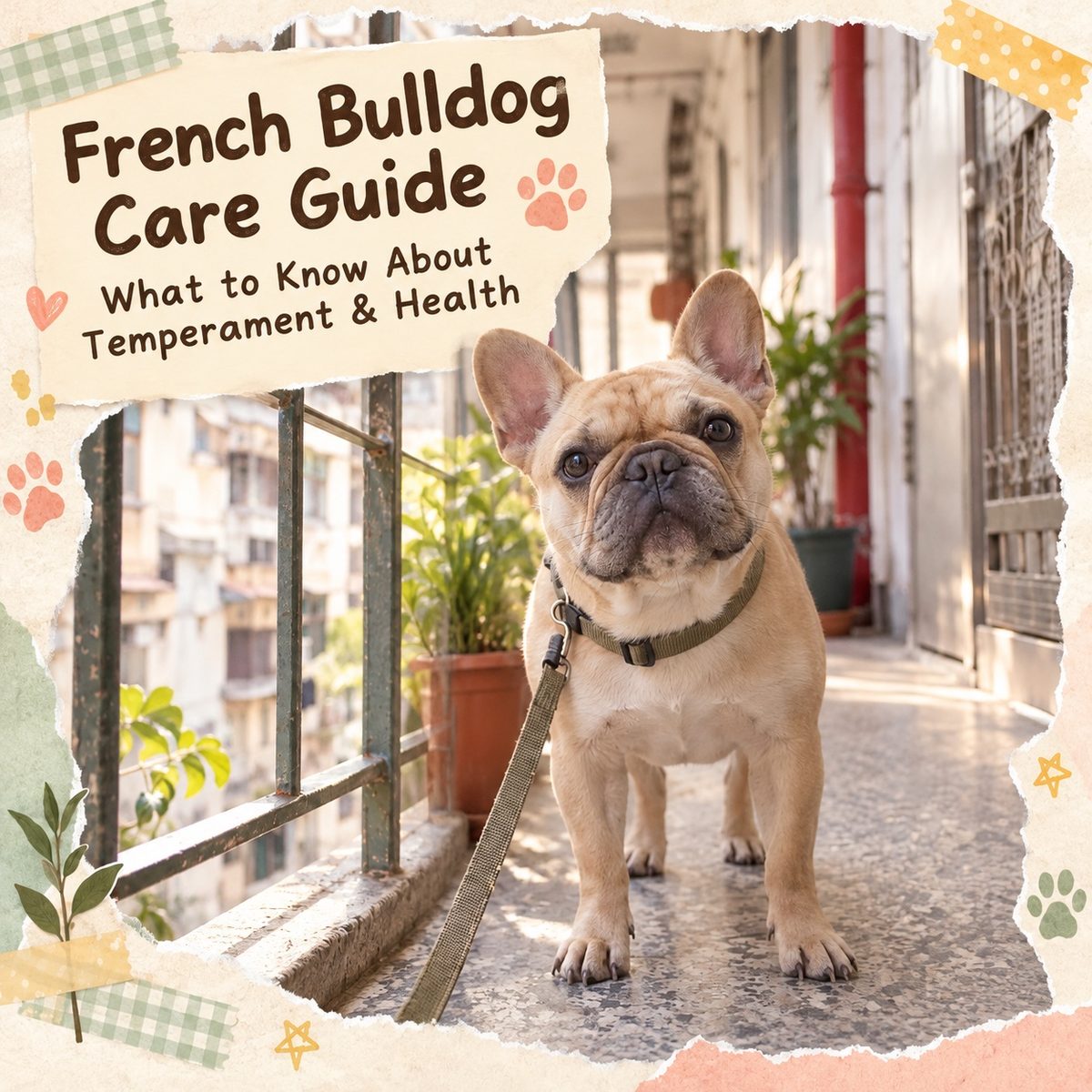
Quick answer: The French Bulldog is a cute, gentle and affectionate breed that is flat-friendly, but its short nose makes it prone to BOAS, skin fold dermatitis and spinal problems. In Hong Kong, you must strictly follow the 16-character principle: 'no direct sun, no strenuous exercise, control weight, keep dry.' Health depends on daily care and early recognition of warning signs.
The French Bulldog (Frenchie) is a super popular breed in Hong Kong — big ears, flat face, cute and 'small but cute' with an excellent temperament. But let's be clear: the Frenchie is a breed with top marks for personality but requires homework on health — short-nose respiratory issues (BOAS), skin fold dermatitis and spinal problems are the three major health hurdles, and Hong Kong summers demand special attention to cooling. This article covers the Frenchie's temperament, care essentials and when to see a vet.
What kind of breed is the French Bulldog?
The French Bulldog is a small breed descended from the English Bulldog, standardised after arriving in France in the 19th century, known for its big ears, flat face and cute looks.
Physical characteristics:
- Small breed, muscular and heavy-boned
- 'Bat ears' — upright large ears, the breed's signature
- Flat nose, round face, short skull (brachycephalic)
- Weight about 8-12kg, lifespan generally around 10-12 years
French Bulldog temperament: tough looks, gentle heart
- Gentle and playful — excellent temperament, loves to play
- Affectionate — loves interacting with people, dislikes being left alone for long periods
- Settles well — low exercise needs, suitable for flats
- 'Small but cute' — tough appearance but gentle character
- Stable temperament — active but not nervous, generally friendly to children and other pets
Tip: The Frenchie is a dog that is 'tough on the outside but super gentle on the inside.' It doesn't need lots of exercise and is very suitable for Hong Kong flats. If you want a dog that is 'cute and doesn't need daily runs,' the Frenchie is an excellent choice. But remember: its low exercise needs aren't because it's lazy — its short nose means it can't breathe well after running for long.

Health hurdle one: short-nose respiratory issues (BOAS)
Frenchies are a brachycephalic breed with narrow nostrils and an elongated soft palate, making their airways narrower than normal dogs. These structural problems are collectively called BOAS (brachycephalic obstructive airway syndrome). Signs range from mild snoring to severe breathing difficulty.
Daily actions:
- No strenuous exercise — short runs and ball games in moderation; walks should stop before heavy panting
- Avoid outings during high temperatures — walk in the morning or evening in summer, stick to shady areas
- Use a harness, not a collar — collars put pressure on the airway, higher risk for flat-nosed dogs
- Control weight — obesity directly worsens breathing effort
Warning signs (see 'When to see a vet' below). Severe BOAS can be assessed by a vet for surgical options such as soft palate correction; best to understand this before getting one.
Health hurdle two: skin folds and ear canals
The Frenchie's facial folds and 'bat ears' are cute features but also spots for bacterial eczema:
- Wipe the folds daily or every other day with damp cotton, then dry — trapped moisture is the most common cause of inflammation
- Watch for redness, odour or scratching under the folds; address early if present
- Check ear canals regularly; odour or head shaking needs a vet — do not clean deeply yourself
- Bathe at moderate frequency with a mild pet shampoo; over-washing damages the skin barrier
Health hurdle three: spine and joints
Frenchies are prone to spinal problems (intervertebral disc disease, especially thoracolumbar):
- Do not let them jump up and down — jumping off sofas and beds is worst for the spine; use a ramp or lift them on and off
- Avoid repeated 'begging' with hind legs straight up — this increases disc pressure
- Control weight — reduces spinal load
- Watch for early signs: hind leg weakness, wobbly walking, unable to jump onto the sofa
Tip: Remember the 16 characters for Frenchie health — no direct sun, no strenuous exercise, control weight, keep dry. If you are willing to do all this, the Frenchie is a cute and loyal companion.
Hong Kong summer: Frenchie cooling checklist
Hong Kong's hot and humid summers are the biggest challenge for brachycephalic dogs:
- Walking times: before 10am or after sunset; if the ground is too hot to touch, don't walk
- Keep air-conditioning or fans on indoors for ventilation; never leave them alone in a room without air-conditioning
- Never leave a Frenchie in a car — it can be fatal within minutes
- Prepare a cooling mat, always have drinking water, bring a water bottle on walks
- First step for heatstroke: move to shade, pour room-temperature water to cool (not ice water), call the vet immediately

Who is a French Bulldog suitable for?
- ✅ Owners who like the cute 'small but cute' look
- ✅ Families in flats with low exercise needs
- ✅ Willing to spend a few minutes daily on skin care, monitor cooling and weight
- ✅ Has time during the day to keep company, won't leave the dog alone for long periods
- ⚠️ Budget should include vet checks and potential treatment costs (a general consideration for brachycephalic breeds)
- ⚠️ Those seeking a long-distance running or hiking partner — the Frenchie is not a suitable breed
When to see a vet?
Please consult a registered veterinarian as soon as possible in the following situations:
| Area | Signs to see a vet immediately |
|---|---|
| Breathing | Laboured breathing even at rest, purple gums, fainting, pauses during sleep |
| Heatstroke | Severe panting, heavy drooling, unsteady gait, high body temperature |
| Spine | Sudden hind leg weakness, limping, unwilling to stand, crying when back is touched |
| Skin | Red, swollen or discharging folds, odour, persistent scratching affecting sleep |
| Appetite | Not eating for over a day, persistent vomiting or bloody soft stool |
Among these, purple gums from breathing difficulty, suspected heatstroke, and sudden hind leg paralysis are emergencies — do not wait until the next day.
Frenchie diet and weight management
Every health hurdle above (breathing, spine, skin) has the same amplifier behind it: obesity. Frenchies are small and low-energy, so it's easy to go from 'cute piggy' to 'truly overweight':
- Weight target: within the 8-12kg range, judged by 'ribs can be felt, visible waist from the side'
- Measured feeding: weigh dry food with a digital scale, don't estimate with a cup; keep treats within 10% of daily calories
- No free feeding: Frenchies will eat until they vomit; two timed meals a day is safer
- If weight rises quickly, reduce portions first then see a vet: before ruling out thyroid etc., don't make a big switch to low-calorie food on your own
For food selection, Frenchies have no breed-specific formula requirement; choose by general adult dog standards (protein ≥22%, first ingredient is meat), and consider fish-based formulas if there are skin sensitivities; if overweight, choose a lower-calorie weight management option.
Budget and mental preparation before getting a Frenchie
The purchase price of a Frenchie is just the entry ticket; the real costs come later: beyond daily dry food and monthly fold-cleaning supplies, vet fees for brachycephalic and spinal issues are generally higher than for other breeds of the same size — anaesthetic risk, possible airway surgery, and disc treatment are all potential large expenses. Recommendations:
- Before getting one, check whether there is a nearby 24-hour emergency clinic and a vet experienced with anaesthesia for brachycephalic dogs
- Consider pet insurance; compare coverage for congenital/hereditary issues
- Set aside a monthly 'medical reserve fund'; don't wait until something happens to scramble for money
With budget and care homework done, the Frenchie's gentleness and humour will repay you tenfold.
For price ranges at different levels and adoption opportunities, see French Bulldog Price and Adoption Guide.
Weekly 5-minute health check
- Watch breathing: count breaths while sleeping quietly; note unusually fast breathing or loud snoring
- Open the folds and check skin: any redness, odour, broken skin
- Feel the limbs: resistance to hind leg bending, changes in walking posture
- Check eyes and ears: increased eye discharge, ear odour — address early
- Weigh monthly: stand on the scale once a month (hold the dog and subtract your own weight); alert if fluctuation exceeds 5%
What you can do starting today
- Check your walking schedule at home and switch to early morning or after sunset.
- Buy saline solution and cotton, establish a 'daily wipe folds, dry thoroughly' habit.
- Add a pet ramp next to the sofa, train going up and down without jumping.
- Note the location and phone number of the nearest 24-hour emergency clinic and stick it on the fridge.
- To choose the right food and supplies for your Frenchie, refer to PetChill's dog food guide and product reviews.
This article is for reference only; consult a registered veterinarian for any concerns.
Further reading
PetChill Pet Knowledge Team — Hong Kong's most authoritative pet knowledge platform
📌 Key summary
- ✅ Frenchies are gentle, playful, affectionate and settle well — extremely suitable for Hong Kong flat living
- ✅ Clean facial folds daily or every other day and dry thoroughly to prevent eczema inflammation
- ✅ Must use a harness instead of a collar to avoid pressure on already narrow airways
- ✅ Never let a Frenchie jump on or off sofas or beds; use a ramp or lift them
- ❌ Going out at midday in summer, leaving the dog in a room without air-conditioning or in a car can be fatal
- ❌ Excess weight directly worsens breathing difficulty, spinal load and skin problems



