
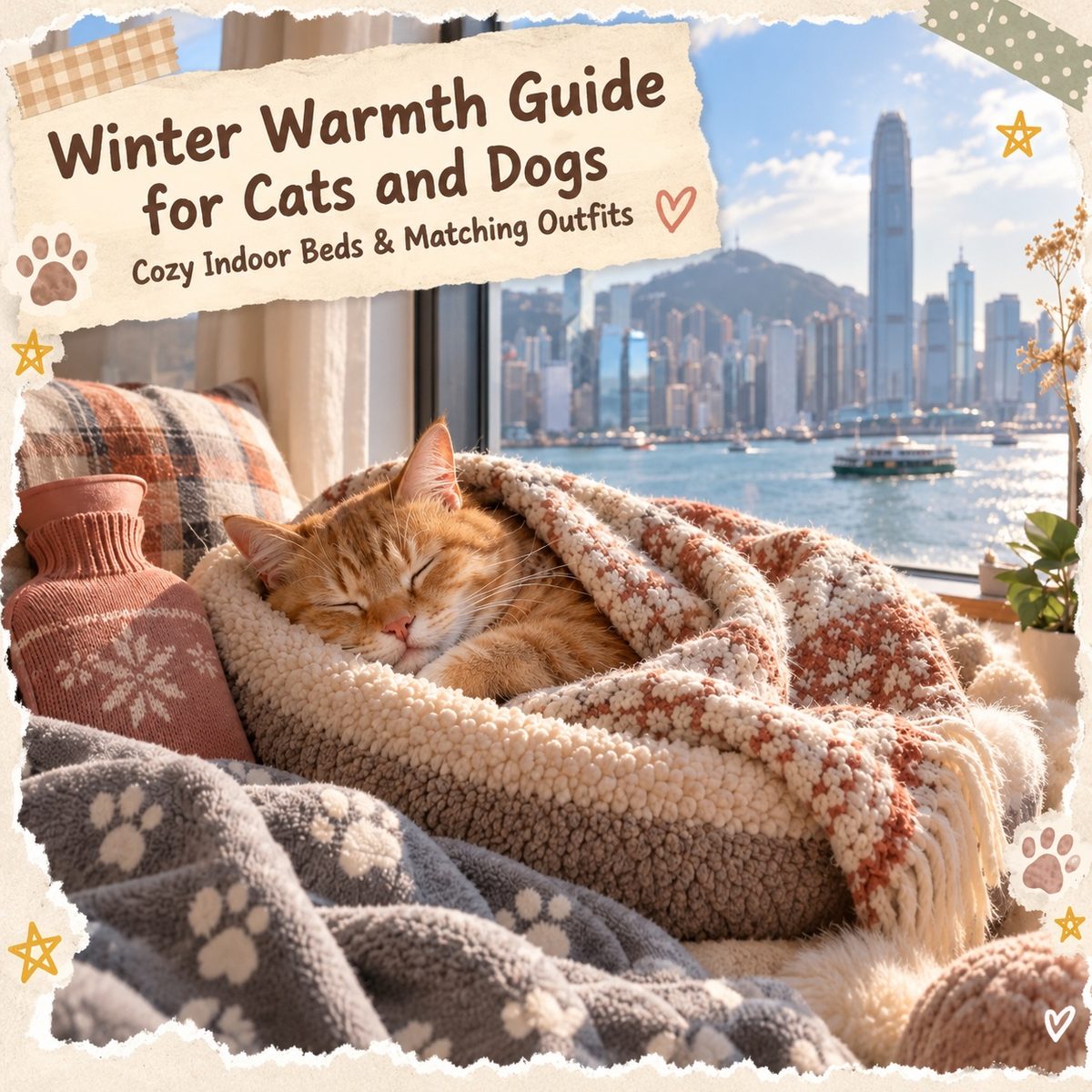
Quick answer: Hong Kong winters are damp and cold, and short-haired pets, puppies and senior cats are most vulnerable to the chill. Use a low-temperature heat pad with a towel for insulation, avoid draughts, keep heating at a constant temperature, and watch for low-temperature burns and stiff joints in senior cats — that's the safe way to keep warm.
Hong Kong winters aren't extremely cold, but the damp chill affects cats and dogs — short-haired, young, senior and frail individuals are especially vulnerable. The four essentials for warmth: a blanket-lined warm bed, a low-temperature heat pad (not too hot), avoiding draughts, and moderate heating; at the same time watch for asthma flare-ups, dry skin and stiff joints in seniors.
Do cats and dogs not need warmth because they have fur?
No. The coat is the first line of defence, but in the following cases that defence isn't enough:
| Group | Why they feel the cold especially |
|---|---|
| Short-haired cats and dogs (Siamese, Greyhound, etc.) | No thick fur for warmth |
| Kittens and puppies | Temperature regulation not mature, weak immunity |
| Senior cats and dogs | Less muscle, slower metabolism, cold-sensitive joints |
| Sickly, thin individuals | Poor resistance, no fat for insulation |
| Cats and dogs on balconies or terraces | Directly exposed to damp cold and wind |
Tip: To tell if they're cold, feel the ears, paw pads and belly — cold to the touch is a signal. Curling into a ball, tucking the tail around the body when sleeping, and reluctance to move are all ways they tell you they're cold.
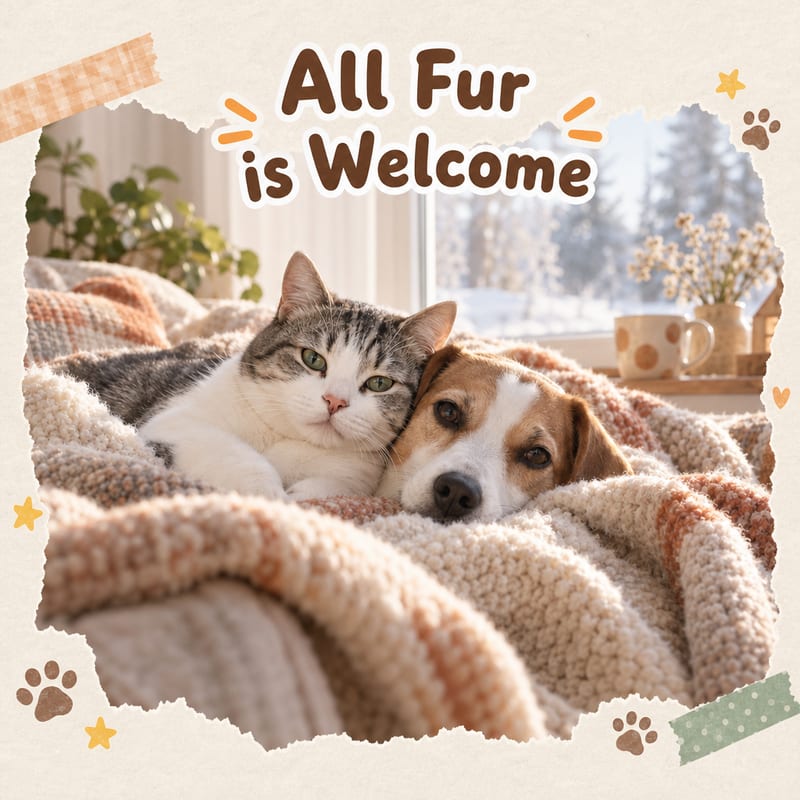
How to keep cats and dogs warm? Five methods
- Blanket / warm bed — provide a warm sleeping spot, placed in a sheltered, elevated position
- Heat pad — use the lowest setting, with a towel layer on top to prevent direct contact with an overheated surface
- Watch for draughts — don't put the cat bed in a draught path or by a windy window
- Moderate heating — keep it at a constant temperature, not too strong (watch for dryness; a humidifier can help)
- Extra care for short-haired and frail pets — consider pet clothing, but make sure they can't chew or pull at it when no one is around
Warmth isn't about being as hot as possible: the goal is comfortable, constant temperature, not sweating. If you don't use heating at home, a closed cat igloo with layers of blankets is already better than a big warm room.
Heat pad and hot water bottle safety: watch for low-temperature burns
This is where accidents most often happen in winter:
- Low-temperature burns are real — when cats and dogs lie against a surface above 45°C for a long time, the skin slowly burns, and they don't know to move away, even when asleep
- Use the lowest setting + a towel for insulation on heat pads, and don't leave them on a high setting all night
- Wrap hot water bottles in a towel and move them every 2–3 hours to avoid local overheating
- Don't leave cats and dogs alone with a plugged-in heat pad — turn it off when you're not home
- Regularly part the fur to check the skin touching the heat pad — if it's red or peeling, stop using it and check carefully
Tip: One test — if you can't hold your own hand on it for 10 seconds, it's too hot for a cat or dog's skin.
Electric blankets and fan heaters follow the same principle: don't use the highest setting, and don't leave them unattended all night. Senior cats are especially at risk — thin skin, dulled sensation, sleeping on an overheated pad all night and only discovering the burn when they wake up is not unusual. A timer, a towel layer and the lowest setting are the safest combination.
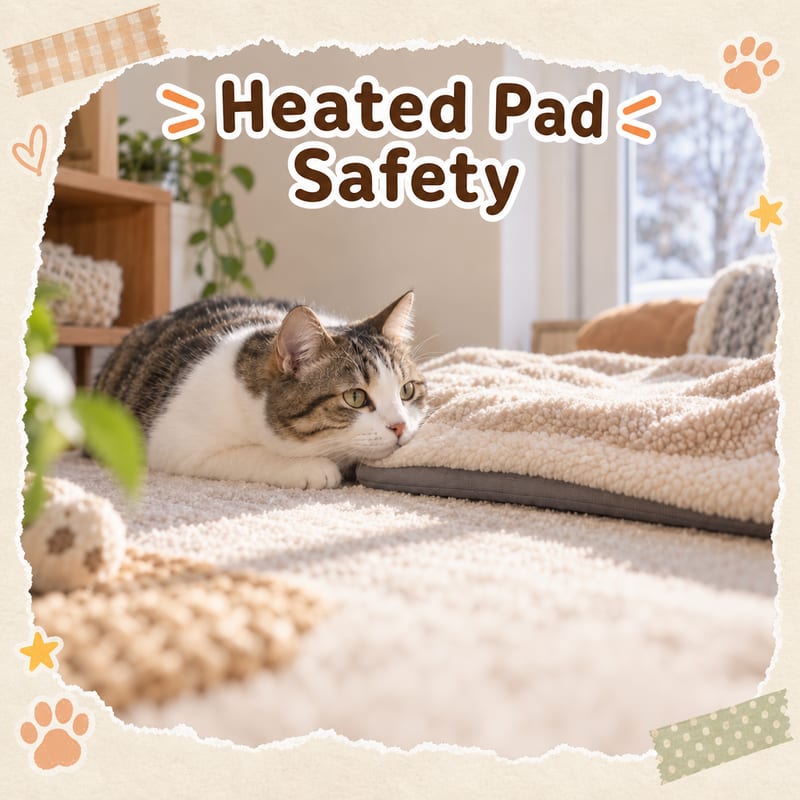
Special winter care for senior cats and dogs
For cats and dogs over 7–8 years old, pay extra attention in winter:
- Joints: cold and damp makes joints stiff; make the bed thicker and avoid sleeping directly on the floor; be alert if they hesitate to walk or won't jump up
- Body temperature: older pets regulate poorly; a constant-temperature environment is more important than occasional blasts of heat
- Drinking and appetite: warm environments can make them forget to drink; place water bowls in several spots to encourage drinking
- Chronic illness: for those with heart, kidney or arthritis conditions, symptoms tend to fluctuate in winter; follow your veterinarian's advice on check-ups
- Environmental safety: senior dogs with stiff joints can slip on slippery floors — put non-slip mats in sleeping areas and limit jumping up and down
Other winter precautions
These "warmth methods" are actually dangerous
- Direct fan heater: far-infrared heaters have hot surfaces; a cat sleeping against one all night means low-temperature burns plus fire risk
- Hot water bottle directly against the body: must be wrapped in a towel and moved every 2–3 hours; don't use it overnight
- Sweaters left on all day: trapped moisture can cause skin problems; take them off when back home to let the fur breathe
- Windows shut with no airflow: damp stuffiness also harms the respiratory tract; moderate ventilation plus draught-blocking is the right way
- Letting cats and dogs sleep in your bed: human bedding and pillows are full of skin flakes and scent, which can disrupt toilet and sleeping-area habits; a dedicated warm bed is better
Taking dogs out in winter: five details
- Early morning before sunrise is coldest: add a pet coat and dry them off as soon as you're home
- Grass after rain is damp and cold: dry the paw fur after walks to prevent interdigital dermatitis
- Short-haired and small dogs: shorten time outside; only energetic large dogs need long exercise sessions
- Let the car heating warm up before getting in, to avoid a chill
- Carry a water bottle with room-temperature water; very cold water reduces how much they drink
Winter drinking and appetite
In cold weather, cats and dogs drink less without realising it, which is a concern for the urinary system (especially male cats): place water bowls in several spots, use slightly warm room-temperature water, and consider a flowing water fountain to encourage drinking. As for appetite, cold weather burns more energy and some cats and dogs eat more — watch their weight; don't overfeed obese individuals just because it's cold.
Other winter precautions
- Watch for asthma — asthma and respiratory conditions flare up more easily in winter; direct cold wind is a trigger
- Keep dry — Hong Kong's humidity can worsen skin and cause matted fur; always dry thoroughly after washing
- Don't stay in draughts for long — catching a chill is minor, but triggering airway problems is trouble
- Heater tip-over protection — choose models with automatic cut-off if tipped, surround with a barrier to prevent burns and electric shock
- Watch the skin — winter dryness causes itching and dandruff; use a humidifier as appropriate
- Don't let drinking water get too cold — lukewarm is just right; avoid ice-cold water all day
When to see a veterinarian?
Even with good warmth, watch for signs of illness. See a registered veterinarian as soon as possible if you notice:
- Continuous shivering in a ball, ears and paw pads cold for long periods, lethargy
- Worsening cough, laboured breathing, open-mouth breathing (especially flat-faced dogs and asthmatic cats)
- Redness, blisters or fur loss on skin touching the heat pad
- Senior pets suddenly having difficulty walking or refusing to get on the cat bed or sofa
- Appetite not improving for more than two or three days
This article is for reference only; consult a registered veterinarian for any concerns.
How do I know if my home is warm enough?
Three practical checks: 1) Is your pet's sleeping spot off the floor? (The floor is coldest; raising it ten-odd centimetres makes a big difference.) 2) Are they curled up all day or stretched out relaxed? (Curled up means cold.) 3) Feel the ears and paw pads in the early morning and late at night (the coldest times of day show it best).
What you can do starting today
- Feel your pet's ears and belly once to assess whether they're cold right now
- Move cat and dog beds away from draughts and windows, and add an extra blanket
- Turn the heat pad to the lowest setting, add an insulating towel, and set a time limit
- Check for dry skin and asthma, and book a veterinarian if anything is abnormal
- For cat houses on balconies exposed to the north wind, consider moving them indoors
There's also a summer edition in our seasonal care series: PetChill's Pet Seasonal Care Guide and Heatstroke First Aid Guide, so your pets are comfortable all year round.
This article is for reference only; consult a registered veterinarian for any concerns.
Further reading
📌 Key takeaways
- ✅ Use the lowest setting on heat pads + a towel for insulation; turn off when you leave
- ✅ Make senior cats' and dogs' beds thicker and off the floor, away from draughts
- ✅ Dry paw fur immediately after walks to prevent interdigital dermatitis
- ❌ Direct fan heaters and all-night high-temperature heat pads = risk of low-temperature burns
- ❌ Sweaters left on all day trap moisture and cause skin problems
 Fuji One full guide →

