
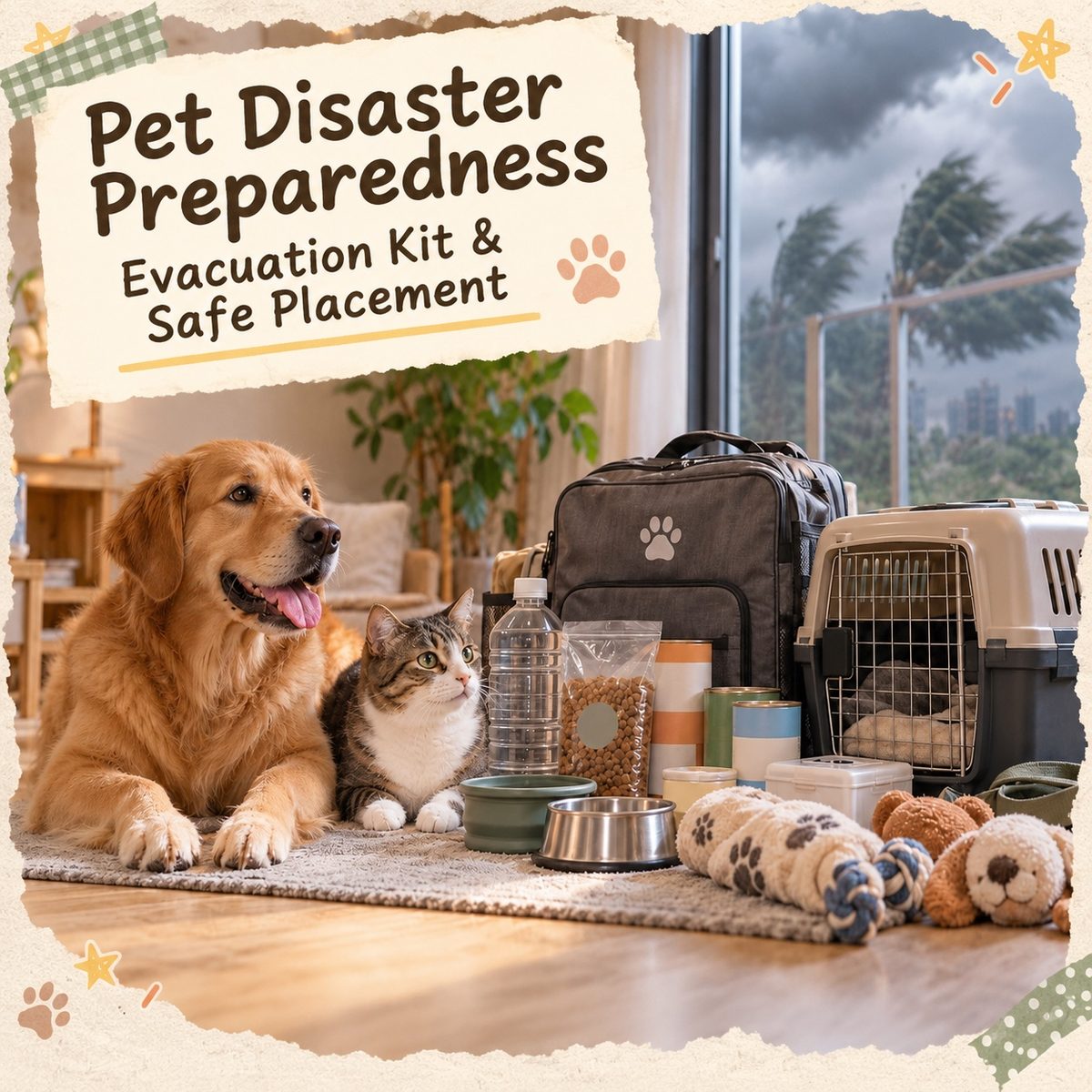
Quick answer: Hong Kong's typhoon season lasts six months. If owners prepare an emergency kit in advance—3 days of food and water, medication, microchip and vaccination records, leash/carrier, first-aid kit, blanket, pee pads, and pet photos—update microchip details, and get pets used to carriers, they can grab it and go when Typhoon Signal No. 8 is hoisted or evacuation is ordered, keeping both people and pets safe.
Every year Hong Kong faces typhoons and rainstorms. The core of pet disaster preparedness is a ready emergency kit: at least 3 days of food and water, medication, microchip and vaccination records, leash/pet carrier, first-aid kit, blanket, pee pads, and pet photos. When a signal is hoisted, avoid going out; if evacuation is required, pets must go with you. Here's a breakdown item by item.
Why do Hong Kong owners especially need disaster preparation?
Hong Kong's climate reality: the typhoon season runs from May to October each year, with Typhoon Signal No. 8 and black rainstorms occasionally striking suddenly; in high-density housing, if evacuation is needed, escape routes, corridors, and time are limited. Unprepared owners often find, when the wind is howling, that they can't find the cat, haven't fitted the dog's carrier, and left documents and medication in a drawer. The essence of disaster preparation is making decisions in advance—when the signal escalates, you just execute, no thinking required.
What should I put in a pet emergency kit?
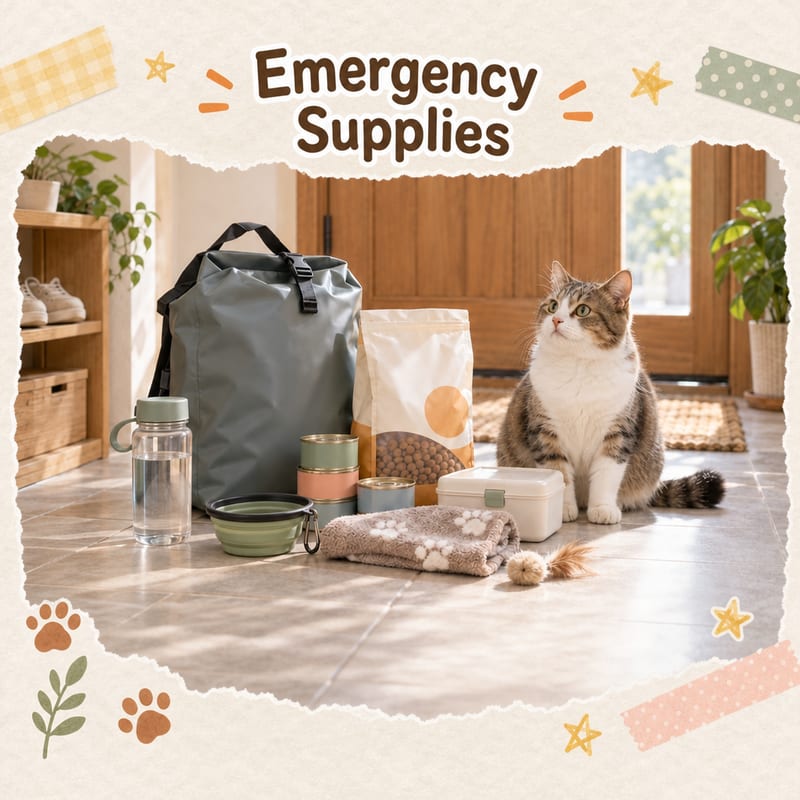
Check each item off; use a waterproof bag or small backpack and store it in a visible place known to the whole family:
- Food and water—at least 3 days' supply: portion dry food into sealed bags, and bring extra bottles of water.
- Medication—regular medications (heart, epilepsy, skin, etc.) and a copy of the vet's prescription.
- Leash/pet carrier/hard-sided carrier—to control your pet and prevent escape during evacuation.
- Identification documents—microchip number, vaccination records; vets or shelters may check these in an emergency.
- First-aid kit—gauze, sterile dressing, saline, haemostatic supplies.
- Pet bed/blanket—shelters won't have beds; a blanket provides security and warmth.
- Pee pads—backup for indoor toileting during a stay.
- Photos—recent close-up and full-body shots (phone photos count), key evidence for lost-pet searches.
⚠️ The kit itself isn't complicated; the easiest things to forget are medication and microchip documents—in an emergency you can borrow food, but running out of chronic medication or being unable to prove "this is my cat" is much harder.
| Item | Suggested quantity/action | Common omission reminder |
|---|---|---|
| Dry food | At least 3 days' supply, in sealed bags | Remember to replace every six months to avoid expiry |
| Bottled water | 3 days' supply, plus a few extra bottles | Check expiry dates together with dry food |
| Medication | Daily meds + copy of prescription | Restock at check-ups; don't wait until you have only two days left |
| Microchip details | Phone number and address must be up to date | Update online immediately if you move or change number |
| Carrier/bag | Leave door open and put treats inside so pets get used to it | First use during a storm will cause resistance |
| First-aid kit | Gauze, saline, adhesive bandages | Check every six months for used items |
| Blanket | One small blanket is enough for warmth | Shelters may not have beds |
| Pee pads | 10 as backup | Needed if power fails and automatic litter box stops |
| Pet photos | Recent close-up + full-body, phone is fine | Makes it easy to make lost-pet posters |
How to handle pets during a typhoon?
Once a signal is hoisted, the principle is: stay home, don't go out.
- Don't take dogs out for walks—going out in the worst wind and rain endangers both people and dogs; flying debris can injure paws. Going out during Typhoon Signal No. 8 is neither safe nor wise.
- Close doors and windows, check window screens—a frightened cat can dash out a door or window in an instant; this is the number one cause of pets going missing during storms.
- Keep the emergency kit visible—so you can grab it with one hand if you need to leave immediately.
- Manage emotions—wind and lightning scare cats and dogs. Hiding doesn't mean you should force them out; place water and a litter box in the room where they hide, stay nearby, close curtains, and play soft music to reduce stimulation.
- Prepare for power and water outages—think ahead about alternatives when the power is out and litter boxes and water fountains don't work.
How to take pets if evacuation is needed?
If circumstances require you to leave your unit (building damage, flooding, government evacuation order), follow this order:
- Grab the emergency kit and your own ID documents.
- Put cats in carriers, dogs on short leashes—secure them before opening the door; a frightened animal can bolt down the corridor in an instant and be impossible to catch.
- Attach an ID tag to the outside of the bag/carrier—write your mobile number.
- Ensure microchip registration details are current—update if you've moved or changed number; do this in normal times.
- On reaching the shelter, proactively show the microchip number and vaccination records.
Tip: Get cats and dogs used to the carrier in normal times (leave the door open, put treats inside) so it's familiar when a storm comes. First use when they're already scared will set you back.
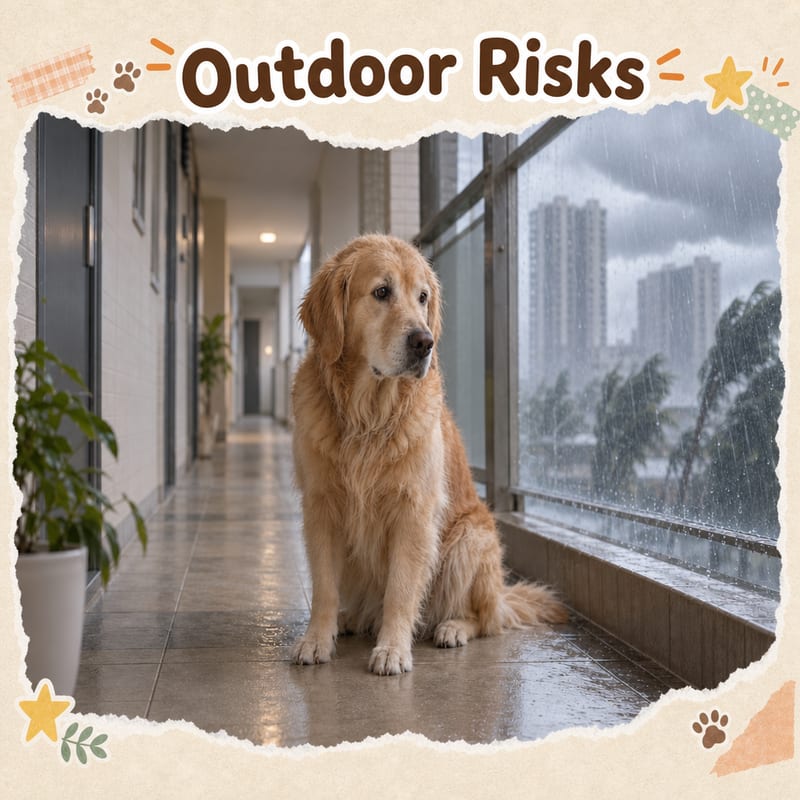
What other risks outside the home should I consider?
- Flood-prone floors: if you live on the ground floor or low level, decide in advance "where to take the cat and dog if water rises"—don't wait until floodwater is at the door.
- Balcony clutter: blown-away flower pots and objects can injure pets near windows; put them away before the storm.
- Backup temporary boarding: if shelters are not convenient for pets, find friends/family or boarding centres in advance; choosing someone during the storm is too late.
Three things to do regularly before typhoon season
The emergency kit isn't something you pack once and leave forever; check it quarterly to make sure it's really usable:
- Check food and water expiry: dry food, canned food, and bottled water all have expiry dates; replace every six months so it's ready to eat when needed.
- Restock medication: the worst thing with long-term medication is "only two days left"; ask at check-ups when to restock and write that date on the checklist on the kit cover.
- Update documents: update vaccination record copies when new shots are given; update microchip registration when you move or change mobile number—if microchip details aren't updated, the chance of recovery is greatly reduced.
Also write the "last check date of emergency kit" on a piece of paper and stick it on the kit, so you know at a glance before Typhoon Signal No. 8 whether it's reliable.
What you can do starting today
- This week, pack a pet emergency kit and write the "last check date" on the lid.
- Check once whether the microchip registration has your latest mobile number.
- Buy a suitably sized carrier and let the cat use it as a bed for practice.
- Hold a 5-minute family meeting: who grabs the emergency kit, who handles the pet.
After these four things, you can sleep much more soundly on the night of Typhoon Signal No. 8.
Further reading
PetChill Pet Safety Team — Hong Kong's most authoritative pet knowledge platform
Hong Kong small-unit practicalities: 24-hour pre-typhoon checklist
Hong Kong living in 300 sq ft—space is limited, but you can still sort out pet disaster preparedness. In the 24 hours before a storm, follow this timetable and you won't be rushing around.
8 pm the night before: final inspection
- Move the emergency kit from the top of the wardrobe to the shoe cabinet at the entrance so the whole family can see it.
- Take a fresh full-body photo of your cat or dog on your phone and save it in a "typhoon" album so you have a photo ready if you need to make a lost-pet poster.
8 am on the day: update details
- Go to the AFCD website, log in with your microchip number, confirm your mobile number and address are correct; correct any errors immediately and screenshot the confirmation.
- Open the emergency kit and check bottled water expiry dates; if expired, go downstairs to 7-11 for new ones and buy two extra cans of cat food as backup.
12 noon: get pets used to the carrier
- Open the carrier door and put their favourite treats inside, letting the cat go in and out freely; for dogs, attach a short leash and walk around the home to simulate evacuation.
- Use your phone timer to ensure the cat voluntarily enters the carrier in under 30 seconds; if it takes longer, practise more.
4 pm: family division of labour
- Hold a 3-minute WhatsApp group meeting with family: A grabs the emergency kit, B puts the cat in the carrier, C closes windows and turns off the power. Clarify who does what so there's no arguing when the signal escalates.
8 pm: final checks
- Bring all balcony flower pots and drying racks indoors to prevent them blowing into the street.
- Lay pee pads on the bathroom floor so if the power fails and the automatic litter box stops, the cat still has a place to go.
After these five steps, even if the Observatory suddenly hoists Typhoon Signal No. 9, you can leave the unit with your pet within 3 minutes—no last-minute panic.
📌 Key summary
- ✅ Keep the emergency kit visible and known to the whole family
- ✅ Never go out during Typhoon Signal No. 8; staying home is safest
- ✅ Check quarterly whether food, medication, and documents are expired or need updating
- ❌ Don't wait until the signal is hoisted to use the carrier for the first time—cats and dogs will panic
- ❌ If microchip registration details aren't updated, it's hard to verify identity if lost
 Fuji One full guide →

