
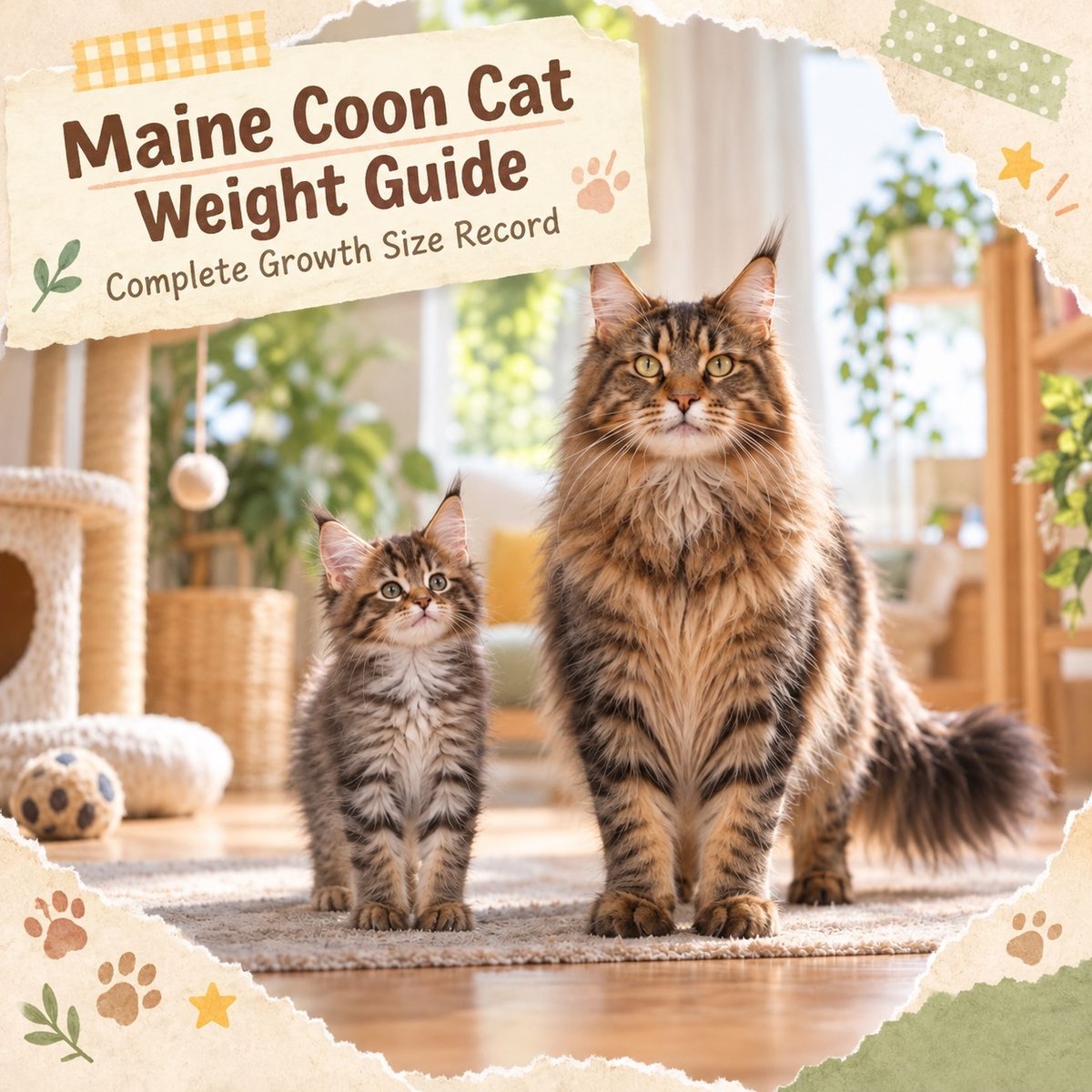
Quick answer: How big is a Maine Coon, and what counts as normal? Adult males weigh about 6-10 kg and females about 4-7 kg, with a nose-to-tail length of up to 90-120 cm. Their growth plates close late, so they are not fully grown until 3-4 years old, and kittens gaining about 0.3-0.5 kg per month is a normal pace. This article covers male vs female size differences, a growth-stage weight chart and a weight self-check method.
Want to know the breed inside out? Start with the Maine Coon breed profile and the complete Maine Coon guide.
How Big Is a Maine Coon? The 30-Second Summary
"How big is a Maine Coon" is one of the most searched questions among prospective owners in Hong Kong. The short answer: males 6-10 kg, females 4-7 kg, up to 90-120 cm including the tail, making it the largest domestic cat breed recognised by the CFA. But the key point is not a single number, it is the slow maturity, with full adulthood at 3-4 years old. The table below lists the key specs at a glance.
| Item | Figure |
|---|---|
| Adult male weight | 6-10 kg |
| Adult female weight | 4-7 kg |
| Nose-to-tail length | 90-120 cm |
| Shoulder height | 25-40 cm |
| Age fully grown | 3-4 years (some up to 5) |
| Kitten monthly gain | About 0.3-0.5 kg |
| Average lifespan | 12-15 years |
| Monthly food cost | About HK$500-900 |
| Upgraded gear budget | One-off about HK$2,500-6,000 |
Three basics you must know:
- A 1-year-old Maine Coon is still a "teenager" — at 12 months it is only 4.5-6.5 kg, with another two or three years of growing ahead.
- Higher on the weight range is not better — firm muscle and a passing body condition score matter more than kilos.
- In Hong Kong the limit is space, not weight — a 400 sq ft flat with vertical space can still work; what matters is gear that can take the load.
Maine Coon Age x Weight Quick Reference
If you are short on time, use this table by age; the figures match the growth chart and gear timeline below:
| Age (months) | Male reference weight | Female reference weight | Gear switch at this stage | Gear cost |
|---|---|---|---|---|
| 2 months | 1-1.5 kg | 0.9-1.4 kg | Kitten litter box, kitten food, small toys | HK$300-600 |
| 4 months | 2-3.2 kg | 1.8-2.8 kg | Same gear (shedding season begins) | Same as above |
| 6 months | 3-4.5 kg | 2.5-4 kg | Medium litter box, first cat tree | HK$800-1,500 |
| 12 months | 4.5-6.5 kg | 3.5-5.5 kg | Load-rated cat tree upgrade, wide bowls | HK$1,500-3,000 |
| 18 months | 5.5-8 kg | 4-6 kg | Extra-large litter box, larger carrier | HK$700-1,800 |
| 24 months | 6-9 kg | 4-6.5 kg | Same, recheck load ratings | Same as above |
| 36 months | 6-10 kg | 4-7 kg | Check load capacity of all gear, replace if needed | HK$0-2,000 |
How to use it: find the weight range for the age first, then look at the gear column. A Maine Coon's "big" comes in stages of gear upgrades, not one big purchase; adult males end up at 6-10 kg and females at 4-7 kg, and it takes 3-4 years to get there.
The Extra-Large Bill for a Big Maine Coon (2026 Hong Kong Prices)
However big the Maine Coon, the gear has to match. This is the cost many new owners forget: standard-size cat products simply do not work for an 8 kg cat. Below are real Hong Kong prices:
| Item | Range | Notes |
|---|---|---|
| Load-bearing solid wood cat tree (15 kg+) | HK$1,500-4,000 | Suction-cup low frames cannot hold them, do not skimp |
| Extra-large litter box / modified storage box | HK$200-600 | Needs room to turn around, or they will go outside the box |
| Large carrier | HK$500-1,200 | Essential for vet visits, standard sizes will not fit |
| Wide food and water bowls | HK$100-300 | Avoid long-term whisker pressure |
| Monthly food | HK$500-900 | About 80-100 g dry food per day as an adult |
| Monthly cat litter | HK$150-300 | A big box uses 1.5x a standard box |
| One-off gear total | About HK$2,500-6,000 | Food and litter on top, about HK$650-1,200 per month |
In one line: a Maine Coon's "big" is not a one-off surprise, it is a fixed cost that shows up on the food bill and litter bill every month. Budget at "normal cat x 1.5-2" and you will not be caught short.
Is a Maine Coon Right for You? Who Can Handle a Big Cat
| Owner type | Suitability | Reason |
|---|---|---|
| Households with vertical space | Suitable | Floor-to-ceiling cat tree plus wall shelves make up for limited floor area |
| Budget of HK$1,500+ per month | Suitable | Food, litter, gear and vet care all come in extra-large |
| People who like interactive big cats | Very suitable | Big body but gentle temperament, highly trainable |
| Renting a subdivided flat / very small space | Not recommended | A 10 kg cat in a cramped flat space can become depressed |
| Elderly or low-strength owners | Needs assessment | Lifting an 8-10 kg cat onto the consultation table is physical work |
Reverse self-check (three questions):
- Can you carry an 8 kg living creature ten steps one-handed (needed for vet visits)?
- Do you have a wall at home where you can install shelves for vertical space?
- Can you reliably set aside HK$1,500+ per month for cat costs?
If you answer "no" to two of the three, consider a medium breed in the 4-5 kg range — they are no less lovable for being smaller.
Maine Coon Size vs Common Cats in Hong Kong
| Breed | Adult weight | Length reference | Monthly food cost | Litter box size |
|---|---|---|---|---|
| Maine Coon | 6-10 kg | 90-120 cm | HK$500-900 | Extra-large |
| Ragdoll | 5-9 kg | 80-100 cm | HK$400-700 | Extra-large |
| British Shorthair | 4-8 kg | 60-80 cm | HK$350-700 | Standard to large |
| Norwegian Forest Cat | 5.5-9 kg | 80-100 cm | HK$400-700 | Extra-large |
| Domestic shorthair | 3.5-5 kg | 50-70 cm | HK$250-500 | Standard |
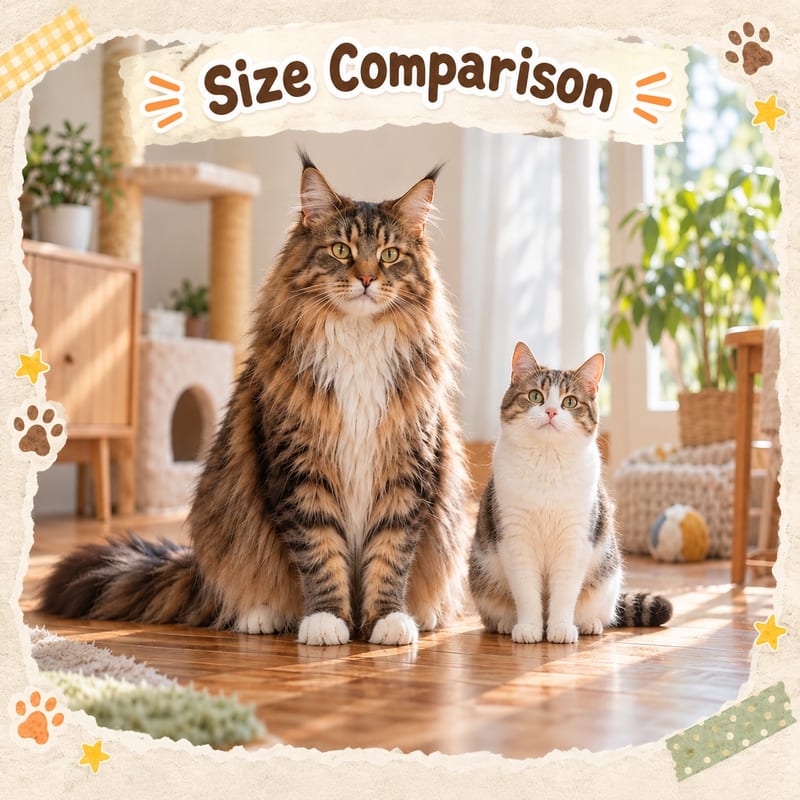
The Maine Coon wins on "long", not "heavy" — at the same 9 kg, a Maine Coon is a rectangular, muscular build while a Ragdoll is a heavy, soft build. Choose gear based on body length and activity level, not just the scale reading.
When to Upgrade Gear? Growth-Stage Buying Timeline
| Age (months) | Weight reference (male) | What to change / buy | Approximate cost |
|---|---|---|---|
| 2-4 months | 1-3.2 kg | Kitten litter box, kitten food, small toys | HK$300-600 |
| 6 months | 3-4.5 kg | Medium litter box, first cat tree | HK$800-1,500 |
| 12 months | 4.5-6.5 kg | Load-rated cat tree upgrade, wide bowls | HK$1,500-3,000 |
| 18-24 months | 5.5-9 kg | Extra-large litter box, large carrier | HK$700-1,800 |
| 36 months | 6-10 kg | Check load capacity of all gear, replace if needed | HK$0-2,000 |
The smart move is to buy extra-large from the start: litter box, carrier and cat tree all straight to 15 kg load rating. It costs about HK$1,000 more in the first year, but saves the total cost of three generations of replacements over three years.
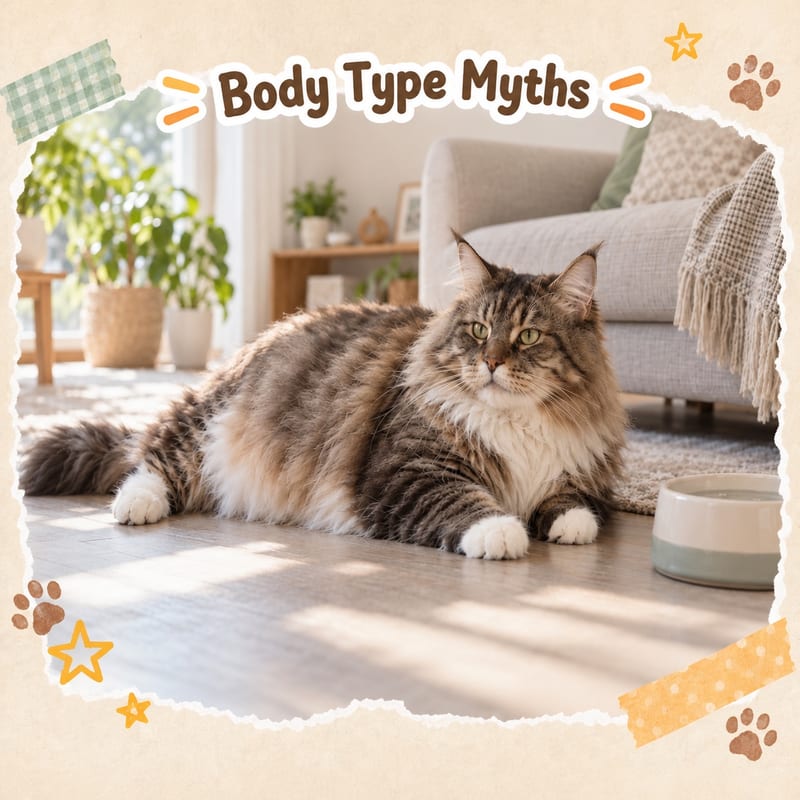
Four Common Maine Coon Size Myths
| Myth | Reality |
|---|---|
| Maine Coons always reach 10 kg | 10 kg is the top of the male range; plenty of healthy males are 6-8 kg. Over 10 kg, check for obesity instead |
| Eating more makes them bigger | Size is set by genetics; overfeeding only adds fat, not size, and strains joints and heart |
| They are fully grown at one year | Maine Coon growth plates only roughly close at 18-24 months, with muscle and chest developing until 3-4 years |
| A small Maine Coon must be a mix | Females at 4-7 kg are standard; bloodline, neutering timing and nutrition all affect final size, so do not judge pedigree by the scale |
Size is the Maine Coon's most eye-catching selling point and also the area with the most myths. Remember the three-part test: growth curve trend + body condition score + vet check. No single number counts on its own.
How Much Should a Maine Coon Eat? Portion Reference
Big cats eat more, that is common sense, but many people guess at "how much is right". Below are reference portions for a dry-food-based diet (adjust to the food's calorie label and body condition):
| Weight | Daily dry food reference | Monthly food cost | Body condition goal |
|---|---|---|---|
| 3-4 kg (late kitten) | 50-70 g | HK$300-500 | Slightly rounded belly is normal, growth curve rising |
| 4-6 kg (young female) | 60-80 g | HK$400-650 | Ribs feelable, waistline visible |
| 6-8 kg (adult male) | 80-100 g | HK$500-800 | Firm muscle, tucked abdomen |
| 8-10 kg (large male) | 90-110 g | HK$600-900 | Stable weight, no continuous rise |
Three feeding principles:
- Meals beat free-feeding — free-feeding a large cat easily reaches 12 kg; 2-3 measured meals a day is the right approach.
- Watch body condition, not the empty bowl — finishing the food does not mean hunger; Maine Coons are famous actors.
- Gain no more than 0.3 kg per month — a rapid rise after the growth period is fat, not muscle.
The biggest trap with a large cat is "it's so big, eating more is normal". A Maine Coon's frame can carry 10 kg of muscle, not 12 kg of fat — the portion table is a tool, the body condition score is the judge.
When to Start Weighing? Home Tracking Method
Do not wait until adulthood — start recording from the first day the kitten comes home. It is simple:
| Stage | Weighing frequency | Recording method |
|---|---|---|
| Kitten (2-12 months) | Once a month | Note the kilos in a phone memo, compare with the growth chart |
| Development (1-3 years) | Once a month | Join into a growth curve so sudden changes show up |
| Adult (3 years+) | Once a month | Weight plus body condition score in parallel |
A single weighing means nothing; the trend means everything. Same day each month, same scale, same time of day, and in three months you will see a clear curve — that line is the first thing your vet will ask about.
Why Maine Coons Are So Big: Breed Background
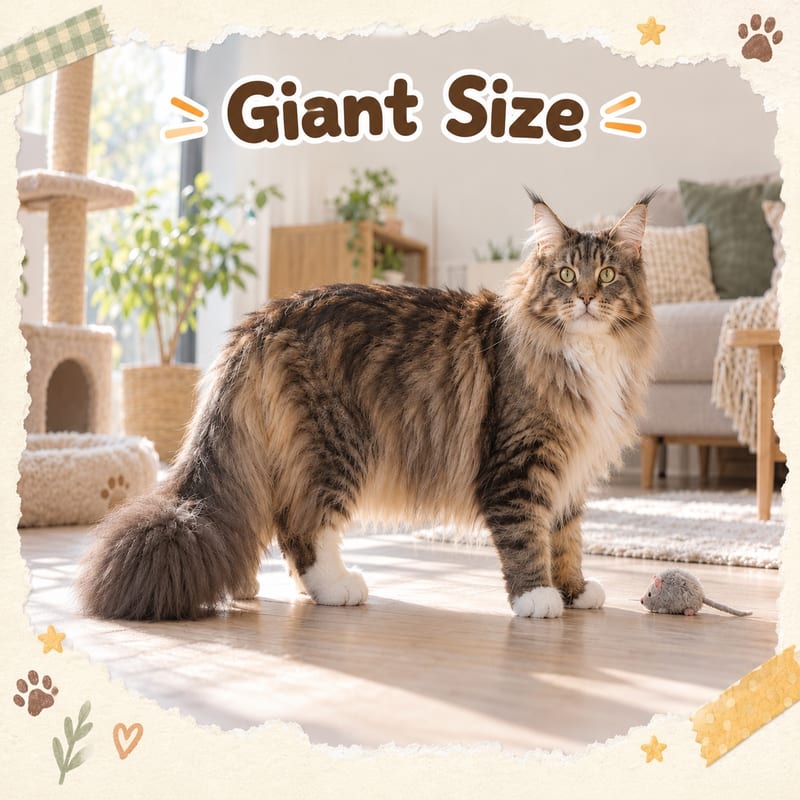
The Maine Coon is one of the oldest natural long-haired breeds in North America, formally recognised by The International Cat Association (TICA) and the Cat Fanciers' Association (CFA), and listed by the CFA as the largest domestic cat breed. The sturdy frame, broad chest and large ears with "ear tufts" are all body features evolved in its cold native region: a double waterproof coat against low temperatures, a fluffy long tail to wrap around the nose and mouth for warmth, and broad paws that act like natural snowshoes. On length, several Guinness World Record "longest domestic cat" titles have been held by Maine Coons — record holder Barivel measured about 120 cm from nose to tail tip, proof that this breed's size ceiling really is astonishing.
Male vs Female Size Comparison
| Item | Adult male | Adult female |
|---|---|---|
| Weight | 6-10 kg | 4-7 kg |
| Shoulder height (floor to shoulder blade) | About 25-40 cm | About 25-35 cm |
| Nose-to-tail length | About 100-120 cm | About 90-100 cm |
| Age fully grown | 3-4 years (some up to 5) | About 3 years |
| Frame features | Broad chest, thick neck, square face | Slighter but still a large cat |
The above are the breed's typical safe ranges, and individual variation can be large: bloodline, bone thickness, neutering timing and nutrition can all push actual figures away from the middle. As long as muscle is firm and appetite and energy are normal, slightly below or above the range does not mean a health problem. By the way, a Maine Coon's tail alone can be over 40 cm long, so never leave the tail out when measuring length, or you will underestimate their true size.
0-36 Month Growth Weight Reference Chart
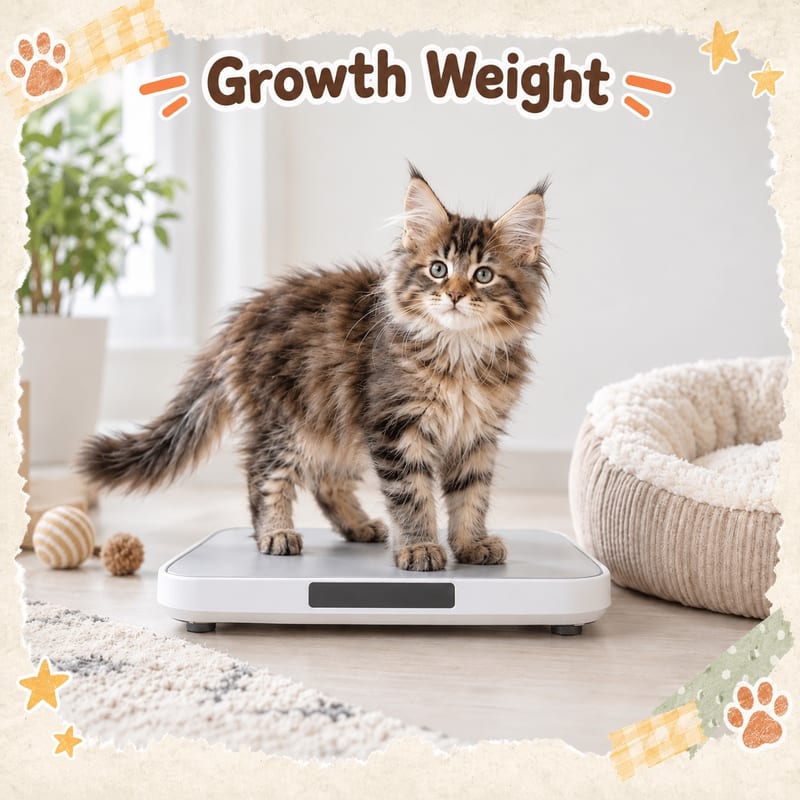
The most special thing about the Maine Coon is its slow maturity. A normal domestic cat is roughly settled at 12 months, but the Maine Coon's growth plates (epiphyses) close much later: bone length is roughly complete at 18-24 months, while muscle mass and chest width keep increasing until 3-4 years old. Below are reference ranges for healthy kittens:
| Age (months) | Male reference weight | Female reference weight | Development focus |
|---|---|---|---|
| Birth | About 100 g | About 100 g | Steady daily weight gain is the health indicator after birth |
| 2 months | 1-1.5 kg | 0.9-1.4 kg | Weaning and first vaccinations done, length shoots up |
| 4 months | 2-3.2 kg | 1.8-2.8 kg | Shedding begins, ears look especially large in proportion |
| 6 months | 3-4.5 kg | 2.5-4 kg | Sexual maturity window, discuss neutering timing with your vet |
| 12 months | 4.5-6.5 kg | 3.5-5.5 kg | Only "adolescence", far from settled |
| 18 months | 5.5-8 kg | 4-6 kg | Bones nearly complete, muscle starts to catch up |
| 24 months | 6-9 kg | 4-6.5 kg | Chest and neck visibly broaden |
| 36 months | 6-10 kg | 4-7 kg | Roughly at final size |
Five Factors That Affect Final Size
- Bloodline and parents' size: genetics is the main factor. When buying, ask the cattery for the weight records of the sire and dam to estimate the kitten's growth ceiling; this is more reliable than any number online.
- Sex: males are generally 30-50% heavier than females, and the gap is more obvious after two years old; littermates can look like two different cats when grown.
- Nutritional density: growing cats need high protein, moderate fat and a sufficient calcium-phosphorus ratio. Choose a quality food labelled for large-breed kittens; do not make do with adult food.
- Neutering timing: early neutering may delay growth plate closure and make the cat longer in body; discuss the right timing with your vet rather than following others blindly.
- Health status: intestinal parasites, chronic gut disease or heart problems all slow the growth curve, so regular faecal checks and annual check-ups are part of size management.
Size Comparison with Other Large Breeds
| Breed | Male weight reference | Age fully grown | Size features |
|---|---|---|---|
| Maine Coon | 6-10 kg | 3-4 years | Rectangular frame, very long tail |
| Norwegian Forest Cat | 5.5-9 kg | About 3 years | Triangular face, waterproof double coat |
| Ragdoll | 5-9 kg | About 4 years | Heavy bone, calmer temperament |
| Domestic cat | 3.5-5 kg | About 1 year | Settles early, obvious gap |
The final weight ranges of the three large breeds look close, but the outlines are completely different: the Maine Coon wins on "long" and "athletic", while the Ragdoll is "heavy and soft". So weight alone is not enough; look at body length and muscle distribution too.
At-Home Check: Weight and Body Condition Scoring
- Weigh at a fixed time: same day each week, same digital scale (a pet scale, or weigh yourself holding the cat then subtract your own weight), and record the number in a phone memo or on paper.
- Draw a growth curve: join the monthly weights into a line. A normal curve should rise steadily; a sudden flattening or drop mid-way is more of a warning sign than a single low number.
- Body condition score: run your hand along the cat's ribs — the standard is "feelable, not visible"; from above there should be a waistline, and from the side the abdomen should tuck up slightly rather than hang down (a hanging belly is normal in kittens).
- Measure body length: from the front of the breastbone to the base of the tail, plus tail length, to track whether the "rectangular" outline is even and symmetrical.
- Warning signs: no weight gain for two consecutive weeks, protruding ribs, a waistline that disappears into a barrel shape, or a huge appetite with weight loss — see a vet promptly.
Size Considerations for Keeping in Hong Kong
Hong Kong living spaces are generally small, so keeping a large cat needs planning ahead: choose a solid wood cat tree rated for 15 kg or more, as low suction-cup frames simply cannot hold; use an extra-large litter box or a modified storage box; food and water bowls should be wide enough to avoid long-term whisker pressure on a long-haired cat. In the hot, humid climate a Maine Coon's undercoat tangles easily, and the bigger the cat the bigger the area to groom, so 5-10 minutes of daily brushing is essential. For detailed home setup, see the Maine Coon Hong Kong keeping guide.
Common Myth: Is Bigger Always Better?
Social media is full of boastful posts like "6 kg male at 8 months", but a size contest has never been a health indicator. Excess weight increases joint load and diabetes risk; conversely, a cat that stays at the lower edge of the curve but has good energy, stools and coat may be perfectly healthy. The standard is always the three-part test of "curve trend + body condition score + vet check", not a single number in kilos.
Related Articles
- Maine Coon Lifespan and Health Explained
- Maine Coon Genetic Health Screening Guide
- Maine Coon Personality and Intelligence Revealed
- Maine Coon Disadvantages: 8 Costs, Monthly Expenses and Space Needs
- Maine Coon Colour Guide: 30+ Colours and Patterns
- Maine Coon Price Hong Kong 2026: Buying vs Adopting
- PetChill Pet Supplies — solid wood cat trees for large cats and quality food, all in one place
 Fuji One full guide →





