
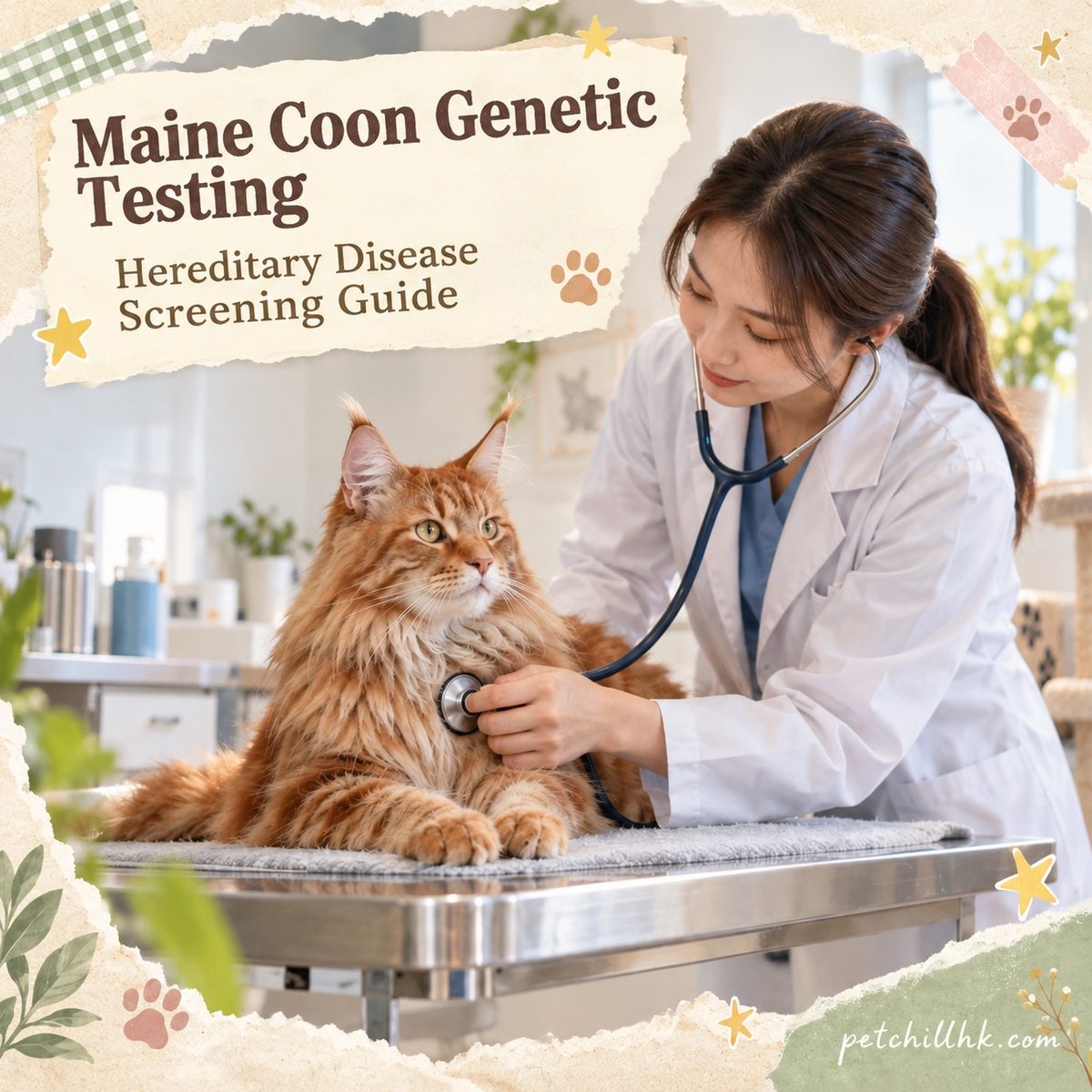
Quick answer: The main inherited risk for Maine Coons is hypertrophic cardiomyopathy (HCM), followed by spinal muscular atrophy (SMA), polycystic kidney disease (PKD) and GALC deficiency. Before buying, ask the cattery to show the parents' genetic test and heart ultrasound reports; from age seven, regular rechecks are recommended.
Want to know all about Maine Coons? Start with the Maine Coon breed profile and the Complete Maine Coon Guide.
What are Maine Coon defects? Key points in 30 seconds
Maine Coons are large long-haired cats, gentle and easy to keep, but the breed's inherited risks are concentrated in four areas: the heart (HCM), the nerves and muscles (SMA), the kidneys (PKD) and the brain's white matter (GALC). These are not diseases the cat is bound to get, but tendencies that are more likely than in other breeds. The table below covers the points Hong Kong owners ask about most; costs and practical steps are broken down item by item below.
| Item | Maine Coon |
|---|---|
| Country of origin | Maine, USA |
| Average lifespan | 12–15 years |
| Weight | Male 6–8 kg / Female 4–6 kg |
| Coat | Semi-long double coat; heavy shedding in moulting season |
| Temperament | Gentle and affectionate, quiet voice, moderate activity level |
| Number one inherited risk | HCM hypertrophic cardiomyopathy |
| Other inherited risks | SMA, PKD, GALC deficiency, hip dysplasia |
| Price in Hong Kong | About HK$15,000–35,000 |
| Basic monthly costs | About HK$1,000–1,800 |
Three basics you must know:
- No breed is expected disease-free — screening only lowers risk, it does not eliminate it; even if both parents are negative, the cat needs regular check-ups throughout its life.
- Seeing reports before buying is the minimum — if a cattery cannot produce the parents' screening documents, treat it as not done.
- Hip problems are not just a dog thing — Maine Coons are large, and hip dysplasia is more common than people think; "can't jump onto the windowsill" may be an early sign.
Maine Coon defect screening costs (2026 Hong Kong prices)
Many people think genetic screening cannot be done in Hong Kong, but it can: sampling is done at a local veterinary clinic (blood draw or buccal swab), and samples are sent to an overseas accredited laboratory (such as the UC Davis system in the USA) for testing; imaging tests (heart ultrasound, hip X-rays) are done directly at Hong Kong clinics with the relevant equipment.
| Item | Approximate cost | Notes |
|---|---|---|
| HCM genetic test | HK$800–1,500 | Buccal swab or blood, sent to overseas laboratory |
| SMA genetic test | HK$600–1,200 | Recessive; carrier cats look completely healthy |
| PKD genetic test | HK$600–1,200 | Originates in Persian bloodlines; introduced into some Maine Coon lines |
| GALC genetic test | HK$600–1,200 | Only affects offspring if both parents are carriers |
| Four-panel package | HK$2,000–3,500 | Results about 2–4 weeks after sampling |
| Heart ultrasound | HK$2,500–4,500 | Requires a clinic with cardiac specialist equipment |
| Hip X-ray | HK$1,500–3,000 | Usually requires sedation; cost included |
| Adult cat baseline check | HK$3,000–6,000 | Blood test + urine test + heart + abdominal ultrasound |
The most common trap for Hong Kong owners: the cattery says "screening was done" but cannot produce the original laboratory report. Remember the three questions—laboratory name, sample number, test date; if they cannot answer one of them, the "screening" is just a verbal promise.
Who is suited to keeping a Maine Coon given its defect risks?
| Owner type | Suitability | Reason |
|---|---|---|
| Families willing to do homework before buying | Very suitable | They know how to read screening reports; risk is manageable |
| Owners with large-cat experience | Suitable | They understand weight and food intake management |
| Beginners with a generous budget | Can keep one | Just follow the check-up schedule |
| People who really don't want vet visits | Not recommended | Annual heart checks are a routine expense |
| Very small flats | Needs assessment | Adult males can reach 8 kg and need space to move |
Reverse self-test (three questions):
- Are you willing to spend HK$2,500–4,500 a year on a heart ultrasound?
- If the cattery cannot produce the parents' screening reports, would you be willing to walk away from that cat?
- Does your home have space for a 6–8 kg cat to run and climb?
If you cannot answer "yes" to two of the three, consider a smaller breed with fewer screening items first.
How Maine Coon defects compare with other breeds
| Breed | Main inherited risks | Recommended screening | Annual check-up budget |
|---|---|---|---|
| Maine Coon | HCM, SMA, hips | Genetics + heart ultrasound + X-ray | HK$2,500–4,500 |
| Ragdoll | HCM, PKD | Genetics + heart ultrasound | HK$2,500–4,000 |
| Persian | PKD, flat-face respiratory issues | Genetics + abdominal ultrasound | HK$2,000–3,500 |
| British Shorthair | HCM (lower risk) | Mainly heart ultrasound | HK$2,000–3,500 |
| Siamese | Relatively few inherited risks | Mainly routine check-ups | HK$600–1,200 |
In one sentence: the Maine Coon is not the "sickest" breed, but one of the breeds with the most mature screening system—the problems are transparent and the tests are comprehensive, which actually gives owners more control.
Maine Coon defects: three screening budget plans
For the same Maine Coon, screening can be done in three ways. The key is to decide at the moment of purchase, not to discover after a problem arises that there is no baseline data.
| Item | Basic | Standard | Comprehensive |
|---|---|---|---|
| Genetic testing | HCM single test (HK$800–1,500) | Four-panel package (HK$2,000–3,500) | Four-panel package + verification of parents' reports |
| Heart ultrasound | One baseline after purchase | Once a year | Once a year, every six months after age 7 |
| Hip X-ray | Only if symptoms appear | Once at one year old | Once at one year and once at four years |
| First-year total budget | About HK$3,500–6,000 | About HK$5,000–8,500 | About HK$8,000–12,000 |
How to choose: If adopting an adult cat with no records, do at least the "Basic" plan to establish a baseline; if buying a kitten from a cattery whose parents already have reports, "Standard" is enough; if you plan to breed or want to minimise risk, go for "Comprehensive".
Maine Coon defects: buyer's checklist before signing
Whether from a cattery or adoption, tick each item before signing anything:
| Check item | Pass standard |
|---|---|
| Parents' HCM genetic reports | Both negative, with laboratory name and date |
| Parents' heart ultrasound | Valid within two years, signed by a veterinary cardiologist |
| SMA / PKD / GALC | At least one parent has a report, not just verbal assurance |
| Microchip number | Matches the number on the report |
| After-sales health guarantee | Genetic disease terms stated in writing |
If you cannot get two of these five items, the "bargain" of this deal is actually transferring the risk to you. Better to wait for another litter or find another cattery than to spend HK$15,000–35,000 on a lottery.
Adopting an adult Maine Coon: the catch-up route when there are no records
Most adopted Maine Coons have no genetic records, but that does not mean you should keep it with your eyes closed. Recommended order of catch-up:
- First week: basic check-up + blood test + urine test (about HK$800–1,500) to establish a health baseline.
- First month: heart ultrasound (about HK$2,500–4,500); HCM is the one thing you cannot delay.
- Within three months: abdominal ultrasound to look at the kidneys (about HK$1,500–2,500); add a PKD genetic test if there is any suspicion.
- Every year after: check-up + blood test; after age 7, recheck the heart every 1–2 years.
The whole route costs about HK$5,000–8,500; you do not have to do it all at once, but do not put the heart item last.
Four common misconceptions about Maine Coon defects
| Misconception | Reality |
|---|---|
| A negative genetic test means no problems for life | It only rules out known mutation sites; other HCM variants are still possible, so heart ultrasound rechecks are needed after age 7 |
| Cats with screening reports must be very expensive | A four-panel genetic package costs HK$2,000–3,500; the real expense is the medical cost from a cattery that refuses to screen |
| Hip problems are only in dogs | Large cats have them too, and the Maine Coon is one of the high-incidence cat breeds; X-ray costs about HK$1,500–3,000 |
| After screening, no more tests are needed | No breed is expected disease-free; screening only lowers risk; rechecks are needed for life according to the age schedule |
Remember the bottom line: no breed is expected disease-free; screening only lowers risk. A Maine Coon that has been fully screened still needs annual tests according to the schedule—this is the core of the whole article.
To understand the symptoms and inheritance patterns of specific diseases, the item-by-item breakdown below covers the details of HCM, SMA, PKD and GALC.
First, the principle: screening is not about creating anxiety, it is about managing risk
Every purebred cat has breed-related inherited tendencies, and the Maine Coon is no exception. To be honest, these diseases do exist; but precisely because the disease mechanisms are clear and the testing methods are mature, responsible catteries have long included screening in their routine breeding process. For owners, the value of screening lies in three things: a basis before buying, a baseline before keeping, and a warning before illness. This article will not exaggerate the risks, nor will it play down the problems; it simply sets out clearly, in one go, the facts Hong Kong owners most need to know.
The four major genetic defects broken down item by item
1. HCM hypertrophic cardiomyopathy—the Maine Coon's number one heart risk
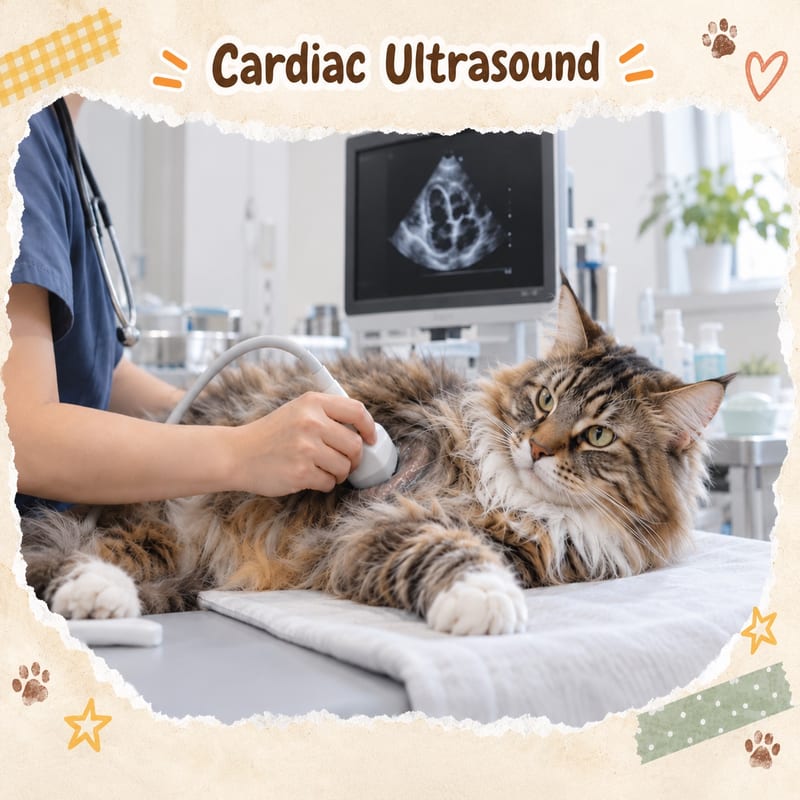
HCM is the most common cardiomyopathy in cats, characterised by abnormal thickening of the ventricular wall and reduced pumping efficiency; in severe cases it can cause thrombosis, pulmonary oedema or sudden death. Research generally considers the Maine Coon one of the high-incidence breeds; the University of California, Davis Veterinary Medical Center (UC Davis) has long conducted research on inherited heart disease in cats and also lists the Maine Coon as a key screening breed. One of the mutation sites in the MYBPC3 gene identified by the centre is representative in the Maine Coon population, but it must be noted: a negative genetic test does not mean zero risk, because other unknown variants can still cause cardiomyopathy, so international reputable catteries use "genetic testing + heart ultrasound" as the double screening standard.
2. SMA spinal muscular atrophy—a neuromuscular disease specific to Maine Coons
SMA is a recessive inherited disease affecting the motor neurons in the spinal cord responsible for muscle control. Affected cats usually develop hind-leg muscle wasting, difficulty jumping and a wobbly gait in the hind legs when running from a young age. One comfort: the literature generally indicates that SMA does not affect a cat's pain sensation or life expectancy, and with physiotherapy and weight management a good quality of life can be maintained. SMA genetic testing has been commercially available for years and is a routine test in breeding pairings.
3. PKD polycystic kidney disease—the "dowry" brought by Persian bloodlines
PKD is characterised by multiple fluid-filled cysts in the kidneys, which gradually affect kidney function with age; late-stage signs resemble chronic kidney disease. The disease originates in Persian bloodlines; because some lines in early Maine Coon breeding history introduced Persian ancestry, Maine Coons may also carry the relevant mutation. Abdominal ultrasound can detect cysts early, while genetic testing can confirm carrier status; the two are complementary.
4. GALC deficiency (juvenile-onset leukodystrophy)
A GALC gene mutation causes a deficiency of a specific enzyme, affecting the myelin sheath of the central nervous system; affected cats usually develop the disease young, with regression in coordination and vision. It is a recessive inherited disease: carrier cats are completely healthy, and only when both parents are carriers can affected offspring be produced, so a genetic test before mating can almost completely avoid it.
Screening summary table: disease × inheritance pattern × testing timing × symptoms
| Disease | Inheritance pattern | Recommended testing timing | Symptoms to watch for early |
|---|---|---|---|
| HCM hypertrophic cardiomyopathy | Complex inheritance; some sites appear dominant | Genetics plus ultrasound before breeding; recheck every one to two years after age seven | Reduced exercise tolerance, rapid breathing, sudden hind-leg weakness (thrombosis) |
| SMA spinal muscular atrophy | Recessive | Genetic test before breeding; observe gait in kittenhood | Thinning hind-leg muscles, hesitation jumping up and down, wobbly running gait |
| PKD polycystic kidney disease | Recessive (some literature describes near-dominant expression) | Ultrasound after one year old; genetic test before breeding | Increased drinking and urination, weight loss, poor appetite and vomiting |
| GALC deficiency | Recessive | Genetic test before breeding | Regression in vision or coordination in kittens, body tremors |
How to verify a cattery's screening reports (Hong Kong practical version)
- Look for the three elements of a report: laboratory name, sample number and test date, none may be missing; anything with only verbal assurance and no written record is treated as not screened.
- Check identity: the cat's microchip number or DNA sample number on the report must match the registered details of the father and mother cats, to prevent mismatches.
- Require both parents to be tested: HCM should have heart ultrasound records for both parents; SMA, PKD and GALC should have genetic results for both parents. Claims based only on generational inference such as "my mother had no problems" are not credible.
- You can verify with the laboratory: large veterinary genetic testing laboratories generally offer a report-number verification service; if in doubt, you can also ask a trusted local veterinarian to help review the report contents.
- Written terms matter most: reputable catteries are usually willing to state the screening items, genetic disease guarantee period and buy-back arrangements in the contract; only those willing to put it in writing are sincere.

Later preventive care schedule
- Zero to one year: establish baseline checks, including a weight curve and heart auscultation; when adopting, request all screening documents and scan them for filing.
- One to seven years: annual routine check-up; ask your veterinarian to look for heart murmurs or arrhythmias, and refer for a heart ultrasound if anything is suspicious—do not "wait until there is a big problem".
- Over seven years: a heart ultrasound every one to two years is recommended, together with blood pressure and kidney function screening (SDMA and urine specific gravity may be referenced); this is the earliest window for detecting problems in the asymptomatic stage.
- Daily home observation: record the breathing rate when the cat is sound asleep (generally about 16–30 breaths per minute is a common range); if it is persistently fast, seek veterinary care promptly.
- Nutritional support: the calcium-phosphorus balance in the diet and an appropriate amount of omega-3 fatty acids support heart and kidney health; if considering supplements, consult your veterinarian first and never feed high doses on your own.
The reality of screening costs
Based on local Hong Kong prices, a cat heart ultrasound is generally a specialist item in the range of several hundred to over a thousand Hong Kong dollars, while genetic tests mostly use buccal swabs and are sent by the cattery to a laboratory, with the cost often already included in the kitten's price. For buyers, rather than spending a lot of money later dealing with a sudden illness, it is better to spend the money beforehand on "a cat with all the reports"—this is one reason reputable catteries charge more. For related buying budgets, see Maine Coon price Hong Kong 2026.

Frequently asked questions
Do Maine Coons have to be genetically screened? They are a breed with a high incidence of HCM, so before buying or breeding you should confirm that the parents' screening records are complete, so you can choose with full knowledge.
Can a genetic test replace an ultrasound? No. The test covers only known mutation sites, and a negative result can still be followed by disease; double screening is needed.
How serious is SMA? It is a recessive inherited disease; hind-leg muscle wasting occurs but usually does not affect pain or lifespan, and early intervention can maintain mobility.
How do I verify a cattery's reports? Look for the three elements—laboratory name, sample number and date—check the microchip number, and verify with the laboratory if necessary.
Is PKD only found in Persian cats? It originates in Persian bloodlines, but Maine Coons with Persian ancestry may also carry the mutation.
What is GALC deficiency? Juvenile-onset leukodystrophy, a recessive inherited disease; affected offspring occur only when both parents are carriers, and testing before mating can avoid it.
What if I adopt an adult cat with no records? Do baseline checks: heart ultrasound plus kidney blood and urine tests plus abdominal ultrasound; they are just as useful.
Key points summary
- ✅ The four major inherited concerns for Maine Coons: HCM, SMA, PKD and GALC; the disease mechanisms are clear and the testing methods are mature
- ✅ HCM is the most common cardiomyopathy; a negative genetic test does not mean zero risk, and "genetics plus ultrasound" double screening is needed
- ✅ Ask the cattery for written reports showing the laboratory name, sample number and date, and check the microchip number item by item
- ✅ From age seven, a heart ultrasound recheck every one to two years is recommended; the sleeping breathing rate is a practical home warning indicator
- ✅ Recessive inherited diseases (SMA, PKD, GALC) can be effectively avoided by testing both parents before mating; the key is "both parents tested"
- ✅ For adopted adult cats with no records, imaging plus blood baseline checks can also detect problems early
- ✅ The cost of screening beforehand is far lower than emergency care afterwards; buying a cat with all the reports is the most economical decision
Related reading
- Maine Coon lifespan and health explained
- Maine Coon disadvantages and considerations
- Maine Coon price Hong Kong 2026: buying vs adopting
- PetChill pet supplies — heart-healthy food and senior cat nutrition choices
 Fuji One full guide →





