
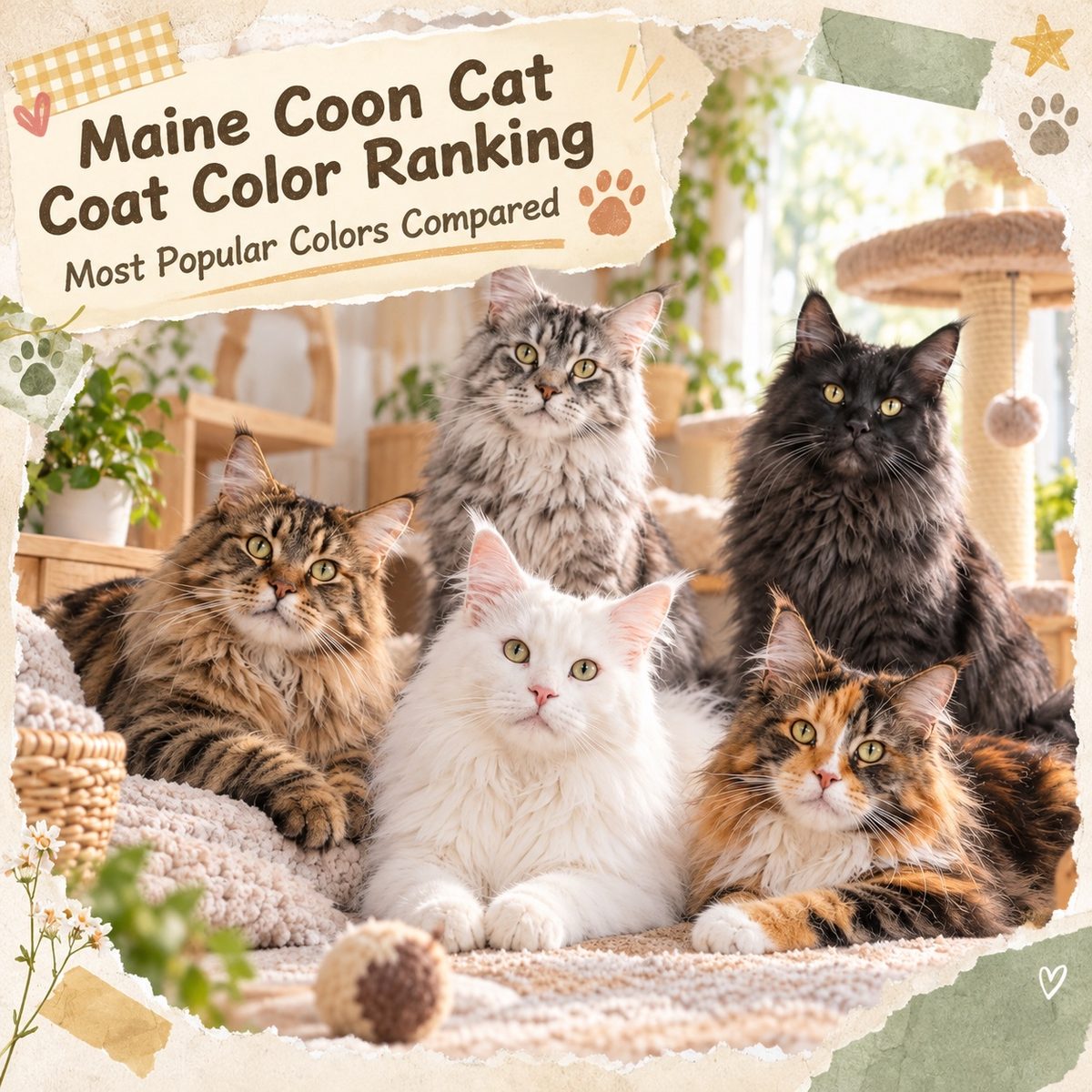
Maine Coon colour ranking answer: The most recognised are brown classic tabby, silver tabby, solid black and white, smoke, and tortoiseshell and calico.
Quick answer: Maine Coon colours are one of the richest systems among purebred cats. According to CFA breed standards, they fall into five groups: solid, tabby, bi-colour, tortoiseshell and calico, and shaded and smoke, with over 30 combinations. Brown classic tabby is the most classic, silver tabby and smoke are most sought after by collectors, while pointed and chocolate colours are not recognised. This article includes a quick-reference table of popular colours and the relationship between colour and price.
Want to know all about Maine Coons? Start with the Maine Coon breed profile and the Maine Coon complete guide.
1. CFA-recognised coat colour framework: five groups, 30+ combinations
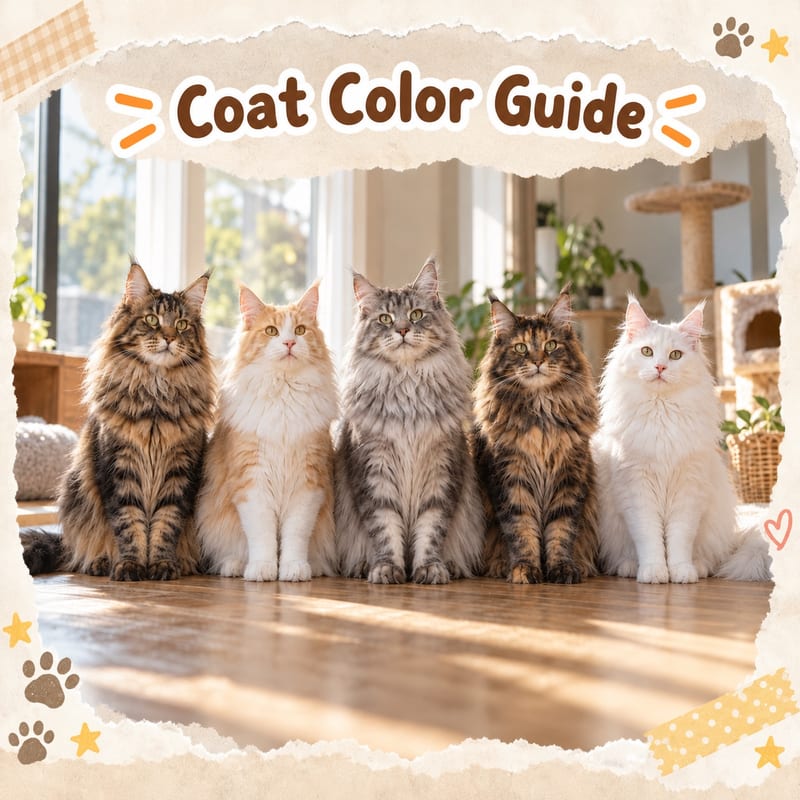
According to the CFA (The Cat Fanciers' Association) Maine Coon breed standard, the breed accepts almost all natural coat colours, but explicitly excludes colours that show signs of crossbreeding with Siamese or other breeds—including pointed patterns, and chocolate, lilac and their derived colour lines. This is the biggest difference between the Maine Coon coat colour guide and other breeds: its base colours are "born on the farm, grown in the wild" rather than a single colour developed through selective breeding. The five-group framework is as follows:
- Solid group: black, white, blue (grey), red (orange), cream, etc., a single colour over the whole body, with even tone and no markings
- Tabby group: classic tabby, mackerel, spotted and ticked patterns, combined with brown, silver, red, cream, blue and other base colours—the group with the most combinations
- Bi-colour group: any of the above colours plus a white bib, white socks and white chin, e.g. "brown tabby and white"
- Tortoiseshell group: tortoiseshell, calico, tabby tortoiseshell and other black-and-red intermingled expressions, almost all female
- Shaded and smoke group: a special expression with silver-white hair roots, divided from light to dark into three levels: "shell, shaded and smoke"
Incidentally, the other major association, TICA, has a wider recognised range: pointed, chocolate and lilac have separate groups in TICA shows. But both associations agree: coat colour is only a small part of the score; breed type and coat quality are the main criteria.
2. Popular coat colours: recognition and popularity ranking
Based on CFA show and registration data and observations from Hong Kong breeders, the popularity and recognition ranking is roughly as follows:
| Rank | Colour/Group | Key features | Commonness | CFA recognised |
|---|---|---|---|---|
| 1 | Brown classic tabby | Bullseye side pattern, M mark on forehead | Highest | Accepted |
| 2 | Silver tabby | White base with black markings, distinct eye and nose lines | High | Accepted |
| 3 | Solid black/white | Single colour all over, no pattern | High | Accepted |
| 4 | Smoke group | Silver-white hair roots, dark tips | Medium | Accepted |
| 5 | Tortoiseshell/calico | Random black and red (plus white) patches | Low | Accepted |
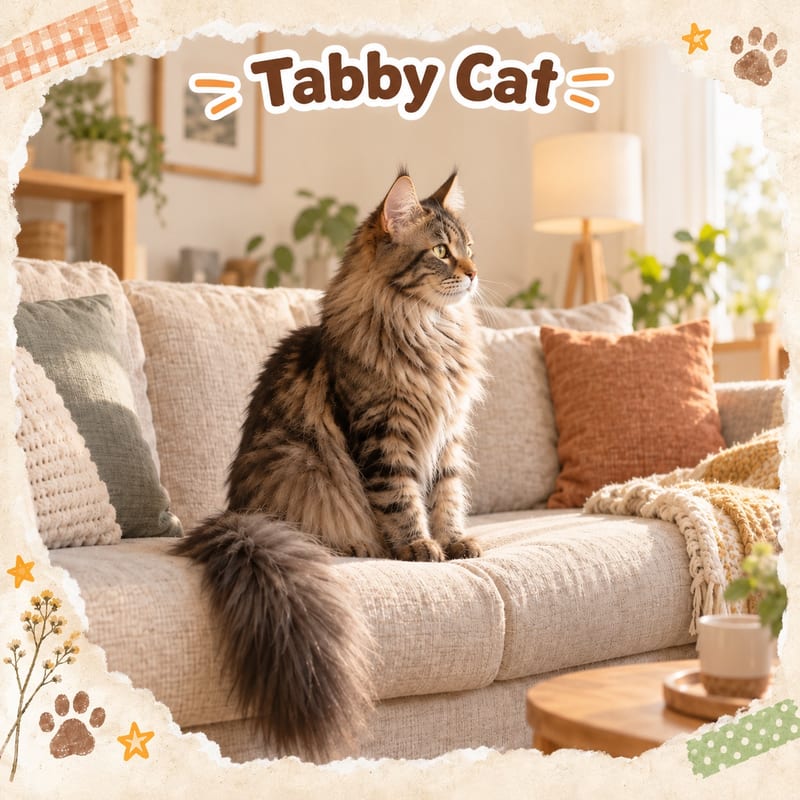
- Brown classic tabby: the breed's "factory colour", with bullseye side pattern and M mark on the forehead, most faithfully showing the wild outline; a long-standing favourite in shows and the pet market
- Silver tabby: white base with black markings, distinct eye and nose lines, strong contrast; still going strong on social media in recent years
- Solid black and solid white: black shows off a velvety texture; white with gold or blue eyes is especially sought after
- Smoke group: black smoke, red smoke, etc.; parting the coat reveals a silver base, regarded as a sign of luxury
- Tortoiseshell and calico: rare due to genetic mechanisms, and their temperament is often described as "little devil"; demand is steady
It is worth noting that the English name "Maine Coon" is often associated with a raccoon-like fluffy long tail and brown tabby appearance—brown classic tabby is the source of this wild look, and the appearance new owners most easily recognise in cat show photos.
3. Colour group × features × commonness × recognition table
| Colour group | Representative colours | Appearance features | Commonness | CFA recognised |
|---|---|---|---|---|
| Solid | Black, white, blue-grey | Single colour all over, no pattern | High | ✅ Accepted |
| Brown tabby | Classic brown tabby | Bullseye side pattern, M mark on forehead | Highest | ✅ Accepted |
| Silver group | Silver tabby, silver shell | White base with black markings, obvious eye and nose lines | High | ✅ Accepted |
| Smoke group | Black smoke, red smoke | Silver-white hair roots, dark tips | Medium | ✅ Accepted |
| Bi-colour group | Brown tabby and white | Symmetrical white bib and four white socks | High | ✅ Accepted |
| Tortoiseshell/calico | Tortoiseshell, calico | Random black and red (plus white) patches | Low | ✅ Accepted |
| Pointed | Seal point, etc. | Siamese-style mask and coloured limbs | — | ❌ Not accepted |
| Chocolate/lilac | Chocolate, lilac | Brownish or pale purple-grey tones | — | ❌ Not accepted |
4. Coat colour and show scoring: colour itself is not ranked
CFA judging focuses on overall type, coat condition and body condition; coat colour itself does not directly determine placing. In other words, a well-groomed brown tabby can beat a rare-coloured individual of poor quality. What judges look for in the colour category:
- Is the tone pure? Solid cats should have no stray markings; silver should not have a yellow cast
- Are the markings symmetrical and clear? The more complete and symmetrical the bullseye pattern of a classic tabby, the better; mackerel tabbies should have parallel side stripes like a fish skeleton
- Do nose leather and paw pads match? For example, silver tabby should have a brick-red nose leather with black outline; solid black should have copper eyes and black paw pads
5. Coat colour and price: a practical view of the Hong Kong market
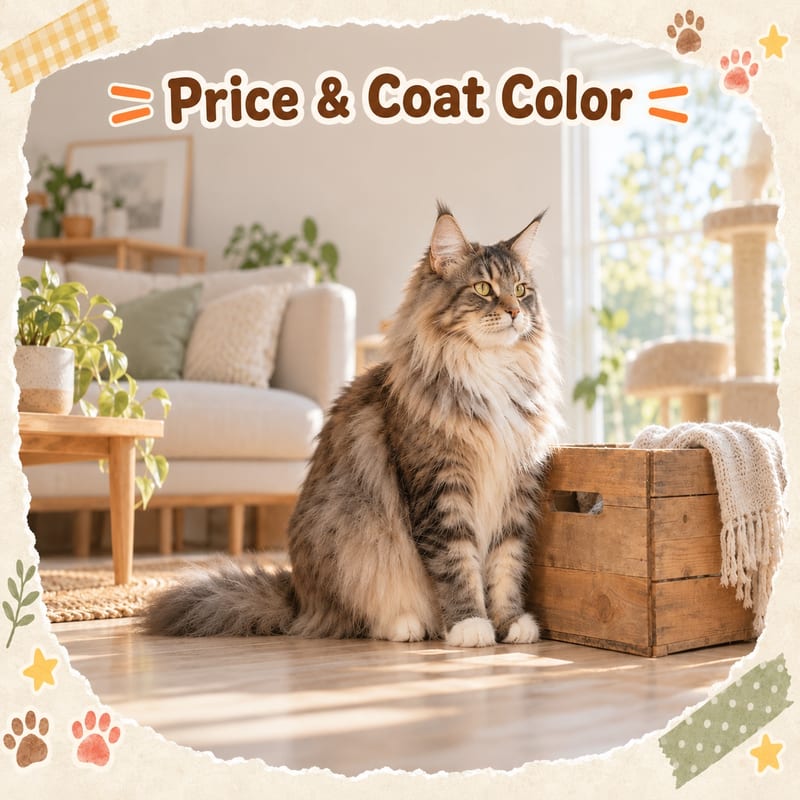
In Hong Kong, for a Maine Coon from a registered breeder that has completed genetic screening for hypertrophic cardiomyopathy and polycystic kidney disease, the price difference mainly comes from bloodline, depth of health screening and overall quality; coat colour is a secondary variable. Silver tabby and smoke occasionally carry a slight premium because the "inhibitor gene" they rely on requires deliberate pairing to reproduce reliably, so supply is tighter; calico has low output due to sex limitations. But there is no "double the price" gap. The sensible approach: check health documents and parents' test reports first, then choose your preferred colour; never give up health checks for a "rare colour".
6. Care differences by coat colour
Coat colour does not affect personality, but it does affect grooming difficulty:
- Solid white cats: tear stains and drool marks show easily; wipe around eyes and mouth daily; paw pads get dirty easily after going out
- Solid black cats: dandruff and dust are obvious on dark coats; brush more often and control indoor dust mites
- Silver and smoke cats: yellowing is the biggest enemy; diet and sun exposure can turn the white base yellow, so use whitening shampoo when bathing
- Tabby cats: easiest to maintain; the pattern naturally "hides dirt"; routine brushing is enough
- Long-haired dark individuals: shedding undercoat is most obvious during moulting; be prepared for clothes and furniture
7. Bonus: the six-toed cat and the Hemingway legend
Among early farm cats in Maine, North America, polydactyly was quite common; the extra toes helped them grip better on snow and boat decks, so they were nicknamed "ship cats". In the 1930s, Nobel laureate Ernest Hemingway was given a six-toed cat named Snowball, believed to have Maine Coon ancestry; today the Hemingway Home and Museum in Key West, USA, still keeps dozens of six-toed descendants, a legendary bonus in the cat world. However, CFA show standards require normal toe count, so polydactyl individuals do not appear in championship shows and are active on social media only as "family stars".
8. Understanding colour codes on breeder documents
When you ask a breeder, they often describe coat colour with a set of numbers and letters (e.g. "21 11 30" or "silver tabby with white 01"), from the cat coat colour coding system: the tens digit represents the pattern category (1 is white and patterned, 2 is tortoiseshell, 3 is tabby, 5 is silver group), the units digit represents the base colour (01 black, 02 chocolate, 03 orange, 05 blue, 06 lilac, 09 red, etc.), plus eye colour codes (6 gold eyes, 7 green eyes). The codes on documents and pedigrees must match the actual coat; if you find a cat declared as an "accepted color" but showing unaccepted pointed features, confirm the bloodline source.
Three colour observation points when buying
Take the popular silver tabby as an example: an ideal individual should have the whiter the base the better, the blacker and clearer the markings the better, white "spectacles" at the outer corners of both eyes, and a complete, symmetrical M mark on the forehead. For smoke, look at the proportion of silver-white in the lower third of the hair—the thicker the silver-white layer and the sharper the boundary, the higher the quality. For calico cats, there is no absolute preference for facial distribution, but a symmetrical "inverted V mask" is more popular in the market. Learning to look at colour this way is far more practical than simply asking "which colour is the most expensive".

Key points
- ✅ CFA accepts five groups and 30+ coat colour combinations in Maine Coons, excluding only pointed and chocolate/lilac lines
- ✅ Brown classic tabby is the most representative; silver tabby, smoke and calico are highly popular
- ✅ Show scoring is mainly based on type and coat condition; coat colour does not directly determine placing
- ✅ In Hong Kong, prioritise health screening over coat colour; do not sacrifice the essentials for a rare colour
- ✅ White, black and silver cats each have their own care points; assess whether you can manage the grooming before choosing a colour
- ✅ The six-toed "Hemingway cat" is a historical bonus of the breed, but not part of the show standard



