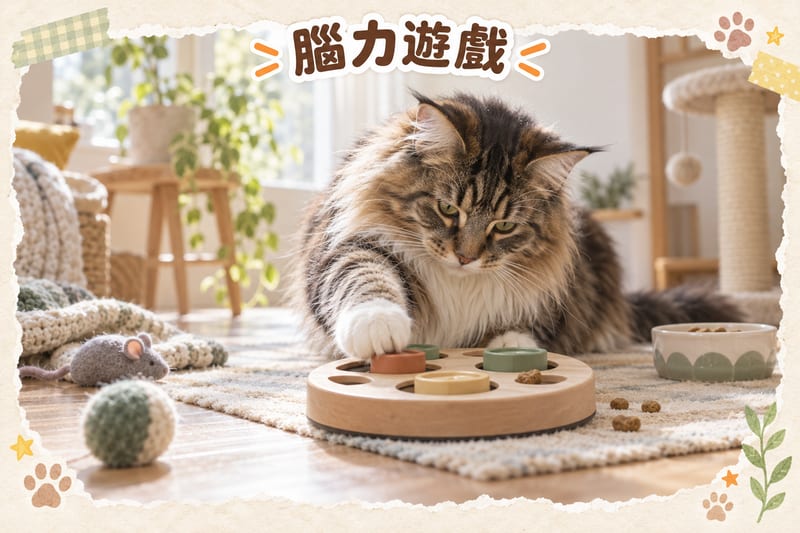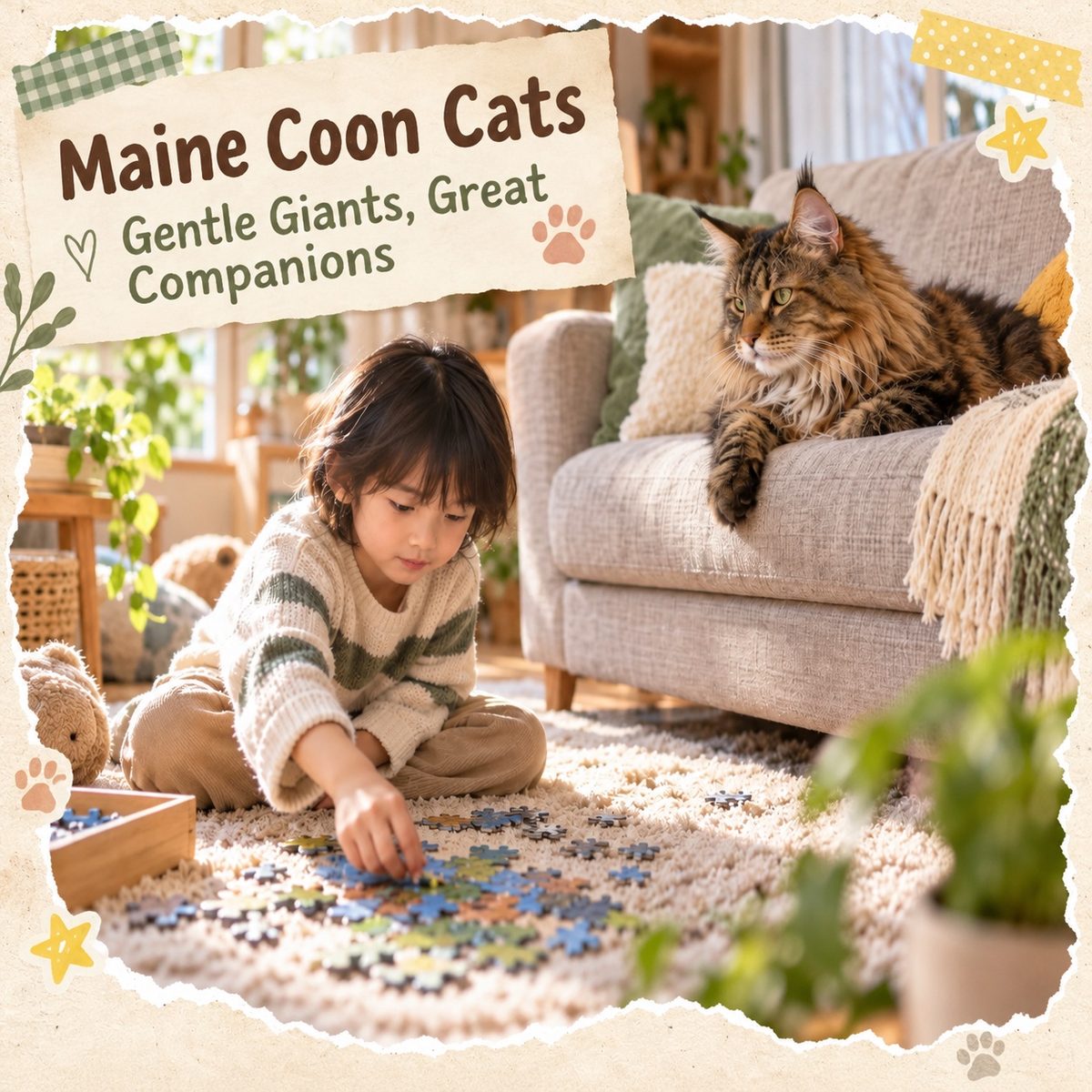
Quick answer: Maine Coons are called the 'gentle giant': imposing in size but friendly and affectionate, following their owner like a dog and 'singing' greetings with trills; highly intelligent, skilled at opening doors, solving puzzles for food, and responding to their names. They are patient and suit families with young children and dogs, but need plenty of interactive play and gradual alone-time training.
Want to know all about Maine Coons? Start with the Maine Coon breed profile and the Maine Coon complete guide.
1. The Gentle Giant: The Underlying Logic of Personality
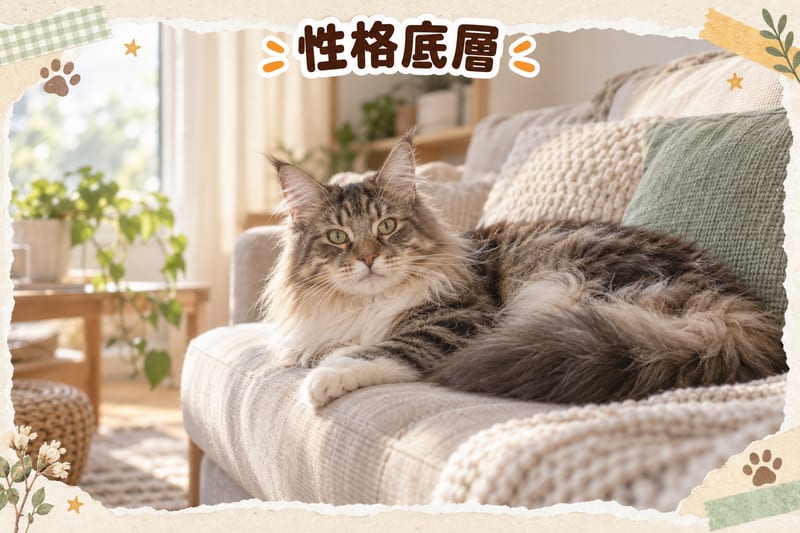
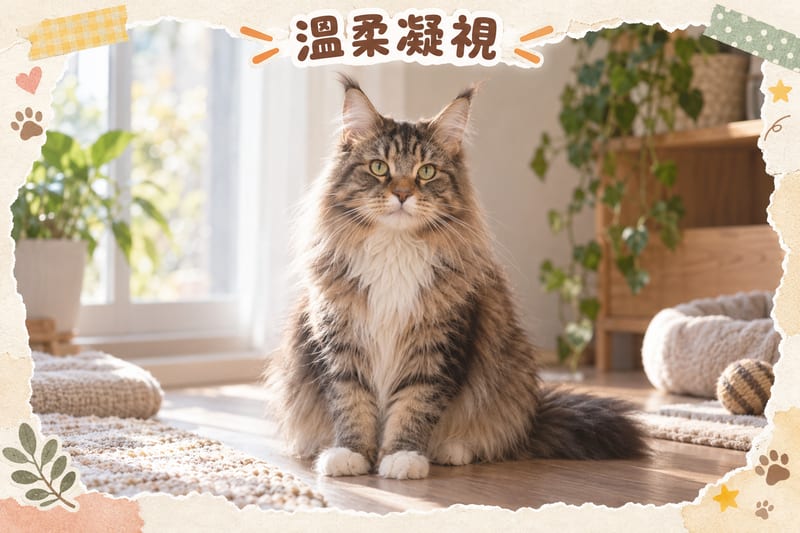
The CFA (Cat Fanciers' Association) breed standard describes the Maine Coon's personality as 'balanced and charming': the calm confidence of a large cat combined with the practical curiosity of a farm cat. They are not as sedentary as Persians, nor as demanding of attention as Siamese; instead they take a 'participatory companionship' approach—when you cook, they sit on the observation counter; when you work, they occupy the other corner of the sofa, expressing closeness through presence rather than interruption.
- Friendly and low aggression: The breed standard clearly states Maine Coons have stable behaviour and are widely recognised as one of the top family cat choices
- Dog-like cat behaviour: Many individuals accept leash walks, play fetch, and even greet their owner at the door like a dog
- Love to 'sing': They communicate with trills, purrs, and short chirps; vocal but moderate in volume, veterinarians nickname them 'chatty large cats'
- Curious but steady: Interested in new things but low in impulsivity, more likely to investigate drawers than destroy things violently
Once you understand this underlying logic, you realise: the 'companionship' a Maine Coon wants is the comfort of being in the same room, each doing their own thing, not being held and not allowed down. This is exactly where they beat many clingy breeds.
2. Intelligence in Action: Where Exactly Are They Smart
Maine Coon intelligence is 'observational problem-solving', with real-life examples including:
- Opening doors and cabinets: Learning to press door handles and pull drawers to find food or follow their owner
- Puzzle feeding: Quickly mastering the logic of treat balls and puzzle boards, and 'remembering the route', noticeably faster the second time
- Responding to names: Research shows cats can distinguish their own name from other words; Maine Coons, with strong social motivation, respond more obviously
- Imitation learning: Observing owner behaviour, such as learning to 'press buttons' to open doors or turn on taps to drink running water
- Water play: Many individuals enjoy playing with water, pawing at water bowls, even pushing toys into water and fishing them out
This also means: boredom is the biggest behavioural killer for Maine Coons. A high-intelligence cat lacking environmental enrichment may vent energy through destructive behaviour, nighttime noise, and excessive begging for food. Intelligence is not a free lunch—they need 'something to do' more than the average cat.
3. Male vs Female Personality Differences
General consensus among breeders and owners (individual differences are large; for reference only):
| Aspect | Male | Female |
|---|---|---|
| Social style | Outgoing and easy-going, approaches actively | Observant, selectively affectionate |
| With strangers | Accepts faster, may even cling | Slower to warm up, assesses environment first |
| Activity level | Persistent play drive, big movements | Efficient play, more independent |
| Size expression | Larger, clumsier movements | Lighter and more agile |
| Unneutered behaviour | Urine spraying, restless calling | Periodic heat calling |
Key point: After neutering, the personality gap between the sexes narrows; the influence of upbringing and the socialisation period (around 2 to 7 weeks of age) is far deeper than sex. When choosing a cat, observing how the individual responds to you is far more reliable than insisting on 'must be male/female'.
4. Living with Young Children and Other Pets
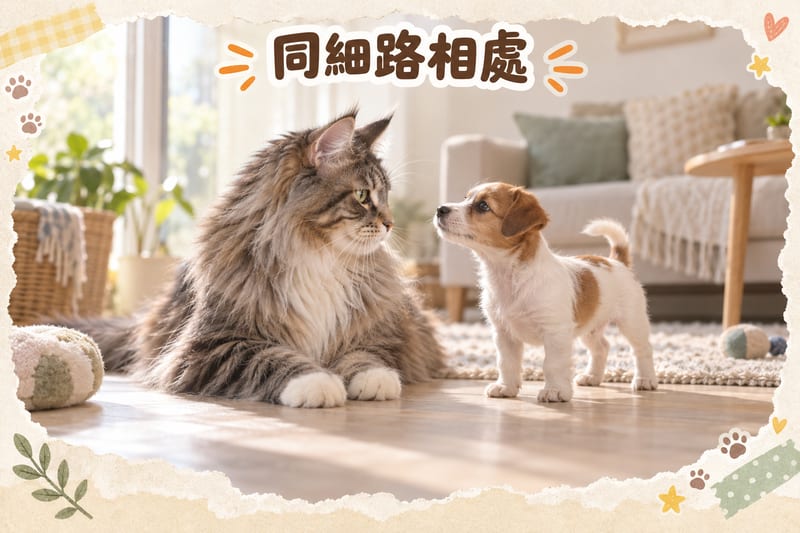
Maine Coons are often described as 'the most dog-like cat' and are recognised as a child-friendly breed for three reasons: restrained reactions (tending to leave rather than scratch when pulled), stable size (not easily injured by accidental pressure from children), and high patience threshold. Practical tips:
- Teach young children: no tail pulling, no ear tugging, no disturbing the cat while eating or sleeping
- Preserve 'cat highways': cat trees, cabinet tops and other high routes so the cat can withdraw from interaction at any time
- When introducing dogs, choose gentle breeds; scent swap first, then meet through a barrier, finally short supervised sessions with rewards
- For small pets (rabbits, guinea pigs): Maine Coons retain hunting instincts, never let them loose together without cover
A single swipe from a Maine Coon is more damaging than from an average cat; adult supervision is still required when interacting with children—this protects both cat and child.
5. Separation Anxiety Tendency and Alone-Time Training
Because they are so affectionate, Maine Coons are a higher-risk breed for separation anxiety in Hong Kong's long-working-hours environment. Signs include: excessive vocalisation when separated, waiting by the door, over-grooming, inappropriate urination, and damaging window screens. Reliable alone-time training methods:
- Start from kittenhood: Arrange 15 to 30 minutes of 'out of sight but safe' alone practice daily, gradually lengthening
- De-dramatise departures and returns: No lingering when leaving; when home, calmly finish what you're doing first, then greet the cat
- Gamify feeding: Set out puzzle feeders before leaving, linking 'alone time' with 'positive events'
- Consider a companion: If away for long hours, a compatible cat companion is often more effective than any toy
- Seek help if severe: Persistent destruction or refusal to eat are behavioural abnormalities; consult a veterinarian to assess anti-anxiety options, never self-medicate
6. Interactive Game Recommendations: Smart Cats Need 'Brain Drain'
| Game type | Examples | Training goal |
|---|---|---|
| Fetch | Flicking small balls, tossing fabric prey | Release energy, strengthen recall response |
| Puzzle feeding | Treat balls, flip-board feeders | Satisfy hunting brain needs, slow eating |
| Wand toy prey simulation | Feather wands, pull-string mice | Exercise and bond with owner |
| Cue training | Sit, high-five, enter carrier | Socialisation and easier vet visits later |
| Water play | Floating toys in shallow basin (owner must be present) | Cater to the breed's water-loving nature |
Daily recommendation: two sessions of 15 minutes of focused play, plus a grooming session, basically satisfies a Maine Coon's physical and mental needs. End play by letting them 'catch' the prey and giving a small treat, simulating the complete hunting cycle for maximum satisfaction.