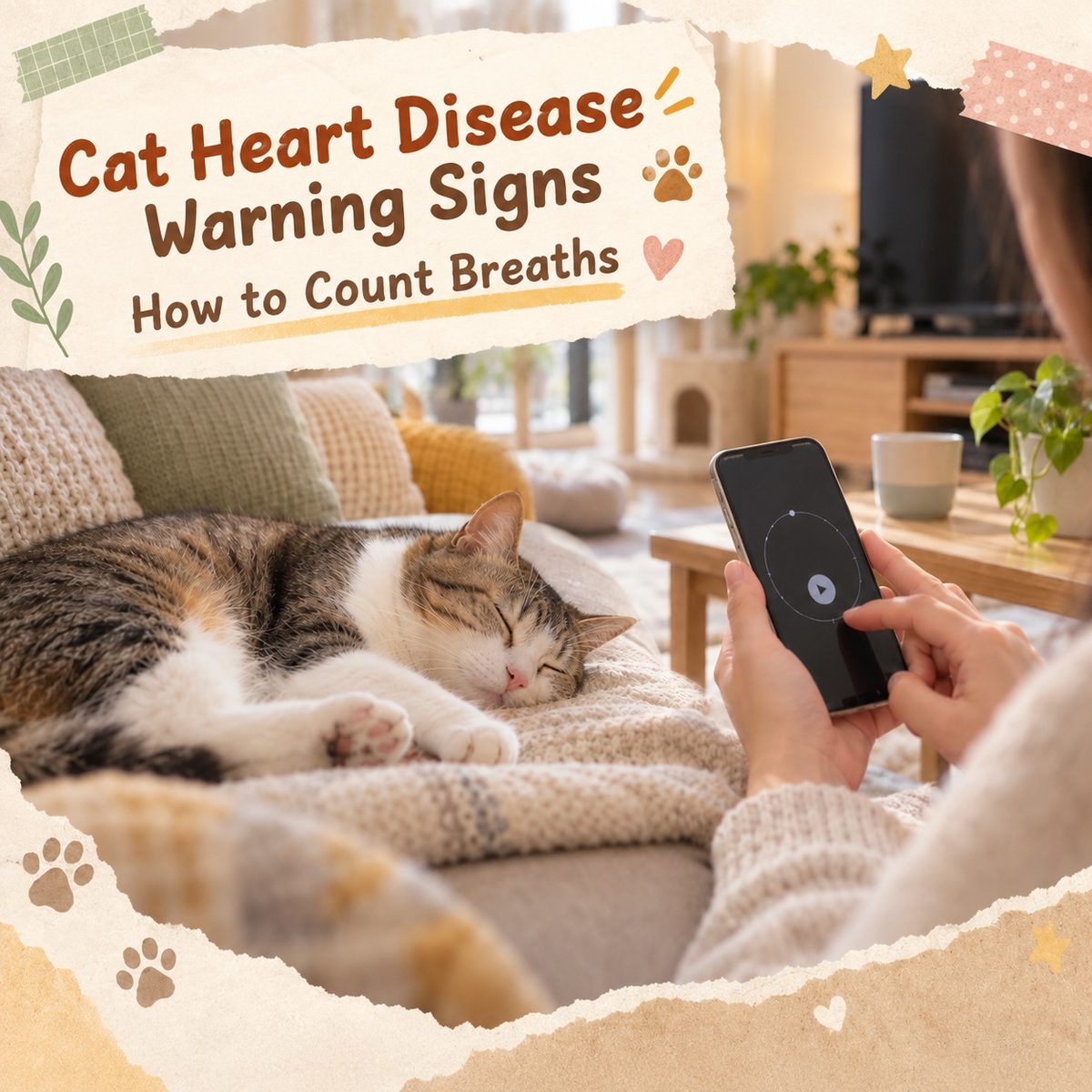
Quick answer: The most common heart disease in cats is hypertrophic cardiomyopathy (HCM), which has almost no symptoms in the early stages and can only be caught by auscultation and cardiac ultrasound. The most practical self-monitoring method for Hong Kong cat owners is to measure the "sleeping respiratory rate": when fully asleep, generally below 30 breaths per minute is a reference; if it persistently exceeds 40, seek medical attention the same day. If a cat suddenly has weak hind legs, drags them, or cries loudly, it is a thromboembolic emergency; do not wait, go to the emergency clinic immediately.
How common is cat heart disease? Which cats are at higher risk
Hypertrophic cardiomyopathy is the most common heart disease in cats, characterised by abnormal thickening of the left ventricular myocardium, which prevents the heart from filling adequately during diastole and can lead to heart failure and blood clots in the long term. Breeds such as Maine Coon, Ragdoll, and British Shorthair have a familial predisposition; but domestic cats can also be affected, so do not be complacent just because "it's not a breed".
There is another condition to be aware of: dilated cardiomyopathy (DCM) caused by taurine deficiency. Since mainstream cat foods have added taurine according to standards, cases have greatly decreased, but if you feed only homemade meat or a single unbalanced food for a long time, the risk increases.
Middle-aged and older cats (over 7 years) have an increased risk with age, so it is recommended to include a heart check during the annual health examination for senior cats.
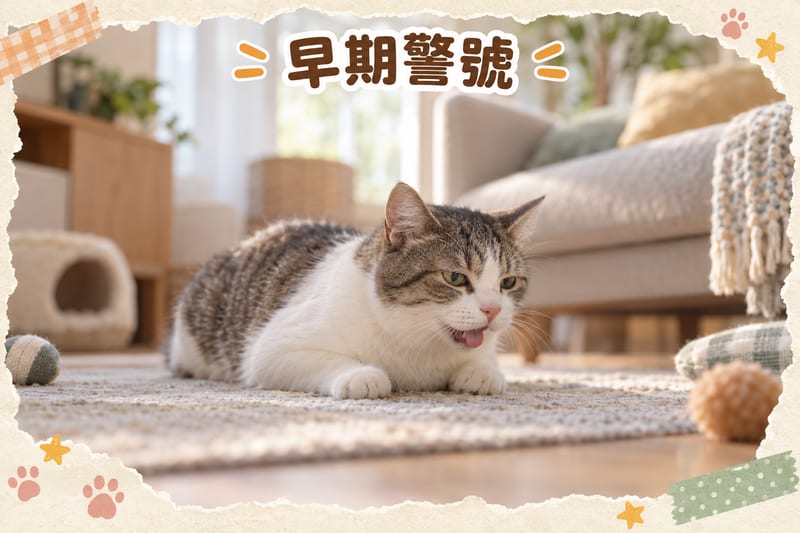
Early warning signs: don't wait for symptoms to appear
| Observation item | Early signal | When to worry |
|---|---|---|
| Activity level | Less jumping, no longer going to high places | Obvious change within two weeks |
| Breathing | Increased respiratory rate during deep sleep | Persistently over 30 breaths/min |
| Energy | Panting after a short play, needing rest | Occurs after every play session |
| Weight | Unexplained weight loss (heart failure or complications) | Drop of more than 5% in a month |
| Hind legs | Unsteady gait, cold paws | Any sudden weakness = emergency |
It is worth noting: coughing is less common in cats than in dogs, and many owners think "cat cough" is hairballs, but it may actually be a heart or respiratory problem. If a cat frequently makes the motion of "wanting to vomit but nothing comes out", it is best to record a video for the veterinarian.
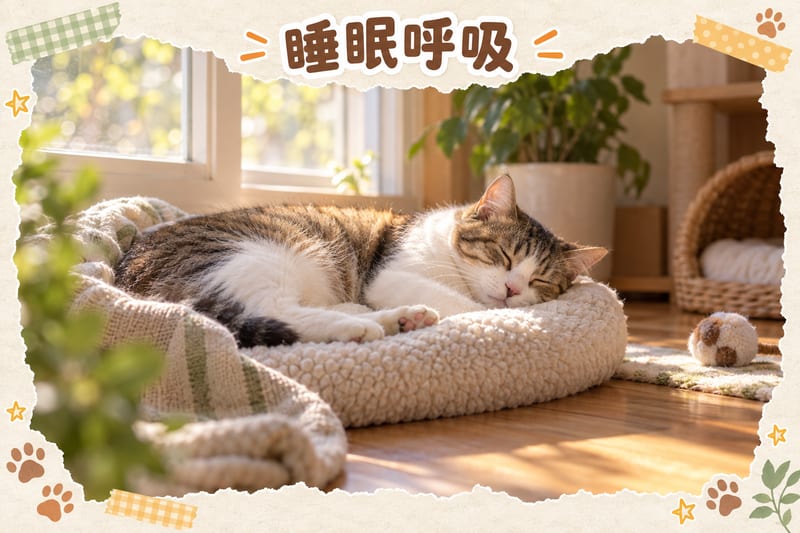
30-second home test: sleeping respiratory rate
This is a home monitoring method recommended by international veterinarians, and it can be done even in small Hong Kong flats:
- Wait until the cat is fully asleep (not dozing), lying on its side or prone.
- Watch the chest and abdomen movements, each inhalation + exhalation counts as 1 breath.
- Use a phone timer for 15 seconds, count the breaths and multiply by 4; or count for a full 30 seconds.
- Record in a phone memo or on paper, preferably at the same time each day (e.g., before bed).
The general reference is below 30 breaths per minute. If it persistently exceeds 40, or if open-mouth breathing or obvious abdominal effort occurs, do not wait until tomorrow; go to the emergency clinic that night. These numbers are for home reference and do not replace a veterinary examination.
From examination to diagnosis: Hong Kong process
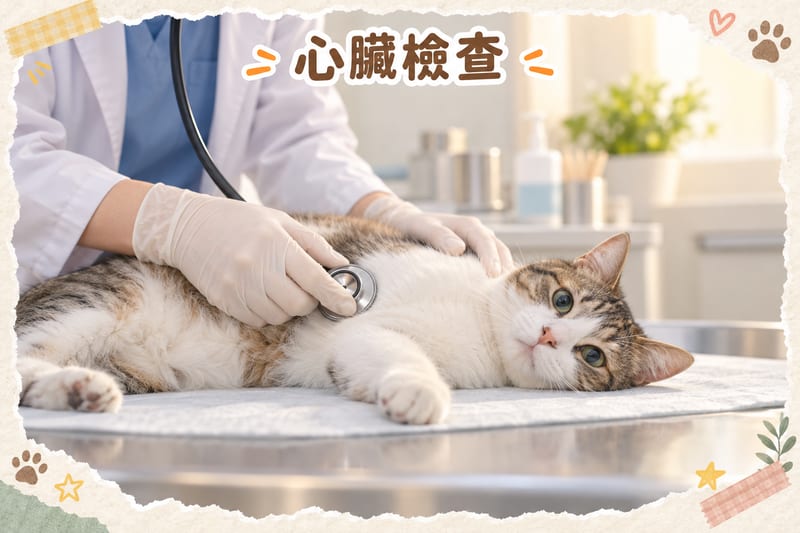
- Auscultation at a general clinic: The veterinarian hears a heart murmur or arrhythmia, or finds an elevated respiratory rate.
- Cardiac enzyme screening: Blood test for NT-proBNP and other markers as an auxiliary screening before ultrasound.
- Cardiac ultrasound: Measures myocardial thickness, atrial size, and assesses blood flow; it is the key examination for diagnosing HCM, usually requiring referral to a cardiology specialist or a larger clinic.
- X-ray/ECG: Assesses for pulmonary oedema and rhythm problems.
- Staging and medication: The veterinarian will decide based on the stage whether to observe or start medication (e.g., beta-blockers, anticoagulants). These are all prescription drugs; do not buy them yourself or borrow a friend's medication.
Clinic fees in Hong Kong vary widely; ultrasound generally starts from several thousand dollars, and referral to a specialist is higher. Before each follow-up, ask clearly about the items and prices, and whether fasting is required.
Daily care: food, living environment, follow-up
Food: The focus is weight management. Obesity increases the burden on the heart, so portion control is more important than "heart supplements". Wet food or cans labelled "heart care" by manufacturers can be used as daily choices, but cannot replace veterinary prescriptions. Examples available in Hong Kong: Astkatta Heart Care Soup Pack 40g (reference price HK$9, hydrating and increasing appetite), Astkatta Strong Heart Complete Wet Food Pure Sardine 170g (reference price HK$23.5), Signature7 Heart & Gut Health Can 80g (reference price HK$7.5, small can suitable for senior cats with small appetite). Cats with heart failure may need a low-salt prescription diet; ask your veterinarian before ordering.
Living environment: Reduce the height of jumps, add steps next to the sofa; Hong Kong summers are hot and humid, and cats with heart disease are particularly prone to panting, so keep air-conditioning stable and avoid sudden temperature changes.
Follow-up: After diagnosis, most cats are followed up every 3 to 6 months, more frequently if heart failure occurs. Remember to bring your home respiratory record each time; the veterinarian can use the trend to judge whether medication needs adjustment.
Home environment tweaks for cats with heart disease
Cats with heart disease are most afraid of two things: sudden strenuous activity and large temperature differences in the environment. Hong Kong summers are scorching, and indoor-outdoor temperature differences can exceed ten degrees; winters are damp and cold, which can make cats unwilling to move, so environmental management is more important than many people think.
- Stable temperature: Set air-conditioning to 24 to 26 degrees, avoid direct airflow on the cat; when going out, do not turn off the air-conditioning completely and then turn it to the lowest when you return.
- Reduce jumping stress: Add steps at places the cat frequently goes up and down, breaking one big jump into two smaller jumps.
- Humidity: Use a dehumidifier during Hong Kong's humid season to reduce respiratory burden; but keep water bowls clean and do not rely on the dehumidifier to replace drinking water.
- Quiet corner: Provide an undisturbed resting place so the cat can regulate its activity level.
- Medication storage: Keep prescription drugs in a cool, dry place, not in the kitchen or bathroom; check remaining medication at each follow-up.
Also, if there are children or other pets at home, do not play chasing games or suddenly pick up the cat. Cats with heart disease react more strongly to stress than healthy cats, and severe fright can cause a sudden increase in respiratory rate.
Common misconceptions
| Misconception | Actual situation |
|---|---|
| "Cat coughing means hairballs" | Coughing is less common in cats and may be related to heart or respiratory problems; record a video for the veterinarian |
| "No murmur means no heart disease" | Some HCM cats have no obvious murmur on auscultation and require ultrasound confirmation |
| "Supplements can replace heart medication" | Supplements are only auxiliary and cannot replace veterinary prescriptions |
| "Cat panting is because of heat" | Increased respiratory rate during deep sleep is related to heart failure and cannot be dismissed as weather |
Home warning signs of acute heart failure
Chronic heart disease can be stable for many years, but once heart failure develops, the condition can deteriorate within days. The following are acute warning signs to watch for at home:
- Rapid breathing: More than 40 breaths per minute during deep sleep, or obvious effort in breathing.
- Open-mouth breathing: A cat breathing with its mouth open is extremely unusual and is an emergency.
- Restlessness, unwillingness to lie down: Because lying down makes breathing more difficult.
- Abdominal distension: May be fluid accumulation.
- Cold or dragging hind legs: Blood clot.
- Sudden complete loss of appetite: More dangerous when accompanied by abnormal breathing.
If any of these occur, do not wait until the next day; go to a veterinarian with emergency services that night. Some clinics in Hong Kong offer night consultations; it is advisable to find out in advance which nearby clinic has emergency services, rather than searching at the critical moment.
Frequently asked questions
Q: What does sudden hind leg weakness in a cat mean? A: This is a typical presentation of arterial thromboembolism (saddle thrombus), where a blood clot blocks blood supply to the hind limbs, causing extreme pain, loud crying, cold hind legs, or even dragging. It is a minute-level emergency and requires immediate visit to a veterinarian with emergency services; do not wait.
Q: Can a cat with heart disease go outside or fly? A: Stable cases usually can, but avoid hot periods and long periods in enclosed spaces. Before long-distance travel or air transport, a veterinarian must assess the risk of heart failure and prepare a medication list.
Q: Does absence of a heart murmur mean there is definitely no problem? A: No. Some HCM cats may have no obvious murmur on auscultation, so for cats with a family history or elevated home respiratory rate, the veterinarian may still recommend an ultrasound.
Key summary
- ✅ The most common heart disease in cats is HCM, which mostly has no symptoms in the early stages
- ✅ Sleeping respiratory rate below 30 breaths per minute is a general reference
- ✅ Persistently over 40 or open-mouth breathing = seek medical attention the same day
- ✅ Sudden hind leg weakness is a thromboembolic emergency; go to the clinic immediately
- ✅ Weight management + regular follow-up are the core of daily care
- ❌ Do not buy heart medication yourself or change the dosage
- ❌ Do not ignore heart checks just because the cat is not a breed
The above is general information and does not replace veterinary diagnosis; if your cat has persistent symptoms, please take it to a veterinary clinic as soon as possible.
Further reading: Early warning signs of chronic disease in cats, Dietary management for cats with chronic disease, Care guide for chronic kidney disease in cats, Checklist for preparing for a vet visit with your cat, Cat health overview
 Astkatta full guide →