🤖 AI Summary
Feline diabetes is one of the most common endocrine diseases in cats, affecting about 1 in 200 to 300 cats. Obesity and high-carb diets are the biggest drivers. The good news: feline diabetes (mostly type 2) is one of the few chronic diseases that can go into remission—with early detection, weight loss, a low-carb diet, and insulin therapy, some cats can achieve clinical remission.
• Classic warning signs: increased drinking, increased urination, increased appetite, and weight loss
• Red line: vomiting + lethargy + fruity breath = diabetic ketoacidosis emergency
• Management triad: insulin + low-carb wet food + blood sugar monitoring
Quick answer: Feline diabetes mellitus is an endocrine disease where the body cannot properly regulate blood sugar; most cats have type 2 (insulin resistance). Typical signs are the classic quartet: increased drinking, increased urination, increased appetite, and weight loss. Diagnosis relies on blood glucose, fructosamine, and urine glucose (to rule out stress hyperglycaemia). Treatment: insulin injections + low-carb diet + weight management + blood sugar monitoring; with early aggressive treatment, some cats can achieve clinical remission (no more injections). Emergency red line: diabetic ketoacidosis (DKA).
Contents
-
What is feline diabetes?
-
Which cats are high risk?
-
The classic warning signs: four major alerts
-
Diagnosis: why test fructosamine?
-
When to see a vet + emergency red lines (DKA)
-
The treatment triad + the truth about remission
-
Dietary management + Hong Kong practicalities
-
FAQ
What is feline diabetes?
Diabetes = the body's blood sugar regulation system fails. Carbohydrates from food become blood sugar, which needs insulin (a hormone from the pancreas) as a 'key' to open the door for cells to absorb it. The system can fail in two ways:
- Type 1—the pancreas cannot produce insulin (the key factory shuts down): most common in dogs, rare in cats
- Type 2—cells respond poorly to insulin (the lock rusts), the pancreas initially works overtime to compensate, then becomes exhausted: the vast majority of cats have this type, which is 90% similar to human type 2 diabetes
The good news about type 2 diabetes: before the lock is completely broken, reducing resistance and easing the pancreas's burden can allow the system to recover—this is the principle behind 'clinical remission'. So feline diabetes is not a death sentence; it's a race where 'early action' wins.

Which cats are high risk?
- Obese cats—the number one risk: obesity multiplies insulin resistance; overweight cats have several times the risk of ideal-weight cats
- Indoor + neutered + middle-aged or older—low activity, risk rises from age 8; slightly higher in males
- Long-term high-carb dry food as staple—cats are obligate carnivores, naturally good at handling protein and fats, poor at handling large amounts of carbohydrates; long-term high-carb diet = forcing the pancreas to work overtime every day
- Breed predisposition—studies in some regions show higher risk in Burmese cats (Hong Kong families with Burmese cats should note)
- Long-term steroid use—long-term steroid treatment can raise blood sugar
- Other endocrine diseases—acromegaly, Cushing's disease, etc. can accompany diabetes
One self-check: ideal body condition = ribs can be felt (with a thin fat layer) + waistline visible. Can't feel the ribs? Weigh your cat and ask your vet for a body condition score (BCS).
The classic warning signs: four major alerts
The most classic combination of symptoms in feline diabetes, which owners can easily observe:
-
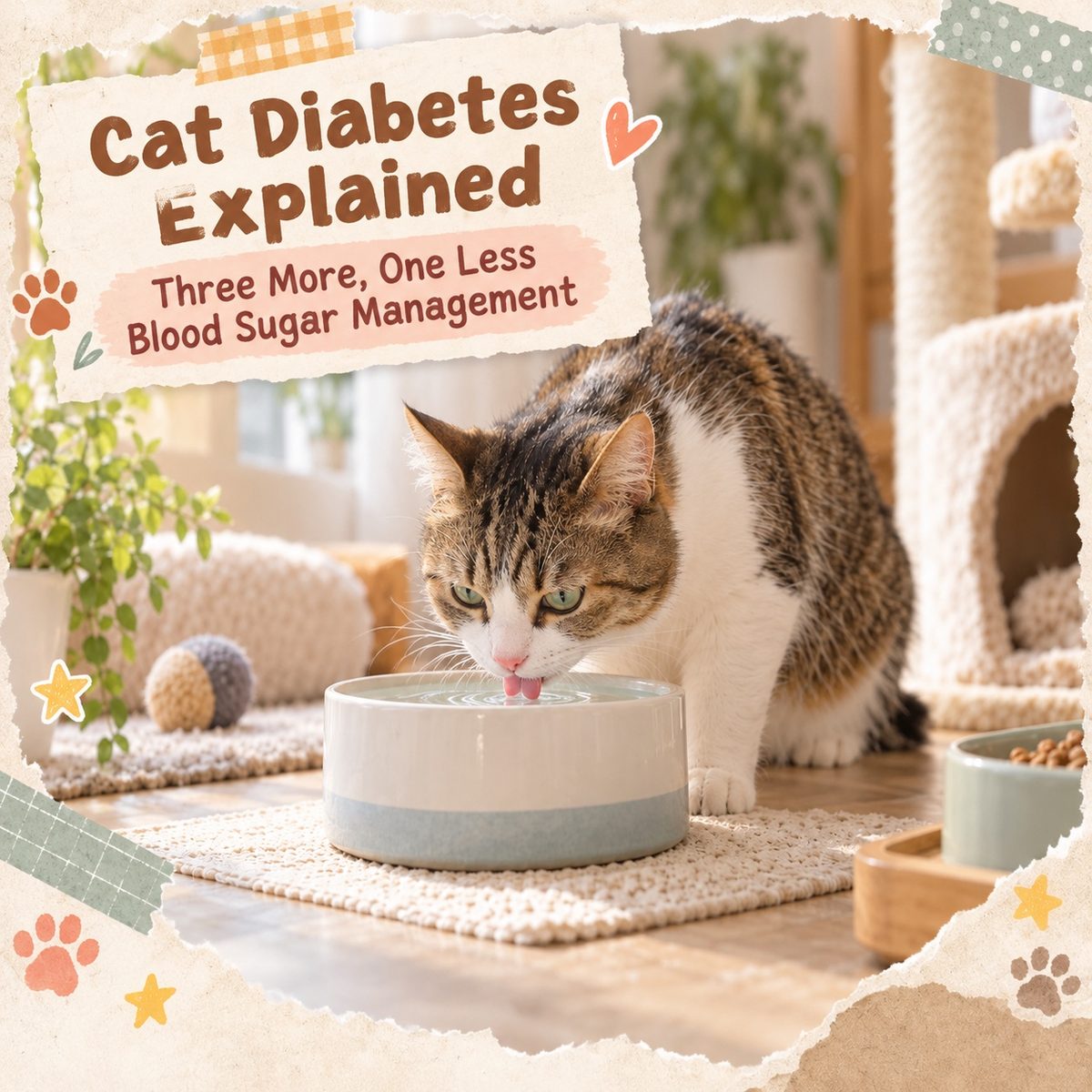
Increased urination—blood sugar exceeds the threshold, kidneys are forced to excrete sugar, which drags water with it → urine volume increases greatly (litter clumps become larger and more numerous, sometimes inappropriate urination)
-
Increased drinking—more urine → dehydration → excessive drinking to compensate (water bowl empties faster, cat lingers at the water fountain)
-
Increased appetite—cells can't get sugar = body thinks there's a 'famine' → appetite increases
-
Weight loss—eating more but sugar can't be used, body starts breaking down muscle and fat → 'eating but losing weight'
Why be alert? Because all four can develop slowly, with tiny daily changes, owners often think 'he just likes drinking water lately' or 'he's lost weight, great'. Remember the combination: a single signal can be observed, but all four together = test blood sugar immediately.
There are also subtler signs: lethargy, unable to jump to high places (hind leg nerve damage, walking with feet flat 'plantigrade stance'), dull coat.
Diagnosis: why test fructosamine?
- Blood glucose—basic indicator, but cats get stressed at the vet causing 'stress hyperglycaemia'; a single high reading does not confirm diagnosis
- Fructosamine—reflects average blood sugar over the past 1 to 2 weeks, unaffected by immediate stress, a key marker for confirming and monitoring feline diabetes
- Urine glucose—sugar only spills into urine when blood sugar exceeds the renal threshold, supporting diagnosis
- Check for concurrent diseases—diabetic cats often have pancreatitis, CKD, hyperthyroidism 'holding hands', so blood tests should look at all
Hong Kong advice: if you suspect the classic signs → do blood glucose + fructosamine + urinalysis all at once; after diagnosis, follow-up frequency is initially higher (adjusting insulin dose), then regular fructosamine + blood glucose curves as directed by your vet once stable.
When to see a vet + emergency red lines (DKA)
Red/green decision table:
| Situation | Assessment | Action |
|---|---|---|
| Obese cat with no symptoms | 🟢 Prevention | Weight loss plan + diet review |
| One of increased drinking/urination | 🟡 See vet | Test blood glucose and fructosamine |
| All classic signs present | 🟡 See vet soon | High suspicion, confirm ASAP |
| Diagnosed and stable on treatment | 🟢 Management | Monitor according to follow-up schedule |
| Not eating + vomiting + lethargy | 🔴 Emergency | Possible insulin overdose hypoglycaemia or DKA, see vet immediately |
| Breath smells of rotten apples/nail polish remover | 🔴 Emergency | Classic sign of ketoacidosis (DKA) |
| Trembling, seizures, collapse after injection | 🔴 Critical | Hypoglycaemic crisis, follow vet instructions and take to vet immediately |
How does DKA (diabetic ketoacidosis) happen? Cells can't get sugar long-term → body breaks down fat frantically → produces ketones → blood becomes acidic → can be fatal within days. Once a diagnosed diabetic cat stops eating, vomits, and is lethargic, don't wait—this combination is an emergency.
Hypoglycaemia is also an emergency: if a cat doesn't eat after insulin or the dose is too high, blood sugar can drop to dangerous levels—trembling, weakness, seizures. Vets generally teach: if conscious, rub some syrup/honey on the gums and take to vet immediately. So 'must eat after injection' is the first iron rule of home management for diabetic cats.
The treatment triad + the truth about remission
1. Insulin injections—the mainstay of feline diabetes treatment: usually twice daily, subcutaneous. It sounds scary, but the needles are very fine and cats adapt quickly; your vet will teach the full procedure (dose, technique, timing, needle disposal). Never adjust the dose yourself—insulin is a prescription drug; any change must be decided by your vet based on blood sugar data.
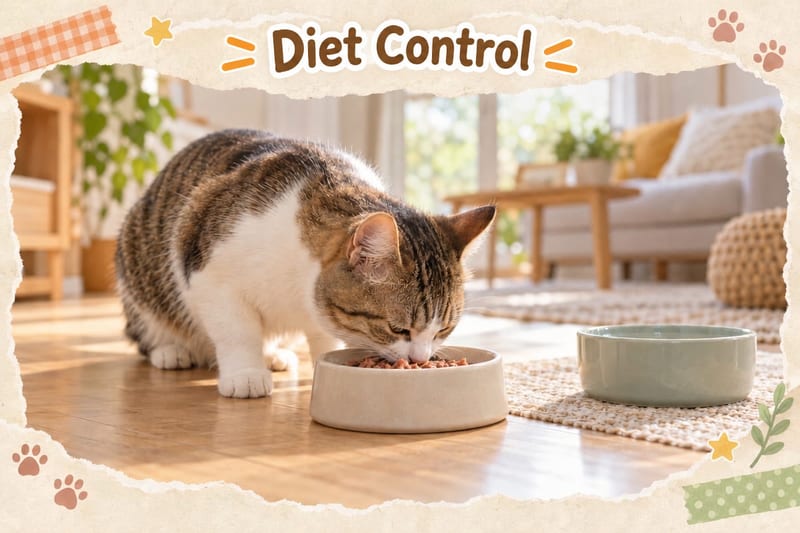
2. Dietary modification—low-carb (<10% of calories) high-protein diet: wet food as the mainstay greatly reduces blood sugar fluctuations; many cats have significantly lower insulin requirements after switching to low-carb wet food. This is one of the biggest contributors to 'remission'.
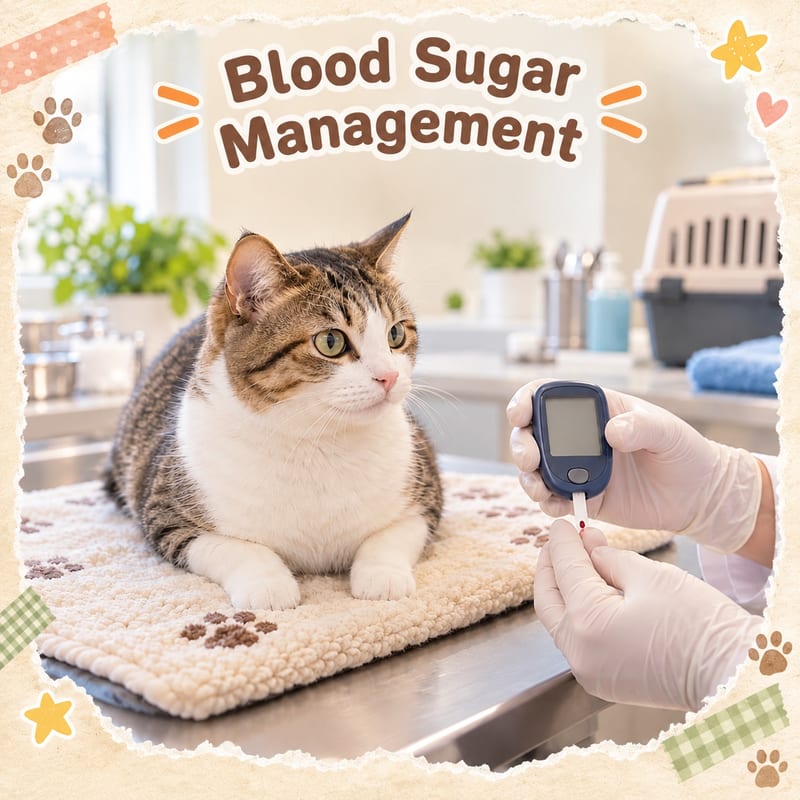
3. Blood sugar monitoring—follow-up blood glucose curves (multiple readings in a day) + fructosamine; if needed, your vet may teach home glucose monitoring (blood from ear margin/paw pad) or continuous glucose monitors. The more data, the more accurate the dose adjustment.
The truth about remission:
- Feline diabetes can go into remission—studies show a significant proportion of cats can stop injections and maintain normal blood sugar with aggressive treatment
- Remission is not a 'helps manage': pancreatic function is fragile; relaxed diet or weight regain can cause relapse at any time
- Remission rate is directly linked to early diagnosis—delay until pancreatic exhaustion and the chance of remission drops greatly
- So the strategy is clear: test as soon as you see the classic signs, and start full management immediately upon diagnosis—this is the golden window you're fighting for
Dietary management + Hong Kong practicalities
Dietary principles (follow vet guidance):
- Low-carb wet food as staple—check the 'carbohydrate NFE' on canned/pouch food labels; aim for less than 10% (dry matter basis)
- Timed and portion-controlled—insulin and feeding are linked: must eat before injection; how much and when to eat should become a fixed routine
- Weight loss (obese cats)—safe weight loss under vet guidance: rapid loss risks fatty liver; aim for 1 to 2% body weight loss per week
- Treats must also pass—high-carb treats (some lickable treats, biscuits) disrupt blood sugar; choose freeze-dried meat treats
Hong Kong practicalities:
- Wide choice of wet food: large pet stores/veterinary clinics stock prescription diabetic food and low-carb complete wet foods
- Working owners: two injections a day need fixed times—inject and feed before leaving for work in the morning, inject again when you get home at night; finding a fixed 12-hour interval routine is the key to long-term success
- Business trips/long holidays: arrange a cat sitter/boarding in advance, and hand over the injection schedule; better to reschedule than to miss or mess up injections
- Multi-cat households: diabetic cats should be fed separately to control intake; other cats won't 'catch' diabetes, so no isolation needed
This article is for reference only and cannot replace veterinary diagnosis. If you have health concerns, please consult a registered veterinarian.
Further reading
📌 Key points
- ✅ The vast majority of feline diabetes is type 2, caused by insulin resistance rather than complete pancreatic failure, so there is room for the system to recover
- ✅ The classic quartet appearing together is the most reliable home warning sign—not a single symptom, but a combination
- ✅ Fructosamine is key to diagnosis, reflecting average blood sugar over the past 1–2 weeks, unaffected by stress at the vet
- ✅ Clinical remission is a real possibility, but depends on early diagnosis, strict dietary control (low-carb wet food as staple), and regular insulin use
- ❌ A single high blood sugar reading is not enough to diagnose—stress hyperglycaemia can cause false positives
- ❌ Once a diabetic cat shows 'not eating + vomiting + lethargy', it does not just mean poor appetite—it is very likely fatal ketoacidosis (DKA)
Related products and Hong Kong purchasing reference
- RC Cat Wet Food DIABETIC Gravy 85g (reference price HK$19)
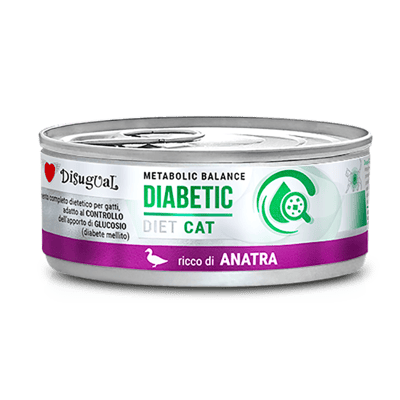
- Disugual Diabetic Formula Duck 85g (reference price HK$8)
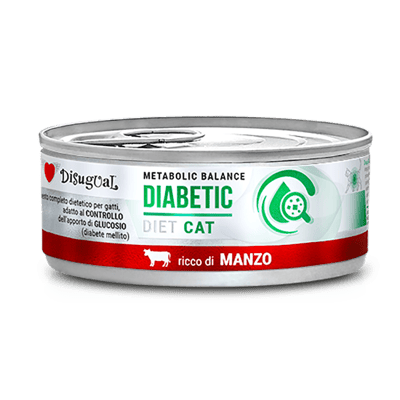
- Disugual Diabetic Formula Beef 85g (reference price HK$8)
Hong Kong practical points
- Confirm the cat has eaten before and after injection to avoid hypoglycaemia risk
- Changing diet alters insulin needs; must coordinate with vet for monitoring and adjustment
- A single high blood sugar reading does not confirm diagnosis; combine with fructosamine and symptoms for a comprehensive assessment
The above is general information and does not replace veterinary diagnosis; if your cat has persistent symptoms, please take them to a veterinary clinic as soon as possible.
 Feline Natural full guide →
 Fuji One full guide →