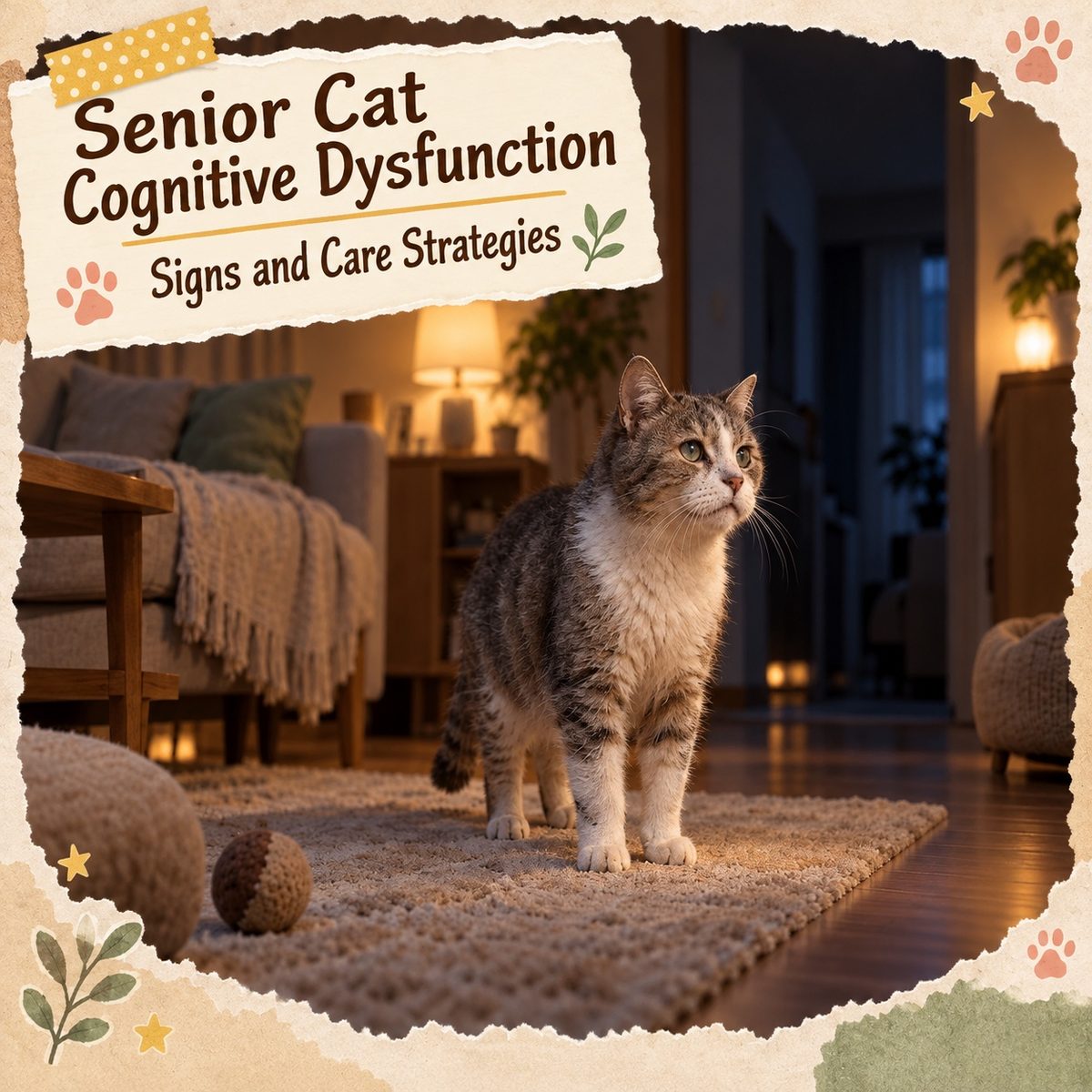
Quick answer: Night crying, wandering and inappropriate urination in an old cat may be cognitive dysfunction (feline dementia), but books remind us: treatable conditions like hyperthyroidism and high blood pressure can also cause night crying — so the first step is blood tests to rule out physical problems. Once cognitive dysfunction is diagnosed there is no cure, but daily fixed interaction + mental stimulation + a stable environment are the prevention and slowing methods recognised in books.
Cats can get 'dementia' too
Books on cat behaviour are very clear: cats can show symptoms similar to dementia in dogs. In senior cats, metabolism, vision and hearing all decline, and the brain's cognitive ability also degenerates — things they used to know how to do (use the litter box, recognise mealtime, recognise people) gradually become unfamiliar.
This is not 'being naughty', not 'revenge', not 'not liking you' — it's brain degeneration. Understanding this is the first step in caring for a senior cat with cognitive dysfunction.
Symptom comparison table
| Symptom | What the books say | What you'll observe |
|---|---|---|
| Eating multiple times | Forgetting whether they've eaten | Half an hour after eating, they're back at the bowl crying |
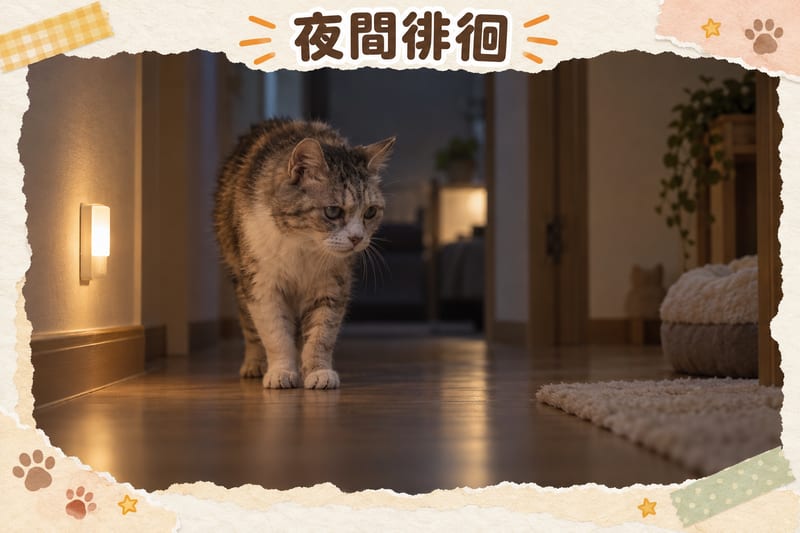
| Aimless wandering | Pacing is a typical sign | Walking around the house at night with no destination |
| Litter box mistakes | Cognitive decline | Urinating or defecating in the wrong place, or standing next to the litter box 'forgetting to go in' |
| Reversed sleep pattern | Disrupted body clock | Sleeping during the day, crying and wandering at night |
| Not recognising people/places | Cognitive decline | Looking at you as if you're a stranger; 'getting lost' in a familiar home |
| Night crying | Confusion + anxiety | Pitiful crying, then acting as if nothing happened |
Important difference: Changes from cognitive dysfunction are slow to appear and gradually worsen. If your cat's behaviour changes suddenly (completely different within a day or two), it's more likely pain or acute illness — seek veterinary care immediately, don't assume dementia.
The first step is not acceptance, it's ruling things out
This is the most important paragraph in the whole article. Books remind us: senior cats with hyperthyroidism cry in the early morning — indistinguishable from the night crying of cognitive dysfunction. And hyperthyroidism is a treatable disease!
So the correct order is:
- Blood tests: thyroid T4, kidney function, blood glucose
- Blood pressure measurement: high blood pressure is common in senior cats and can make them restless and anxious
- Sensory check: declining vision and hearing can make cats confused (books remind us: cloudy eyes in most senior cats are normal ageing, but a veterinarian needs to distinguish ageing from disease)
- Joint check: pain can also cause night crying and inappropriate urination
Only after all of these are ruled out can a diagnosis of 'cognitive dysfunction' be made. For the check-up process and items, see Senior Cat Check-up Guide; for hyperthyroidism details, see Cat Hyperthyroidism Guide.
No cure, but it can be slowed
The direction given in books is very practical: good human interaction and mental stimulation are effective measures for preventing dementia. Specific methods:
Fixed daily interaction
- Play with them for 10-15 minutes at the same time every day (gentle toys, no need for intense play)
- Interaction doesn't have to be play — grooming, talking softly to them, letting them sit on your lap all count
- Routine is key: a fixed schedule gives a confused brain a sense of security
Mental stimulation
- Puzzle toys, food-hiding toys: using their brain to find food keeps them thinking
- Window perch for bird-watching: visual stimulation is low-effort brain exercise
- Don't buy a dozen new toys at once — introduce them slowly; one or two they're willing to play with is enough
Stable environment
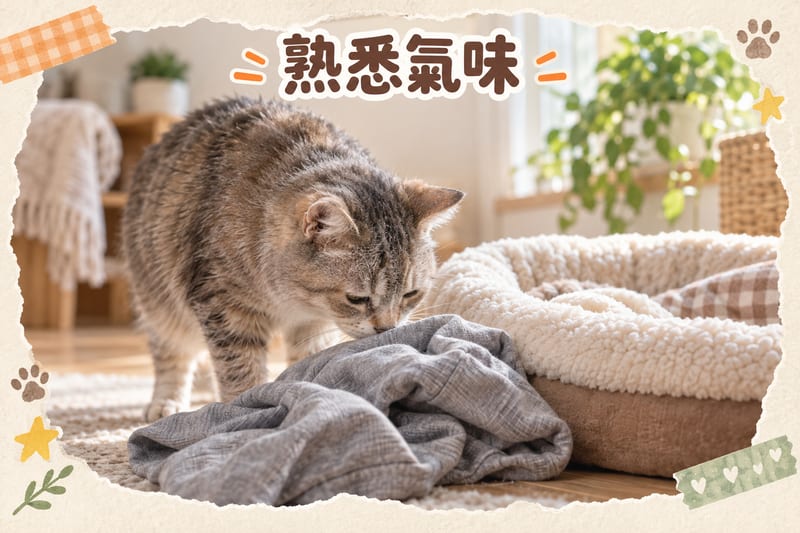
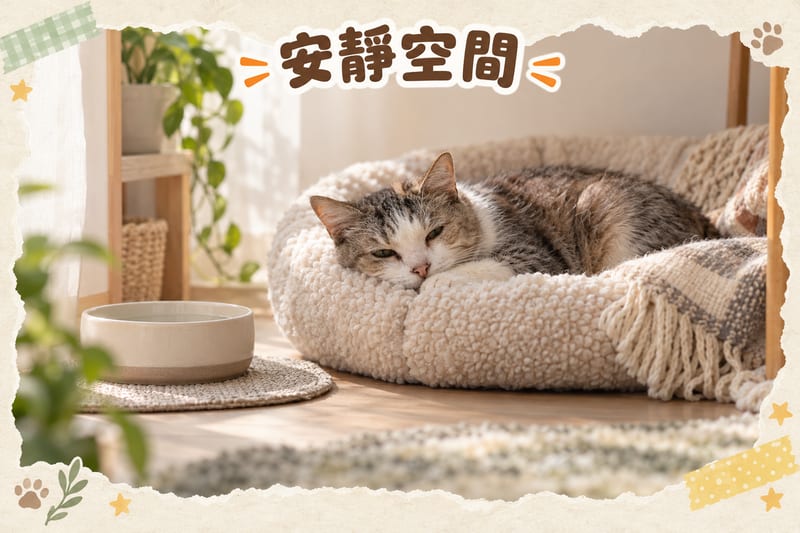
- Don't move things: keep furniture, litter box and food bowls in fixed positions — a confused cat navigates by memory, and moving things destroys their map
- Night light: leave a dim light on at night to reduce their panic of 'not knowing where they are'
- Put one or two extra litter boxes in places they often go, with low sides
Nutritional support
- A balanced senior cat food provides the nutrition the brain needs; some veterinarians may suggest an antioxidant nutritional approach
- Ask your veterinarian about any supplement — products claiming to 'boost the brain' on the market have varying levels of evidence
What a veterinarian can do
- For cases severely affecting sleep or with persistent anxiety, a veterinarian has medication that can help
- Regular follow-up visits to track the rate of decline and adjust the care plan
Adjusting your mindset as a household
Caring for a senior cat with cognitive dysfunction is hardest on the humans. Being woken by their crying at night, wiping up urine from the wrong place, repeatedly answering 'the bowl is right there' — these are all labours of love.
Remember three things:
- Don't scold them — they're not doing it on purpose; scolding only makes them more confused and anxious
- A fixed routine saves everyone — both you and your cat benefit from a predictable schedule
- Assess quality of life — at a certain stage of decline, start consulting your veterinarian to assess whether they're doing well; for this topic see Senior Cat Quality of Life
Prevention: start in middle age
Cognitive decline doesn't suddenly begin on their 12th birthday — the view in books is that brain health is a lifelong matter. Middle-aged cats (7-10 years) can start:
- Don't break daily interaction: even if they're not a kitten, keep 10 minutes of toy time every day
- New experiences: occasional new toys, new cardboard boxes, new window perches — new stimulation is brain exercise
- Train small tricks: books mention that cats learning different tricks and getting rewards makes them happy — simple commands like high-five or shake hands can still be learned by older cats
- Balanced nutrition: discuss an antioxidant nutritional approach with your veterinarian
By the time decline really happens, these habits are the best tools you have.
Get the whole household on the same page
Caring for a senior cat with cognitive dysfunction requires the whole family to follow the same approach:
- Consistent rules: if they urinate in the wrong place, everyone cleans it up quietly — no one scolds
- Division of labour: who feeds, who cleans, who notices their night-time activity
- Children: explain to children 'the cat is old, their brain forgets things, we need to be gentle' — this is great life education
- Night shift support: during periods of intense night crying, family members take turns getting up to check, don't let one person bear it all
Related articles
- Senior Cat Check-up Guide: the process for ruling out physical problems
- Cat Hyperthyroidism Guide: the number one 'false culprit' for night crying
- What to do about poor appetite in senior cats: telling apart eating multiple times and not eating
- Senior Cat Care Guide: the overall senior cat care table
- Early Warning Signs of Chronic Disease in Cats: normal ageing or illness
Adapting to sensory decline
Books remind us: cloudy eyes in most senior cats are normal ageing, and declining vision and hearing intensify confusion. The adaptations are simple: make a sound before approaching them (a deaf cat will jump in fright if you touch them suddenly); let them sniff your hand before touching them; keep the night light on. Cats with both sensory and cognitive decline have stronger fear responses, so all contact follows the principle of 'slow and announce yourself'.
References
- Agriculture, Fisheries and Conservation Department (Hong Kong Government) — Pet Care Information
- Veterinary Surgeons Board of Hong Kong
- The knowledge points in this article are compiled from cat encyclopaedia books such as 'The Complete Book of Cat Care' and 'My First Cat Book'
Related products (available in Hong Kong)
Balanced nutrition is the foundation of brain health; senior cat formulas:
- Royal Canin FHN Senior Cat 11+ Nutritional Formula 2kg ($256, checked 2026-10-12)
- Astkatta Mousse Series Senior Cat Tuna + Chicken 80g ($14)
The above content is for reference only and cannot replace veterinary diagnosis and treatment. If behaviour changes suddenly or cognitive dysfunction is suspected, please consult your veterinarian and seek examination as soon as possible.
📌 Key points
- ✅ The first step for night crying is blood tests — hyperthyroidism is the 'false culprit'
- ✅ Fixed interaction + a stable environment are the main ways to slow decline
- ✅ Slow deterioration looks like dementia; sudden changes are usually illness
- ❌ Scolding or punishing them — they're not doing it on purpose
- ❌ Moving furniture or litter boxes — a confused cat navigates by memory
 Royal Canin full guide →


 Astkatta full guide →