Hong Kong pet daily care can be broken down into three lines: measuring breathing and heartbeat in a dozen or so seconds, switching cooling or warming supplies according to the season, and recording behavioural changes. Cat stress usually shows first as hiding, over-grooming and lip licking; once a cat has not eaten for more than 24 hours or has urinary obstruction, see a vet immediately.
Quick answers
- Stress response: Behaviourally, you mostly see hiding first, over-grooming, lip licking and increased swallowing, dilated pupils, refusal to eat or inappropriate urination; physiologically, breathing and heartbeat speed up, ears and paw pads become warm, and drooling occurs. Look at the trend, not a single action.
- Physiological monitoring: An adult cat at rest breathes 16 to 30 times/minute, 15 to 25 times/minute in deep sleep, with a heartbeat of 120 to 240 times/minute; if it is consistently over 40 times/minute at rest, arrange a vet check.
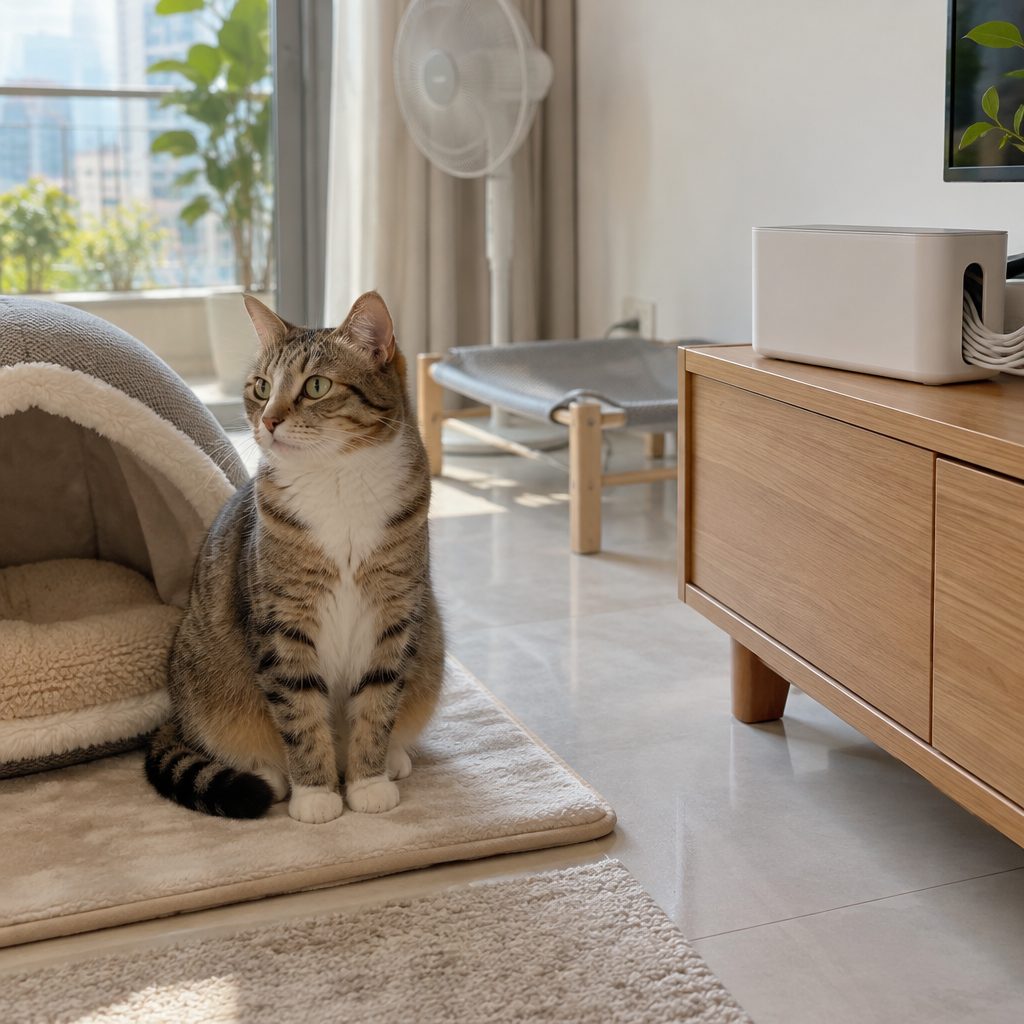
- Seasonal supplies: In summer use aluminium or gel cooling mats, raised mesh beds, and keep indoor temperature at 26 to 28 degrees; in winter use removable-washable warming mats, with the heat mat on low setting plus a towel for insulation, and in both cases leave both a "sheltered spot" and a "cooling spot".
- Coat colour issues: Discolouration of hair tips is mostly caused by UV or saliva, cannot be washed out, and you can only wait for new hair or trim it; if even the hair roots are discoloured, test the skin and endocrine system.
- Bite-proofing cables: The most effective approach is cable routing management — all cables below 1 metre from the floor go into plastic trunking or corrugated conduit, combined with daily alternative chewing and walks.
- When to see a vet: Urinary obstruction, more than 24 hours without eating or drinking, open-mouth breathing, sudden hind-leg weakness, licking or biting until the skin breaks — these are same-day situations.
Key summary
- The stress response is a "whole-body" response, with behavioural and physiological signs appearing at the same time, so records should be kept together: daily food intake, water intake, litter box use, grooming duration and number of lip licks.
- Breathing and heartbeat are the cheapest monitoring instruments at home. The point is not a single reading, but a baseline value at the same time period over several consecutive days.
- Seasonal supplies are not just about hot and cold, but also "close to the body" versus "environment": close-to-body items change with the season, while environmental temperature (26 to 28 degrees, ventilation, humidity) is maintained all year round.
- Coat turning yellow or brown is mostly a grooming matter; once it is accompanied by odour, hair loss, dandruff or weight change, treat it as a health issue.
- Cables and seasonal supplies in small Hong Kong flats are two major sources of accidents: cables must be tidied away, and cooling mats and warming mats should only be used if they do not feel hot to the touch and do not accumulate water.
- Senior dog beds and long-haired cat combs follow the same principle: measure first, then divide the work by purpose, and do not choose based only on weight or the word "suitable" on the packaging.
What behavioural or physiological changes does a cat's stress response usually show?
The stress response is a whole-body reaction when a cat faces pressure, not simply "being in a bad mood". Behaviourally, avoidance and vigilance appear first, and may later develop into over-grooming, inappropriate urination or aggression; physiologically, it is the result of increased sympathetic nervous system activity and cortisol, so you see faster breathing and heartbeat, slightly raised body temperature, dilated pupils and gastrointestinal symptoms. Both the World Small Animal Veterinary Association (WSAVA) and the International Society of Feline Medicine (ISFM, parent organisation International Cat Care) emphasise that a cat's health assessment must include environmental and behavioural aspects, because psychological stress is directly reflected in physiological indicators.
The key to observation is not catching a single action, but "whether there is a change compared with usual", and recording it over several consecutive days. The following three-level comparison table can help you judge the degree and how to handle it:
| Level | Common behavioural signs | Physiological changes | What you can do at home | When to see a vet |
|---|---|---|---|---|
| Mild | Ears back, tail tucked close to body, brief hiding, slight decrease in appetite | Breathing and heartbeat slightly faster, dilated pupils | Reduce noise, provide hiding spots, fixed feeding times | Generally resolves within 1 to 2 days, can observe |
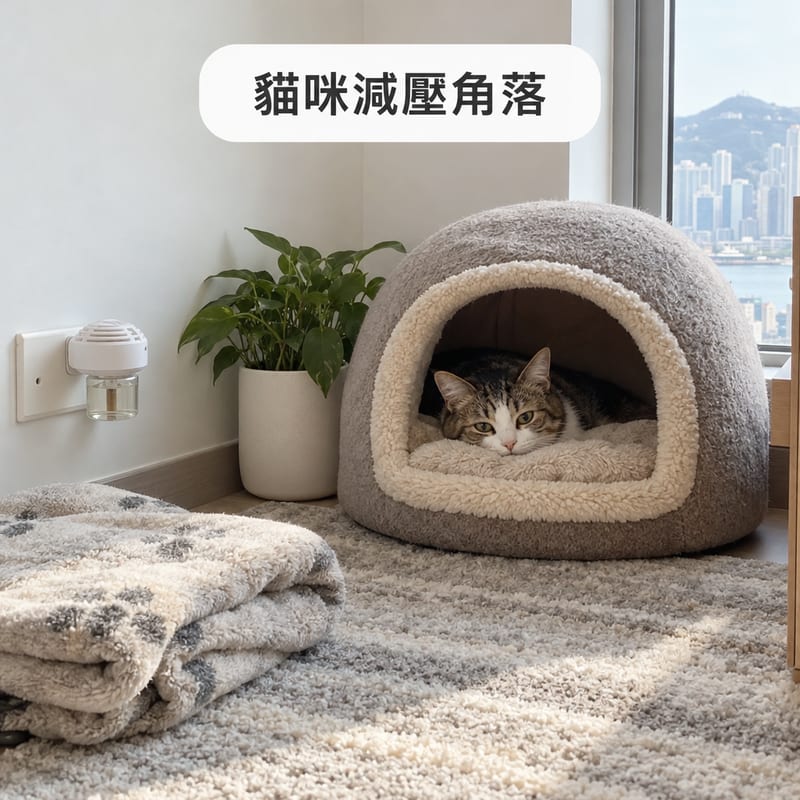
| Moderate | Over-grooming, noticeably increased lip licking and swallowing, inappropriate urination, not using the litter box, avoiding touch | Persistently fast breathing, hot ears, drooling, soft stool | Remove the stressor, plug in a pheromone diffuser, separate food, water and litter box locations | More than 24 hours without eating, or symptoms lasting over 2 days |
| Severe | Continuous hissing, aggression, huddling in a corner, complete refusal to eat | Abnormal body temperature, dehydration, urinary obstruction, vomiting | Do not force-hold or force-feed, prepare the carrier | Contact a vet immediately; urinary obstruction and 24-hour food refusal are emergencies |
How to observe lip licking? Lip licking itself is a normal action, but when it repeats within a short period it usually indicates nausea or stress. The method is to pick a quiet time period, record the number of times within 10 minutes, and write down the environment at the time (whether there were loud noises, strangers, other cats passing by). If the number is clearly more than usual, together with dilated pupils, tail twitching or refusal to eat, that is a complete set of stress signals and should not be treated as "the cat being difficult today".
Picky eating after moving house is a typical case. A cat in a new environment will first hide and reduce activity, and in many cases gradually recovers its appetite within 24 to 72 hours. What you need to do is: keep the original food and bowls, put an old towel in the new sleeping spot to retain scent, and place the litter box and water bowl separately. For details you can refer to the site's cat moving stress handling and three-level interpretation of cat stress response. If there is completely no eating or urination for more than 24 hours, or continuous hissing appears, it is not "adapting" and you should see a vet immediately.
Pheromone diffusers, catnip and environmental enrichment (vertical space, multiple hiding spots, food puzzle toys) are auxiliary measures that can be used together, but the core is always removing the stressor and stabilising the routine. Chronic, repeatedly occurring tense states (such as multi-cat conflict or long-term environmental instability) should be handled in the direction of cat anxiety environment modification, and assessed by a vet to see whether further intervention is needed.
What is the difference between the normal breathing rate range of kittens and adult cats?
The normal breathing rate of an adult cat at quiet rest is 16 to 30 times per minute, and can drop to 15 to 25 times when in deep sleep or completely relaxed; the heartbeat is generally 120 to 240 times per minute. Kittens have a high metabolic rate and a large body surface area relative to body weight, so their breathing rate at rest is usually faster than that of adult cats, but you should not rigidly apply a fixed number — the correct approach is to establish an individual baseline for them: measure and record at the same time period for three to five consecutive days.
As for senior cats, the breathing range is similar to adult cats, but with greater fluctuation. Factors affecting the breathing rate of kittens and senior cats include: environmental temperature and humidity, stress or pain, anaemia, heart and respiratory diseases, thyroid problems, fever, obesity, and indoor air quality. Hong Kong summers are hot and humid, and cats dissipate heat through sweating from their paw pads, so breathing speeds up slightly; in dry cold winters, some cats develop occasional coughing. Hong Kong pet owners can also refer to the Agriculture, Fisheries and Conservation Department's (AFCD) public pet care information to understand local keeping and management requirements.
| Monitoring item | General reference range | Numbers to watch | Home measurement method |
|---|---|---|---|
| Adult cat resting breathing | 16 to 30 times/minute | Consistently over 40 times/minute | Count abdominal rises for 15 seconds while in deep sleep, then multiply by 4 |
| Adult cat deep sleep breathing | 15 to 25 times/minute | Consistently over 30 times/minute | Same as above, take the average over several consecutive days |
| Cat heartbeat | 120 to 240 times/minute | Below 100 or above 260 times/minute | Press palm lightly on the left chest for 15 seconds, then multiply by 4 |
| Kitten breathing | Usually faster than adult cats at rest, based on individual baseline | Sudden marked increase, open-mouth breathing | Measure during deep sleep and record baseline |
| Senior cat breathing | Range similar to adult cats, but with greater fluctuation | Faster breathing at night, unwilling to lie on its side and needs to lie prone | Measure at the same time period every night |
Details of measurement: Count one rise and fall of the abdomen as one time, do not count one up-and-down as two; if the cat is purring, measure on another day, because the sound will cover the breathing sound. Faster breathing after exercise, in hot weather, after being startled or at the clinic is a normal physiological response, so you must wait until it is completely calm for about 10 minutes before measuring, for the number to be meaningful. The World Small Animal Veterinary Association (WSAVA global guidelines) also recommends that vital signs should be interpreted within the framework of a complete history and physical examination, and cannot be judged by a single number alone.
Muscle weakness and abnormal posture is another key point. If a cat suddenly has weak hind legs, drags them, becomes hesitant going up and down stairs, or changes from sitting to lying flat for long periods, with both front legs splayed out and refusing to sleep on its side, these are not "sleeping deeply" but signals that need immediate attention. Sudden hind leg weakness in particular should be treated as a thromboembolism emergency and you cannot wait until the next day. For related content, see the site's Cat Breathing Rate Observation Guide and Early Warning Signs of Cat Heart Disease.
How to record activity level? Two numbers are enough: the total minutes of active play per day, and the number of times jumping onto high places. Adult cats generally need two to three interactive play sessions per day, 5 to 10 minutes each; for senior cats the numbers will drop, but the key is "whether there is a sudden change". If a cat that usually loves jumping onto the windowsill suddenly stops jumping for several days in a row and instead stays close to the ground for long periods, pain and joint problems should be ruled out first. You can extend your reading to Senior Cat Arthritis Care and Daily Care for Pet Arthritis.
How should pet warming products and summer cooling products be used?
Hong Kong's seasonal challenge is "hot and humid in summer, cold and damp in winter". So the principle for using products is: change close-contact products with the seasons, maintain environmental conditions all year round. In summer, keep the indoor temperature at 26 to 28 degrees as far as possible and maintain ventilation, and place clean water in multiple locations; in winter, avoid draughty spots, and make sleeping areas thicker and keep them dry. A cat's most comfortable living environment temperature is about 25 to 29 degrees, so do not set the air conditioning too low; long-term temperatures below 25 degrees will make cold-sensitive individuals (kittens, senior cats, short-haired cats) uncomfortable.
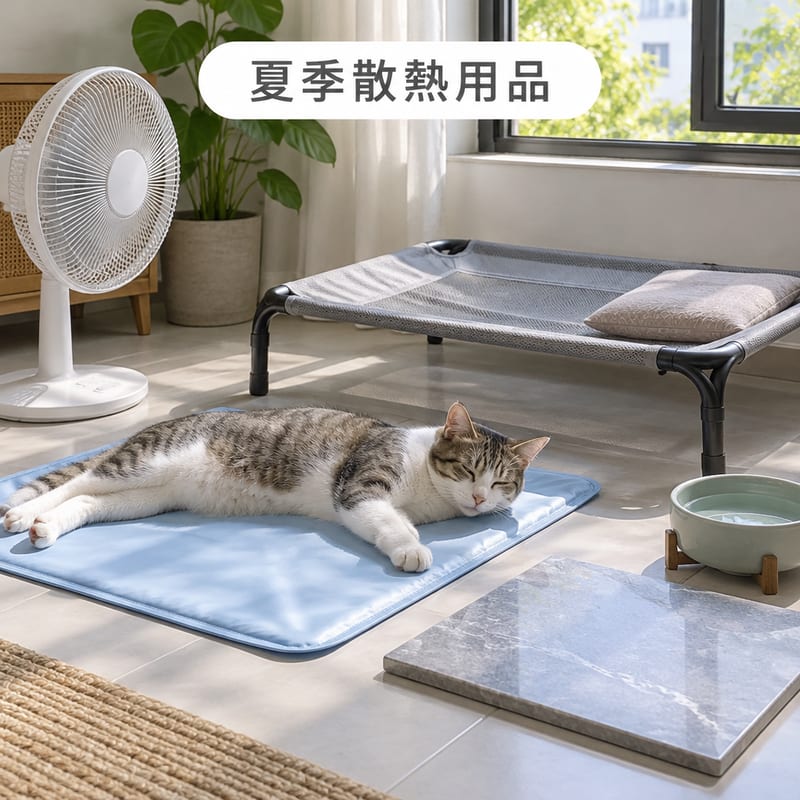
Summer cooling products fall into three categories: first, heat-conducting types (aluminium cooling mats, marble mats, tiled spots), suitable for stretching out the whole body against them; second, breathable types (raised mesh beds), which rely on being off the ground and ventilated to carry away body heat; third, environmental types (fans, circulation fans, shading). Note that long-haired cats should not be shaved bald; the fur itself is an insulating layer. The correct approach is to brush out dead hair daily, trim the hair on the paws and belly short, and keep the room cool. You can refer to Long-haired Cat Summer Cooling Care and Preventing Heatstroke in Cats in Summer.
Winter warming products are likewise divided into three categories: removable and washable warming soft pads and blankets, low-temperature pet heating pads, and indoor thermostatic equipment. The iron rule for using heating pads is low-temperature setting plus a towel for insulation, and checking the skin regularly, because cats and dogs lying against an overheated surface for long periods can cause low-temperature burns. Senior cats and senior dogs have joints that are sensitive to cold; sleeping pads should be thicker and placed in a sunny spot that will not get hot from the sun. For detailed methods, see the site's Cat and Dog Winter Warming Guide.
| Product type | Applicable season | Correct use | To avoid |
|---|---|---|---|
| Aluminium or gel cooling mats | Summer | Place in a cool, ventilated spot; use only if not hot to the touch; can be used with a fan | Long periods of direct sun, placing in the direct path of air conditioning |
| Raised mesh bed | All year, especially summer | Off the ground and ventilated, placed near the owner's activity area | Loose mesh, gaps at the edges |
| Marble mat or tiled spot | Summer | Provide one cool surface while also leaving one warm sleeping spot | Placing only cooling mats throughout the home, leaving cold-sensitive individuals nowhere to escape |
| Warming soft pads, blankets | Winter | Removable and washable; feel for dampness every day | Putting them back in the sleeping spot while still damp |
| Pet heating pads | Winter | Low-temperature setting plus a towel for insulation; check the skin regularly | High-temperature setting, leaving on for long periods when the pet is alone |
| Cat bed material | Summer: aluminium alloy, rattan, mesh fabric, corrugated cardboard; winter: fleece, cotton, far-infrared cotton | Change according to room temperature; do not use the same type all year round | Thick fleece beds in summer, aluminium beds in winter |
Do cat beds in summer need special design? Yes, the key is three things: "material + off the ground + convection". Aluminium alloy, rattan or mesh fabric dissipate heat faster; raising the bed 10 to 20 cm off the ground avoids residual floor heat; facing the opening towards the airflow creates convection. Conversely, thick fleece beds and enclosed, non-breathable beds become small incubators in summer. In winter it is the opposite: enclosed sleeping beds, fleece plus far-infrared cotton have good insulation, but remember to check for dampness every day; in Hong Kong's humid weather, water accumulating at the bottom of the bed is the starting point for mould and skin problems.
Do indoor cats need extra sunbathing time? There are three observation points for judging: whether the coat is dry and glossy, whether the daily routine is day-night reversed, and whether the cat hides in dark corners for long periods. If all three appear, you can arrange 15 to 30 minutes of sunlight per day, through a window, avoiding the fierce midday sun, and provide a spot the cat can leave at any time. Note that sunlight through glass filters out some ultraviolet rays, and west-facing windows in Hong Kong can cause local temperatures to rise sharply, so you must leave a cool spot and must not shut the cat on a balcony or by a sealed window. If panting, drooling, or hot ears and paw pads appear after sunbathing, cool the cat down immediately and seek veterinary advice.
Below are several seasonal products actually worth considering; prices are subject to the online store's current listed prices:
- Petio Extreme Cold Series Cooling Non-slip Aluminium Cooling Mat M (91603609) — HK$213. Suitable for placing in a ventilated spot in summer.
- Petio Cooling Round Gel Pet Bed for Cats and Dogs Penguin Style (81606031) — HK$280. Gel beds suit individuals that are sensitive to heat but need support.
- Petio Pet Warming Pad Lemon Yellow Large (91600892) — HK$156. Removable and washable winter warming pad, easy to clean.
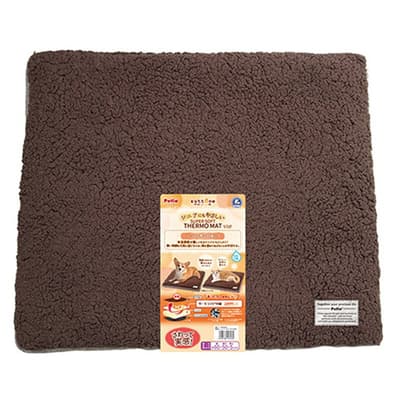
- Petio zuttone Super Soft Warming Pad for Senior Dogs L — HK$345. A soft warming sleeping pad designed for senior dogs.
How to improve black dog hair turning brown? What is the solution for white dog hair turning yellow?
The first step in coat colour problems is always to distinguish "external staining" from "internal health". There is only one key to judging: whether the discolouration is limited to the tips of the hair, or whether even the hair roots have changed.
For black dog hair turning brown, if the hair roots are still jet black, the most common causes are ultraviolet bleaching (long periods in the sun or often outdoors) and saliva staining (repeated licking of the same spot). The response to ultraviolet bleaching is to change walk times (avoid 11am to 3pm), use a mild dog shampoo, and address the source of the itching. Saliva staining is different; it usually reflects itching, pain or a skin infection, and shampooing alone will not wash away the source. If even the hair roots have changed colour, the coat texture has become brittle, or hair loss is present, a veterinarian should examine the skin, hair follicles and endocrine system; do not supplement copper or zinc on your own, because an excess can be toxic. For a complete breakdown, see the site's Causes and Improvement of Black Dog Hair Turning Brown.
White dog hair turning yellow is mostly pigment from tears, saliva and urine that has kept the coat wet long-term and then oxidised and deposited, plus sebum oxidation and ultraviolet light. The core of home care is "keep it dry": every day use clean water or pet-specific wipes to wipe the eyes, mouth, all four paw pads and the spaces between the toes, about 5 minutes each time; bathe once every 4 to 6 weeks and rinse and dry thoroughly. Hair tips that have already oxidised and deposited cannot be washed back; they can only be trimmed. To learn how to choose a de-yellowing shampoo, how to dilute it, and the maximum contact time, see Solutions for White Dog Hair Turning Yellow.
| Situation | Common causes | Home management | When to see a vet |
|---|---|---|---|
| Black dog's hair tips turn brown, hair roots still black | UV bleaching, saliva staining | Change walk times, address the root cause of itching, bathe once every 2 to 4 weeks with a mild dog shampoo | Persistent licking or biting at the same spot, odour or dandruff |
| Black dog's colour changes down to the hair roots | Follicle or endocrine problems | Do not supplement copper or zinc on your own | Bilateral symmetrical hair loss, weight changes, sensitivity to cold |
| White dog's tear stains turn yellow | Oxidation after tears keep the area wet long-term | Wipe eyes daily, trim hair around the eyes short | Abundant thick discharge, yellowing of the whites of the eyes or gums |
| White dog's whole body turns yellowish | Saliva, urine pigments, sebum oxidation | Bathe once every 4 to 6 weeks, dry thoroughly | Accompanied by odour, itching, hair loss, thickened skin |
How to choose a comb? A long-haired cat's coat colour and texture are directly related to the combing method: comb incorrectly and mats tear and break the hair, and scratched-red skin then triggers over-grooming. So the three comb types are not a choice of one over another, but a division of labour in sequence.
| Comb type | Purpose | Frequency of use | Notes |
|---|---|---|---|
| Comb (tooth spacing 2 to 3 mm) | Loosen mats layer by layer, tidy the outer long hair | First step every day | Comb from hair tip towards the root, do not pull hard |
| Slicker brush (pin length 1.5 to 2 cm, rounded rubber tips at the ends) | Clear the undercoat fluff, create volume | Use after confirming there are no mats | Pin tips have rounded rubber caps, avoid scratching skin red |
| De-shedding comb | Collect loose hair, use during shedding season | 1 to 2 times per week, every other day during shedding season (March to May, September to November) | 3 to 5 strokes per area each time is enough |
The combing order is "loosen mats first, clear fluff after": the comb goes first, confirm the whole section of hair has no tangles, then use the slicker brush. To see the full process and the boundary for handling mats, you can refer to the Long-haired Cat Comb Selection Guide and Cat Grooming Techniques. For actual products, the Cat & Dog King Cat & Dog Medium/Large Long-haired Pet Slicker Brush (CDK2065) is priced at HK$138, a slicker brush type with rubber caps at the tips, suitable for daily fluff clearing on long-haired cats.
How to prevent dogs from chewing through cables or chargers?
Hong Kong household socket voltage is 220 volts, so chewing through cable insulation is not just "chewing up an object" — it means direct contact with live metal, causing oral burns, arrhythmia and pulmonary oedema. The order of bite prevention should be: first make it impossible to bite (environment), then address why it wants to bite (behaviour).
Most cases are not "the dog is naughty", but three causes stacking up: puppy teething gum itching (densest at around 3 to 6 months old), cables looking like tug toys, and the owner's reaction of chasing and grabbing the cable becoming a reward. The following five methods run in parallel, and obvious improvement is usually seen in 2 to 4 weeks:
| Method | How to do it | Frequency | Common mistakes |
|---|---|---|---|
| Cable routing management | Wrap cables below 1 metre from the floor with cable trunking or corrugated conduit, store extension leads in a cable management box | Do it once properly, then check weekly | Only sticking down with tape, it comes apart as soon as the dog bites |
| Alternative chewing | Rotate 3 to 4 chew toys of different hardness | 10 to 15 minutes each time, several times a day | Giving only one toy, the dog quickly loses interest |
| Energy-release walks | 2 times a day, 20 to 30 minutes each time | Daily | Using running instead of sniffing walks, the dog becomes more hyper |
| Pet-specific bitterant | Wipe the cable clean with water, spray evenly from 15 cm away, use only after fully dry | Re-spray every 2 to 4 weeks | Using human anti-bite products, chilli powder, mustard or camphor |
| "Swap" training | The moment it bites the cable, swap it for a toy, reward immediately when the swap is made | Short practice sessions daily | Chasing and grabbing the cable, making cable biting an interactive game |
Bitterants are a supplement, not the main method, because dogs get used to the taste and it stops working. Before use, wipe the cable clean with water, wait until fully dry after spraying, and do a 24-hour test on an old cable, observing for drooling, vomiting or eye irritation. If the dog has other destructive behaviours (for example, starting to chew furniture within 30 minutes of you leaving), you can extend to read Puppy Biting Training to first rule out separation anxiety. For the full breakdown of the five methods and delayed symptoms, see the site's How to prevent dogs chewing through cables and chargers.
What to do after it has been chewed? Even if there is no electric shock and no visible wound, call and ask a vet immediately. The reason is that the chewed insulation plastic and metal fragments may already have been swallowed, which can cause gastrointestinal obstruction or scratch the mouth; and oral burns and pulmonary oedema caused by live cables — in some cases, rapid breathing and coughing only appear delayed by 12 to 24 hours. During this time, do not induce vomiting on your own; follow the vet's instructions. For home bite-prevention products, Nutrivet Anti-Bite Spray, sprayable on furniture to prevent cats scratching and biting, 8oz (C50410) is priced at HK$86.4, a pet-specific formula that can be sprayed on cable trunking or furniture edges as a supplement.
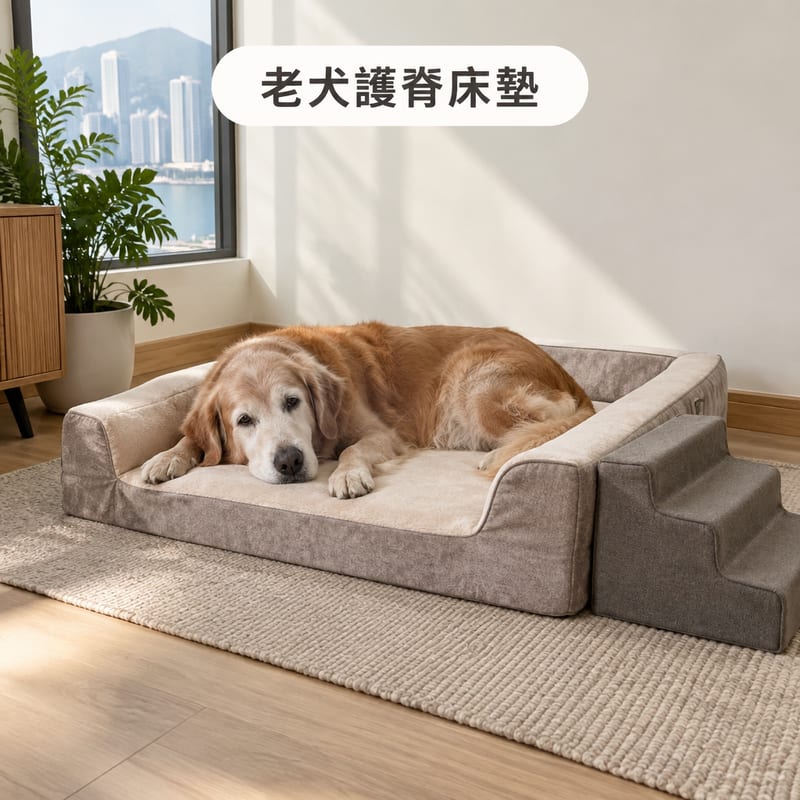
Recommended mattress for old dogs, how to choose a suitable dog bed for senior dogs?
The selection criteria for senior dog mattresses differ from adult dogs, because joints, muscle mass and thermoregulation ability have all changed. Before choosing, do two things: measure the dog's length from nose tip to tail base when stretched out (better too big than too small), and observe its usual sleeping posture — if it likes to lie on its side, choose a flat model; if it likes to curl up or needs head and neck support, choose a low-bolster model.
| Selection point | What senior dogs need | Common mistakes |
|---|---|---|
| Support | Memory foam or a supportive layer, to distribute joint pressure | Cheap foam that is too soft and sinks as soon as it lies down |
| Bolster height | Low bolster for easy getting on and off, while providing head and neck support | High bolster, senior dogs cannot step in and may even fall |
| Base | Non-slip base, paired with non-slip mats or carpet strips | Placed directly on smooth tiles or wooden floors |
| Cleaning | Removable washable cover, wash once a week | Not removable, grows mould after damp |
| Size | Measure nose to tail base, better too big than too small | Estimating size by weight only |
| Getting on and off | Add a step or small ramp at the bedside, no jumping height difference | Mattress placed too high or against a wall corner with no room to turn around |
Besides the mattress itself, environmental coordination is equally important: lay non-slip mats along main walking routes, place food and water bowls at floor level raised 5 to 10 cm, change litter tray or toilet position to a low-sided model. Senior dogs thermoregulate poorly; in winter the sleeping mat should be thicker and moisture-proof, and in summer leave a cool flat surface. For a more complete home modification checklist, see the Pet Mattress Selection Guide and the site's articles on joint care for senior cats and dogs.
The following two models can serve as a starting point; prices are subject to the online store's current listed price:
- PETKIT Deep Sleep Memory Foam Deep Sleep Mattress M (pkb2) — HK$299. Memory foam support type, suitable for senior dogs whose joints need pressure distribution.
- Petio zuttone Senior Dog Ultra-Soft Warming Mat L — HK$345. Focused on softness and warmth, suitable for winter or senior dogs that feel the cold.
What dog cafes are recommended, suitable for bringing dogs along to play?
In recent years Hong Kong has relaxed arrangements for dogs entering food premises, and together with the LCSD's pet shared park network, there are many more places suitable for bringing dogs out than before. To see the latest lists of pet-friendly restaurants, parks and outdoor routes, the most practical approach is to refer directly to the site's compiled Hong Kong Pet-Friendly Places Guide and Dog-Friendly Restaurant Compilation, because lists and opening arrangements are updated with policy, and checking the current version is more reliable than reading old articles.
But "allowed to go" does not equal "suitable to go". Before choosing a cafe, use the following checklist for a quick assessment:
| Check item | What to watch out for | Ideal practice |
|---|---|---|
| Space and foot traffic | Too crowded, music too loud, dogs too close to each other | Choose non-peak hours, seat near the exit |
| Floor | Tiles too slippery, broken bones or cigarette butts | Choose non-slip flooring, keep on leash at all times |
| Drinking water | Only shared human water cups | Bring your own water bowl, do not share with the dog |
| Food | Table food easily fed by hand | State clearly in advance that human food must not be fed |
| Room temperature | No air conditioning or poor ventilation in summer | Avoid midday, keep visits short at 60 to 90 minutes |
| Leaving | Dog already tired, panting or tail tucked | Leave immediately when stress signals appear, do not push through |
There are also several basic requirements for taking dogs out: dogs must be led on a leash or rope, excrement must be cleaned up immediately, dogs must not be left alone sitting on seats, and vaccination and deworming records must be complete. In summer, pay extra attention to heatstroke risk when going out, with short-nosed breeds especially high-risk. Before heading out, check dog heatstroke prevention, and avoid 11am to 3pm. The first time taking a dog to a cafe, it is recommended to sit for 30 minutes first to observe reactions, then gradually extend the time; if the dog keeps trembling, tucks its tail or refuses to sit down, it is not suitable to stay.
When to see a vet immediately
All the home observations above share one common premise: they only help you spot problems early and cannot replace diagnosis. If any of the following appears, do not wait — contact a vet or a 24-hour emergency clinic immediately:
- Abnormal breathing: resting rate persistently over 40 breaths per minute, open-mouth breathing, gums turning purple or white, obvious abdominal effort.
- Circulation and heart warning signs: heart rate persistently below 100 or above 260 beats/minute; sudden hind-leg weakness, dragging, abnormal crying (thrombosis emergency, cannot wait until the next day).
- Behaviour and eating: completely not eating or drinking for over 24 hours, urinary blockage (especially critical in male cats), persistent hissing and hiding in a corner, lethargy and unresponsiveness.
- Season-related accidents: panting, drooling, hot ears and paw pads in high temperatures (heatstroke); red swollen skin or blisters caused by heat pads (low-temperature burns).
- Coat colour and skin: discolouration rapidly expanding within 24 hours, pus, strong odour, or licking and biting until the skin breaks.
- Chewed wires or swallowed foreign objects: contact a vet immediately, and watch for delayed symptoms such as rapid breathing, coughing and drooling over the next 12 to 24 hours.
This article was reviewed by the PetChill Veterinary Editorial Team. The content is for reference only and cannot replace veterinary diagnosis, prescription or treatment.
Common questions FAQ
Q: What behaviours or physiological changes do stress responses in cats usually show?
A: Behaviourally, the most common are hiding, over-grooming, increased lip-licking and swallowing, dilated pupils, sudden refusal to eat or inappropriate urination; physiologically, they include faster heart rate and breathing, hot ears and paw pads, drooling and gastrointestinal discomfort. The key to judging is not a single action, but whether there is an obvious change compared with usual. If there is persistent hissing, not eating or drinking for over 24 hours, urinary blockage or lethargy, see a vet immediately.
Q: How should pet warming products and summer cooling products be used?
A: The principle is to change close-contact items with the seasons, while keeping the environmental temperature steady all year round. In summer, use aluminium or gel cooling mats, raised mesh beds and marble mats, and keep indoors at 26 to 28 degrees as far as possible; long-haired cats can have the fur on their paw pads and belly trimmed short but not shaved completely; in winter, use removable-washable warming pads and blankets, and use the low-temperature setting on heat pads with a towel for insulation to avoid low-temperature burns. When the seasons change, change the sleeping mat first, then adjust the air conditioning and vent positions, observing for a few days after each change.
Q: How can black dogs' fur turning brown be improved?
A: First distinguish the direction: if only the tips have changed colour while the roots are still black, it is mostly UV bleaching or saliva staining, so you can change walk times, address the root cause of itching and use a mild dog shampoo; if even the roots have changed colour, the coat texture has become brittle or there is hair loss, a vet should examine the skin and endocrine system. Fur that has already changed colour cannot be washed back, you can only wait for new fur to grow or trim the tips, and do not use bleach or products marketed as black-enhancing yourself.
Q: Why do cats prefer sleeping on the floor rather than on cat beds?
A: Mainly temperature and sense of security. The comfortable temperature range for domestic cats is about 30 to 38 degrees, noticeably higher than humans' 18 to 25 degrees, so a soft mat in an air-conditioned room may be too cool for them; when the air conditioning is off, tiles conduct heat quickly and are instead a cooling spot. The floor is also a flat surface where they can see all around at a glance and leave in multiple directions. If you want them to use a bed, place it in a spot without drafts, raise it 40 to 60 cm off the ground, and mix in a towel they have used to retain their scent.
Q: How can you tell whether redness in a cat's eyes is related to dietary adjustments?
A: First record the date the redness appeared and whether it matches the timing of changing food or treats. Food sensitivity can cause conjunctival congestion, but redness can also be caused by conjunctivitis, corneal scratches, foreign objects or viruses. If the redness persists for more than a day, is accompanied by discharge, squinting or light sensitivity, you should not wait any longer and should take them to a vet immediately. To confirm a food factor, a dietary elimination trial should be done under veterinary guidance.
Further reading
- Complete guide to daily cat and dog care|Grooming, bathing, nail trimming, ear and eye cleaning schedule
- Why do cats prefer sleeping on the floor rather than on cat beds?
- Full explanation of cat stress responses|Three-level stress scale and vet-visit red lines
- What is a normal cat breathing rate? Observation methods and 6 major warning signs
- Cat and dog winter warmth guide|Heat pad safety and notes for senior cats and puppies
- Long-haired cat summer cooling care|Grooming, trimming and environmental cooling
- How to prevent dogs chewing wires and chargers? Five major home anti-chewing tips
- How to choose a pet bed? Types, sizes and cleaning guide
- Hong Kong pet-friendly places 2026|Restaurants, parks and hiking trails
- Complete guide to cat eye care|Tear stain cleaning and conjunctivitis prevention
In emergencies, contact a vet immediately; this article is for reference only and cannot replace veterinary diagnosis. Information checked as of 2026-10-14Source: PetChill Editorial Team
 Petio full guide →
 Feline Natural full guide →