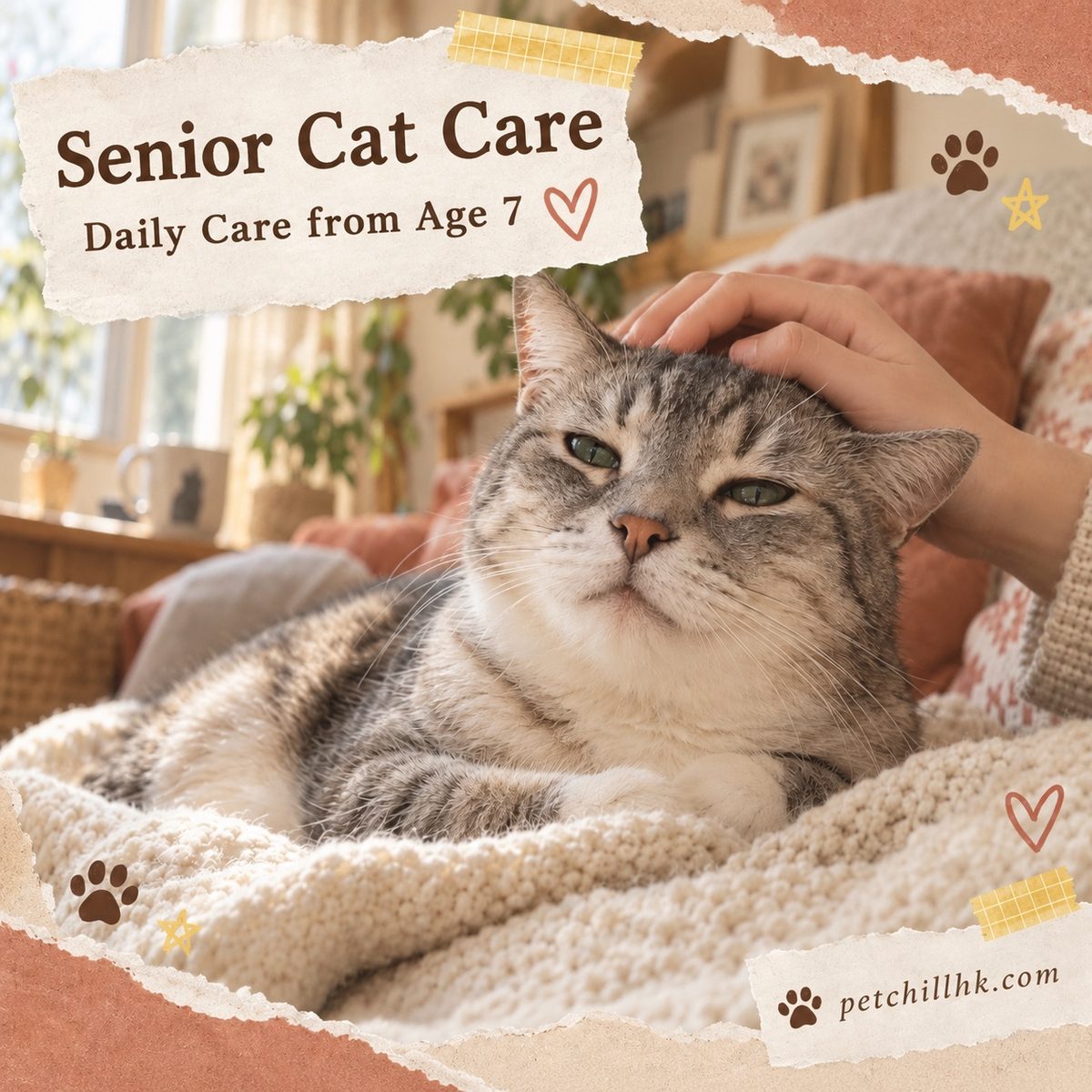
Quick answer: Cats are considered senior from age 7—books record that after 7, organ metabolism gradually deteriorates, activity, vision, and hearing slowly decline, and diseases begin to appear. The average lifespan is about 14 to 16 years, but with careful care they can live to 19 or 20. The core of senior care is: set times and amounts with smaller, more frequent meals; daily observation of water intake and appetite; brushing and nail trimming; adjusting the home environment; watching for behavioural warning signs; and regular check-ups.
At what age is a cat considered senior?
Many cat owners ask: a 7-year-old cat still looks lively, is it really senior? Books answer directly—the senior period refers to middle-aged and older cats from 7 years old. Many cats over 7 look no different from adult cats, but inside their bodies changes have begun: organ metabolism deteriorates, so diseases will gradually occur, and this stage requires closer observation and care.
An age chart makes it clearer (standard weight 3.5-5.5kg):
| Cat age | Roughly equivalent to human | Stage focus |
|---|---|---|
| 3 years | 28 years | Most stable adult stage physically and mentally |
| 7 years | 44 years | Officially enters senior period, switch to senior food |
| 10 years | 56 years | High-incidence period for age-related diseases begins, sleep time lengthens |
| 15 years | 75 years | Claw retraction weakens, trim nails monthly |
| 20+ years | 100 years | More and more indoor cats live to this age |
Books also remind of a concept: 3 months in a cat's life is roughly equivalent to 1 human year. So a senior cat's "wait and see" is equivalent to a human delaying for several months.
5 major body changes in senior cats
The book My First Cat Book PART9 lists the body changes in senior cats that Hong Kong owners should keep in mind for daily care:
- Gradual vision decline: Senior cats' vision gradually deteriorates, but because smell and touch remain sharp and movement slows, owners may not notice without special attention. Be especially careful: cataracts and high blood pressure can cause blindness, so senior cats need regular eye exams and blood pressure checks.
- Hearing deterioration: Sensitivity to external sounds decreases; they may not hear normal volumes and only respond to loud sounds. Not responding to their name may not be "naughty"—they may genuinely not hear.
- Weakened digestion: Digestive ability weakens with age; switch to senior-specific food that is highly nutritious and easy to digest. For detailed food selection, see Senior Cat Food Guide.
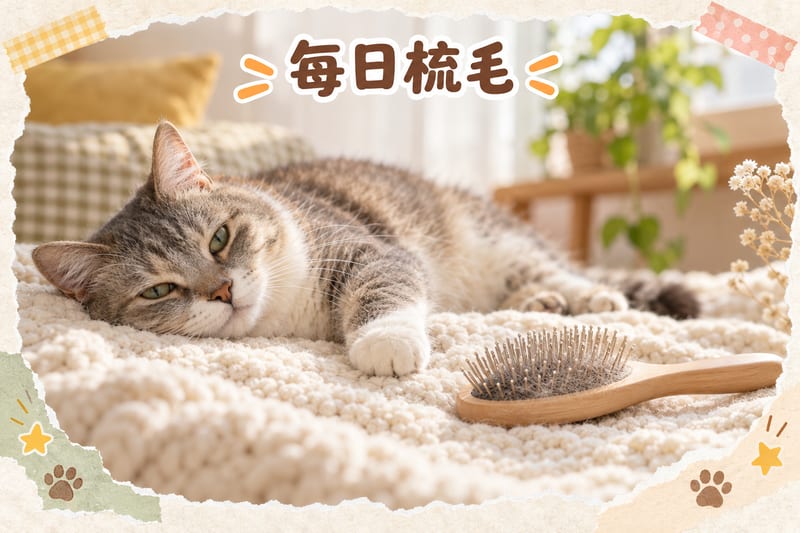
- Poorer grooming: The body is no longer flexible; they can't groom themselves, and long-haired cats especially need help. From about 15 years old, claw retraction weakens, claws stay out, and scratching decreases; trim nails once a month.
- Difficulty adapting to new things: Cats at this age find it increasingly hard to adapt to new items—changing food, moving the litter box, new furniture should all be done slowly, not all at once overnight.
Daily care routine
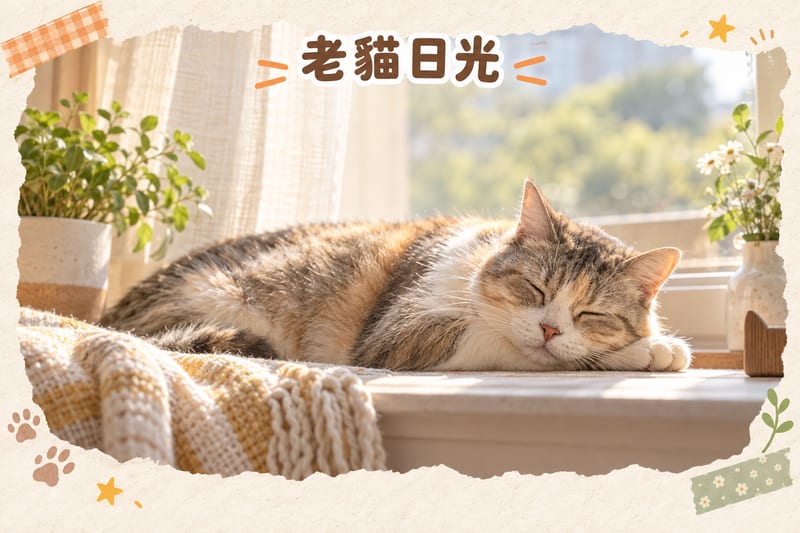
Regularity is most important in senior care. Here is a daily routine you can follow:
| Time | What to do | What to observe |
|---|---|---|
| Morning | Change fresh water, feed first meal, quick brush | Any sudden increase in water intake, appetite, energy |
| Midday | Check litter box, top up water, light interaction | Size and number of urine clumps, stool form |
| Evening | Feed dinner (add a meal for those over 10), play for 10-15 minutes | Willingness to move, walking posture, any limping |
Books recommend: for cats over 10, feed three meals a day with smaller portions to reduce the burden on digestive organs and metabolism; cats that have been fed at set times and amounts since young are less likely to have problems in old age. Also note that senior cats are most afraid of "stress"—keep routine times and the location of food and water bowls fixed long-term.
Home environment adjustments
Books have several specific requirements for a senior cat's home:
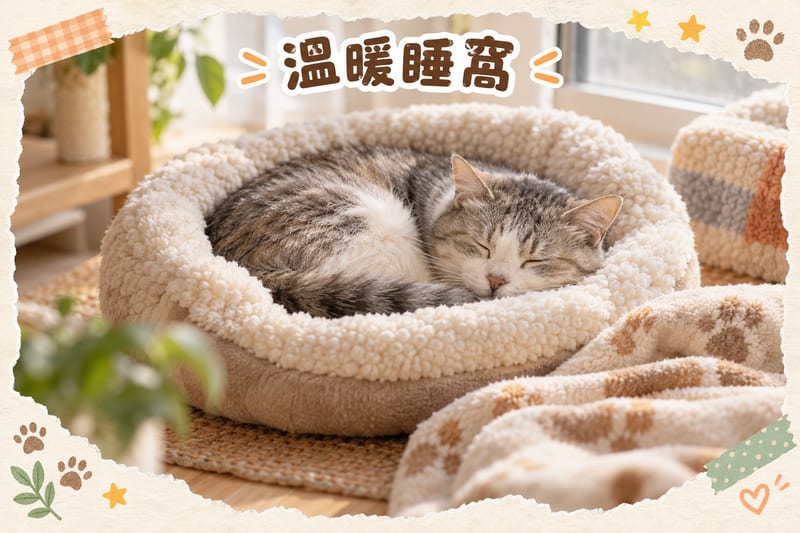
- Warm in winter, cool in summer: Create an environment that doesn't burden the body; turn on air-conditioning in summer, provide a warm mat in winter, and keep room temperature at a level comfortable for humans.
- Keep items lower: Place food bowls, water bowls, and litter box entrances slightly lower than usual so senior cats with joint issues can use them easily.
- Multiple water stations: Place several water bowls in different locations, or use a circulating water fountain, to encourage drinking (kidneys are one of the biggest weaknesses in senior cats).
- An extra litter box: If the litter box is dirty, cats may hold it in and go elsewhere—better to have more litter boxes than fewer.
If you are away from home short-term, prepare in advance: extra food and water, extra litter boxes, adjust room temperature, lock rooms that could be dangerous for the cat, and keep doors to living spaces open. But remember the book's boundary: senior cats cannot be left home alone; for overnight or longer, ask someone to care for them.
Behavioural changes are warning signs
Cats are masters at hiding ageing—an instinct inherited from wild ancestors to appear strong in front of enemies. So abnormalities in senior cats often show only in behavioural details. The book lists these warning signs:
- Drinking more, urinating more—possible kidney disease, diabetes, hyperthyroidism, etc.
- No appetite, food refusal—commonly gingivitis from tartar
- Gradual weight loss—chronic gastroenteritis, hyperthyroidism, or even tumours
- Incontinence—urinary system problems
- Limited flexibility, not jumping to high places—arthritis (cartilage decreases with age, causing pain)
- Timid, sudden aggression—possible decline in vision or hearing
- Bad breath, drooling, "clicking" sound when eating—gingivitis and periodontitis are very common in senior cats, and long-term feeding of only soft food makes tartar accumulate more easily and accelerates deterioration. Such oral problems directly reduce food intake and should not be dismissed as "eating less due to old age". For details, see Senior Cat Dental Care Guide
- Strange crying at night—this is natural in older cats, but hyperthyroid senior cats may also cry loudly after waking early in the morning; if the crying worries you, go to the hospital immediately. For details, see Senior Cat Cognitive Dysfunction Guide
Also be careful of abnormally increased appetite: despite normal feeding, the cat sits by the food bowl waiting and meows for food constantly—books remind this may be a precursor to endocrine diseases such as diabetes or hyperthyroidism. For handling a senior cat that won't eat, see Senior Cat Appetite Loss Guide; for kidney disease: Cat Kidney Disease Guide.
When to get a check-up
No matter how good daily care is, it cannot replace check-ups—books recommend a health check every 3-6 months during the senior period. After 7 years old, cancer incidence rises significantly; after 10, periodontal disease, hyperthyroidism, chronic kidney insufficiency, arthritis, and cognitive dysfunction all enter high-incidence phases. Many of these diseases are hard to helps manage, but early detection and treatment can slow progression. The veterinary book Feline Medicine puts it more plainly: before kidney function drops to a certain level, the body's compensatory mechanisms can leave the cat completely symptom-free, easily overlooked clinically—so don't wait for the cat to "seem unwell" before doing blood tests.
For check-up frequency, items, how to read reports, and practical arrangements in Hong Kong, see the dedicated article: Senior Cat Check-up Guide. Ageing pace differs by breed: Senior Care by Breed; for the whole senior cat care framework: Senior Cat Care Comprehensive Guide.
References
- Agriculture, Fisheries and Conservation Department (Hong Kong Government) — Pet Care Information
- Veterinary Surgeons Board of Hong Kong
- This article's key points are compiled from cat encyclopaedia books such as My First Cat Book, The Cat Family Medicine Encyclopedia, and Feline Medicine.
Related products (available in Hong Kong)
Switching senior cats to wet food and joint supplements are basic expenses in senior daily care; these items are in stock in Hong Kong:
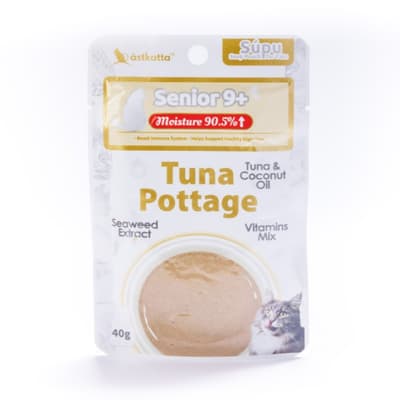
- Astkatta Icelandic Can Senior Cat Formula Tuna Soup Pouch 40g ($8, checked 2026-10-14)
- CIAO Cat Can 14+ Senior Cat Rich Soup Chicken Tuna Scallop 85g (discontinued, original price $9, checked 2026-10-14)
- VetriScience Feline Joint Health Chews 30 tablets ($158, checked 2026-10-14)
The above content is for reference only and cannot replace veterinary diagnosis and treatment. If a senior cat shows any abnormality—not eating, sudden increase in drinking, behavioural changes—please seek veterinary help as soon as possible.
📌 Key summary
- ✅ Senior from 7 years: organ metabolism deteriorates, with good care they can live to 19 or 20
- ✅ Five daily tasks: water, food, brushing, litter box, interaction; for over 10, three meals a day with smaller portions
- ✅ Home adjustments: keep items lower, warm in winter and cool in summer, multiple water stations and litter boxes
- ✅ Behavioural changes (strange crying at night, weight loss, not jumping to high places) are warning signs—don't dismiss as "normal ageing"
- ❌ Leaving a senior cat home alone overnight—senior cats need human care
- ❌ Waiting until the cat "looks unwell" to see a vet—cats hide ageing until very late
⚠️ Some products mentioned in this article are discontinued (marked "discontinued"); the prices are pre-discontinuation records; for other products, please refer to the current prices shown on the online store.
 Feline Natural full guide →
 Astkatta full guide →