Quick answers
- All appetite stimulants are veterinary prescription-only; none can be bought or given on your own. Long-term use carries at least 4 risk categories that a vet must monitor item by item.
- The biggest risk is 'masking the cause': chronic kidney disease, pancreatitis, dental pain and tumours all present as not eating, and eating again after medication does not mean the disease is cured.
- Common side effects include drowsiness, unsteady walking, behaviour changes and gastrointestinal upset, usually appearing within 1 to 3 days of starting the drug; notify your vet as soon as they appear.
- A cat that refuses food completely for 2 to 3 days is already at risk of fatty liver, so 'wait until it stops eating, then give an appetite stimulant' is one step behind.
- Long-term use of hormonal drugs (e.g. megestrol acetate) is linked to diabetes and mammary tumour risk; vets usually use them only short-term or choose another approach.
- Safe use means 'short-term medication + weekly weighing + regular blood tests'; most cases need reassessment after 1 to 2 weeks. Any stopping, reducing or increasing of the dose must be decided by the vet — stopping on your own can cause a relapse.
The question 'What are the potential health risks of long-term appetite stimulant use in pets?' can be broken into 4 categories: masking the underlying cause, cumulative side effects, liver/kidney and metabolic burden, and owners delaying vet visits because 'the pet seems to be eating again'. Appetite stimulants are not poisons, and vets do use them in appropriate situations, but they are positioned as short-term support tools, not long-term supplements, and certainly not over-the-counter medicines you can buy yourself — all pet appetite stimulants in Hong Kong are veterinary prescription-only, and none can be legally purchased.
Why so cautious? Because 'not eating' is a symptom, not a diagnosis. When a cat or dog stops eating, the cause can range from a food change or environmental stress (benign) to chronic kidney disease, pancreatitis, oral pain or even tumours (requiring same-day examination). An appetite stimulant makes the brain 'feel hungry' but does not address any cause; used long-term, the disease continues to worsen under the cover of 'eating on the surface'. For an overall framework on medication safety, see Pet Medication Safety Guide.
What are appetite stimulants? All commonly used drugs require a prescription
Appetite stimulants work by acting on central nervous or hormonal pathways to make pets 'feel hungry' and eat voluntarily; they are completely different from prescription gastrointestinal diets or nutritional pastes — the former are drugs and require a vet's prescription. Vets usually have three prerequisites before prescribing: first, examinations have been done and the cause is known or at least emergencies excluded; second, the pet has already lost weight due to prolonged poor eating; third, there is a clear medication period and follow-up plan. Without these three steps, owners have the right to ask questions before long-term prescribing.
| Drug (generic name) | Main mechanism | When vets typically use it | Common side effects | Concerns with long-term use | Can it be used on your own? |
|---|---|---|---|---|---|
| Mirtazapine | Affects serotonin and histamine pathways, stimulates appetite centre | Chronic disease-related appetite loss in cats, adjunct to vomiting control | Drowsiness, unsteady walking, constant vocalising, behaviour changes | Side effects persist; risk when combined with other serotonergic drugs | No, veterinary prescription required |
| Cyproheptadine | Antihistamine and antiserotonergic, with incidental appetite-stimulating effect | Short-term support for appetite loss in some cats and dogs | Sedation, dry mouth, constipation | Cumulative anticholinergic effects; poor tolerance in older pets | No, veterinary assessment required |
| Capromorelin | Ghrelin receptor agonist, mimics hunger signals | Appetite support mainly in dogs | Vomiting, drooling, over-excitement | Limited long-term data; vets mostly use short-term | No, veterinary prescription required |
| Megestrol acetate | Synthetic progestin, markedly stimulates appetite | A few short-term cases, usually avoided in entire female cats | Thirst, increased appetite, mood changes | Linked to diabetes, mammary tumours, pyometra | No, high-risk drug |
| Diazepam | Sedative, briefly stimulates appetite in cats | Now rarely a first choice | Drowsiness, unsteady walking | Linked to acute liver toxicity in cats | No, rarely used by vets now |
The most important message from this table is that the risk levels of different drugs vary greatly. Capromorelin and cyproheptadine are relatively mild but still require a prescription; megestrol acetate and diazepam are high-risk options that vets consider only after weighing the risks. None of them can be 'bought and tried by the owner'; all 'cat appetite pills' circulating online are prescription-only, and the more immediate danger is dosing: the usual dose of mirtazapine for cats is measured in milligrams, and a single 15 mg human tablet is far above the usual level for a 4 kg cat.
6 potential risks of long-term use
The following 6 items are the risks that really come with the word 'long-term'; short-term cases usually do not encounter all of them.
- Masking the underlying cause — the most serious. A cat with dental pain stops eating because of pain; after medication it eats again but the pain remains, the dental problem continues to worsen, and eventually it becomes a complex case requiring general anaesthesia. A cat with chronic kidney disease relying only on appetite stimulants without fluids and a prescription kidney diet will continue to decline, often reaching an advanced stage by the time obvious symptoms appear.
- Cumulative side effects leading to misjudgement. Mirtazapine's drowsiness and vocalising, and cyproheptadine's sedation and constipation, usually appear within 1 to 3 days of starting. With long-term use, these side effects become the 'normal state', and owners may mistake them for worsening disease, actually masking real changes.
- Drug interactions and serotonin-related risks. Mirtazapine affects serotonin; combining it with other serotonergic drugs (some painkillers, antiemetics) can cause emergency signs such as tremors, raised temperature, fast heart rate and confusion. So before adding any new drug, let the vet know what your pet is taking.
- Metabolic burden on the liver and kidneys. Most drugs are metabolised by the liver and excreted by the kidneys. Pets with existing kidney or liver disease clear drugs more slowly, and the risk of accumulation is clearly higher than in healthy pets. The ideal is blood tests before prescribing and regular rechecks during treatment — do not judge by appearance and 'keep going because it seems fine'.
- Appetite improves but weight keeps falling. This is the most easily overlooked situation. The drug makes the pet eat, but because of malabsorption, chronic enteropathy or tumour consumption, weight can continue to drop. So 'how much it ate' is not enough — you must weigh; weight is the only indicator that does not lie.
- Specific risks of hormonal drugs. Megestrol acetate is a synthetic progestin with a strong appetite-stimulating effect, but long-term use is linked to diabetes, mammary tumours and pyometra; vets usually use it only short-term and avoid it in entire female cats. Diazepam can briefly stimulate appetite in cats but is linked to acute liver failure and is now rarely a first choice.
A common question: appetite stimulants do not cause drug-style addiction and there are no withdrawal symptoms, but 'behavioural dependence' does exist in practice — owners add medication as soon as the pet stops eating, and every follow-up ends in a dose increase rather than investigating the cause. Medication should be treated as a time-limited tool.
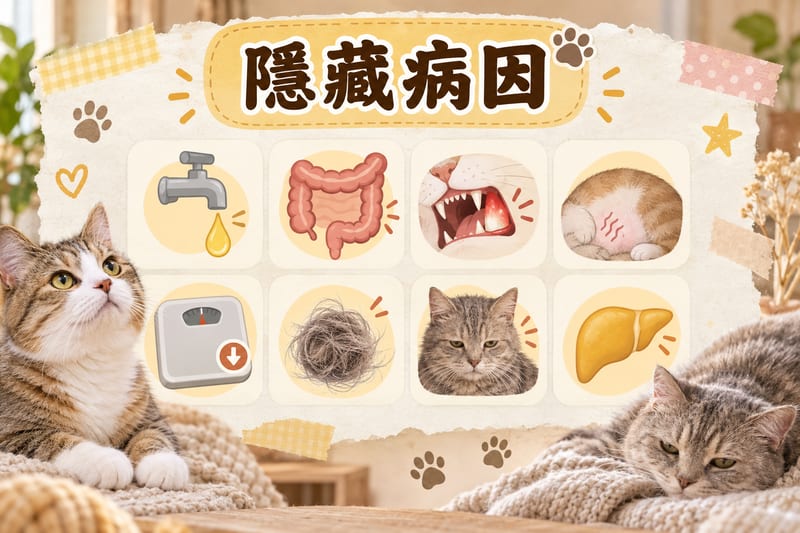
Different causes, very different risks: 8 situations appetite stimulants cannot help
To judge how dangerous 'long-term use' is, the key is not the drug itself but the underlying cause. The following 8 are the most common hidden causes, each requiring separate management.
| Surface symptom | Common underlying cause | Can appetite stimulants help? | What happens if untreated |
|---|---|---|---|
| Gradually eating less, plus increased drinking and urination | Chronic kidney disease, diabetes | Only briefly improves intake | Kidney function or blood sugar continues to deteriorate |
| Fluctuating appetite, weight falling | Chronic enteropathy, gastrointestinal lymphoma | Almost no help | Malnutrition worsens, diagnosis delayed |
| Wants to eat but avoids food, drops food, drools | Oral pain, periodontal disease, tooth resorption | No help; pain remains | Oral infection spreads, anaesthetic risk rises |
| Suddenly stops eating completely, low energy, hunched posture | Pancreatitis, acute abdomen | Should not be used | Needs same-day fluids and pain relief |
| Good appetite but weight keeps falling | Hyperthyroidism, diabetes, parasites | Not needed; opposite direction | Metabolic problems continue, cardiac burden increases |
| Intermittent not eating plus vomiting | Foreign body, hairball, gastritis | Risk of masking symptoms | May delay until intestinal obstruction |
| Senior cat eating less, poor coat | Chronic disease, tumour, kidney disease | Only surface improvement | Misses early intervention window |
| Suddenly stops eating completely, then jaundice | Fatty liver, liver disease | Should not be used | Emergency; requires hospitalisation and feeding |
This table makes one key point: appetite stimulants address the behaviour of 'not eating', not the question of 'why it is not eating'. For any case in the table, what is really needed is blood tests, urinalysis, imaging and oral examination, not another box of medicine; many owners first search online for 'appetite pills', spending money and wasting the most valuable diagnostic time.
The real cost of long-term poor eating in cats and dogs
Some owners think 'if it doesn't eat, let it be — it'll eat when hungry', or the opposite, rushing to use drugs to make it eat. Both extremes are undesirable; here are the costs in practical terms.
Cats are at greatest risk. A cat that refuses food completely for 2 to 3 days is already a clinical warning sign. Cats have a different metabolic design from dogs; prolonged fasting mobilises large amounts of fat to the liver, and if the liver cannot cope it becomes fatty liver (hepatic lipidosis), requiring hospitalisation and feeding via nasogastric or oesophageal tube, with treatment lasting weeks; overweight cats are at higher risk. So for cats the safest approach is 'don't wait' — act if intake drops sharply for two consecutive days.
Dogs tolerate it better, but there is still a limit. Dogs can tolerate longer periods of reduced intake, but if weight falls to 5% to 10% of original, it should be treated as a line requiring full investigation. Puppies have fewer reserves; if they stop eating completely for more than 12 to 24 hours, seek veterinary care, because hypoglycaemia and dehydration progress quickly.
Thresholds should be halved for senior and young pets. Cats and dogs over 10, and kittens and puppies under 6 months, have fewer metabolic reserves and dehydrate quickly; the observation window should be shorter than for healthy adults; using appetite stimulants to 'hold things over' is riskiest at this time. Long-term poor eating also causes intestinal mucosal atrophy and reduced immunity, creating a vicious cycle of eating less and having less energy to eat, so neither 'wait for it to get better' nor 'rely on drugs to hold on' works.
How do vets use these drugs safely? A 5-step monitoring framework
If a pet genuinely needs appetite stimulants after veterinary assessment, the following 5 steps are the difference between 'safe use' and 'dangerous misuse'.
- Diagnose first, then prescribe. At minimum basic blood tests, plus urinalysis, imaging or oral examination as needed, to exclude emergencies; this step cannot be skipped.
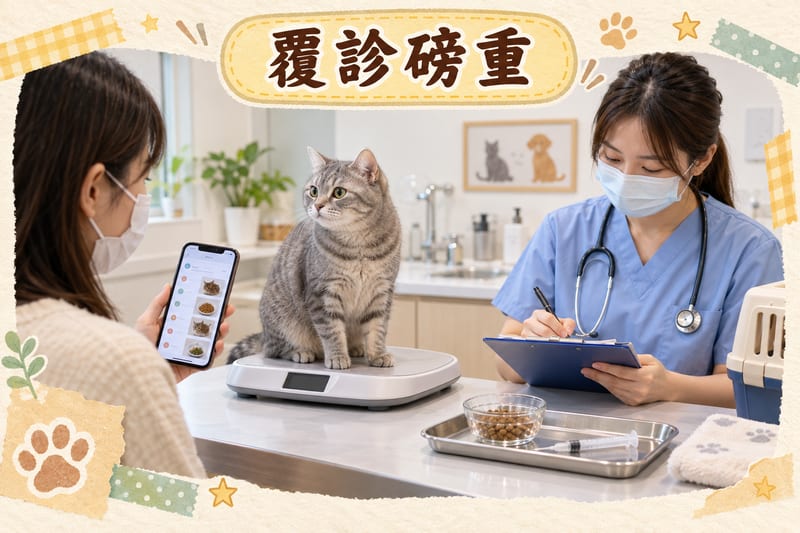
- Set a time limit. Most cases need reassessment after 1 to 2 weeks; the follow-up date should be booked on the day of prescribing.
- Record intake daily. Use the same bowl and same food and record actual grams, not 'looks like it ate half'.
- Weigh weekly. Use the same pet scale at the same time, because weight is the only objective indicator of nutritional status.
- Regular blood tests. The frequency of liver and kidney function, electrolytes and blood glucose checks is decided by the vet, and follow-up is needed both during and after treatment.
| Monitoring item | Suggested frequency | Warning line (notify vet immediately) |
|---|---|---|
| Weight | Once weekly | Drop of 5% or more in one week |
| Food intake | Daily record | Eating less than half normal for 2 consecutive days |
| Energy and behaviour | Daily | Drowsiness, tremors, constant vocalising after medication |
| Water intake and urine output | Daily | Sudden marked increase or decrease |
| Blood tests (liver/kidney, electrolytes, glucose) | Decided by vet, usually 1 to 4 weeks | Values clearly deviating from previous results |
| Oral examination | Weekly | Drooling, avoiding hard food, chewing on one side |
6 questions to ask at the vet visit
- What is the cause? Have emergencies been excluded?
- Is this drug short-term or long-term? How long is it planned?
- What should I record daily?
- Which side effects mean I should stop the drug immediately and call the clinic?
- Do I need to adjust the diet at the same time, such as a prescription diet?
- When is the follow-up? Will blood tests or imaging be repeated then?
If a pet's appetite worsens while on antibiotics, the approach is different from chronic disease. For these cases, see Why do cats lose appetite after antibiotics? and How to manage antibiotic side effects in pets — first work out whether it is a drug reaction or the disease itself, rather than rushing to add an appetite stimulant.
4 traps Hong Kong owners fall into most easily
Trap 1: Using human or family members' medicine. Human mirtazapine and cyproheptadine tablets are adult doses, many times the usual pet dose; cutting a half-tablet can still overdose and is the most dangerous practice.
Trap 2: Treating 'supplements' as 'drugs'. Nutritional pastes and appetite powders sold in pet shops or online are supplements; they cannot claim to treat poor appetite and cannot replace diagnosis. They can be discussed with a vet as support, but treating them as treatment delays the condition.
Trap 3: Reusing old medicine. Leftover medicine from a friend or from last time may not match the current weight and condition in formulation or dose, and storage conditions and expiry dates are uncertain.
Trap 4: Increasing the dose or continuing long-term on your own. 'It's eating well, so keep going' is the most common reason for delayed veterinary care; when the medication period ends, a follow-up is due.
Medication safety extension: parasite control during oral medication — choose the formulation by weight
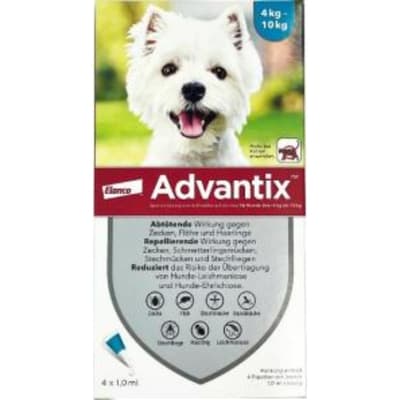
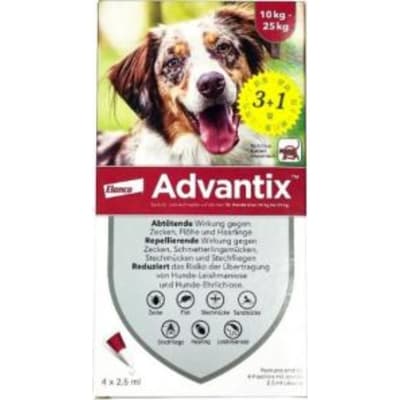
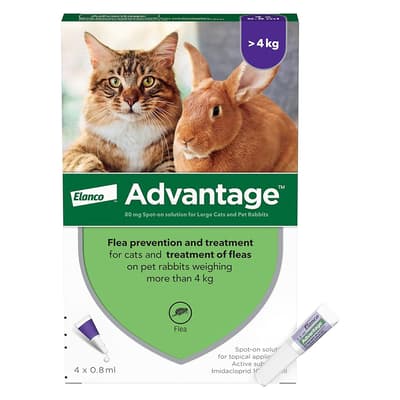
Many owners also need to deal with fleas and ticks while their pet has gastrointestinal problems or poor appetite. Two iron rules apply: first, dog spot-on products must never touch cats — products containing permethrin are highly toxic to cats; second, use pet-specific formulations graded by weight. The following are examples available at PetChill's online shop, to illustrate the principle of choosing by weight:
- Elanco (Bayer) Advantix for Dogs 4kg-10kg, 1 box of 4 pipettes (X-02) — HK$295
- Elanco (Bayer) Advantix for Dogs 10kg-25kg, 1 box of 4 pipettes (BAX250) — HK$318
- Elanco (Bayer) Advantage for Cats 4-8kg, 1 box of 4 pipettes (BAC80) — HK$195 (available for pre-order)
Prices and stock are subject to the online shop's current listed price.
Note that whether oral or topical, if your pet is taking veterinary-prescribed medication, ask your vet before adding any new product, because some ingredients interact.
If a pet accidentally ingests something or there is a dosing problem, do not rely on online calculators to judge yourself; take the packaging to the clinic immediately. For the process, see Emergency pet drug dose management.
Further reading
- Pet Medication Safety Guide | Dosage, side effects, accidental ingestion (2026)
- Why do cats lose appetite after antibiotics? Causes and management
- How to manage antibiotic side effects in pets: what to watch and when to see a vet
- Emergency pet drug dose management | Accidental ingestion and overdose
In an emergency, contact a veterinarian immediately; this article is for reference only and cannot replace veterinary diagnosis.
Information checked as of 2026-10-12 · Source: PetChill editorial team
 Almo Nature full guide →