
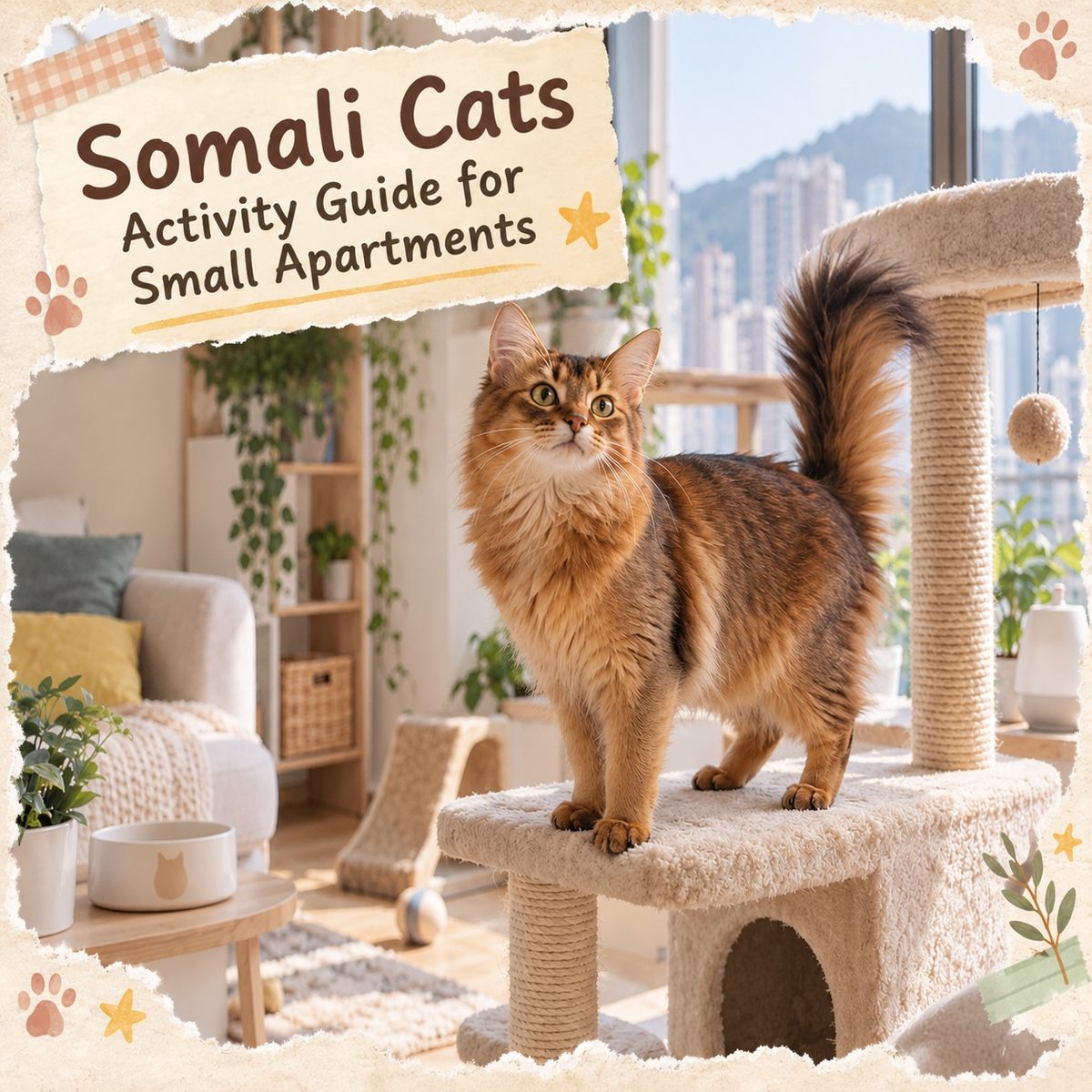
Quick answer: Somali cats can be kept in Hong Kong, and the key is not how big your home is but three things: enough vertical space (tall cat trees and shelves), sufficient air-conditioning and dehumidification (they tolerate neither heat nor humidity well), and whether the law and deed of mutual covenant allow it. Do these three well, and even in a 300-400 sq ft flat, a Somali cat can live comfortably.
Want to learn more about Somali cats? Continue reading the series below.
1. Overview of key points for keeping in Hong Kong homes
| Item | Recommendation | Reason |
|---|---|---|
| Space planning | Focus on vertical, add tall cat trees and shelves | Medium-to-large light body needs climbing height |
| Temperature management | Air-conditioning or fans all day in summer, multiple water stations | Not tolerant of high heat and humidity, prone to dehydration |
| Humidity management | Dehumidifier to keep dry, regular washing of cat beds | Semi-long coat tangles easily, skin problems likely |
| Sunlight arrangement | Avoid direct midday west sun, leave shaded spots | Prevent heatstroke and coat quality deterioration |
| Interaction time | Two to three scheduled play sessions daily | High social needs, more important than space |
| Regulation check | Check public housing policy, building deed, landlord consent | Don't buy a cat only to find it's not allowed |
2. Space planning: go vertical, not fight for floor space
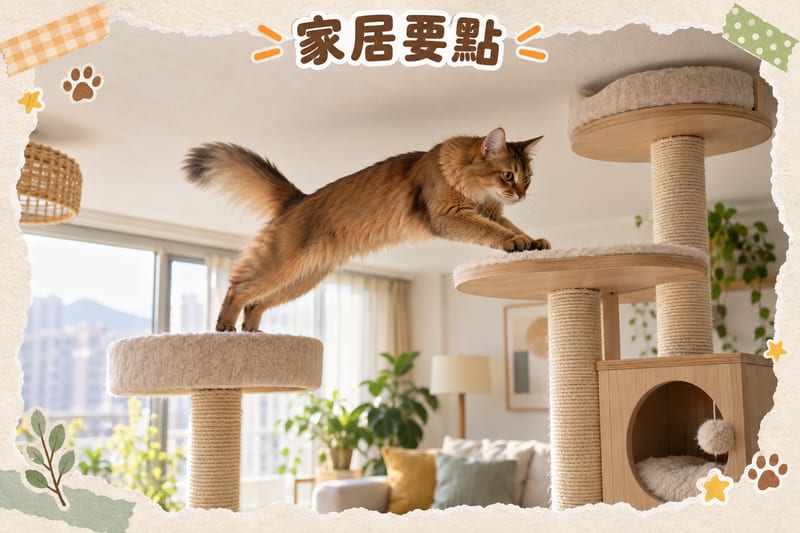
Hong Kong flats are limited in area, but what Somali cats really need is height. They are climbing cats, and vertical routes are far more important than floor area. Practical approach: choose a sturdy tall cat tree as the main base, add several shelves along the wall to connect high spots, and turn the window sill (with window screens installed) into a viewing platform. This way, a 300-400 sq ft flat can effectively multiply its activity space several times. Note that the cat tree base must be heavy enough; Somali cats have strong sprinting and jumping power, and lightweight cat trees will be knocked over. If space is really tight, consider using bookshelf tops and wardrobe tops with soft cushions to connect the whole home into a loop route; Somali cats will develop their own routes, you just need to lay the 'infrastructure'. Also, window screens must be installed properly; they are agile, and windows without screens are high-risk accident spots.
3. Climate management: two lines of defence against heat and moisture
Hong Kong summers are hot and humid, a double challenge for Somali cats. For heat prevention: keep air-conditioning or at least fan convection during hot periods, provide multiple water stations (they don't drink much, so actively encourage), and avoid direct midday west sun. For moisture prevention: use a dehumidifier to keep indoor air dry, brush frequently to keep the undercoat ventilated, and regularly wash and dry cat beds and sleeping mats. During the plum rain season, pay special attention to ear canals and paw pads; when humidity is high, skin problems and tangles increase. Winter is less of a problem as their undercoat provides warmth, but kittens and senior cats should still avoid direct cold drafts. Also, Somali cats have low water intake; in summer use a flowing water fountain to encourage drinking and reduce urinary risk; in winter indoor heating dries the air, so a humidifier can balance it. In the long run, setting up a fixed, cool, quiet rest corner for the cat helps greatly with adapting to Hong Kong's climate.
4. Seasonal care schedule
| Season | Care focus | Special attention |
|---|---|---|
| Spring (humid) | Dehumidify, brush frequently, check skin | Peak time for tangles and skin problems |
| Summer (hot) | Air-conditioning, water, prevent heatstroke | Watch for decreased appetite and rapid breathing |
| Autumn (shedding) | Increase brushing, hairball gel | Hairballs and digestive burden |
| Winter (dry cold) | Warm sleeping nest, maintain activity | Kittens and senior cats avoid direct cold drafts |
This schedule is not rigid rules but a reminder to adjust focus by season, not use the same routine all year. In summer, if appetite drops noticeably or breathing is rapid, cool them down immediately and seek veterinary advice.
5. Legislation and living conditions: must check before deposit
Hong Kong public housing estates generally do not allow cats, except special cases such as guide dogs. For private buildings, check the building's deed of mutual covenant and owners' incorporation rules; some estates explicitly prohibit pets. For rented units, obtain the landlord's written consent first and state it in the tenancy agreement. This step cannot be omitted—every year owners have to give up their cats because they didn't check. Before paying a deposit, please confirm your unit's permission status. Also consider neighbours on the same floor—Somali cats are active, and nighttime running and jumping can transmit sound; lay mats on wooden floors to reduce noise and avoid complaints. If the unit really doesn't allow cats, consider moving or postponing cat-keeping plans; don't take chances.
6. Somali cat vs Maine Coon: Hong Kong adaptability comparison
People searching 'Abyssinian cat Hong Kong' or 'are Maine Coons afraid of cold' often compare several long-haired breeds. Maine Coons are large, with high food intake, litter usage and space needs, heavier for small Hong Kong flats; Somali cats are medium-to-large, light and agile, satisfied with vertical space, and have lower daily care and food costs. Both are sensitive to heat and humidity and rely on air-conditioning. If you have a small Hong Kong flat and want a long-haired cat, the Somali is usually the relatively easier choice; if you insist on a Maine Coon, reserve more space and budget. Whichever breed you choose, you face the same climate challenges in Hong Kong; the difference is only in size, food intake and care workload.
7. New owner's first-month preparation checklist
| Item | Recommended action |
|---|---|
| Space | Install tall cat tree, shelves and window screens before welcoming the cat |
| Climate | Trial air-conditioning and dehumidifier settings to find the most comfortable temperature and humidity |
| Supplies | Large litter box, scratching post, grooming tools, puzzle toys all ready |
| Medical | Choose a nearby veterinarian, arrange initial check-up and record baseline |
| Routine | Establish no-counter rules, scheduled feeding and daily play sessions |
| Regulations | Reconfirm tenancy agreement, deed of mutual covenant and estate rules are correct |
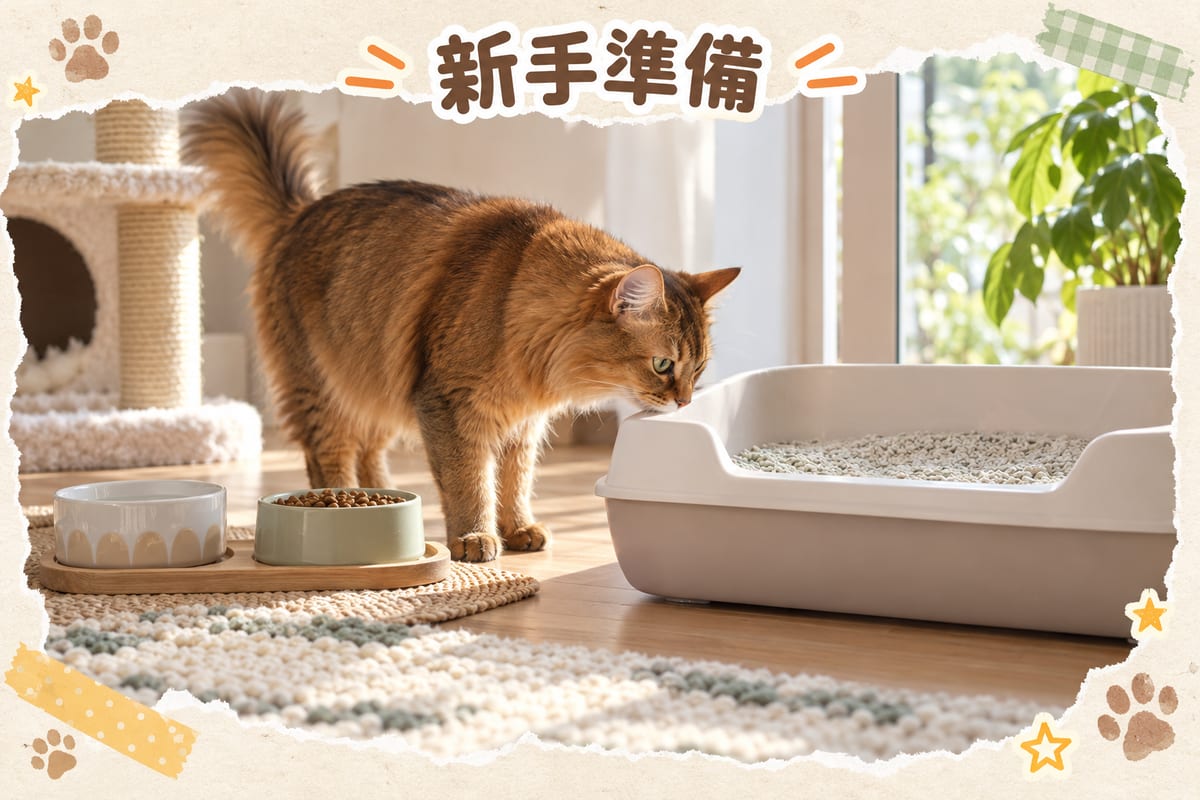
The first month's focus is 'establishing rhythm': fixed feeding, fixed play, fixed cleaning; Somali cats adapt quickly. The earlier the routine is established, the fewer frictions later—especially important for highly interactive breeds. If there are children or other pets at home, give plenty of space to observe interactions in the first month; don't rush to force closeness. Also, record daily food intake and litter box habits in the first month to detect signs of maladjustment early.
Key summary
- ✅ Keeping Somali cats in Hong Kong: three things decide success—vertical space, air-conditioning and dehumidification, legal permission
- ✅ Area is not the problem, height is—tall cat trees and shelves are essentials
- ✅ Sensitive to heat and humidity: summer air-conditioning plus water, rainy season dehumidification plus frequent brushing
- ✅ Before deposit, definitely check public housing policy, building deed of mutual covenant and landlord consent
- ✅ Compared with Maine Coons, Somali cats are lighter and lower cost, more suitable for small flats
- ✅ Interaction time is more important than space; long-working families should plan activities in advance
Related reading
- Somali cat price and adoption guide
- Full list of Somali cat disadvantages
- Somali cat weight and size full analysis
- Tall cat trees, dehumidifying supplies and cat sleeping mats: get them all at PetChill pet supplies.
This article is general care information; whether your unit allows cats should be based on public housing policy, building deed of mutual covenant and tenancy terms; for health issues please consult a registered veterinarian.



