
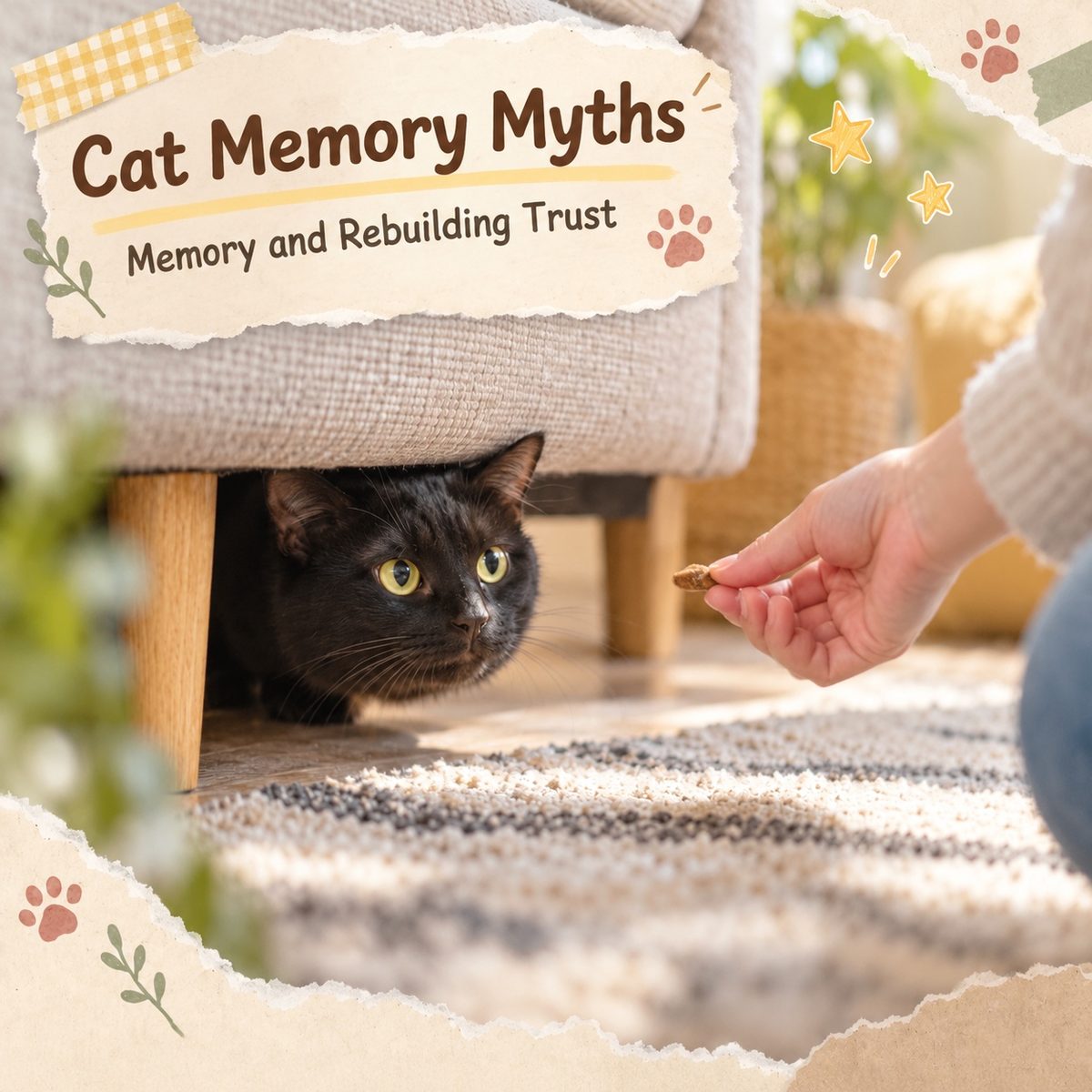
Quick answer: Cats don't hold grudges; they use avoidance to stay away from people, things, and places that once made them uneasy. As long as you build positive associations through space, treats, gentle interaction, and slow blinking, trust can be rebuilt at any time.
Let's start with the conclusion: cats don't hold grudges; they avoid—they remember people, things, and places that made them uneasy, and then avoid them. This is a survival instinct, not revenge. Fortunately, cats are also associative animals: with space + treats + gentle interaction + slow blinking to build positive associations, trust can be rebuilt. This article explains the mechanisms of cat memory and a five-step repair method.
Do cats hold grudges?
Cats don't truly hold grudges, but they remember unpleasant experiences:
- They remember environments and people—a fall, being shouted at, being punished: they link "this person/this place = unsafe" and then avoid it.
- It's not revenge—many people think a cat giving them the cold shoulder for days is revenge, but cats have no concept of revenge; they simply avoid unpleasantness happening again (psychologically called "aversion").
- Memories are emotionally charged—experiences tied to survival and happiness (good food, comfort, being frightened) are remembered especially vividly.
So next time your cat avoids you, don't think they're holding a grudge—they just want to avoid uncomfortable associations and are waiting to see if there's new evidence from your side.

How good is a cat's memory, and how long does it last?
- Short-term memory—on the order of minutes, e.g., temporarily shifting attention, not finding something hidden.
- Long-term memory—can last from days to a lifetime, especially experiences related to survival/happiness: tasty food, comfortable spots, frightening moments.
This explains two things: first, why a cat can remember a scary renovation noise from a year ago; second, why repeated positive experiences can also be remembered for a lifetime—holding grudges is a misunderstanding, remembering kindness is instinct.
Your cat misunderstood you: five steps to rebuild trust
- Don't force it—if they don't want to be held, don't hold them; give space and let them come out on their own; the more you chase, the more scared they get.
- Rebuild associations with treats—feed at set times and places, put down treats and walk away, so "you appearing = good food."
- Gentle interaction—speak softly, move slowly, gently stroke from the chin and behind the ears, avoid the belly and tail.
- Slow blink—slowly blink at your cat and close your eyes for a second; it's the cat world's way of saying "I mean no harm." If they blink back, that's progress.
- Give time—cats warm up slowly; days to weeks is normal, and they set the pace.
Core logic: cats are associative animals—you can't explain "it was an accident" with words, but you can override old negative associations with one treat at a time and one slow blink at a time.
These behaviours aren't grudges
Many behaviours interpreted as "revenge" actually have other causes:
| Behaviour | Common misunderstanding | Real cause |
|---|---|---|
| Peeing on the bed/sofa | "Revenge" | Urinary tract disease, stress, litter box issues |
| Scratching the sofa | "Holding a grudge" | Marking, stretching, overgrown nails |
| Avoiding you for two days | "Still angry" | Fright hasn't faded / not feeling well |
| Sudden hissing | "Turned hostile" | Reflex to pain or fear |
⚠️ Pay special attention: sudden behavioural changes (a normally affectionate cat suddenly not letting you near, inappropriate urination, hiding)—first consider pain and illness, then "emotional issues." Older cats and sick cats are most likely to be aggressive due to pain. If there's persistent poor appetite, lying around not coming out, or rapid breathing, see a vet immediately.
Prevent from an early age: don't create "grudges"
- Don't use loud scolding, hitting, or water spray bottles for discipline—these only teach the cat "fear you," not "don't do that."
- Pair grooming like nail clipping and wiping with treats, do it in several short sessions, don't try to get it all done at once.
- Before events like guests or renovations, set up escape spots in advance (cardboard boxes, high places, pheromones).
- Introduce a new cat gradually with isolation, don't force "everyone to be friends."
Multi-cat households: do cats hold grudges against each other?
"Cold wars" between cats are also avoidance associations, not hatred:
- After a fight—the losing cat will avoid the winner and the location of the conflict; this is normal self-protection, not "petty."
- How to make peace—separate feeding stations, litter boxes, and sleeping spots to reduce meeting stress; when reintroducing, use a screen door to exchange scents + positive associations with treats on both sides.
- Don't "administer justice"—punishing the winner only makes them associate "being punished" with "the other cat nearby," escalating conflict.
- Long-term avoidance—increase vertical space and escape routes; each cat needs food, water, and toilet routes that aren't guarded.
Will my cat be "angry" if I'm at work all day with no time to keep them company?
They won't be angry, but they will be bored and anxious. Problem behaviours in solo cats (night crying, scratching, over-grooming) mostly stem from energy and stress having no outlet:
- Feed a meal before leaving + food puzzle toys (treat balls, treats hidden in boxes).
- Play with a wand toy for 10–15 minutes when you get home to burn off hunting energy.
- A window perch for bird-watching and a cat tree are "self-entertainment systems" that last longer than new toys.
You misunderstood your cat: these aren't "revenge"
- Peeing on the bed—mostly urinary tract disease or stress; see a vet first.
- Knocking things over—excess energy at night, not hatred.
- Standing in the litter box looking at you—interpreting that as a "guilty" look is human projection; cats have no concept of guilt, they just don't understand what you're doing.
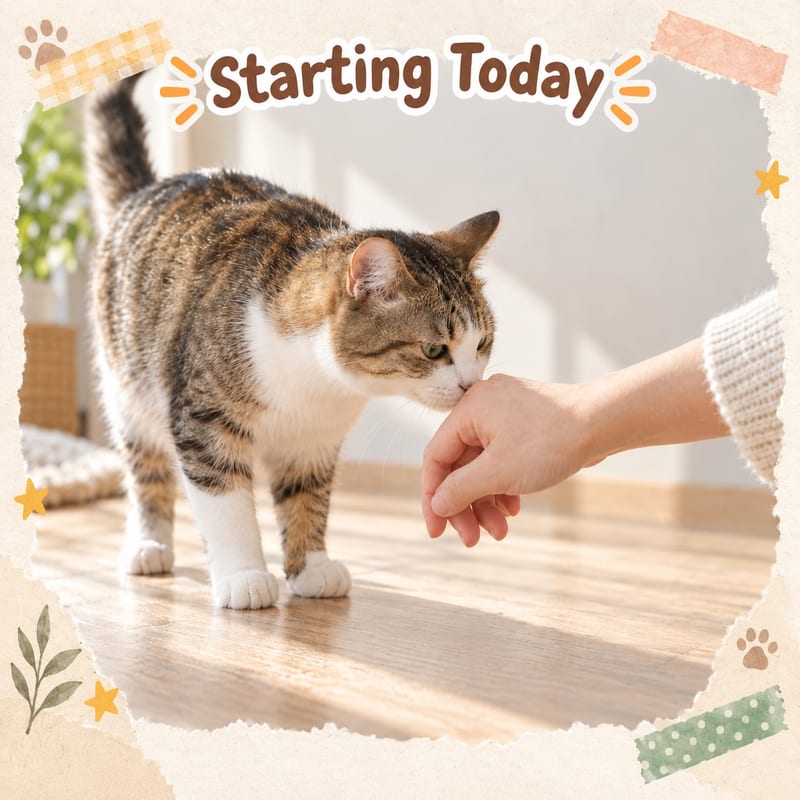
What you can do starting today
- Think back over the past week or two for anything that scared your cat; give them quiet space and don't chase after them to make up.
- Sit down at a set time each day, slowly blink at your cat, and place treats beside you.
- Use feeding to build a daily association that "you = good food."
- If behaviour changes suddenly along with poor appetite or low energy, book a vet first.
- The whole family should be consistent: no shouting, no forced holding, reward after grooming.
To learn more about cats' body language and trust signals, see PetChill's cat behaviour guide and trust signals collection.
This article is for reference only; consult a registered veterinarian for any concerns.
Further reading
PetChill Cat Behaviour Team — Hong Kong's most authoritative pet knowledge platform
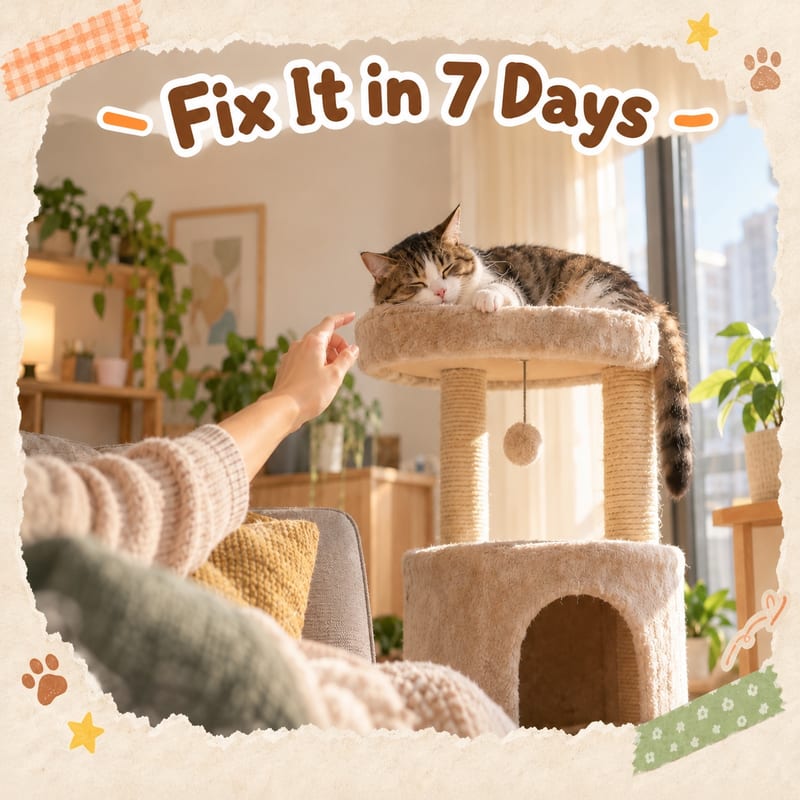
Hong Kong small-flat practical guide: a 7-day timetable for the five-step trust rebuild
Hong Kong homes are small, and if a cat has no way out, they get more scared. The following 7-day timetable is designed for 300–400 sq ft units, using all five steps from the article—no new elements needed.
Day 1–2: Give space
- Move the litter box, water, and food to a corner of the room or on top of a wardrobe, and leave an "escape line"—for example, a cat tree from under the bed to the top of the wardrobe so they can avoid foot traffic in the living room.
- Family agreement: don't disturb the room these two days; knock three times before opening the door and wait 5 seconds so the cat can prepare.
Day 3–4: Rebuild associations with treats
- Every morning before leaving and every evening when you get home, place 3–4 pieces of freeze-dried treats at the door of the room, then walk away. The cat hears your footsteps = food, and starts building a positive link.
- If the cat is willing to eat in front of you, gradually move the treats closer to your feet, by 20 cm each day.
Day 5: Gentle interaction
- Sit on the floor in the room, lower than the cat, to avoid looming over them. Start with the "gentle stroke from chin and behind ears" from the article, stop after 3 seconds each time, and watch the cat's reaction before deciding whether to continue.
Day 6: Slow blink
- Turn off the TV and main lights, leave a night light on. Slowly blink at the cat, one second per blink. If the cat blinks back, reward with a treat; if no response, wait patiently and don't press.
Day 7: Check progress
- If the cat is willing to sleep next to you or rub against your legs, trust is starting to return. If they're still hiding after seven days and appetite has clearly dropped, book an appointment at a 24-hour vet clinic on Hong Kong Island or Kowloon to rule out pain.
Tip: Hong Kong summers with air-conditioning can be dry, so remember to put a cup of water in the corner where the cat often hides to reduce tension from thirst. Keep the same feeding times throughout—a stable rhythm is key.
📌 Key points
- ✅ A cat avoiding you is an avoidance instinct, not revenge
- ✅ Treats + slow blinking can override negative associations
- ❌ Forced holding and chasing to make up only increase fear
- ❌ Inappropriate urination and scratching the sofa aren't grudges—see a vet first
- ✅ Multi-cat homes: use zoning + vertical space to reduce conflict
 Wellness Core full guide →