
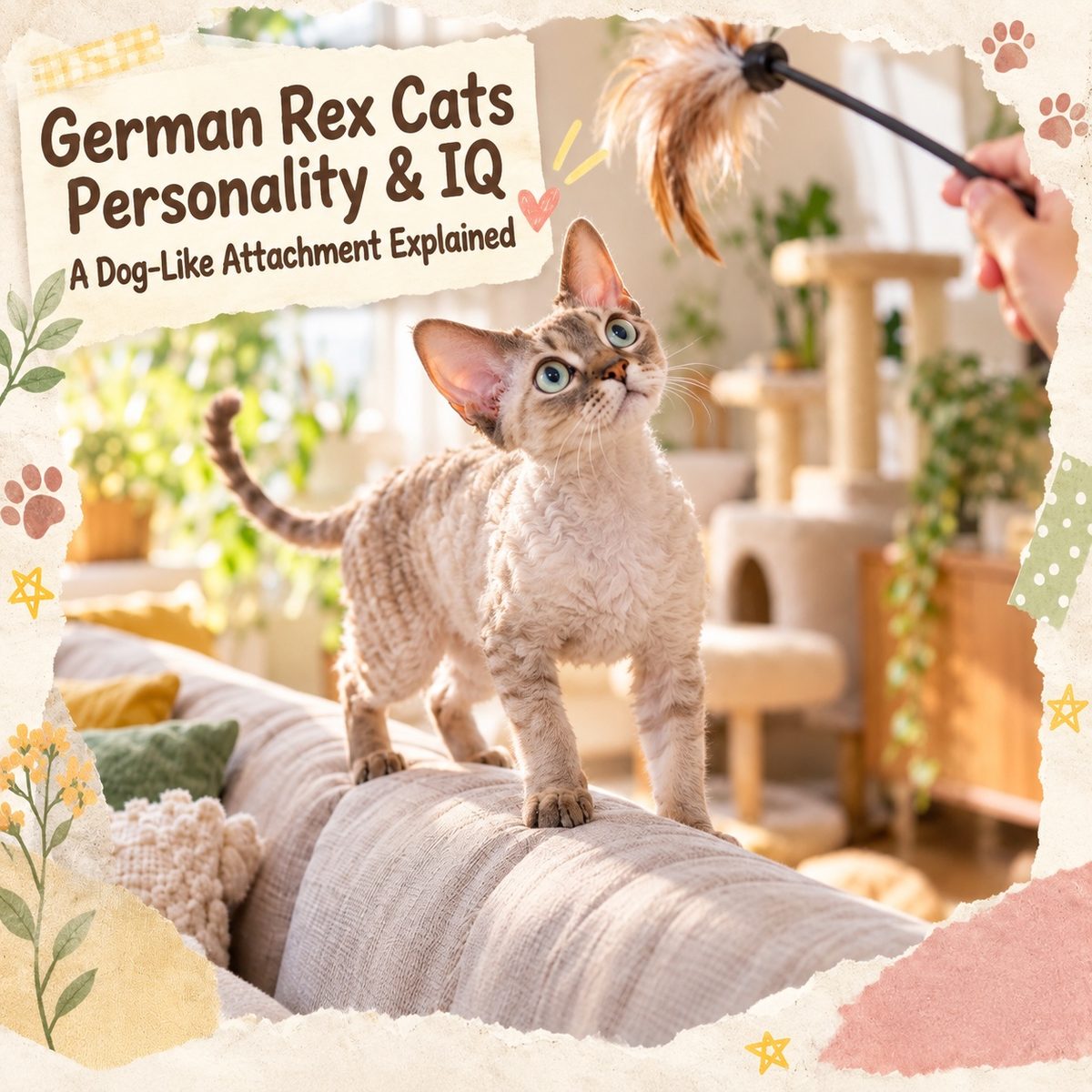
Quick answer: The Devon Rex personality can be summed up in four words: clingy, mischievous, curious, dog-like. Devon Rexes are extremely affectionate, love to follow you around and jump onto your shoulder; at the same time they are playful, active and bursting with curiosity. In terms of intelligence, their problem-solving and interactive learning are above average, but obedience is only moderate—they are not the 'come when called' type. They generally get along with children and usually with other cats and dogs, but they need more daily interaction and play than a typical cat.
Want to know more about the Devon Rex? Keep reading the series below.
1. Devon Rex personality: clingy, mischievous, curious, dog-like
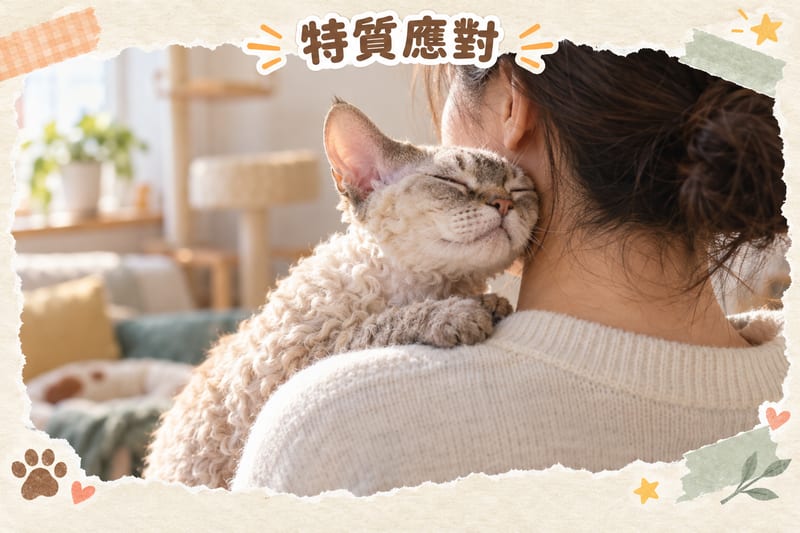
Clingy—The Devon Rex is a famous 'companion cat', loving to follow their owner everywhere: shoulder-sitting, keyboard-sitting, bed-burrowing. Mischievous—They are playful and active, love jumping high, playing with water, opening drawers and cupboard doors, and are full of energy. Curious—They react quickly to new things, love to observe and join in, unlike the slow-to-warm-up, hiding type of cat. Dog-like—They respond strongly to people, will play interactive games and show 'greeting the owner' behaviour; many owners describe them as acting more like a small dog. Understand these four points and you'll see why they're described as 'the least cat-like cat'.
This personality makes the Devon Rex especially suited to people who want an interactive companion, but it also means they cannot be left alone for long periods. If your life is nine-to-nine and no one is home to keep them company, their clinginess turns into stress—for them and for you. Before choosing this breed, honestly assess how much time you can spend interacting each day.
2. Devon Rex intelligence: two kinds of intelligence to look at separately
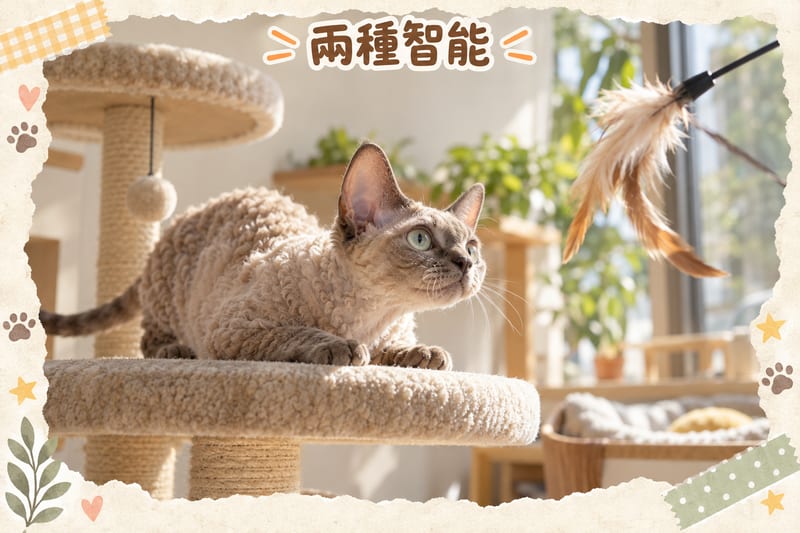
When talking about cat intelligence, you need two lines. For problem-solving and interactive learning, the Devon Rex is above average among cats: they quickly learn to open doors, play treasure hunts, recognise toy names and learn small tricks—they are naturally curious and willing to try. The other line is obedience: they are strong-willed and have their own ideas, not the type to follow orders obediently. Training should use rewards and games, not loud voices or repeated commands.
So the true picture of 'Devon Rex personality' and intelligence is: smart enough, but not necessarily obedient. They think and evaluate, and are willing to do what you want—provided it's interesting to them. This is crucial for training direction: gamification always beats hard commands.
Practical training advice: short sessions, high rewards, immediate response. Their attention span isn't long; five-minute sessions several times a day work better than forcing them to sit for half an hour. Use a clicker to mark correct actions and reward immediately with treats—they learn quickly and happily.
3. Getting along with children and other pets
With children: generally yes. Devon Rexes are tolerant, rarely aggressive and enjoy interaction, but they have big ears and thin coats, so teach children not to pull ears or tails and not to hold them too tightly. It's best to feed them separately to avoid snacks being snatched. Any cat living with young children needs adult supervision.
With other cats: generally yes. They are sociable, and a multi-cat household can actually benefit them by reducing separation anxiety. For first introductions, use a gradual approach: separate first, then exchange scents, finally short supervised time together.
With dogs: it depends on the dog's temperament and size; gradual introductions usually work. With small animals (hamsters, birds, fish), strict separation is needed—their hunting instinct remains, and you can't assume they'll coexist peacefully.
Whatever the pet, the key is 'gradual'. Separate for a few days, exchange scents, then short meetings through a door or cage, and finally time together in the same room. Reward each meeting with treats so they associate the other pet with good things. Rushing it can create long-term hostility.
4. Male-female differences: a safe way to put it
The differences between male and female Devon Rexes are smaller than individual variation. General observations: males are slightly larger, more clingy and more scent-reactive; females are slightly smaller and sometimes more independent. But what really determines personality is early social experience, neutering status and daily interaction—you shouldn't choose a cat by sex alone. Before choosing, ask more about the parents' temperament and the kitten's upbringing.
Also, neutering affects behaviour: generally, neutered cats show less territorial and marking behaviour and are more emotionally stable. So rather than agonising over male or female, look at the actual upbringing environment and health records.
5. Traits × behaviour × response table
| Trait | Typical behaviour | Suggested response |
|---|---|---|
| Extremely clingy | Follows you, shoulder-sits, paws at doors | Set regular companionship times; consider two cats |
| Playful and active | Jumps high, opens drawers, plays with water | Cat trees, puzzle toys, daily play |
| Highly curious | Has to see and try everything | Store hazardous items safely, leave space to explore |
| Strong response to people | Dog-like, will play interactively | Use rewards for training, teach tricks |
| Moderate obedience | Has own ideas | Gamify training, don't rely on commands |
| Prone to separation anxiety | Cries, scratches doors when alone | Gradual alone-time training, puzzle toys, companion cat |
| Hunting instinct remains | Chases small animals | Strict separation from hamsters and birds |
6. Interaction and training tips
- Daily interactive play: at least two to three times a day, each over ten minutes, using wand toys and treasure-hunt toys to mimic hunting;
- Rotate puzzle toys: swap in a few at a time to keep them fresh—don't put them all out at once or they'll get bored;
- Trick training: use a clicker plus treats to teach 'sit', 'high five', 'fetch'—they learn quickly and happily;
- Prevent separation anxiety: start with short alone-time practice, tire them out with play before you leave, and use automatic toys;
- Enrich the environment: cat trees, window perches, scratching posts to meet their need to jump and explore.
Another tip is to make training a daily ritual—for example, a fixed evening treasure hunt or teaching a new trick. Devon Rexes have good memories and love to play; regular interaction not only burns energy but also deepens your bond, greatly reducing behaviour problems in the long run.
Key points
- ✅ Four-word personality: clingy, mischievous, curious, dog-like—'the least cat-like cat'
- ✅ Two kinds of intelligence: high problem-solving, moderate obedience; training should be gamified
- ✅ Extreme clinginess is innate; long-working households need a companion cat or automatic toys
- ✅ Generally good with children and cats; slow introductions with dogs, strict separation from small animals
- ✅ Male-female differences are smaller than individual variation; don't choose by sex alone
- ✅ At least two to three interactive play sessions daily; mental stimulation is key
- ✅ Environmental enrichment (cat trees, window perches, scratching posts) keeps them satisfied and reduces destruction
Related reading
- Devon Rex disadvantages: what to know before keeping one in Hong Kong
- Devon Rex Hong Kong care guide: grooming in a humid climate
- Devon Rex lifespan and genetic disease guide
- Devon Rex price in Hong Kong: buying vs adoption costs explained
- PetChill pet supplies: wand toys, puzzle toys, cat trees and automatic toys to satisfy their active nature
The behaviour descriptions in this article are general observations; individual cats can vary greatly. If you encounter behaviour problems, consult a veterinarian or animal behaviour specialist.



