
PetChill Pet Encyclopedia
Cat Breeds

Birman Cat Personality and Intelligence Explained | Hong Kong Owner's Guide

Is the Birman cat's personality good? This article breaks down the Birman's gentle, social, affectionate but not overly clingy temperament according to CFA and TICA breed standards, analyses its intelligence and interaction needs, explains key points for living with children and other pets, gives a reliable description of male-female differences, and includes a personality-behaviour-response table and an interaction suggestions checklist to help you decide if a Birman is right for your home.

Published: 2026-10-11·9 min read·Author: PetChill Editorial
Birman Cat Personality and Intelligence Explained | Hong Kong Owner's Guide — PetChill

💡 Quick Answer

Key points: Birman Cat Personality and Intelligence Explained | Hong Kong Owner's Guide. In a hurry? Jump to the core sections via the table of contents below, or read the FAQ at the end. About 9 min.

Quick answer: The Birman cat is gentle, social and affectionate, and is widely recognised as one of the easiest breeds to live with; they are willing to follow people and be held, but their clinginess is generally lower than that of the Ragdoll. They generally tolerate children and other pets well and are suitable for families with time to spend with them; puzzle toys and daily interaction make the ideal combination.

Want to learn more about the Birman? Continue reading the series below.

Birman personality: CFA and TICA both say 'gentle and social'

The most reliable starting point for understanding the Birman's personality is the breed standard itself. In their breed descriptions, both the Cat Fanciers' Association (CFA) and The International Cat Association (TICA) consistently describe the Birman (Sacred Cat of Burma) as a gentle, social, affectionate cat. These three words may seem ordinary, but together they are the Birman's selling point: many people meeting a Birman for the first time feel it is like 'a friend with claws hidden'—it comes over to rub against you and accepts being held, but it does not stick so close that you cannot move, as some breeds do.

One common misunderstanding to clear up: some people confuse the Birman with the Ragdoll because both are semi-longhaired, blue-eyed and colourpointed. There are three main differences: the Birman has four white gloves (the back legs are laced white boots), its build is medium rather than large, and it matures relatively slowly. In temperament, both are affectionate, but the Ragdoll is famous for going limp and relaxed, while the Birman is more of an 'active socialiser'—it prefers to take part in what you are doing.

Five personality traits explained one by one

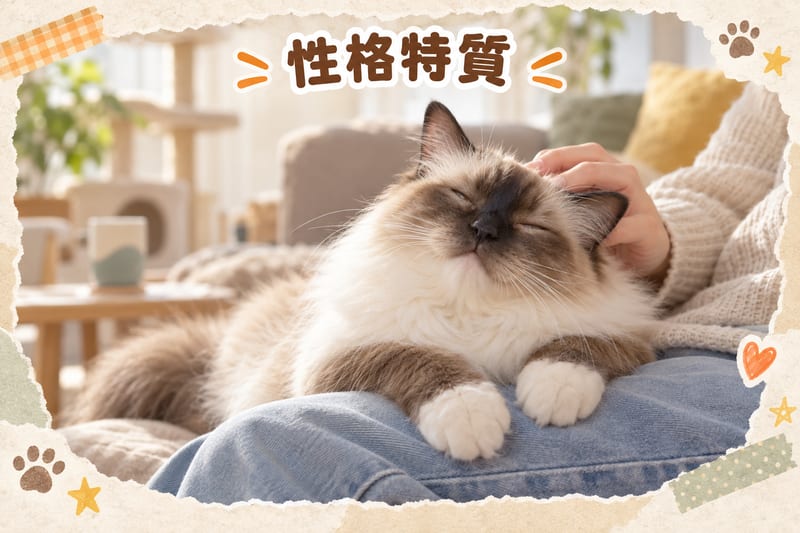
1. Affectionate but not clingy. A Birman will follow you around, sit nearby and sleep at your feet, but generally will not demand to be held for long periods. For office workers who need their space, this sense of proportion is an advantage.

2. Socially oriented and tolerant. With strangers and new environments, Birmans are mostly curious rather than avoidant, unlike some sensitive breeds that hide at the slightest disturbance. This makes them better suited to homes with frequent visitors or children.

3. Gentle and low in aggression. Low aggression means they are better suited to multi-pet homes; but it also means they cannot defend themselves, so letting them roam outdoors would be very dangerous.

4. Curious and eager to join in. Whether you are reading, cooking or opening a parcel, they want to be part of it. This is the cutest form of 'clinginess', but it also means drawers and cables need to be secured.

5. Relatively quiet. Compared with the chattiness of Oriental-type breeds, Birmans mostly communicate through body language, which is friendlier for noise-sensitive neighbours and households.
Birman cat sitting by the window in the sun, looking outside, relaxed posture

Intelligence and interaction suggestions

The Birman is an above-average intelligent breed. In practice this includes: recognising its own name, remembering which drawer the treats are in, learning to push doors open with its nose, and even copying you after watching you open a cabinet a few times. But their intelligence comes with not being overly mischievous—they are more restrained than Oriental-type breeds that excel at solving problems, so their intellectual needs are not hard to satisfy.

To bring out their potential, consider the following interaction ideas:

  • Two 10–15 minute active play sessions daily, using a wand toy to mimic the hunting cycle (chase, pounce, catch, eat).
  • Puzzle feeders instead of simply pouring food, turning meals into puzzles and burning off excess energy.
  • Basic command training: Birmans respond well to food motivation and can be taught simple behaviours such as 'come', 'sit' and 'high five'.
  • Environmental enrichment: cat trees, window perches and cardboard tunnels so they can entertain themselves.

Living with children and other pets

The Birman's low aggression and high tolerance mean their record with children is generally good. But 'friendly breed' does not equal 'zero risk': parents should teach children not to pull fur, not to hold the neck and not to surprise the cat while it sleeps, and should supervise at all times. No breed should be handled by young children alone, and the Birman is no exception.

Regarding other pets, Birmans are socially oriented and generally have a positive record of getting along with other cats and dogs, and those raised together from a young age are even easier to integrate. When introducing a new member, we suggest:

  1. Isolate the new pet first and let them smell each other through a door for a few days to a week.
  2. Swap sleeping mats and towels so both become familiar with each other's scent.
  3. At the first meeting, separate food and water bowls and place feeding stations some distance apart.
  4. Gradually increase time together, with someone present to observe throughout.

Male-female differences: a reliable way to put it

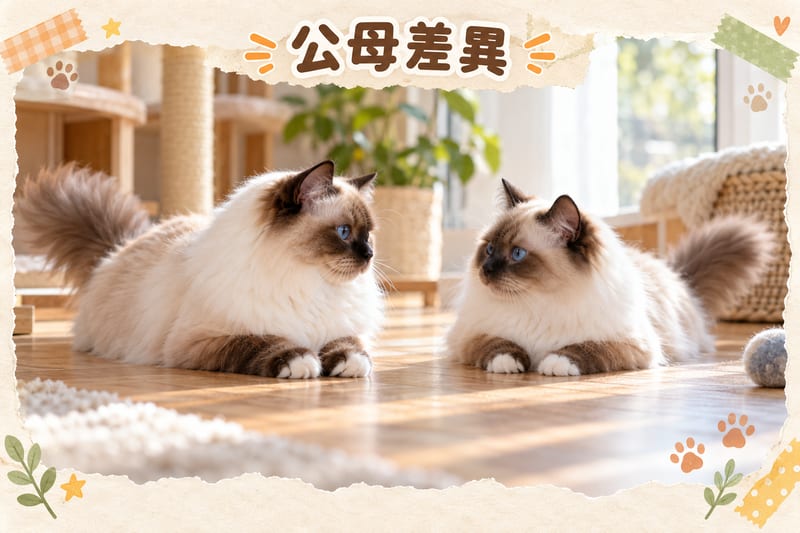
It is often said that 'male cats are more clingy and female cats more independent'. This saying has some observational basis, but sex differences are far smaller than individual differences. A Birman's personality is influenced more by bloodline, early socialisation and upbringing, and sex should not be treated as an iron rule. When actually choosing a cat, we suggest:

  • To find out how clingy it is, ask the breeder or previous owner directly about that cat's daily behaviour.
  • To reduce territorial and behavioural problems in adulthood, arrange neutering early.
  • In multi-cat households, consider an adult cat with an established personality first, as compatibility is easier to predict.
Birman cat lying on the living room rug with another cat, harmonious atmosphere

Personality × behaviour × response: one table at a glance

Personality trait Daily behaviour Corresponding arrangement
Affectionate Follows you, sits at your feet, waits at the door Fixed daily companionship time
Social Approaches visitors, not easily hidden Provide a quiet retreat at home
Gentle, low aggression High tolerance, cannot defend itself Indoors only, window screens throughout
Curious, eager to join in Opens cabinets, joins in, climbs high Secure cables, add cat trees and puzzle toys
Quiet Mostly uses body language Watch for subtle body signals, don't ignore needs
Above-average intelligence Learns commands, remembers locations Use puzzle feeders + simple training

Which families suit a Birman best

The Birman is not a difficult cat, but it does have preferences. Here is a comparison for reference:

  • Suitable: families with regular time at home, willing to groom daily and able to accept higher costs; families with children who are willing to supervise.
  • Fairly suitable: full-time office workers—as long as a pet sitter or puzzle toys are arranged, short periods alone are acceptable.
  • Not very suitable: people who are away from home for long periods, those seeking an aloof, independent cat, or those who do not want to groom a long coat at all.

In one sentence: the Birman's personality is sweet and good-tempered, but its need for companionship is a real requirement, not a breed that can be treated as an ornament.

Key summary

  • ✅ Both CFA and TICA define the Birman as a gentle, social, affectionate cat.
  • ✅ Four white gloves + medium build + slower maturation are the three main differences from the Ragdoll.
  • ✅ Affectionate but not clingy, it can be described as 'loving company while giving you space'.
  • ✅ Above-average intelligence, curious but not overly mischievous; puzzle feeders plus daily interaction are enough.
  • ✅ High tolerance for children and other pets, but parental supervision and gradual introductions cannot be skipped.
  • ✅ Male-female differences are far smaller than individual differences; ask the breeder or previous owner directly about actual behaviour.

The personality descriptions in this article are based on CFA/TICA breed standards and general husbandry observations; individual cats may vary considerably. If behavioural problems persist, please consult a veterinarian or cat behaviour professional.

Brand guides mentioned in this article

These brands appear in this article; their guide pages cover product lines, nutrition ranges and buying tips.

Frequently Asked Questions

📌 Key Takeaways

  • This article covers: Birman personality: CFA and TICA both say 'gentle and social', Five personality traits explained one by one, Intelligence and interaction suggestions, Living with children and other pets, Male-female differences: a reliable way to put it, and more
  • Jump to any section via the table of contents for the key details
  • If in doubt, consult a registered veterinarian

📚 貓品種 article index

This article is part of the 貓品種 topic cluster. Explore related articles:

⭐ 主文章:貓品種完全指南Napoleon Cat (Minuet) Complete Guide | Hong Kong Short-Legged Longhaired Cat Personality, Price and Health Risks→ ReadBirman Cat Disadvantages: 8 Real Costs to Know Before Getting One in Hong Kong→ ReadBirman Cat Lifespan: A Must-Read Longevity Checklist for Hong Kong Owners→ ReadBirman Cat Prices and Adoption Guide | Hong Kong 2026→ ReadWhat Are the Downsides of a Devon Rex? 7 Things Hong Kong Owners Must Know Before Getting One→ ReadDevon Rex in Hong Kong: Care Guide for the Humid Climate and the Law→ ReadHow Long Do Devon Rex Cats Live? A Hong Kong Guide to Hereditary Diseases and Health→ ReadDevon Rex Personality and Intelligence: What Hong Kong Owners Need to Know→ ReadDevon Rex Price in Hong Kong 2026: Buying vs Adoption Costs Explained→ ReadNorwegian Forest Cat Downsides Explained | 8 Things to Know Before Getting One→ ReadNorwegian Forest Cat in Hong Kong: Home, Climate and Legal Guide→ ReadNorwegian Forest Cat Lifespan and Health | HCM, GSD IV and a Longevity Checklist→ ReadNorwegian Forest Cat Personality and Intelligence: Independent, Gentle, or Clingy?→ ReadNorwegian Forest Cat Prices and Adoption Guide | Hong Kong 2026 Market Breakdown→ ReadHow Big Do Norwegian Forest Cats Get? Weight Growth Chart and Body Condition Score Explained→ ReadSomali Cat Coat Colour Guide: Ticked Multi-Tone Ruddy Gold→ ReadSomali Cat Disadvantages: 7 Things to Know Before Keeping One in Hong Kong→ ReadSomali Cat Hong Kong Care Guide | Home Climate Full Guide→ ReadSomali Cat Lifespan and Health: A Must-Read for Hong Kong Owners→ ReadSomali Cat Personality Revealed | An Active, Playful Companion Cat→ ReadSomali Cat Prices and Adoption Guide | Hong Kong 2026→ ReadSomali Cat Weight and Size: A Full Guide to Growth Curves→ ReadCalico Cat Prices: Hong Kong Adoption Routes, Costs and a Verification Checklist→ ReadCalico Cat Lifespan: Key Factors, Common Diseases and Longevity Tips for Hong Kong Owners→ ReadCalico Cat Disadvantages: 7 Real Challenges Every Hong Kong Owner Should Know→ ReadAmerican Shorthair Weight Standards and Growth Chart | Essential Hong Kong Cat Weight Guide→ ReadBritish Shorthair Weight Standards: Hong Kong Growth Curve, Male-Female Differences and Weight Chart→ ReadAre Calico Cats Really That Feisty? | Hong Kong Calico Traits × Intelligence Explained→ ReadAmerican Shorthair Personality and Intelligence | Hong Kong Companion-Cat Smarts→ ReadBritish Shorthair Personality & Intelligence: Inside the Mind of Hong Kong's Quiet Cat→ Read>- Is a Calico a Breed? Tortoiseshell, Calico Tabby and White-Based Calico Explained (Hong Kong Coat Guide)→ ReadRagdoll Weight Chart: Monthly Standards and Male-Female Differences in Hong Kong→ ReadAmerican Shorthair in Hong Kong: Full Care Guide for Small Flats and Local Climate→ ReadBengal Cat Personality Explained | Hong Kong Bengal IQ, Affection and Male-Female Differences→ ReadHow Long Do British Shorthairs Live? A Hong Kong Owner's Guide to a Longer Life and Disease Risks→ ReadExotic Shorthair Lifespan: How Long Do They Live? A Hong Kong Guide to Longer, Healthier Lives→ ReadRagdoll Colour Patterns Explained: Colourpoint, Mitted, Bicolor, Colours and Prices→ ReadSiamese Cat Lifespan: Hong Kong Genetic Tendencies and a Longevity Checklist→ ReadAmerican Shorthair Lifespan: A Hong Kong Owner's Guide to a Longer Life | Disease Prevention and Health Check Schedule→ ReadHow Long Do Bengal Cats Live? | Hong Kong Bengal Genetic Risks and Longevity Guide→ ReadExotic Shorthair Personality & Intelligence | A Guide to Hong Kong's Quiet, Smart Cat→ ReadRagdoll Intelligence Explained | A Must-Read for Hong Kong Owners: Smart or Just Sweet?→ ReadSiamese Cat Personality | A Must-Read for Hong Kong Pet Owners: The Truth About the Chatterbox, the Clingy and the Highly Intelligent→ ReadAmerican Shorthair Colours & Patterns: With White, Tabby, and Price Guide (2026 Hong Kong)→ ReadBefore You Get a Bengal Cat: 8 Real Downsides and How to Handle Them in Hong Kong→ ReadExotic Shorthair Disadvantages: 8 Honest Points Hong Kong Owners Must Know→ ReadRagdoll Lifespan: Key Factors and a Longevity Checklist for Hong Kong Owners→ ReadHow Many Siamese Cat Colours Are There? Four Key Point Colours Plus Pattern Variants (Hong Kong)→ ReadAmerican Shorthair Disadvantages: 7 Honest Assessments and Solutions for Hong Kong Owners→ ReadBengal Cat Prices and Adoption Guide: Hong Kong Cattery Rates, Adoption Routes and a Pre-Purchase Checklist→ ReadExotic Shorthair Hong Kong Care Guide|Humidity Protection for Flat-Faced Cats & Heat Relief→ Read8 Real Downsides of Ragdoll Cats: At Least HK$1,100 a Month (Hong Kong)→ Read>- Siamese Cat Disadvantages: Loud, Clingy, Prone to Separation Anxiety (Hong Kong)→ ReadAbyssinian Cat Colour Guide|Four Main Colours, Prices and Hong Kong Market→ ReadAbyssinian Cat Disadvantages: 7 Things to Know Before Getting One in Hong Kong→ ReadAbyssinian Cat Hong Kong Care Guide: High-Jump Champion in a Small Flat→ ReadAbyssinian Cat Lifespan and Health: A Hong Kong Genetic Screening Guide→ ReadAbyssinian Cat Personality Revealed | Hong Kong Cat Owner Must-Read: How Smart Is the 'Dog of the Cat World'?→ ReadAbyssinian Cat Price: Hong Kong Catteries, Adoption and Verification Guide→ ReadAmerican Shorthair Price and Adoption Guide | Hong Kong 2026→ ReadBengal Cats in Hong Kong: The Complete 2026 Guide to Small Flats, the Law, and Humidity & Heat Protection→ Read>- The Downsides of Domestic Cats: The Truth and How to Handle It Before Getting a Hong Kong Cat→ ReadHow Long Do Domestic Cats Live? A Hong Kong Guide to Health Management and Longer Life→ ReadDecoding the Domestic Cat Personality | Hong Kong Street Cat Blind Box: Why They're So Loved→ ReadAdopting a Domestic Cat in Hong Kong: AFCD & SPCA Fees, Procedures, and Public Housing Rules→ ReadEgyptian Mau Disadvantages: The Truth Hong Kong Owners Must Know Before Getting One→ ReadEgyptian Mau Lifespan: Health Risks and Longevity Guide for Hong Kong→ ReadEgyptian Mau Personality Revealed | Hong Kong Cat Owner Must-Read: The Cat That Acts Like a Dog, Loyal to One Family for Life→ ReadEgyptian Mau in Hong Kong: Price and Adoption Guide 2026 – Market Rates and Verification Checklist→ ReadExotic Shorthair Price & Adoption Guide | Hong Kong Buying Market 2026→ ReadHimalayan Cat Disadvantages: 8 Truths to Know Before Owning One in Hong Kong→ ReadHimalayan Cat Hong Kong Care in Practice: What to Do About the Hot and Humid, Heat-Sensitive Problem|The Complete Longhair Flat-Face Guide→ ReadHow Long Do Himalayan Cats Live? A Must-Read 12–15 Year Health Guide for Hong Kong Owners | PetChill Cat Encyclopedia→ ReadHimalayan Cat Personality: Persian Calm Meets Siamese Spark — Which Suits Hong Kong? | PetChill→ ReadHimalayan Cat Price and Adoption in Hong Kong: 2026 Cattery Guide→ Read7 Disadvantages to Know Before Getting a Munchkin Cat | A Practical Guide to Keeping Short-Legged Cats in Hong Kong→ ReadMunchkin Cat Care in Hong Kong: Daily Management in Small Flats, Heat and Humidity, and Short Legs→ ReadHow Long Do Munchkin Cats Live? Hong Kong Short-Leg Gene Health Risks and a Longevity Checklist→ ReadMunchkin Cat Personality: 5 Traits of Hong Kong's Short-Legged Comedian→ ReadMunchkin Cat Prices and Adoption: Hong Kong Market Rates and Verification Checklist 2026→ ReadPersian Cat Disadvantages: 8 Things Hong Kong Owners Must Know Before Buying (Chinchilla Included)→ ReadPersian Cat Lifespan: How Long Do They Live? Hong Kong Chinchilla Lifespan and Disease Guide | PetChill Cat Encyclopedia→ ReadPersian Cat Personality & Chinchilla Temperament: Intelligence Explained | The Truth About Hong Kong's 'Quiet Aristocrat'→ ReadPersian Cat Prices in Hong Kong: Chinchilla Costs and Adoption Guide | PetChill→ ReadRagdoll Cat Care Essentials in Hong Kong: Climate, Home and Legislation→ ReadThe Downsides of Owning a Russian Blue | 8 Real Costs Every Hong Kong Cat Owner Should Know→ ReadRussian Blue Lifespan: How Many Years? | Hong Kong 15+ Year Longevity Checklist→ ReadRussian Blue Personality: A Hong Kong Cat Owner's Guide to the Loyal, Intelligent Cat Behind the Shy Exterior→ ReadRussian Blue Price and Adoption Guide | Hong Kong 2026→ ReadSiamese Cats in Hong Kong: A Care Guide for Climate, Flats and Company→ ReadSphynx Colour Guide: Every Skin Colour and Pattern Explained for Hong Kong Owners→ ReadSphynx Cat Disadvantages, Personality, Price and Care: A Hong Kong Guide→ ReadHow Long Do Hairless Cats Live? Sphynx Health Risks and Longevity Guide for Hong Kong→ ReadSphynx Cat Personality Revealed | Hong Kong Cat Owner's Must-Read: How Smart Is This Clingy Dog-Like Cat?→ ReadSphynx Cat Price 2026: Hong Kong Cattery and Adoption Guide→ ReadThe Downsides of Keeping a Turkish Angora | 7 Real Costs in Hong Kong→ ReadTurkish Angora Lifespan: How Long Do They Live? | Hong Kong Owner's Guide to Genetic Red Flags and a Longevity Checklist→ ReadTurkish Angora Personality: The Smart, Chatty 'Fox of Cats' | Hong Kong Care Guide→ ReadTurkish Angora price and adoption guide: 2026 Hong Kong market, routes and waiting lists→ ReadSilver Shaded Cats & British Shorthair Colours: Golden Shaded vs Blue & White, Differences and Prices→ ReadBritish Shorthair Disadvantages: Prone to Obesity, Heavy Shedding, Not a Lap Cat | Are They Easy to Keep?→ ReadBritish Shorthair Hong Kong Care Guide|Small Flat Hot & Humid Weather Tips→ ReadBritish Shorthair Cat Price and Adoption Guide|Hong Kong 2026→ ReadMaine Coon Colours Ranked: A Full Guide to 30+ Colours, Patterns and Popular Shades→ Read8 Real Disadvantages of Maine Coons: Space, Grooming, Costs & Solutions→ ReadMaine Coon Genetic Health Screening: HCM, SMA, PKD & GALC→ ReadThe Complete Guide to Keeping a Maine Coon in Hong Kong: Space, Air-Conditioning, Building Regulations→ ReadHow Long Do Maine Coons Live? 5 Key Factors Behind 12–15 Years | Hong Kong Edition→ ReadMaine Coon Personality and Intelligence: What Makes the Gentle Giant Tick | Hong Kong→ ReadMaine Coon Price in Hong Kong 2026: Buying, Adoption & Full Cost Guide→ ReadHow Big Do Maine Coons Get? Males 6-10 kg, Up to 120 cm Nose to Tail→ ReadOriental Shorthair Colour Guide | Hong Kong Picking Guide: How to Choose from 300 Colours→ ReadOriental Shorthair Disadvantages: 7 Things to Know Before Getting One in Hong Kong→ ReadOriental Shorthair in Hong Kong: A Care Guide for Small Flats, Humidity and Public Housing→ ReadOriental Shorthair Lifespan: Health Risks and Longevity Checklist for Hong Kong Owners→ ReadOriental Shorthair Personality Explained | Hong Kong Care Guide: The Clingy, Chatty 'Dog of Cats'→ ReadOriental Shorthair price and adoption in Hong Kong (2026): cattery vs rescue costs→ ReadOriental Shorthair Weight & Growth Curve: What's Normal for Hong Kong Owners→ ReadRagdoll Cat Prices and Adoption Guide | Hong Kong 2026→ ReadSiamese Cat Prices and Adoption Guide (Hong Kong) 2026→ ReadBengal Cat Care Guide in Hong Kong | Personality, Exercise Needs and Health Watch→ ReadBritish Shorthair Care Guide for Hong Kong | Personality, Weight Control and Health Checks→ ReadAdopting a Hong Kong Cat: Personality, Health Advantages and Adoption Steps→ ReadMunchkin Cat Short-Leg Guide | Essential Reading for Hong Kong Cat Owners: Personality, Spinal Risks and Ethical Debate→ ReadPersian Cat Care Guide for Hong Kong | Long-Hair Grooming, Tear Stains and Kidney Screening→ ReadRussian Blue Cat Hong Kong Care Guide | Silver-Blue Coat, Green Eyes and Personality→ ReadSphynx (Hairless Cat) Complete Guide | Skin Care, Personality, Keeping in Hong Kong→ ReadHong Kong Cat Breeds Guide 2026: 12 Breeds Compared by Personality and Price→ ReadMaine Coon Hong Kong Care Guide 2026 | Personality, Price, Space Needs→ ReadRagdoll Cat Complete Guide 2026 | Personality, Price, Care Essentials, Hong Kong Adoption Info→ ReadSiamese Cat | Full Guide to Price, Personality and Colours (Hong Kong 2026)→ Read

Products mentioned in this article

4 items · prices checked 2026-10-21

  • Nutriplan Cat Food Complete Health Nutritional Formula 5kg (64352)Special offer

    Nutriplan Cat Food Complete Health Nutritional Formula 5kg (64352)

    HK$123HK$128

    About HK$24.6 per kg

    Details

    Price checked 2026-10-21; the store page shows the live price, stock and offers.

  • Bella & Molly's Dutch Berry Royal Selected Cat Food AAFCO Anti-Aging Grain-Free Single Protein Salmon Formula 50g (Limited Time Experience)

    Bella & Molly's Dutch Berry Royal Selected Cat Food AAFCO Anti-Aging Grain-Free Single Protein Salmon Formula 50g (Limited Time Experience)

    HK$10

    About HK$200 per kg

    Details

    Price checked 2026-10-21; the store page shows the live price, stock and offers.

  • Hills Cat Food Life Stage Series Adult Formula Chicken 490g (609885)

    Hills Cat Food Life Stage Series Adult Formula Chicken 490g (609885)

    HK$55

    About HK$112.24 per kg

    Details

    Price checked 2026-10-21; the store page shows the live price, stock and offers.

  • Royal Canin Cat Food EXIGENT Royal Canin Cat Food Fussy Eater Adult 4kg (2531040011)

    Royal Canin Cat Food EXIGENT Royal Canin Cat Food Fussy Eater Adult 4kg (2531040011)

    HK$540

    About HK$135 per kg

    Details

    Price checked 2026-10-21; the store page shows the live price, stock and offers.

The products above are store items related to this article. Prices are reference prices as of the check date (about HK$728 in total); the store page always shows the live price, stock and offers. This article is not medical advice.

You may also like





