Quick answer: Kitten teething timeline—milk teeth at 3 weeks, full set by 1.5 months, permanent teeth start at 4 months, all 30 permanent teeth by 6-7 months. Most shed milk teeth are swallowed by the cat (normal). During teething, provide chew toys and watch out for electrical cords; if you see "retained milk teeth" (milk teeth that don't fall out, old and new teeth side by side), see a veterinarian for extraction.
Kitten Teething Timeline
| Time | Teeth status |
|---|---|
| Birth | No teeth |
| 3 weeks | Milk teeth start to appear |
| 1.5 months | All milk teeth in (26 teeth) |
| 4 months | Permanent teeth start; teething begins |
| 6-7 months | Permanent teeth mostly complete (30 teeth) |
This timeline is very practical—if you take in a kitten of unknown age, you can estimate the age by looking at the teeth: full milk teeth but not yet changing = 1.5-4 months; in the process of changing = 4-6 months; all permanent teeth clean and white = 6 months to 1 year.
"I can't find my kitten's milk teeth" is normal
Many Hong Kong cat owners search everywhere for shed milk teeth as keepsakes during teething, but can't find them. The book 'The Complete Book of Cat Breeding' explains: when kittens teethe, the milk teeth are swallowed directly. The swallowed milk teeth are tiny and pass out naturally, so there's no problem. Therefore:
- ❌ Don't worry "will swallowing teeth cause harm?"
- ❌ Don't specifically search the cat litter for teeth
- ✅ Finding one (very rare) is luck; not finding any is the norm

Four Things to Do During Teething
- Chewing needs: Itchy gums make cats want to chew. The book mentions that hard food (such as large meaty bones) makes teething easier. You can give safe hard items like chew toys and freeze-dried treats.
- Watch out for cords and strings: The urge to chew is strongest during teething, and bitten electrical cords can cause electric shock. For protection methods, see Kitten Home Safety Guide.
- Don't force the teeth: Don't play tug-of-war games that pull on the mouth during this time; the gums may be sore.
- Monitor appetite: If appetite drops noticeably during teething, or if the kitten takes a bite of dry food and drops it, you can temporarily switch to wet food or soak the dry food.
Retained Milk Teeth: The Only Situation That Needs Intervention
The book is very direct: only in very rare cases do milk teeth not fall out and remain next to the new teeth—this is called retained milk teeth (double teeth), and they must be extracted.
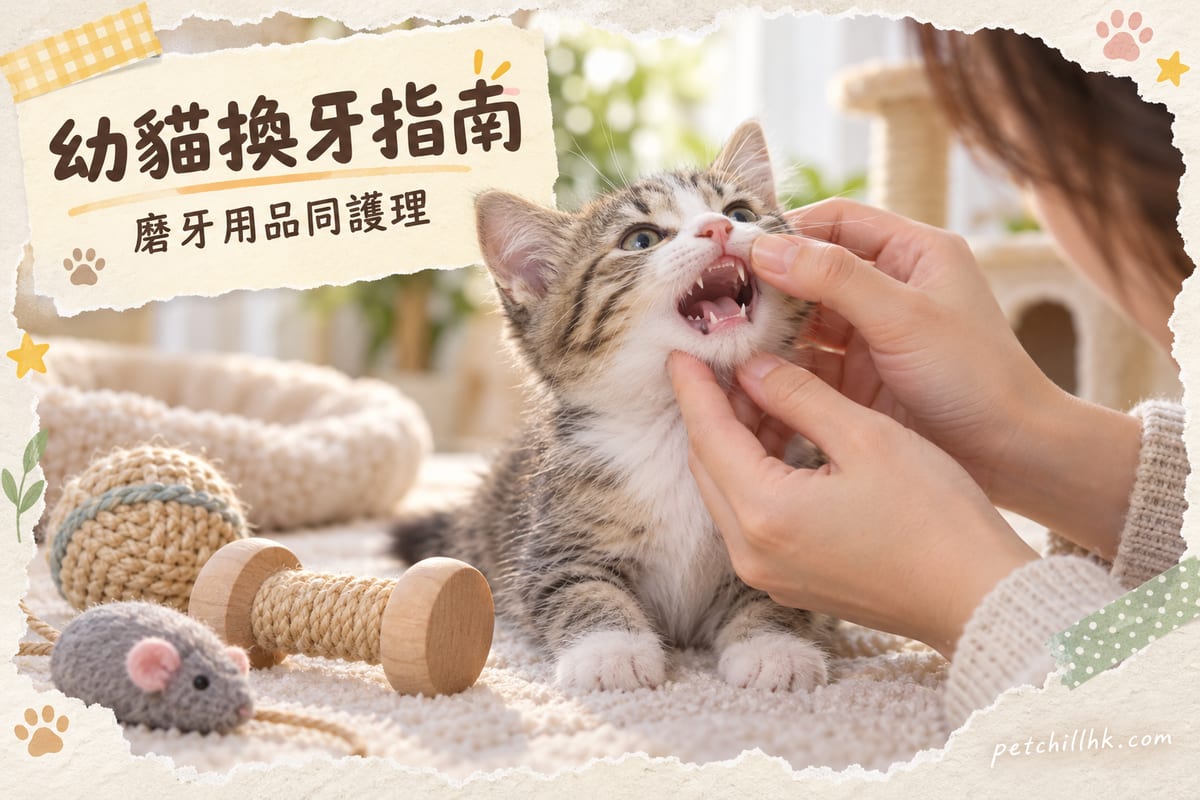
How to spot: During teething (4-7 months), occasionally lift your cat's lips and check. If you see two teeth side by side in the same spot (a loose old tooth and a new tooth), that's retained milk teeth. If left untreated, retained milk teeth can:
- Cause permanent teeth to grow crooked
- Trap food debris between teeth, accelerating tartar and periodontal disease
Extraction at the veterinarian is a minor surgery, so don't be afraid.

Start Brushing from Kittenhood
The book's care chapter emphasizes: food debris on teeth forms tartar, which is the source of periodontal disease and gingivitis; you should get your cat used to tooth brushing from kittenhood, ideally daily.
During teething, gums are sensitive, so you can start by wrapping gauze around your finger and wiping the teeth, then transition to a cat toothbrush after teething is complete (after 7 months). Habits built during the kitten socialization period make brushing much easier—see Kitten Socialization Guide.
Hong Kong Context Notes
- Hot and humid weather: During teething, there may be tiny wounds in the mouth, and food debris can easily breed bacteria. Wash water and food bowls daily.
- Freeze-dried chews: Many shops in Hong Kong sell freeze-dried chicken necks and freeze-dried small fish. Choose the right size for your kitten and supervise the first time you give them.
How to Do an Oral Check During Teething
Teething (4-7 months) is the best time to start checking the mouth—the cat is still young and habits form quickly. Once a week:
- When the cat is relaxed (e.g., after a meal), lift the lips and start looking from the canines.
- Check three things: any double teeth (retained milk teeth), red or swollen gums, any bad odor.
- After each check, give a treat so the cat associates "opening mouth" with something good.
Once this habit is established, brushing and checking for oral problems will be much easier when the cat is older. Oral problems are not just for senior cats—the book notes that dental problems are very common in cats. For oral care in adult cats, see Complete Guide to Cat Stomatitis to learn about symptoms and treatment directions for gum inflammation.
How to Tell "Teething Discomfort" from "Oral Disease"
| Sign | Teething (normal) | Oral disease (see a doctor) |
|---|---|---|
| Appetite | Slightly reduced, still eats wet food | Completely refuses food |
| Drooling | None or very little | Persistent drooling |
| Breath | Mild | Obviously foul |
| Gums | Slightly red at teething sites | Extensive redness, swelling, bleeding |
| Duration | Resolves naturally within 4-7 months | Persists for more than a week at any age |
Four Steps to Start Brushing (Begin After Teething)
The book recommends getting kittens used to brushing from a young age, ideally daily. Here's how to start:
- Week 1: Just lift the lip for one second and give a treat—build "open mouth = good thing".
- Week 2: Wrap gauze around your finger, wipe the outside of the front teeth twice, give a treat.
- Week 3: Wipe the back teeth, add cat toothpaste (never human toothpaste).
- From week 4: Transition to a small cat toothbrush, starting with 30 seconds.
The key is to go slowly. If you make the cat averse, you won't be able to brush for the next ten years. Oral health starts young, and the risk of periodontal disease and stomatitis in adulthood will be much lower—for symptoms and treatment of oral problems in adult cats, see Complete Guide to Cat Stomatitis.
Kitten Teeth Basics
- 26 milk teeth, 30 permanent teeth (the extra ones are the back molars).
- The order of teething generally starts with incisors, then canines and molars.
- The book 'The Complete Book of Cat Breeding' adds: the back molars are made up of the first permanent teeth to emerge; hard food makes teething easier.
In line with growth progress, the teething period generally overlaps with the 4-6 month stage in the Kitten Month-by-Month Guide; this is also the final stage of socialization, so the habit of having the mouth touched should be established now (Kitten Socialization Guide). For weight during teething, see: Kitten Weight Chart.
Teething Toys and Treats Checklist
What can be chewed and what can't:
- ✅ Large meaty bones / freeze-dried chicken necks (hard foods approved by the book to help teething)—supervise the first time.
- ✅ Chew toys (soft rubber, hemp rope)—put rope toys away after play.
- ✅ Frozen wet towel rolls—cold soothes itchy gums.
- ❌ Electrical cords, earphone wires (electric shock risk).
- ❌ Hard objects smaller than a mouthful (dangerous if swallowed).
- ❌ Your fingers—letting them bite hands teaches them to bite people (see How to Stop Kitten Biting).
Another free and good option: soak a clean old towel in water and freeze it. The firmness and coolness of the frozen towel are well received by many kittens.
Teething is the most silent event of kittenhood—you may not find a single tooth. But as long as your kitten eats, plays, and gains weight normally, teething is going well. The oral check habit for six months from now starts today.
After teething is complete, the cat officially enters the "adult teeth" era. These 30 permanent teeth will stay with them for over a decade, relying on the oral care habits you establish during kittenhood: check gum color weekly, brush daily if possible, and have the veterinarian check the mouth at the annual check-up. Getting your cat used to having its mouth touched now will make future dental cleanings, check-ups, and medication much smoother—these are things that the more you do during kittenhood, the easier they become later, and the rewards are measured in years; you'll feel the difference from the first dental cleaning.
References
- Agriculture, Fisheries and Conservation Department (Hong Kong Government) — Pet Care Information
- Veterinary Surgeons Board of Hong Kong
- The knowledge points in this article are compiled from cat encyclopedia books (see publication details at the end) and public veterinary guidelines.
Related Products (Available in Hong Kong)
- RONRON Kitten Complete Wet Food Pouch Duck Chicken & Chicken Liver 75g (reference price HK$8.5)—wet food for teething, soft and easy to eat.
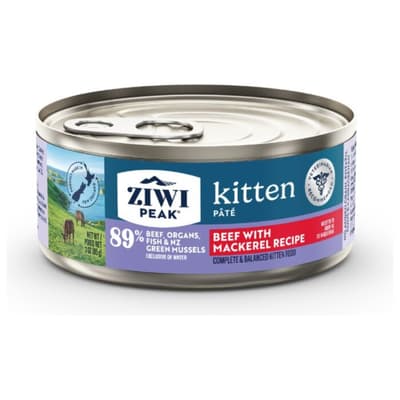
- ZiwiPeak Kitten Can Beef with Mackerel 85g (reference price HK$34)
 ZiwiPeak full guide →