
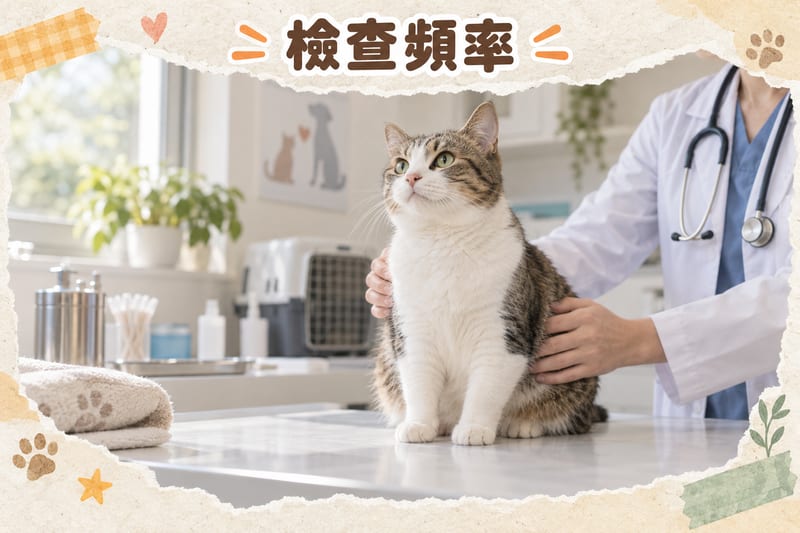
Quick answer: Adult cats and dogs should have a health checkup once a year; from age 7, once every six months. Basic items include auscultation, palpation, taking temperature, weighing and body condition scoring, and an oral examination, together with blood tests and urinalysis. Hong Kong reference prices: a basic examination is about HK$300-600, and a blood test package is about HK$600-1,200. The book The Complete Guide to Raising a Dog for the First Time lists 'vaccination and health checkups' as the two most basic preventive tasks that absolutely cannot be skipped, for a simple reason: animals cannot say they feel unwell. By the time symptoms are obvious enough to visit the clinic, the easiest-to-treat stage has usually passed.
When to Do It: Age × Frequency Table (extractable)
| Age stage | Recommended frequency | Focus |
|---|---|---|
| Juvenile (0-1 year) | According to the vaccination schedule, check at each injection | Vaccination timetable, development, parasites |
| Adult (1-7 years) | Once a year | Weight and body condition, oral health, baseline blood values |
| Later middle age (5-7 years) | Once a year, blood tests can be added | Establish personal baseline values for easier comparison later |
| Senior (from 7 years) | Once every six months | Blood tests, urinalysis, blood pressure, heart and joint assessment |
| Existing chronic illness / on medication | As specified by the vet | Monitor changes in indices and drug response |
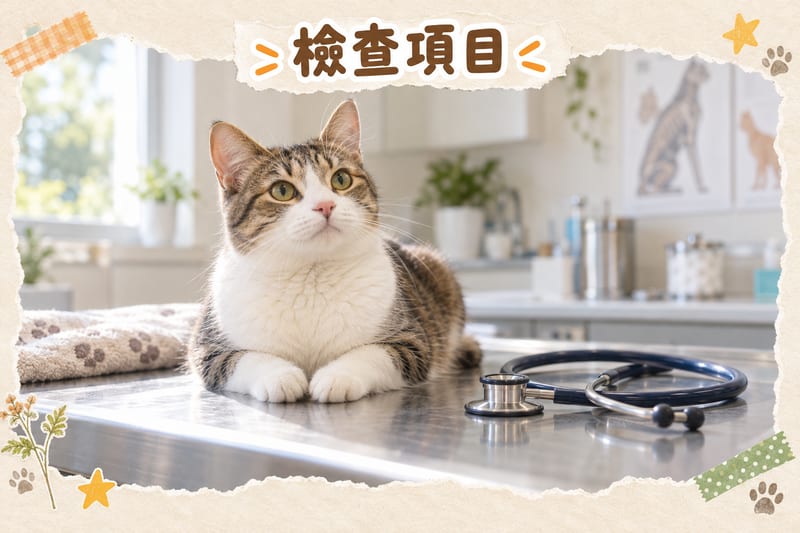
Checklist of Examination Items
Basic (every annual checkup)
- Medical history questions: appetite, water intake, urination and defecation, activity level, behavioural changes
- Weighing and body condition scoring (feel the ribs, look at the waistline)
- Auscultation (heart sounds, lung sounds) + palpation (abdomen, lymph nodes, joints)
- Taking temperature
- Oral and dental, gum examination
- Eyes, ear canals, skin and coat examination
- Anal glands and the area around the anus
Advanced (depending on age and medical history)
- Complete blood count (CBC): red blood cells, white blood cells, platelets — the book specifically mentions this set of values in the pre-surgery examination chapter
- Biochemistry: liver, kidney, pancreas, blood glucose, protein
- Urinalysis: specific gravity, protein, crystals, infection markers
- Thyroid (common in senior cats), heart examination (echocardiography if a murmur is heard on auscultation)
- X-ray: the book states it helps assess the heart and overall body structure
- Blood pressure: the book reminds that senior cats must have their eyes and blood pressure checked regularly
Five At-Home Observations: Free to Do Anytime
The book The Complete Guide to Raising a Dog for the First Time proposes 'five observations' that take just two minutes a day:
| Area | Healthy indicator | What to watch for |
|---|---|---|
| Eyes | Clear and bright, slightly moist around the eyes, no discharge | Pale or yellowish conjunctiva, cloudy cornea, white spots |
| Ears and nose | Ears fairly cool, nose tip moist and cool, ear canal pink and clean | Odour, dark stains, hard lumps |
| Teeth | Neatly aligned, pale pink gums, no bad smell | Tartar, red and swollen gums, bad breath |
| Anus | Dry, abdomen not distended | Damp (possible diarrhoea), distended abdomen (possible parasites) |
| Skeleton and body condition | Springy when picked up, spine not protruding | Protruding spine, weak hind legs |
When Not to Wait for the Annual Checkup and Seek Help Immediately
- Difficulty breathing, open-mouth breathing, panting non-stop
- Persistent vomiting or diarrhoea for more than 24 hours, or blood present
- Not eating at all for 24 hours (especially dangerous in cats)
- Sudden lameness or dragging of the hind legs
- Seizures, sudden loss of balance
- A marked increase or decrease in water intake or urine output
- Distended abdomen that feels hard when pressed
- Unable to urinate (especially in male cats) — this is an emergency The book Practical Dog-Raising Handbook has a line well worth noting down: a puppy that 'eats and plays' does not mean it is not ill; many illnesses have an incubation period, and by the time symptoms are obvious the condition is often already very serious.
Signs of Ageing: What Is Normal Ageing and What Needs Treatment
| Change | Possibly normal ageing | Needs examination |
|---|---|---|
| Worsening hearing, not responding when called | Common | If it happens suddenly, rule out other causes |
| Thirst, frequent urination, incontinence | Not normal | May be related to the kidneys, diabetes, hormones |
| Dropping food, refusing food | Not normal | Inflamed gums, loose teeth |
| Blue film over the eyes | Common, does not affect vision | If it appears as a cloudy cataract, it needs treatment |
| Coughing, easily tired | Not normal | Heart and lung function assessment |
| Weight gain/loss | Needs monitoring | Slower metabolism or a sign of disease |
Hong Kong Cost Reference
| Item | Reference price | Notes |
|---|---|---|
| Basic consultation + health checkup | HK$300-600 | Some clinics charge the consultation fee separately |
| Blood test package (CBC + biochemistry) | HK$600-1,200 | The more items, the more expensive |
| Blood test + urinalysis | HK$900-1,600 | Recommended combination for senior pets |
| Vaccination (alongside the annual checkup) | HK$300-600 per time | See the vaccination timetable for details |
Preparation: Making the Checkup Effective
- Fast for 8-12 hours before the blood test (water is allowed); follow the clinic's instructions for details.
- Book a morning slot; pets are more stable and blood test results are more consistent.
- Bring everything: past medical records, vaccination certificates, and a list of medications and supplements currently being taken.
- Record a week of at-home data: daily food intake, water intake, number of urinations, stool condition — this information is more valuable than the examination itself.
- Use a cat carrier / harness: the book reminds that when anaesthetised or transported by car, use a carrier and do not carry the pet in your arms.
- Ask all your questions at once: weight trend, teeth, parasite prevention, dietary advice — get them all answered in one go.
How It Fits with Other Preventive Items
- Vaccination timetable → Dog vaccination timetable, Cat vaccination guide
- Deworming calendar → Cat and dog deworming guide
- Heartworm prevention → Dog heartworm prevention
- Pre-neutering checkup → Cat neutering guide
- Senior cat care → Senior cat care guide
- Whether to give supplements → Cat vitamin supplements
References
- Agriculture, Fisheries and Conservation Department (AFCD) — Hong Kong pet management and public health information
- Veterinary Surgeons Board of Hong Kong (VSBHK) — register of registered veterinarians
- Book references: 68 The Complete Guide to Raising a Dog for the First Time, 74 Cat Family Medicine Encyclopedia, 76 Feline Medicine, 73 Practical Dog-Raising Handbook
Related Products (available in Hong Kong, checked 2026-10-13)
- DONO Upgraded Pet Pee Pads 60x60 L size 40 sheets — reference price HK$45 (collecting urine samples, household protection)
- My Potty Pad LITE Premium Absorbency Pet Pee Pads 45x60 M size 50 sheets — reference price HK$67
- Wang Miao Xing Qiu 100% PURE Lysine 50g — reference price HK$98 (the ingredient is lysine, a daily nutritional supplement, not a medicine)
The above content is for reference only and cannot replace veterinary diagnosis and treatment. Please consult your registered veterinarian about examination items, frequency and fees.
What Happens on Checkup Day (from entering the clinic to getting the report)
- Registration and weighing: weigh first, because dosages and body condition scoring are based on weight.
- Medical history questions: the vet will ask about appetite, water intake, urination and defecation, activity level and behavioural changes — it is best to write down a week of data in advance.
- Physical examination: auscultation, palpation, taking temperature, oral and dental, eyes, ears and skin, lymph nodes and joints.
- Blood and urine sampling: fasting is required before the blood test; a urine sample can be collected at home (using a clean container or a pee pad) and brought in, and some clinics can take a sample on site.
- Imaging or other tests: X-rays, echocardiography, blood pressure and so on are arranged as needed.
- Getting the report and the follow-up plan: abnormal values usually need a recheck after 2-4 weeks; remember to ask clearly about the date of the next test.
Three Questions You Must Ask When Reading the Report
- 'How does this number compare with last time — what is the trend?' — a single value means limited; the trend is what matters most.
- 'Which values are close to the upper or lower limit?' — only by knowing early can you adjust the diet or bring the recheck forward.
- 'Should any items be added next year?' — for example, adding blood pressure and thyroid after age 7, or adding a heart examination according to breed risk.
📌 Key Points Summary
- Adult cats and dogs once a year, from age 7 once every six months
- Basic examination: auscultation, palpation, temperature, weighing, body condition scoring, oral health
- Advanced examination: blood tests (CBC + biochemistry), urinalysis, blood pressure, heart, X-ray
- Five at-home observations: eyes, ears and nose, teeth, anus, skeleton and body condition
- Behavioural changes are often the only sign of physical pain — do not treat them as a personality problem
- Hong Kong reference prices: basic about HK$300-600, blood test package about HK$600-1,200

 Feline Natural full guide →