

Quick answer: How often should cats take deworming medicine? Puppies and kittens monthly until 6 months old, 6 to 12 months every 2 to 3 months, indoor adult cats every 6 months, adult dogs or those frequently outdoors every 3 to 6 months; those eating raw meat or with hunting habits every 3 months or as advised by a veterinarian. Weigh before dosing, choose medicine per vet's prescription, and deworm together with flea treatment; don't wait until you see worms. Dog oral medicine ingredients are toxic to cats and must not be given to cats on your own.
Deworming is a core part of pet health care: the most common internal parasites in cats and dogs are roundworms, hookworms, tapeworms, and whipworms. Deworm puppies and kittens monthly, adult cats and dogs every 3–6 months; those outdoors and eating raw meat need it more frequently; choose medicine prescribed by a veterinarian. This article covers symptoms, schedule, choosing medicine, and precautions all in one.
What are the four common internal parasites in cats and dogs?
Internal parasites (intestinal worms) are one of the most common health problems in cats and dogs, especially those that go outside, hunt, or eat raw meat. Often there are no obvious symptoms in the early stages, by the time you see diarrhoea or weight loss, the worm burden may already be high, so "regular deworming" is always more important than "treating when symptoms appear". The four most common intestinal parasites:
| Parasite | Characteristics | Common warning signs |
|---|---|---|
| Roundworm | Most common, especially in puppies and kittens | Bloated belly, weight loss, diarrhoea and vomiting |
| Hookworm | Attaches to intestinal wall and sucks blood | Anaemia, black stool, poor coat |
| Tapeworm | Segments look like rice grains | Itching around anus, "rice grains" near anus |
| Whipworm | Parasitises the large intestine | Diarrhoea, blood in stool, weight loss |
Tapeworm segments look like rice grains—if you see white moving grains near your pet's anus, it's very likely them. Fleas also carry tapeworm larvae, so flea treatment and deworming must be done together; don't treat only one side.
Tip: Parasite eggs are mainly transmitted through faeces contaminating soil and grass, accidental ingestion of contaminated environment or prey, and eating raw meat. Cats and dogs don't "generate worms themselves", but exposure opportunities are far more than you think.
How to know if your pet might have worms?
If any of the following signals appear, you should be alert and consider testing or deworming:
- Long-term soft stool, diarrhoea, or even vomiting
- Good appetite but weight loss, bloated belly in young animals ("worm belly")
- Rough, dull coat, poor overall condition
- Itching around anus, scooting on the floor (typical sign of tapeworm)
- Lethargy, pale gums (anaemia caused by hookworm, especially fragile in young kittens and puppies)
- Seeing worms or rice-grain segments near anus or in stool
Indoor cats are not zero risk: eggs brought in on owners' shoe soles, insects flying into the home, infection before adoption, and transmission from mother cat to kittens are all common routes. Never skip deworming completely just because "my cat stays indoors all the time".
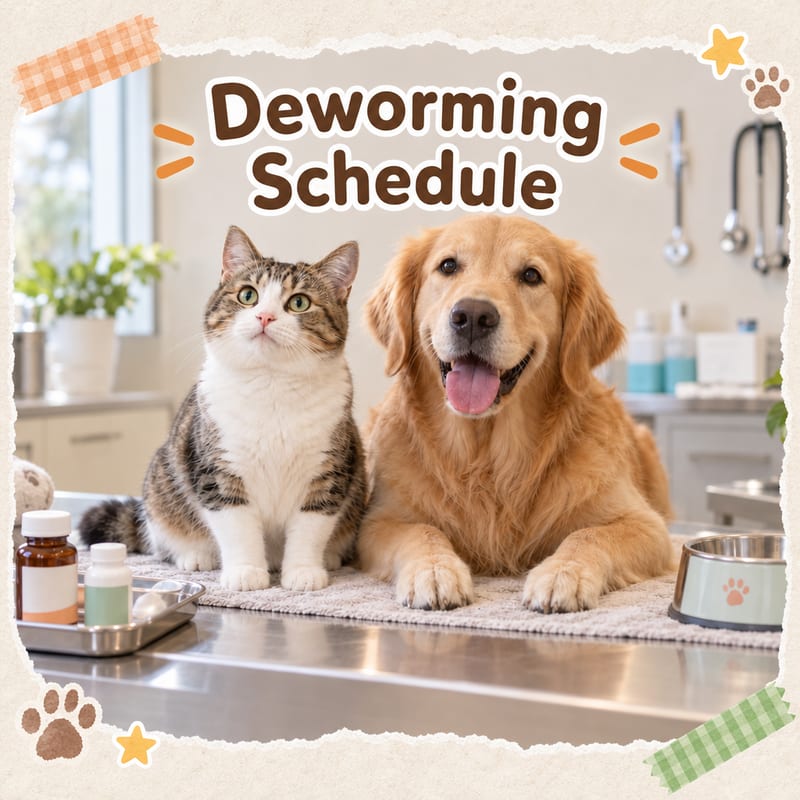
Cat and dog deworming schedule: how often?
General reference principles are as follows; actual frequency should be adjusted according to your pet's lifestyle and veterinary advice:
| Target | Recommended frequency | Reason |
|---|---|---|
| Puppies and kittens (up to 6 months old) | Monthly | Immune system not fully developed, high infection risk |
| Adolescents (6–12 months) | Every 2–3 months | Adjust according to environment and habits |
| Adult cats (indoor only) | Every 6 months | Lower risk, but still necessary |
| Adult dogs / frequently outdoors | Every 3–6 months | More exposure to grass and soil |
| Eating raw meat / hunting habits | Every 3 months or as advised | Raw meat and prey are main infection sources |
Two key principles:
- Start deworming early—start deworming puppies and kittens according to schedule; don't wait until you see worms
- Frequency matches lifestyle—households with outdoor access, multiple pets sharing space, or raw meat feeding need more frequent deworming
How to choose deworming medicine? Oral, spot-on, collar at a glance
| Form | Usage | Advantages | Points to note |
|---|---|---|---|
| Oral medicine | Mixed with food or given directly | Wide range of parasite coverage | Some cats and dogs refuse, must administer correctly |
| Spot-on | Applied to skin at back of neck | Convenient, suitable for cats that won't take pills | Coverage may not include all parasites |
| Collar | Worn long-term | Continuous protection | Must fit size, watch for skin reactions |
Four steps for choosing:
- Vet's prescription is safest—the vet will choose medicine with the right coverage based on your pet's condition, faecal test results, and lifestyle
- Check the deworming range—not all dewormers cover all parasites, especially tapeworms need separate confirmation
- Dose by weight—insufficient dose equals no deworming, overdose has risks; confirm weight before each dose
- Use regularly according to schedule—deworming is not a one-time fix; one dose doesn't guarantee a year's protection
Tip: When buying deworming medicine online, check source and expiry date; consult a vet if in doubt. Some medicine ingredients for dogs are toxic to cats; never give dog medicine to cats on your own.
Precautions before and after deworming
- Weigh before deworming to ensure correct dosage; record weight on your phone
- Observe stool for a while after deworming; worms may be passed—don't panic, take a photo to show the vet
- Handle the environment too: pick up faeces promptly, wash food bowls; in multi-pet households, deworm all pets together, not just one
- External parasites (fleas, ticks) and internal parasites transmit to each other; deworming and flea treatment should be done as a set
- If persistent vomiting, diarrhoea, or lethargy occurs after medication, contact your vet
- For pregnant, nursing, very young, or pets with underlying diseases, consult a vet before use
How is a faecal examination done?
If infection is suspected but the worm type is uncertain, the vet can perform a faecal microscopic examination:
- Collect a sample as soon as possible after your pet defecates (pick up with a plastic bag or tissue, place in a clean container)
- Keep the sample as fresh as possible; if not sent immediately, refrigerate and bring to the clinic as soon as possible
- The vet will look for eggs under a microscope to determine worm type and infection level
- Some intermittent egg-laying cases require samples from several consecutive days for accuracy
After worms are detected, the vet can prescribe targeted medicine, which is much more effective than blind dosing; a follow-up test after deworming can confirm effectiveness.
Relationship between deworming, flea treatment, and vaccination
Many owners ask: can all three be done at the same time? General recommendations:
- Flea treatment first—fleas are intermediate hosts for tapeworms; if flea infestation is not handled, tapeworms will return even after deworming
- Deworming according to schedule—do internal and external together for lasting effect
- Avoid vaccination during illness—if your pet is having diarrhoea, malnutrition, or infection, the vet usually suggests improving condition first before vaccination
The three do not conflict, but it's best to discuss order and timing with your vet all at once and put them into a yearly health calendar.
When to see a vet?
Occasional soft stool after deworming can usually be observed, but if the following occur, take your pet to the vet as soon as possible:
- Persistent diarrhoea or vomiting, difficulty eating or drinking
- Blood in stool, black tarry stool
- Pale gums, obvious anaemia, extreme fatigue
- Rapid weight loss, bloated belly in puppies and kittens with poor appetite
- Vomiting or passing large amounts of worms
- Symptoms not improving after deworming—may need faecal test to confirm worm type and change medication
Puppies and kittens dehydrate quickly; don't wait "a couple more days". Faecal examination and blood tests can accurately determine worm type and infection level; the vet will prescribe accordingly, which is much more effective than guessing and dosing yourself.

What you can do starting today
- Check when the last deworming was and set a reminder for the next one on your phone calendar
- Weigh your pet once and record it for future dosage checks
- Each time you handle your pet, check for "rice grain" segments near the anus
- If your pet goes outside or eats raw meat, book a vet appointment to discuss a fixed deworming plan
- Pair deworming with flea treatment; don't skip either
Deworming is not difficult; the hard part is doing it regularly long-term. For daily diet, you can pair with PetChill's cat food and dog food reviews and product guides to help build a good digestive foundation for your pet and make health care more comprehensive.
This article is for reference only; consult a registered veterinarian for any concerns.
Further Reading
PetChill Pet Health Team — Hong Kong's most authoritative pet knowledge platform