Have you noticed that your cat has been drinking more water lately, sleeping longer, or walking less agilely than before? When cats enter their senior years, their physical and psychological needs change dramatically. As a responsible cat owner, recognising the signs of ageing early and mastering proper care methods is the key to helping your cat enjoy their later years. This article takes you through the 10 key warning signs of cat ageing and practical daily care tips!
Quick answer: The book's classification is that from age 7 cats enter the "senior period" (weight standard 3.5-5.5 kg), and from 9-10 years old age-related diseases begin to appear. Because 3 months of a cat's life ≈ 1 human year, from age 7 it's best to have a health check every 6 months, and over 10 years old every 3-6 months. Daily focus: increased water intake, slower movement and personality changes are common ageing warning signs; diet adjustment, environmental adaptation, daily care and mental companionship are the 4 essential areas.
At what age is a cat considered "senior"?
Many cat owners think a cat is senior at 7, but cats age at a different rate from humans. According to veterinary research:
| Cat's age | Equivalent human age | Life stage |
|---|---|---|
| 1 year | 24 years | Already an adult |
| 3 years | 42 years | Entering stable period |
| 7 years | 54 years | Middle age |
| 10 years | 63 years | Officially entering senior period |
| 15 years | 78 years | Senior senior |
| 20 years | 93 years | Super long-lived cat! |
📊 Data source: According to the American Association of Feline Practitioners (AAFP) feline life stage guidelines, cats over 10 years old are defined as "geriatric", and a comprehensive health check every 6 months is recommended.
Generally, cats enter their senior years around 9 to 10 years old. With advances in veterinary technology and improved nutrition, many cats now live to 14-15 years, and some can even live beyond 20!
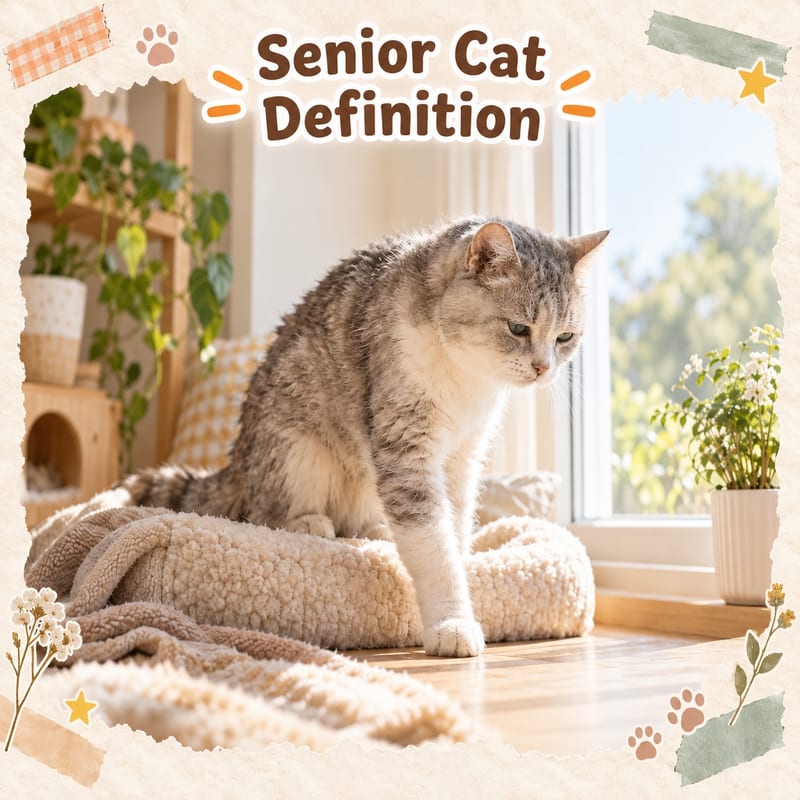
10 warning signs of cat ageing you must recognise
Cats are very good at hiding pain; by the time you notice discomfort, the disease may already be serious. Pay attention to these 10 warning signs daily:
1. Noticeably increased water intake
If your cat visits the water bowl noticeably more often (for more on cat hydration, see What to Do If Your Cat Won't Drink? 7 Ways to Increase Water Intake), in many cases it's a sign of kidney disease, liver disease, diabetes or pancreatitis. Older cats' kidneys often cannot function fully and need more water to flush out waste.
2. Increased urine output
Increased urine output usually accompanies increased water intake and is a typical symptom of kidney disease or diabetes. Observe the litter box daily and record changes in urination frequency and volume.
3. Decreased appetite or refusal to eat
Gum inflammation is a common problem in senior cats; tartar buildup can make eating painful. If your cat suddenly stops eating or eats more slowly, it could be a dental problem or a sign of a more serious disease.
4. Significant weight change
Whether sudden weight loss or weight gain, both are warning signs. Weight loss may indicate chronic infection, gastroenteritis or hyperthyroidism; weight gain increases joint burden and can lead to diabetes and cardiovascular disease.
5. Slower movement
If your cat can no longer jump to heights they used to reach easily, or walks oddly, it may be arthritis. Arthritis is the most common skeletal problem in senior cats and can greatly reduce activity.
6. Coat becomes rough and dull
Senior cats' grooming ability declines, and the coat becomes messy, matted and loses shine (regular brushing is important; see Complete Cat Grooming Guide). If you notice your cat no longer grooms as diligently as before, it may be a sign of physical decline.
7. Sudden personality change
A normally gentle cat suddenly becomes irritable or aggressive? Or an active cat becomes withdrawn? Personality changes may be due to decreased vision or hearing, cognitive decline, or even pain.
8. Increased night-time vocalisation
If an older cat cries at night, it could be cognitive dysfunction (similar to human dementia), or caused by disorientation, anxiety or physical discomfort.
9. Urinating outside the litter box
Older cats may avoid climbing into the litter box due to joint pain, or forget its location due to cognitive decline. This is not the cat being "naughty"; they genuinely need help.
10. Noticeably increased sleep time
Cats naturally sleep a lot (12-16 hours a day), but if a senior cat's sleep time suddenly increases a lot and they are unresponsive or slow to respond when called, watch out for health problems.
5 key points for daily care of senior cats
Regular health checks
It's recommended that cats over 10 have a comprehensive health check every 6 months (also watch for Cats Won't Tell You They're Sick! 5 Key Ways to Detect Disease Early), including blood tests, kidney function indicators (BUN, creatinine), blood sugar, thyroid function, etc. Early detection leads to much better treatment outcomes.
Diet adjustment
Senior cats need easily digestible, nutritionally balanced food. Consider:
- Choosing senior cat formula food
- Adding appropriate antioxidants (such as zinc, selenium) to slow ageing
- Ensuring sufficient water intake (a water fountain can encourage drinking)
- Controlling weight, avoiding obesity or being underweight
Environmental adaptation
Create a comfortable living environment for senior cats:
- Lower the litter box entrance for easy access
- Provide soft beds to protect joints
- Place frequently used items (food, water, litter box) in easily accessible places
- Avoid sudden changes in furniture arrangement to reduce disorientation
Daily care
Senior cats' self-cleaning ability declines and they need help:
- Brush your cat daily to keep the coat clean
- Regularly check teeth and gums
- Trim nails (senior cats' nails may thicken)
- Feel for any abnormal lumps on the body
Mental companionship
Senior cats also need mental stimulation:
- Provide toys suited to their physical ability
- Maintain appropriate interaction and companionship
- If the cat has been leash-trained, try to maintain walking habits
- Gentle massage can help relieve joint discomfort (for detailed massage techniques, see Complete Cat Massage Guide)
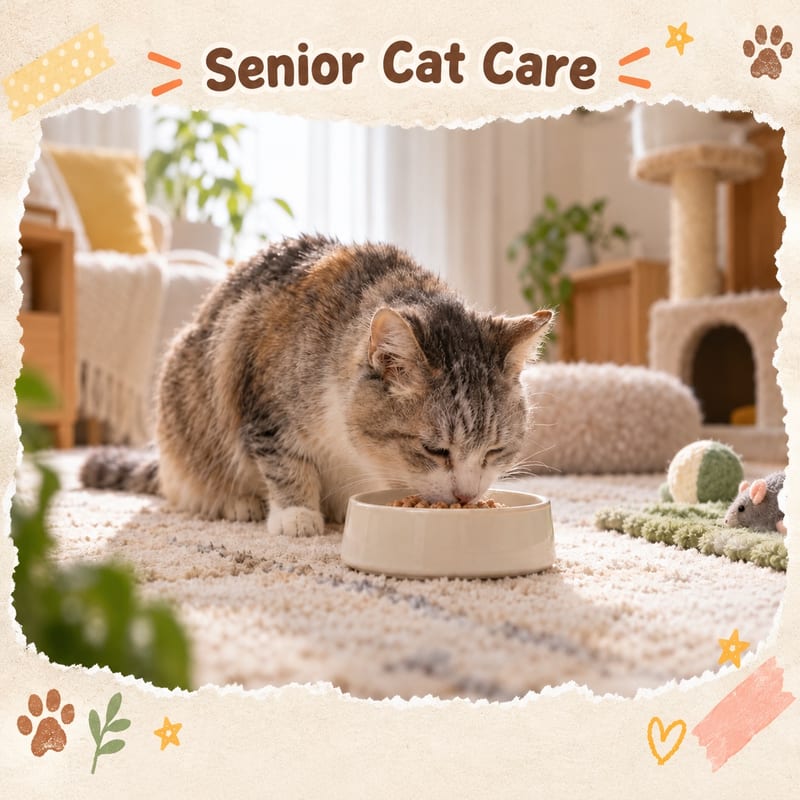
Most common diseases in senior cats (book data)
reminds us: once cats enter their senior years, especially after 10, they are prone to various diseases:
| Disease | Why senior cats are susceptible | Clues to catch it early |
|---|---|---|
| Periodontal disease | Years of tartar buildup + weakened immunity | Bad breath, drooling, eating more slowly |
| Hyperthyroidism | Common endocrine disease in senior cats | Eating more but losing weight, crying at night |
| Chronic kidney disease | Kidneys degenerate with age | Drinking more, urinating more |
| Malignant tumours (cancer) | Incidence rises significantly after age 7 | Early stage just weight loss; lumps on body surface can be felt |
| Arthritis | Cartilage protecting joints decreases with age | Not jumping high, not grooming |
| Cognitive dysfunction (dementia) | Cognitive decline | Forgetting known behaviours, abnormal behaviour |
Many of these diseases are hard to help manage, but early detection and treatment can greatly slow progression—this is why the book emphasises "don't miss any small change in your cat's life". For in-depth guides on each topic, see "Related articles" below.
Related articles
This is the overview of senior cat care; each topic has a dedicated article:
- Senior Cat Health Check Guide: when to start blood tests, what to test
- Senior Cat Food Guide: how to choose protein, phosphorus, moisture (Hong Kong prices)
- Senior Cat Joint Degeneration: daily care and supplements
- What to Do About Poor Appetite in Senior Cats: troubleshooting and improving appetite
- Senior Cat Cognitive Dysfunction: night crying, wandering, inappropriate urination
- Senior Cat Dental Care: scaling, periodontal disease, tooth loss
- Senior Cat Quality of Life: palliative care and assessment
Related in-depth reading: Cat Kidney Disease Guide, Early Warning Signs of Chronic Disease in Cats, Senior Cat Care × Breed Differences.
References
- Agriculture, Fisheries and Conservation Department (Hong Kong Government) — Pet Keeping Information
- Veterinary Surgeons Board of Hong Kong
- This article's knowledge points are compiled from cat encyclopaedias such as My First Cat Book and The Complete Cat Encyclopedia and the AAFP feline life stage guidelines.
Related products (available in Hong Kong)
Senior cats need easily digestible, highly nutritious senior cat food:
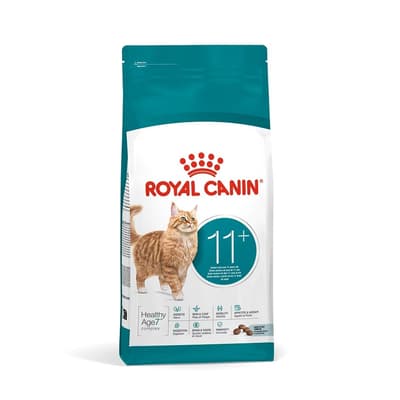
- Royal Canin FHN Senior Cat 11+ Nutritional Formula 2kg ($256)
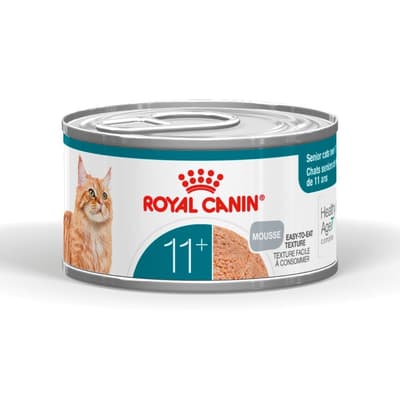
- Royal Canin AIRLIFT Senior Cat 11+ Complete Wet Food 85g ($24)
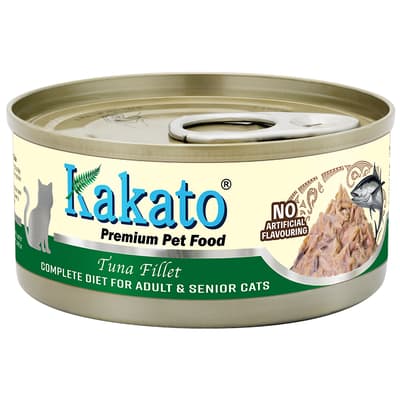
- Kakato Complete Single Protein Complete Wet Food Adult & Senior Cat Formula Tuna 70g ($13.5)
Prices checked on 2026-10-12. For more senior cat food comparisons and actual prices, see Senior Cat Food Guide.
The above content is for reference only and cannot replace veterinary diagnosis and treatment. If your senior cat shows any abnormalities, seek veterinary care as soon as possible; consult your veterinarian for check-ups and dietary arrangements.
PetChill's Reminder
A cat's senior years are an important stage of life that requires more love and patience from the owner. Observe daily changes in your cat's eating, elimination, activity and behaviour, and take them for regular health checks to detect problems early and treat them promptly. Remember, senior cats are not "useless"; they just need more care and attention from you.
To learn more about cat care, keep following PetChill's latest articles!
📌 Key takeaways
- ✅ From age 10, blood and urine tests every 6 months to detect kidney disease early
- ✅ Sudden increase in drinking and urination are warning signs; don't delay
- ✅ For senior cats with joint pain, lower the litter box entrance
- ❌ Don't think 7 is old; actually 10 is the start
- ❌ Don't scold a cat for inappropriate urination; it may be joint pain or cognitive decline
 Royal Canin full guide →


 Kakato full guide →
 Feline Natural full guide →