
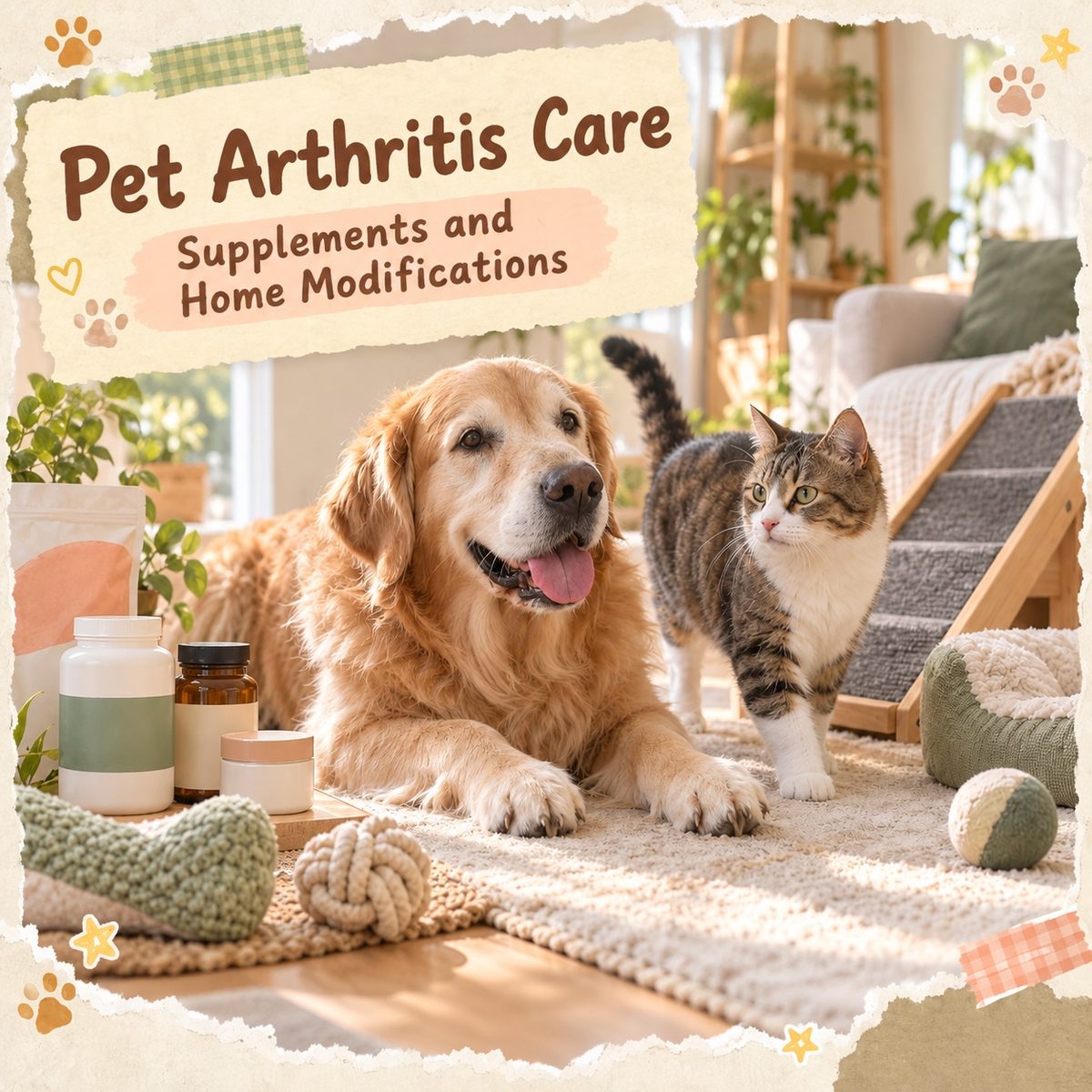
Quick answer: The most important aspects of arthritis care are weight control, low-impact exercise, glucosamine and fish oil supplementation, and immediately laying non-slip mats and adding ramps so senior cats and dogs experience less pain and move more steadily every day.
Arthritis is chronic inflammation and pain caused by wear and degeneration of joint cartilage, most common in senior cats and large dogs. The core care approach is weight control, combined with low-impact exercise, joint supplements and non-slip home modifications. Early warning signs are easily dismissed as 'just old age'; watch for reluctance to jump, slow to get up, and limping. Early management can slow progression and make your pet much more comfortable.
What is arthritis? Which cats and dogs are most at risk?
Arthritis (joint degeneration) refers to the deterioration of joint cartilage with age or long-term wear, reducing its cushioning ability and causing inflammation, stiffness and pain. On cool, damp days, many pets are noticeably more unsteady — Hong Kong's damp cold autumn and winter are especially hard on pets with joint problems.
The following groups are at higher risk:
- Large dogs: heavy breeds like Golden Retrievers and Labradors naturally put more load on their joints
- Senior cats and dogs: the older they get, the more obvious the cartilage degeneration; joint degeneration is actually very common in senior cats
- Overweight pets: every extra pound of body weight adds extra stress on joints
- Congenital joint problems: such as dogs with hip dysplasia (requires veterinary assessment)
- Previous joint injuries: old injury sites tend to degenerate earlier
6 major early warning signs: don't assume it's just 'old age'
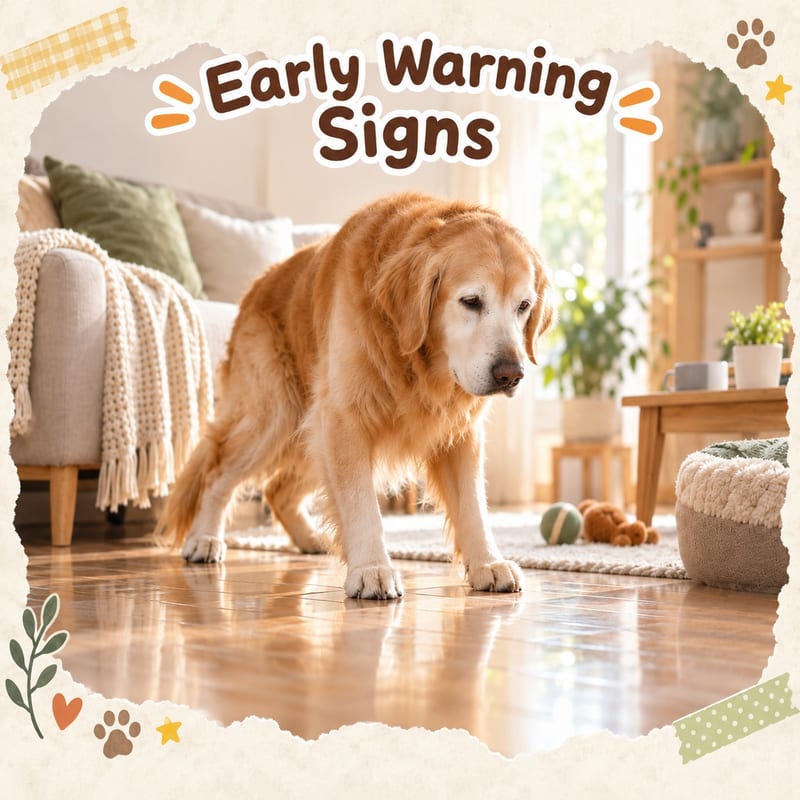
Early arthritis symptoms are very mild, and the most common misunderstanding among owners is 'they're just older and lazy'. In fact, each of the following is a sign of pain:
- Reluctance to jump — used to jump onto the sofa in one go, now hovers, hesitates, or even stops jumping
- Limping — a limp, especially obvious after waking up, seems a little better after moving around
- Slow to get up — takes a long time to get up after lying down
- Refusing stairs — stops at the bottom of the stairs, or takes each step slowly
- Reduced activity — doesn't want to go out or play, sleeps day and night looking 'good'
- Pain when touching joints — pulls away, turns head or avoids when you touch elbows, knees, lower back or hips
Tip: Cats are especially good at hiding pain; they won't cry out, they just quietly stop jumping high, and getting into a small litter box becomes difficult. If a senior cat starts toileting beside the litter box, or prefers to sleep on the floor rather than climb the cat tree, these are indirect evidence of joint pain.
First step in joint care: weight control
Excess weight is the number one enemy of joints. Body weight presses directly on the limb joints, so weight loss is the most substantial and cheapest 'joint medicine'. Fat tissue itself also promotes inflammation, so weight loss is not just about 'reducing load'.
- Use a measuring cup for food, don't pour by eye; include treat calories in the daily allowance
- Weigh your pet once a month at the same time and record the trend; for large dogs, use a baby scale or veterinary clinic
- For overweight pets, plan weight loss with your veterinarian; lose weight gradually, don't starve
- Ideal weight means comfortable joints and ability to exercise
Gentle exercise: no movement = faster degeneration
Many owners stop all exercise when they see their pet in pain, but complete lack of movement causes muscle atrophy, leaving joints unprotected and degenerating faster. The right approach is 'low impact, keep regular', with short, frequent sessions better than one long exhausting walk:
- Walking: short and frequent is better than one long trip; walk on flat ground during cooler hours, avoid steep slopes and rough concrete
- Swimming / walking in water: buoyancy reduces joint stress, the most joint-friendly exercise; some veterinary clinics offer hydrotherapy
- Home games: rolling food puzzle toys encourage slow walking and gentle pouncing, keeping joints moving
- Avoid: sudden running and stopping, high jumps and drops, long periods on stairs, chasing balls with sharp turns, walking on gravel or steep slopes
- Weather considerations: Hong Kong autumn and winter mornings are damp and cold; pets with stiff joints can walk during the warmer daytime, and dry their paws afterwards
Tip: Observe your pet the next day after exercise — if they are especially stiff or reluctant to move the next morning, they overdid it the day before and you should reduce the amount.
How to choose glucosamine, chondroitin and fish oil?
| Supplement | Main function | Suitable situations |
|---|---|---|
| Glucosamine | Supports cartilage repair, slows degeneration | Early joint degeneration, daily care in senior years |
| Chondroitin | Works with glucosamine to protect cartilage | Often formulated together with glucosamine |
| Fish oil (Omega-3) | Helps fight inflammation, reduce stiffness and discomfort | Joint inflammation, skin and heart health |
| Prescription medication | Veterinarian-prescribed pain relief and anti-inflammatory drugs | Obvious pain, acute flare-ups |
Three points to note when choosing:
- Choose pet-specific formulas, with dosage based on body weight; ingredients in human supplements may not be safe for cats and dogs
- Check the ingredient list and source, whether the amount of active ingredient per tablet is stated
- Don't expect immediate results: nutritional supplements provide long-term support and generally need to be taken for a period before improvement is seen; if no improvement, consult your veterinarian and do not increase the dose yourself
See a veterinarian if severe: arthritis with obvious pain has proper prescription pain relief plans; do not buy painkillers yourself — human painkillers can be poisonous to cats and dogs.

Home modifications: a pain-free space for senior pets
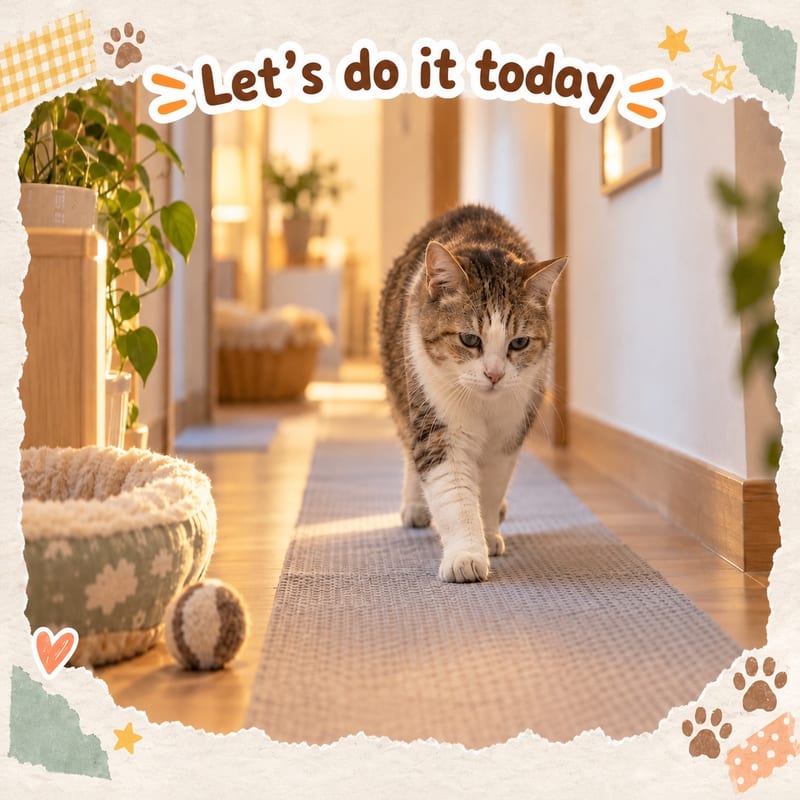
- Non-slip mats / carpets: concrete and tiles are too slippery; slipping is most harmful to joints in senior pets. Lay non-slip mats in corridors and areas where they often sleep
- Ramps, stairs: place pet ramps by the sofa and bed so they can get up and down themselves without jumping
- Raised food bowls: place food and water bowls slightly higher to reduce bending down
- Warm bed: joints are stiffer in damp weather; the bed should be dry, warm and thickly padded, away from draughts and direct contact with tiled floors
- Low-sided litter box: senior cats are unsteady, so use a shallow, easy-to-enter litter box
- Regular paw fur and nail trimming: too much fur between the pads causes slipping; overgrown nails change the angle of weight-bearing and increase joint strain
- Separate food and water bowls: don't make them walk extra steps to drink, reducing unnecessary movement
When to see a veterinarian?
See a veterinarian as soon as possible if the following occur:
- Suddenly unwilling to walk, completely unwilling to bear weight on a leg, or limping worsens rapidly
- Joints are red, swollen, hot or deformed
- Pain so severe they won't eat, hide, or their temperament suddenly changes
- Hind leg weakness, incontinence — may involve spinal nerves, an emergency
- No improvement after several weeks of supplements and care
- Need prescription painkillers or assessment of other treatment options
The veterinarian will use palpation, range-of-motion assessment, and X-rays if necessary to confirm the degree of degeneration, then develop a comprehensive plan covering weight, exercise, nutrition and medication. Good home modifications can significantly reduce the number of painful episodes your pet experiences each day.
What you can do starting today
- Do a three-part observation of your pet: 'getting up — walking — willingness to jump', and note what you see
- Start measuring food and stop high-calorie treats today, set a weight goal
- Lay non-slip mats on the most-used routes, place a ramp by the sofa
- Choose a pet-specific glucosamine/fish oil formula, note the start date for easy monitoring
- To learn how to choose joint care food and supplements, see PetChill's pet supplies guide and petfood review section
Further reading
- Pet health care →
- Fish oil, taurine supplements →
- Pet nutrition supplement course →
- Cat weight management →
This article is for reference only; consult a registered veterinarian for any concerns. PetChill Pet Health Team — Hong Kong's most authoritative pet knowledge platform
📌 Key summary
- ✅ Weight loss is the cheapest and most effective joint medicine
- ✅ Swimming and short walks are better than no movement at all
- ✅ Non-slip mats + ramps immediately reduce falls
- ❌ Do not use human painkillers; they can cause poisoning
- ❌ Stopping exercise at the first sign of limping makes muscle atrophy worse