
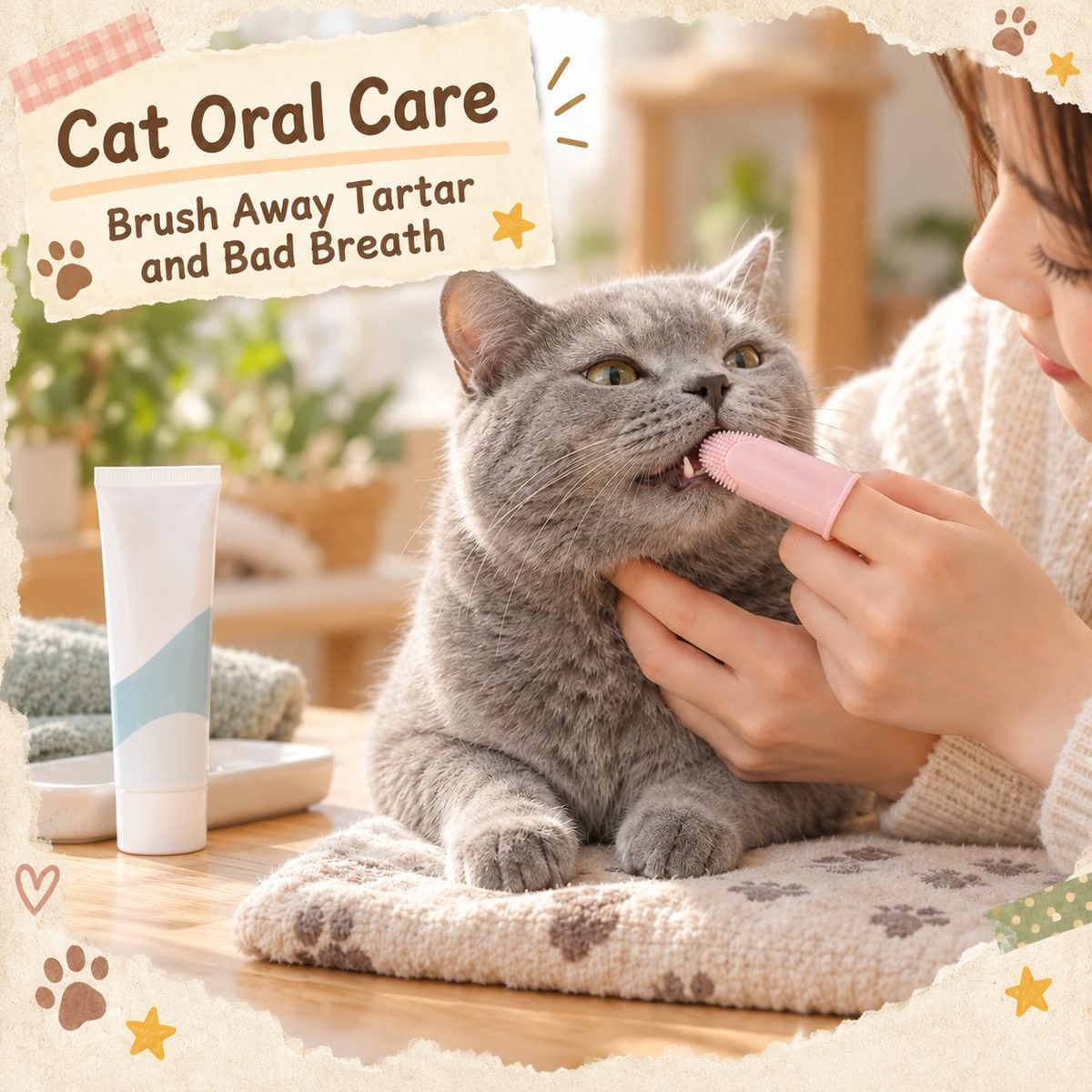
Quick answer: Cats must have their teeth brushed, otherwise plaque calcifies into tartar, causing gum disease, bad breath, and tooth loss, and bacteria can even enter the bloodstream and affect the kidneys and heart. Brushing daily with cat-specific toothpaste and regular vet check-ups are the most effective prevention; formed tartar can only be removed by a dental cleaning under anaesthesia.
The answer first: Cats need their teeth brushed. Cats that don't get their teeth brushed accumulate tartar and develop gum disease, leading to bad breath, pain when eating, and tooth loss; oral bacteria can also affect the kidneys and heart via the bloodstream. The most effective prevention is regular brushing with cat-specific toothpaste plus vet check-ups; if a large amount of tartar has already formed, it must be dealt with by a dental cleaning under anaesthesia.
Can I skip brushing my cat's teeth? How does tartar form?
Short answer: No. Food debris and bacteria accumulate at the gumline, first forming a thin layer of plaque; if not brushed away, the plaque absorbs minerals from saliva and calcifies into tartar within days, firmly sticking to the tooth surface—after that, no amount of brushing will remove it.
The rough surface of tartar allows more bacteria to hide, constantly irritating the gums and gradually developing into gingivitis—red, swollen gums that bleed easily. If left untreated, the infection penetrates the tissues that anchor the teeth, becoming gum disease: teeth become loose, gums recede, and eventually teeth fall out. Gum disease is one of the most common health problems in cats; many cats start showing various degrees of oral issues once they reach adulthood.
More seriously, oral problems don't just affect the mouth. Tooth pain can make cats stop eating, lose weight, and become irritable; oral bacteria can also enter the bloodstream and affect organs such as the heart and kidneys. So oral care is actually part of overall health management, not just a cosmetic issue.
What are the signs of gum disease? Check these 6 warning signs one by one
With your cat, gently lift the lip in a well-lit area and check:
- Tartar—yellow-brown hard deposits at the tooth roots, especially on canines and back teeth
- Red gums—the gumline is clearly red and swollen, even bleeding at a light touch
- Drooling—suddenly more saliva, sometimes with blood streaks
- Bad breath—increasingly noticeable foul odour, one of the most direct warning signs
- Tooth loss—loose or missing teeth, or broken edges
- Pain when eating—refusing hard food, dropping food, chewing on one side, stopping after a few bites and shaking the head
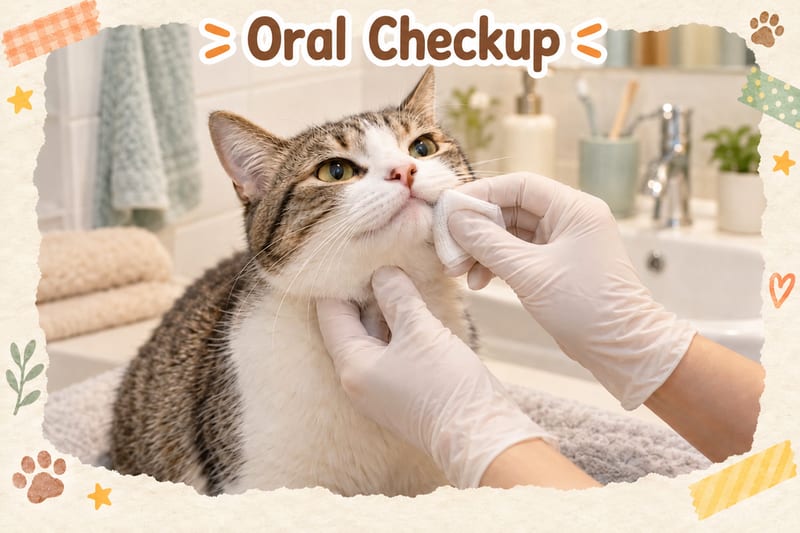
If two or more of these are present, don't wait—book an oral examination for your cat. Be gentle when checking; do not force the mouth open or use your fingers to scrape tartar, to avoid frightening the cat and injuring the gums. It's a good idea to check once a week and take photos; you'll easily see how quickly things change, and it's useful for the vet at follow-up visits.
How to brush a cat's teeth: 5 steps from scratch
- Get used to touching the mouth—for the first few days, just gently touch the face and lift the lip; if the cat tolerates it, praise and give treats to build a positive association
- Rub the gums with a finger cot—use damp gauze or a finger cot dipped in cat treat juice and wipe back and forth on the tooth surface as a "preview"
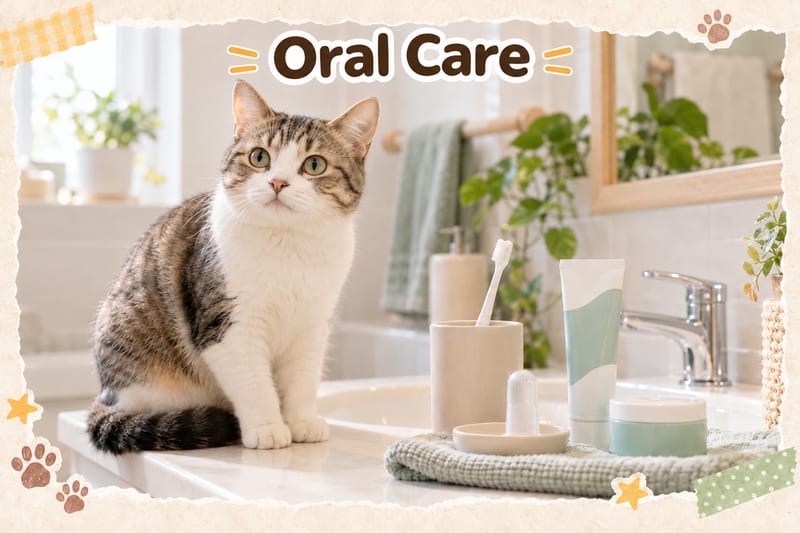
- Prepare cat supplies—switch to a cat toothbrush or finger brush, squeeze a pea-sized amount of cat-specific toothpaste
- Brush along the teeth—lift the lip and gently brush at a 45-degree angle at the gumline, focusing on the canines and back teeth, about ten seconds per side
- Praise and finish—praise immediately after brushing and give a small reward, so brushing = good thing; don't drag it out
Two golden rules: First, always use cat-specific toothpaste—human toothpaste contains fluoride, and some also contain xylitol, which is toxic to cats and must not be swallowed; Second, daily brushing is best, at least 2-3 times a week—inconsistent brushing has very limited effect. Starting from kittenhood makes it easiest, but adult and senior cats can also be desensitised gradually using the steps above; the key is to go step by step and never force it.
Can't brush? 4 supplementary dental care methods
| Method | How to use | Suitable for which cats |
|---|---|---|
| Dental treats | Choose VOHC-certified products | Good appetite, as a reward |
| Dental food | Larger kibble helps friction | Cats willing to eat dry food |
| Dental powder/gel | Mix into food or apply to gums | Completely resistant to brushing |
| Regular check-ups | Annual health check with oral exam | Essential for all cats |
To be clear: supplementary methods can only slow down plaque and tartar formation; they cannot replace brushing, and certainly cannot remove formed tartar. If your cat really resists any touch to the mouth, you can use dental food and dental treats as a backup while increasing the frequency of vet check-ups so professionals can assess the oral condition. Also, never believe the old method of "chewing bones to clean teeth"—chicken bones and fish bones splinter easily and can pierce the mouth and digestive tract; the risk far outweighs the benefit. If you want to help your cat clean its teeth, discuss suitable dental products with your vet.
Is cat bad breath always an oral problem?
Not necessarily. Most bad breath comes from oral problems like tartar and gum disease, but specific odours can indicate systemic diseases:
- Urine/ammonia smell—watch for kidney disease, especially in cats that drink a lot, urinate a lot, and lose weight
- Sweet/fruity smell—watch for metabolic problems such as diabetes
- Rotting smell—may be oral ulcers, necrotic tissue, or severe infection; needs prompt attention
If bad breath worsens noticeably in a short time, or is accompanied by changes in drinking and urination, decreased appetite, weight loss, or lethargy, don't dismiss it as ordinary bad breath—see a vet promptly for oral and blood tests to investigate.
How do the needs differ for kittens, adult cats, and senior cats?
- Kittens (under 6 months)—during the teething period, they are most receptive to having their mouth touched and finger cots used; 30 seconds of "tooth brushing play" daily, breaking the steps down; patience is key
- Adult cats—establish a fixed routine, preferably before meals; add an oral assessment to the annual health check; early plaque can be professionally cleaned, not necessarily requiring anaesthesia
- Senior cats (over 7 years)—the risk of gum disease, stomatitis, and even oral tumours increases, so check more frequently; before a dental cleaning under anaesthesia, the vet will assess heart and kidney function; for cats with tartar but high risk, more direct options such as tooth extraction may be used instead
- Cats with bad breath that won't let you brush—first see a vet to rule out pain factors (cats with stomatitis can't be touched); don't force it
When to see a vet?
If any of the following occur, book a vet appointment promptly:
- Obvious tartar, red swollen bleeding gums, or loose or broken teeth
- Persistent bad breath, especially with a urine, sweet, or rotting smell
- Crying in pain when eating, dropping food, refusing hard food, weight loss
- Excessive drooling, blood in saliva, swelling of the face or chin
- Pawing at the mouth, not letting anyone touch the mouth (may already be very painful)
- Red fleshy tissue growing at the gumline, pus or bleeding—needs professional diagnosis
Formed tartar cannot be brushed away; the only reliable removal method is an ultrasonic dental cleaning by a vet under anaesthesia. Before cleaning, the vet will usually perform a health assessment to reduce anaesthetic risk; cats with severe gum disease may also need follow-up procedures such as tooth extraction—these are routine, so don't worry excessively.

For dental cleaning costs, anaesthetic risks, and itemised fees, see Cat Dental Cleaning Cost Hong Kong | Price Range, Anaesthetic Risk, Tartar and Tooth Resorption.
What you can do starting today
- Tonight, gently lift your cat's lip and check: any yellow-brown tartar? Are the gums red?
- Prepare cat-specific toothpaste + finger brush; never use human products
- Start a desensitisation plan: "touch face—lift lip—rub teeth with finger cot", 1-2 minutes daily
- Once your cat is used to it, establish a routine: ideally daily, at least 2-3 times a week
- Add an oral exam to the next vaccination or health check; if tartar is already present, book a dental cleaning assessment
Want to choose dental treats, dental food, or brushing tools for your cat? Visit PetChill for pet supply guides and pet food reviews, and choose gradually according to your cat's age and tolerance.
This article is for reference only; consult a registered veterinarian for any concerns.
Further reading
📌 Key summary
- ✅ Daily brushing with cat-specific toothpaste is key to preventing tartar and gum disease
- ✅ Check the mouth weekly: tartar, redness, bad breath, tooth loss, pain when eating
- ❌ Human toothpaste contains fluoride and xylitol, which are toxic to cats—never use it
- ❌ Dental treats and dental food are only supplementary and cannot replace brushing
- ✅ Formed tartar can only be removed by a vet under anaesthesia