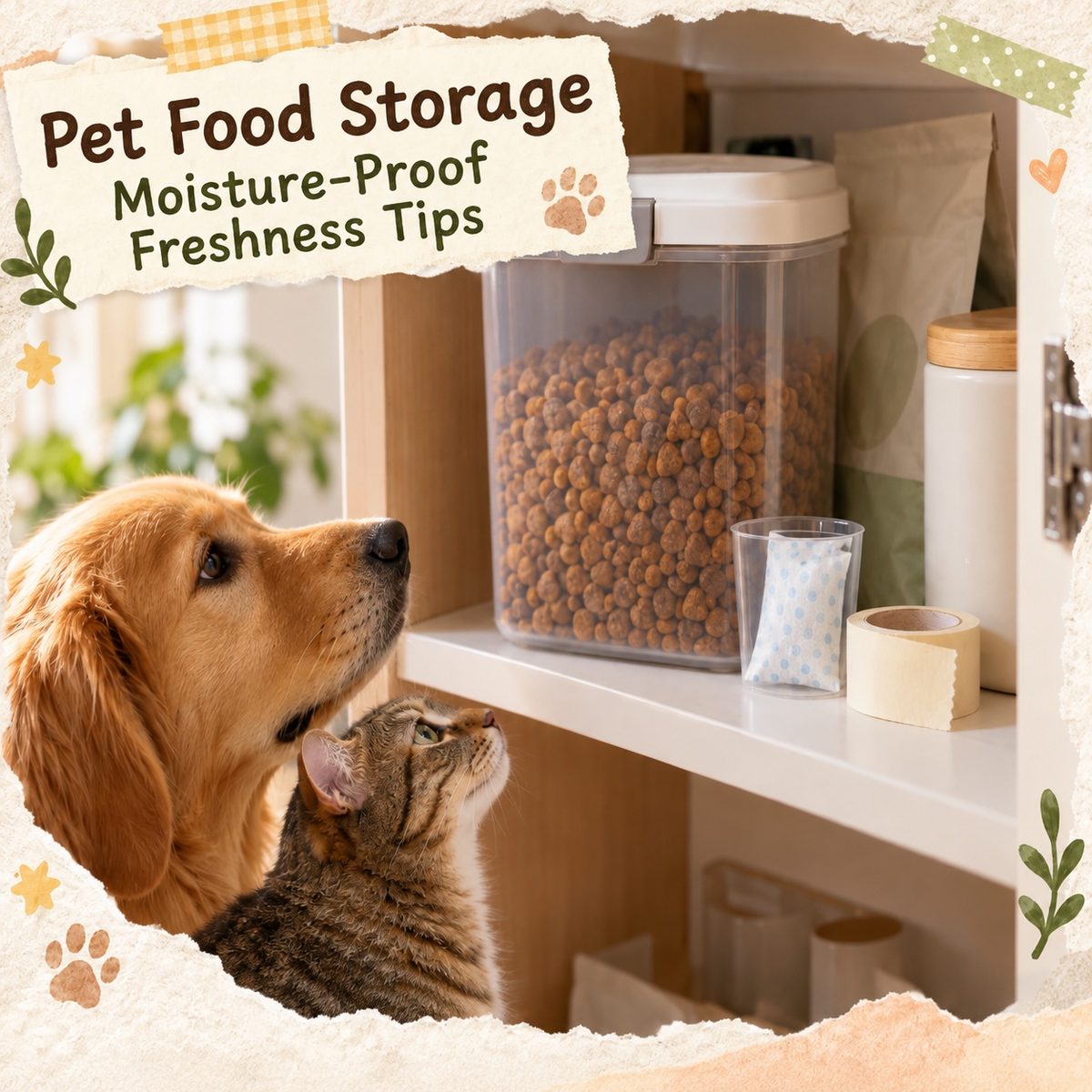
Quick answer: The book 'Nutrient Requirements of Dogs and Cats' puts it most plainly: the biggest hazards in storing dry food are oxygen, light, heat and moisture, so it should be kept in an opaque, sealed container in a dry, cool environment, away from contaminants such as medicines and insecticides. Unopened cans must not be frozen and should be protected from impact; once opened, the risk of contamination increases greatly, so seal and refrigerate and consume within 24-48 hours.
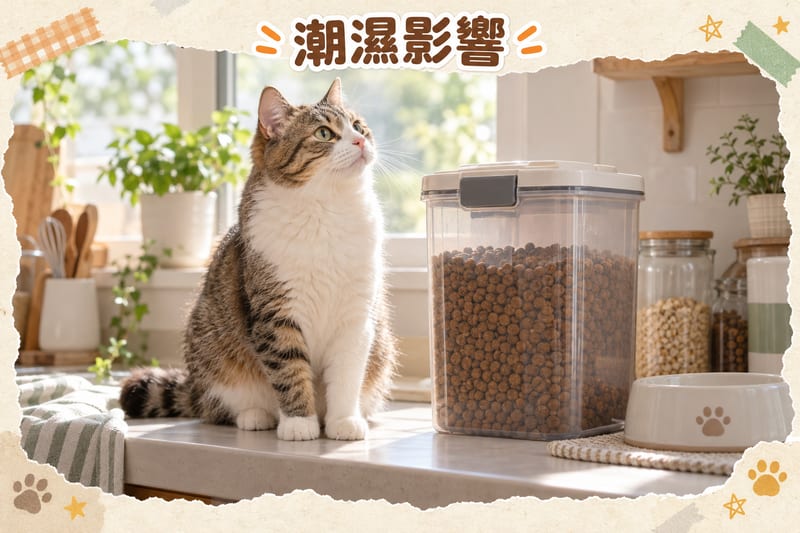
Dry food: the four enemies and countermeasures
| Enemy | Effect | Countermeasure |
|---|---|---|
| Oxygen | Fat oxidation, rancid smell, vitamin loss | Seal, reduce bag openings, squeeze out air |
| Light | Accelerates breakdown of vitamins (A, D, E) | Use opaque containers, keep away from windows |
| Heat | Accelerates oxidation and fat deterioration | Keep away from stoves, water heaters, direct sunlight |
| Moisture | Mould growth, clumping | Seal, add desiccant, pay special attention during Hong Kong's plum rain season |
The book also mentions two practical details:
- Prevent rodents and insects: the storage location should prevent contact with birds, rodents and insects
- Keep away from contaminants: do not store in the same cabinet as medicines, insecticides or toxic substances
About pathogens: The book points out that the high-temperature processing in dry food production can kill pathogens, but before packaging there is still a chance of contact with unsanitised equipment or materials, so unopened dry food may still contain pathogens (low probability); most microbial contamination is actually caused by post-processing recontamination, and only under conditions suitable for multiplication such as moisture and heat does a small amount of contamination become a problem—so storage methods directly affect safety.
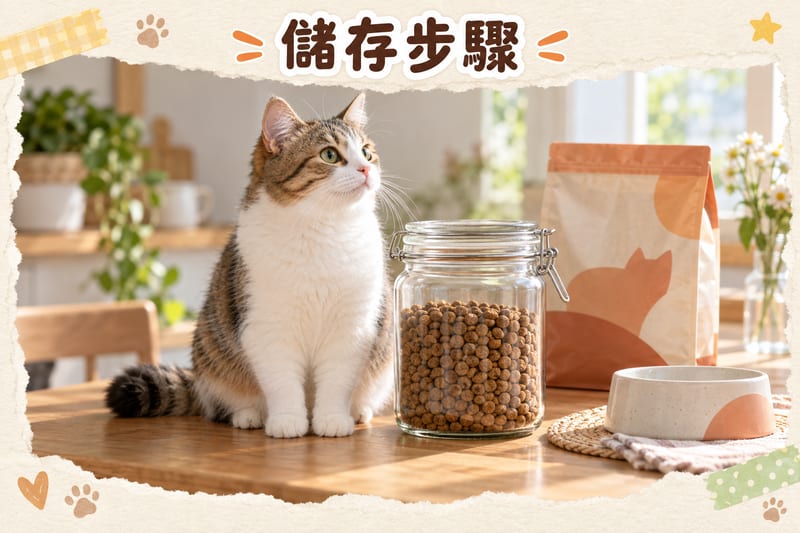
Correct practice (5 steps)
- Buy the right package size: aim to finish within 4-6 weeks; do not buy too large a bag at once
- Put the original bag into a sealed container: keep the batch number and expiry date; the container should be placed in a cool, dry location
- Seal immediately after each scoop: use the same dry scoop; do not grab with hands
- Mark the opening date: stick a label with the opening date for easy tracking
- Clean the food container monthly: with water and mild detergent; let it dry completely before adding new food
Canned and wet food
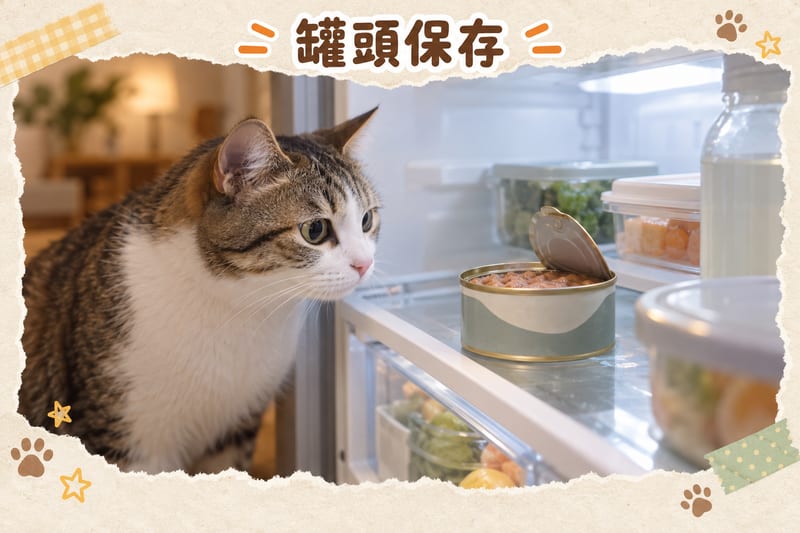
- Unopened: room temperature, cool place is fine; do not freeze (affects texture and packaging integrity); avoid impact and can deformation during transport
- Opened: the book reminds that once a can is opened the contamination risk increases greatly; hygiene principles should be the same as for dry food—seal, refrigerate, consume within 24-48 hours
- Container: glass or ceramic containers are better than the original can; avoid leaving metal spoons in the can for long periods
- Location: place on an inner shelf of the refrigerator, not in the door compartment (large temperature fluctuations)
- Warming up: let it sit at room temperature for 10-15 minutes before feeding, or mix with a small amount of warm water (see Cat Wet Food Guide)
Fresh food, raw meat and freeze-dried
- Raw meat: refrigerate at 0-4°C for short-term storage; portion and freeze for long-term storage, each portion individually packaged and labelled with date
- Thawing: thaw in the refrigerator at low temperature (safest); avoid thawing at room temperature for long periods; do not refreeze after thawing
- Fresh food: after cooking, cool quickly, portion and refrigerate, consume within 2-3 days, or freeze for storage
- Freeze-dried: unopened can be kept at room temperature in a cool place; after opening, seal and protect from moisture, use within a short period
- Cross-contamination: clean cutting boards, knives, countertops and hands immediately after handling raw food (see Raw Feeding Risks)
Vitamin loss: storage environment really matters
Section 8.17 of the book specifically discusses vitamin loss during processing and storage, with key points including:
- Protein, carbohydrates, fat and minerals are relatively less affected by processing; vitamins are most affected
- During storage, moisture content, temperature, pH and active metal ions all affect vitamin loss
- Iron, copper and zinc catalyse redox reactions to produce free radicals, accelerating vitamin destruction
- Protecting fat from oxidation is an important factor in protecting vitamins in the diet (a common practice is to add antioxidants)
Practical conclusion: sealing, low temperature, avoiding light and avoiding metal contamination not only prevent spoilage but also directly relate to nutrient retention.
One-page checklist (stick next to the food container)
| Item | Standard |
|---|---|
| Storage location | Cool, dry, away from light, away from stove and sink |
| Container | Opaque and sealed, with the original bag inside |
| Opening date | Marked with a sticker |
| Scooping tool | Fixed dry scoop |
| Cleaning | Once a month, dry completely |
| Canned food | Do not freeze, avoid impact; refrigerate within 24-48 hours after opening |
| Raw meat/fresh food | Portion and label with date, thaw in refrigerator at low temperature |
| Off smell/clumping | Discard immediately |
Hong Kong seasonal reminders
| Season | Risk | Action |
|---|---|---|
| Plum rain (March-May) | Very high humidity, mould risk | Add desiccant, reduce bag opening time, buy small packages |
| Midsummer (June-September) | Heat accelerates oxidation | Keep away from windows, avoid storing in car boot |
| Stocking up before typhoons | Buying too much at once | Calculate eating speed, do not exceed 4-6 weeks' supply |
| Winter (December-February) | Heaters raise room temperature | Do not place near heaters or kitchen |
| Returning humidity | Floors and cabinets sweat | Sealed containers + desiccant + store elevated |
Outings, boarding and travel
- Portioning: pre-portion into sealed bags by number of days, label date and amount, reduce bag openings
- Boarding: bring the original packaging or clearly labelled portions, and write 'no extra treats'
- Travel: use sealed boxes for short trips; avoid car boot (heat) for long trips
- After returning home: check food for dampness or clumping; discard if present
How long does a bag of food last? The rate of quality decline after opening is directly related to packaging and storage environment; if it is a large bag and the cat or dog eats slowly, it is recommended to portion into small sealed portions (e.g. one portion per week) to reduce repeated bag openings.
Common mistakes
| Mistake | Problem | Correction |
|---|---|---|
| Pouring food directly into container | Old oils at the bottom oxidise, no batch number | Put the original bag into a sealed container |
| Refrigerating dry food | Temperature difference causes condensation, easy to become damp | Dry food at room temperature, cool and sealed |
| Putting cans in the freezer | Affects texture, packaging damage | Do not freeze; refrigerate after opening |
| Leaving an opened can for a full day | Bacterial growth | Consume within 24-48 hours |
| Using raw meat cutting board for other foods | Cross-contamination | Dedicated utensils, clean immediately |
| One bag of food lasts half a year | Nutrient loss later, fat oxidation | Buy small packages, buy according to speed |
Coordination with the cluster
- How to calculate daily portions → Cat Calorie Calculator / Dog Feeding Amount Guide
- Canned food selection and adding water → Cat Wet Food Guide
- Complete vs complementary → Complete vs Complementary
- Raw feeding precautions → Raw Feeding Risks
- How to read labels → Dog Food Label Guide
- Basic nutrition → Cat Nutrition Complete Guide
References
- National Research Council (NRC) 'Nutrient Requirements of Dogs and Cats' (2006) Section 10.3.5 Food Storage, Section 8.17 Vitamin Loss During Processing and Storage
- Agriculture, Fisheries and Conservation Department (AFCD): Agriculture, Fisheries and Conservation Department (AFCD)
- Veterinary Surgeons Board of Hong Kong: Veterinary Surgeons Board of Hong Kong (VSBHK)
Related products (available in Hong Kong, checked 2026-10-12)
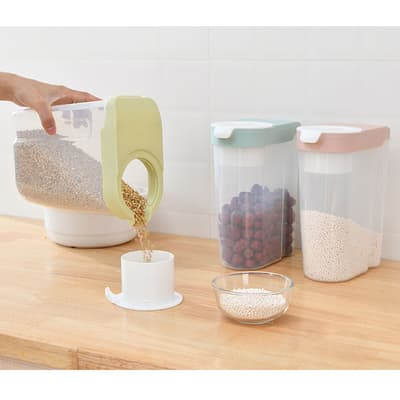
- Japanese-style moisture-proof sealed twist-top food container with measuring cup for cat and dog food — reference price HK$45
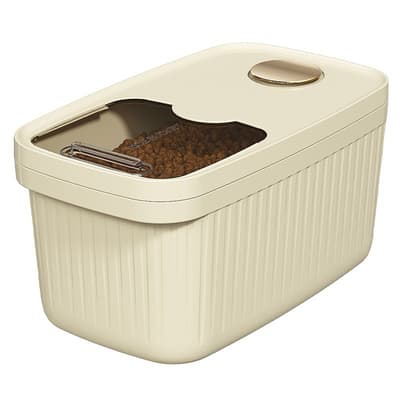
- Pet food container for cats and dogs, large size, holds about 6-8kg (random colour) — reference price HK$48
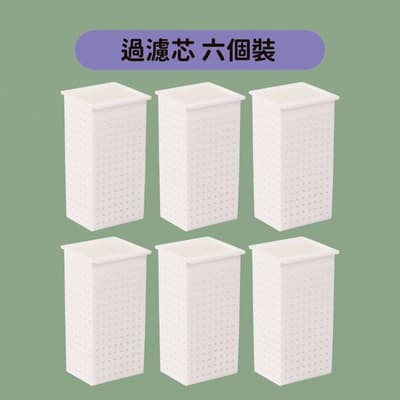
- Smart pet circulating water fountain 1000ml with 6 filter cartridges — reference price HK$48
The above content is for reference only and cannot replace veterinary diagnosis and treatment. If your pet shows vomiting, diarrhoea or lethargy after eating, please consult your veterinarian.
📌 Key summary
- Four biggest enemies of dry food: oxygen, light, heat, moisture
- Sealed opaque container, keep in original bag, clean monthly, mark opening date
- Do not freeze cans; after opening, seal and refrigerate, consume within 24-48 hours
- Storage environment (moisture, temperature, pH, metal ions) directly affects vitamin retention
- High-risk locations in Hong Kong: next to the stove, under the sink, by the window
 Fuji One full guide →