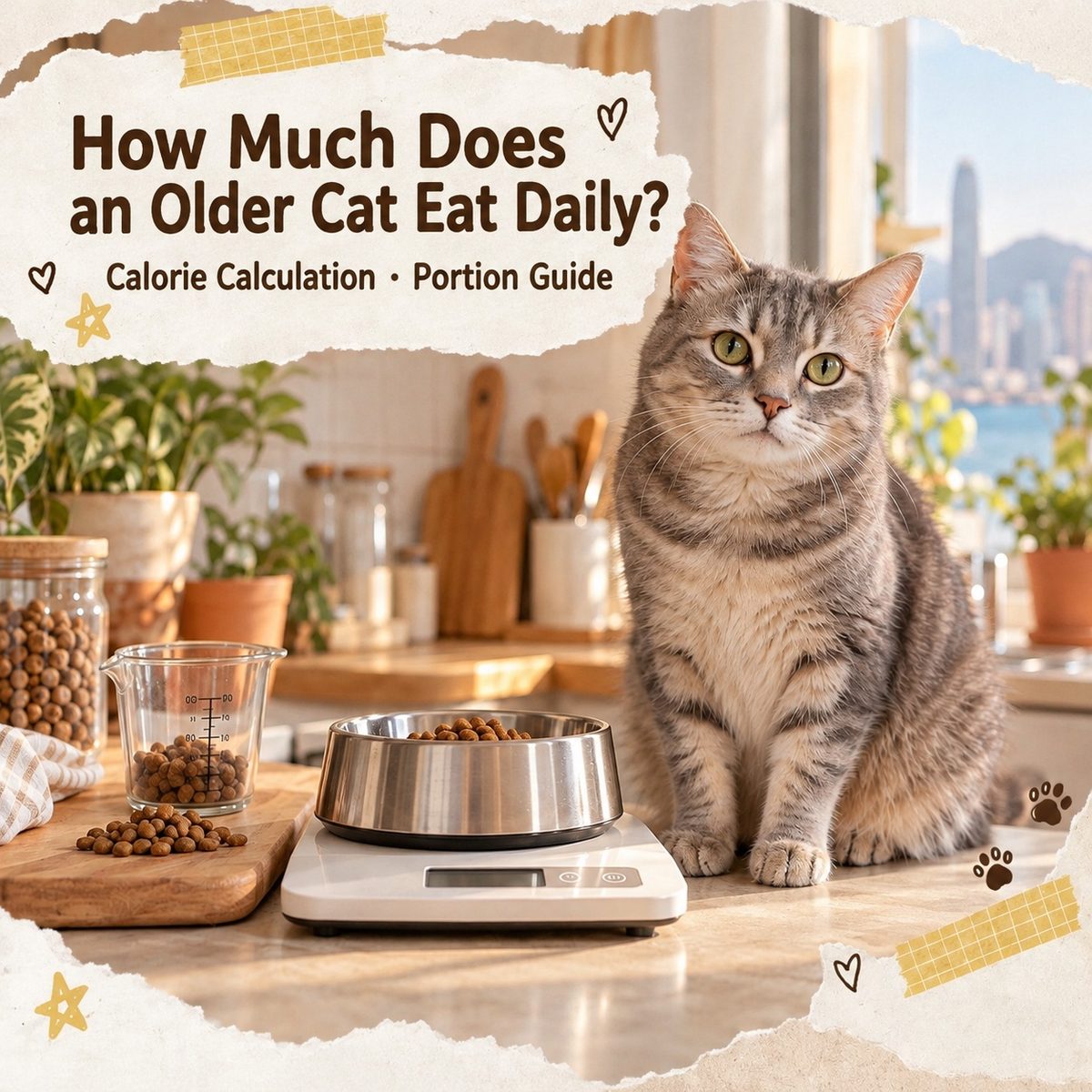
Quick answer: Calculate a senior cat's daily calories using the formula commonly used in veterinary nutrition: RER (resting energy requirement) = 70 × body weight (kg)^0.75. For senior cats, maintenance DER ≈ RER × 1.0-1.2 (use the lower end for low activity). Example: a 4 kg senior cat has an RER of ≈ 198 kcal, about 200-240 kcal per day, split into 2-3 meals, at set times and amounts, then adjust portions based on weekly weigh-ins. A sudden big increase or decrease in appetite is not "normal ageing"—it's a signal to see a veterinarian.
Senior Cat Diet Principles: Weaker Digestion, Smaller More Frequent Meals
The book puts it plainly: by 8-10 years old, a cat's internal organs—kidneys, liver, gastrointestinal tract—are already slowly ageing—senior cats' digestive ability weakens with age. To efficiently digest protein and fat, choose easily digestible, nutrient-dense foods; senior-specific foods on the market are designed for this need.
On meal frequency, the book clearly recommends: cats over 10 should eat three meals a day, smaller and more frequent, to reduce metabolic burden. And a routine of set times and amounts should be established from a young age—changing it in old age is hard for cats, so build regularity when they're young.
As for "how to choose food" (protein, phosphorus, moisture), just a brief note here: senior cats need easily digestible high-quality protein sources; for a detailed food selection guide see Senior Cat Food Guide. This article focuses on "how much to feed and how to split meals".
How to Calculate Daily Calories: RER and DER Formulas
Below are reference formulas commonly used in veterinary nutrition, in two steps:
Step 1: Calculate RER (resting energy requirement)
RER = 70 × body weight (kg)^0.75
Step 2: Multiply by activity factor to get DER (daily energy requirement)
Senior cats have low activity, so DER ≈ RER × 1.0-1.2—use 1.0 for very quiet, inactive cats; 1.2 for those still walking around with normal activity.
Worked example (4 kg senior cat):
- 4^0.75 ≈ 2.83
- RER = 70 × 2.83 ≈ 198 kcal
- DER = 198 × 1.0-1.2 ≈ 200-240 kcal per day
Remember this number is only a starting point—every cat's metabolism differs, so fine-tuning with weekly weigh-ins is the right approach.
Portion Table: Dry Food Grams by Body Weight
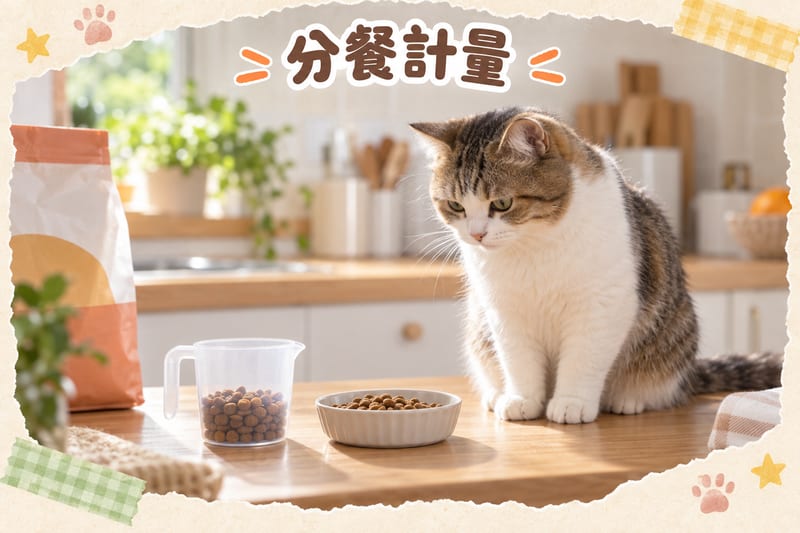
Calculated using a typical senior dry food with metabolisable energy of 3.8 kcal/g (if your package's kcal/g differs, use "daily kcal ÷ food's kcal/g" to convert):
| Body weight | RER (kcal) | DER range (kcal/day) | Approx. dry food weight (g/day) |
|---|---|---|---|
| 3 kg | 70×3^0.75 ≈ 160 | 160-190 | 42-50 g |
| 4 kg | 70×4^0.75 ≈ 198 | 200-240 | 53-63 g |
| 5 kg | 70×5^0.75 ≈ 234 | 235-280 | 62-74 g |
Three tips for use:
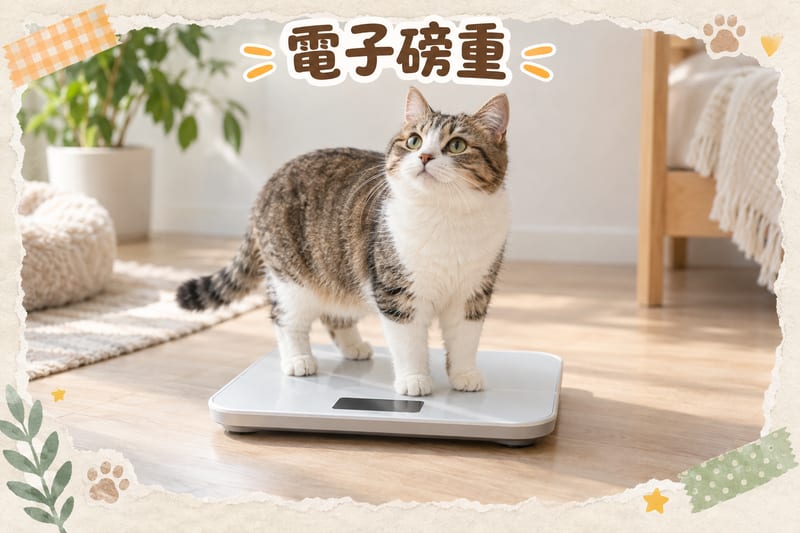
- Use a kitchen scale, not your eyes—a 10 g difference in dry food is hard to judge visually; weighing accurately prevents gradually overfeeding
- Count treats in the total—treats should not exceed 10% of daily calories; if treats are given, deduct from the main meal
- Mixed dry and wet feeding: wet food (e.g. an 80 g senior cat can is about 70-90 kcal) should be deducted from the dry food grams based on the kcal stated on the package
The book also has an important warning: if you want to help a cat lose weight, you must not suddenly cut the food in half—cats are not humans; sudden dieting will upset them and may cause fatty liver. Weight loss is a medical procedure and requires a gradual dietary plan arranged by a veterinarian.
Meal Frequency and Feeding Method: 2-3 Meals, Set Times and Amounts
The book's recommendations are specific:
- 7-10 years: can maintain two meals a day, at set times and amounts
- Over 10 years: three meals a day, smaller and more frequent, to reduce gastrointestinal and metabolic burden
- Place food and water bowls where the senior cat can easily reach—the book suggests setting them slightly lower than usual so cats with joint degeneration don't have to climb up and down
What to do about greediness? The book analyses that greediness is often created by owners: giving bits during human meals, giving treats between meals, gradually forming bad habits; cats with nothing to do and no love of moving also use eating to pass the time. Solutions:
- Completely stop high-calorie treats
- In multi-cat households where cats compete for food, feed in separate rooms
- For cats that beg out of boredom, distract with toys and interaction
But the book has a warning: constant greediness may be a sign of hyperthyroidism or a heavy intestinal parasite burden—don't just dismiss it as "greedy".
Hong Kong practicalities: how to feed on workdays?
Most Hong Kong cat owners work during the day; feeding can be arranged like this:
- Feed one meal before leaving in the morning (35-40% of daily calories), feed the second meal when you get home (60-65%); for cats over 10, if possible, add a half meal before bedtime to make three small meals
- Use an automatic timed feeder instead of manual feeding, so you don't worry about running out of food when travelling—the book also mentions timed feeders as helpful
- Leaving dry food out as a "buffet" is the easiest way to overfeed: senior cats have low activity, and having food available 24 hours makes long-term overfeeding easy—timing meals and removing leftovers is more appropriate
- In multi-cat households, never leave food out publicly—the greedy one will eat others' portions; really feed in separate rooms, each cat with its own measured amount
Eating More or Less Are Both Warning Signs
The book has a chapter specifically on: abnormal increase in food intake is a warning sign of disease. With normal food supply and normal activity, a cat's daily intake is roughly fixed. If you notice your cat:
- Finishes its portion and still sits by the bowl waiting
- Meows at you non-stop begging for food and only stops when given
- Is in a constant state of "never full"
It may be a signal of diabetes, hyperthyroidism, or hyperadrenocorticism—get it checked as soon as possible.
Hyperthyroidism deserves special attention from senior cat owners: the book describes the typical symptom as "ravenous appetite but weight loss"—eating more yet getting thinner, plus drinking a lot of water and restlessness; middle-aged and older cats are very prone. For details see Cat Hyperthyroidism Guide.
Conversely, eating less and decreased appetite should not be delayed either—it may be periodontal pain, kidney disease, or gastrointestinal problems. The veterinary book Feline Medicine specifically notes: gingivitis and periodontitis are "especially common in older cats"; long-term feeding of soft food makes plaque adhere more easily and accelerates deterioration; early signs are bad breath, drooling, and a "clicking" sound when eating; if ignored, the cat will eat even less. For a complete check of appetite changes in senior cats: Senior Cat Appetite Loss Guide; for oral problems: Senior Cat Dental Care Guide; for dietary support in kidney disease: Cat Kidney Disease Guide.
Weight Monitoring: Weekly Weigh-Ins, Trends Are Key
The book lists the senior cat weight standard as 3.5 to 5.5 kg (general domestic cats; large breeds separately). Recommended practice:
- Weigh once a week at the same time: stand on the scale holding the cat, subtract your own weight, and record it
- Adjust portions by trend: if weight keeps dropping → increase daily calories by about 10%; if it keeps rising → reduce by about 10%
- Sudden weight loss (more than 5-10% in a month) → seek veterinary care directly, don't wait to "adjust diet and see"
Weight monitoring is complete only with regular check-ups: from 7 years old every six months, over 10 years old every 3-6 months; blood tests can uncover hyperthyroidism, kidney disease, and diabetes behind weight abnormalities. Full check-up items: Senior Cat Check-up Guide; overall senior cat care summary: Senior Cat Care Guide.
References
- Agriculture, Fisheries and Conservation Department (Hong Kong Government) — Pet Keeping Information
- Veterinary Surgeons Board of Hong Kong
- The knowledge points in this article are compiled from cat encyclopaedia books such as My First Cat Book, The Complete Home Veterinary Guide to Cats, and Feline Medicine; the calorie calculation is a commonly used reference formula in veterinary nutrition (RER/DER)
Related Products (Available in Hong Kong)
After calculating portions, choose the right food (prices as of the check date):
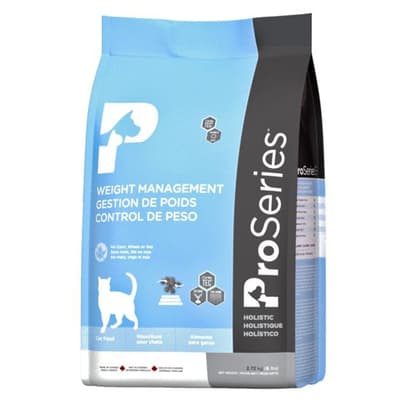
- ProSeries All-Natural Cat Food Weight Control Senior Formula Chicken + Ocean Fish 5.8kg ($310, checked 2026-10-16)
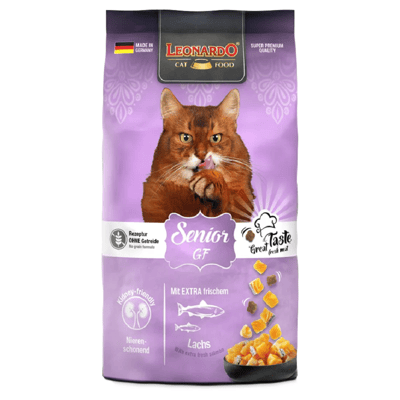
- Leonardo Cat Food Grain-Free Senior Cat Food 300g ($58, checked 2026-10-14)
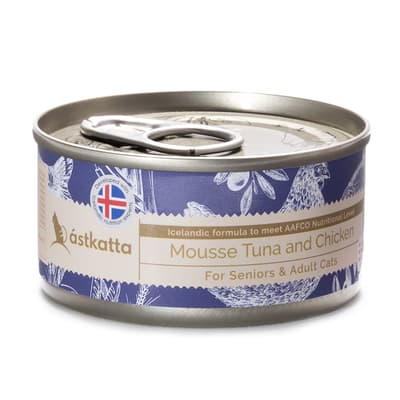
- Astkatta Icelandic Can Senior Cat Can Tuna Chicken Mousse 80g ($14, checked 2026-10-14)
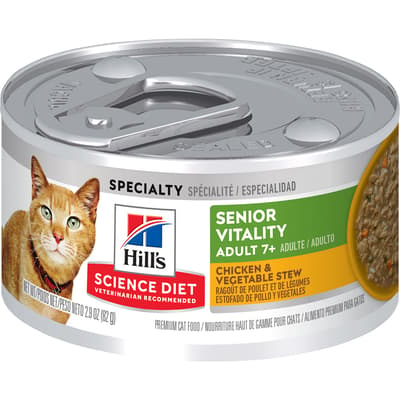
- Hills Senior Cat 7+ Complete Wet Food Stewed Chicken and Vegetables 2.9oz ($21, checked 2026-10-14)
The above is for reference only and cannot replace veterinary diagnosis and treatment. The calorie formula is a general reference; each cat's actual needs vary with health status; if a senior cat shows any abnormality, seek veterinary care as soon as possible.
📌 Key Summary
- ✅ Calorie formula: RER = 70×body weight (kg)^0.75, DER = RER×1.0-1.2; a 4 kg senior cat needs about 200-240 kcal/day
- ✅ Over 10 years old, split into three meals, smaller and more frequent, at set times and amounts
- ✅ Weigh weekly, adjust by about ±10% each time based on trend
- ✅ Abnormal appetite (big increase or decrease) is a signal to see a veterinarian
- ❌ Suddenly cutting food in half to help a cat lose weight—may cause fatty liver
- ❌ Treating a cat that never feels full as "greedy"—hyperthyroidism and diabetes can both cause this
⚠️ Some products mentioned in this article are discontinued (marked "discontinued" in the text); the prices shown are records before discontinuation; for other products, please refer to the current prices displayed on the online store.
 Feline Natural full guide →
 K9 Natural full guide →
 Astkatta full guide →