Quick answer: A cat at 3 months is roughly equivalent to a 1-year-old human—ageing is fast, so books recommend checkups every 6 months from age 7, and every 3-6 months over 10. Basic items: physical examination + blood count + biochemistry (kidney, liver) + thyroid T4 + urinalysis + blood pressure; add X-ray and ultrasound as needed. A normal checkup doesn't guarantee a safe year—daily observation is equally important.
Why start regular checkups at age 7
Cats are masters at hiding discomfort—books repeatedly emphasise that they skilfully conceal the fact that their body is deteriorating. By the time you can see something is wrong with the naked eye, the disease is often no longer in its early stages.
And the diseases brought by ageing have a clear timeline: My First Cat Book records that after age 7, cancer incidence rises significantly; from 9-10, various geriatric diseases begin to appear; after 10, periodontal disease, hyperthyroidism, chronic kidney insufficiency, tumours, arthritis, and cognitive dysfunction all enter a high-incidence period.
The point of regular checkups is to push 'discovery' forward by months or even years: kidney function indicators not yet above the threshold but continuously rising, thyroid T4 on the borderline, blood pressure slowly climbing—these trends can only be seen through regular comparison. The first blood test also has a long-term purpose: establishing your cat's healthy baseline, so every subsequent report has something to compare against.
Checkup frequency: following the book's schedule
| Age | Recommended frequency | Reason |
|---|---|---|
| 7-9 years | Every 6 months | Function begins to decline, immunity weakens |
| Over 10 years | Every 3-6 months | High-incidence period for various geriatric diseases |
| Existing chronic disease | Follow vet's arrangement (usually more frequent) | Monitor condition and drug response |
The book puts it directly: 3 months in a cat's life is roughly equivalent to 1 year in a human—6 months without a checkup is like a human not having a checkup for 2 years.
Checkup items explained one by one
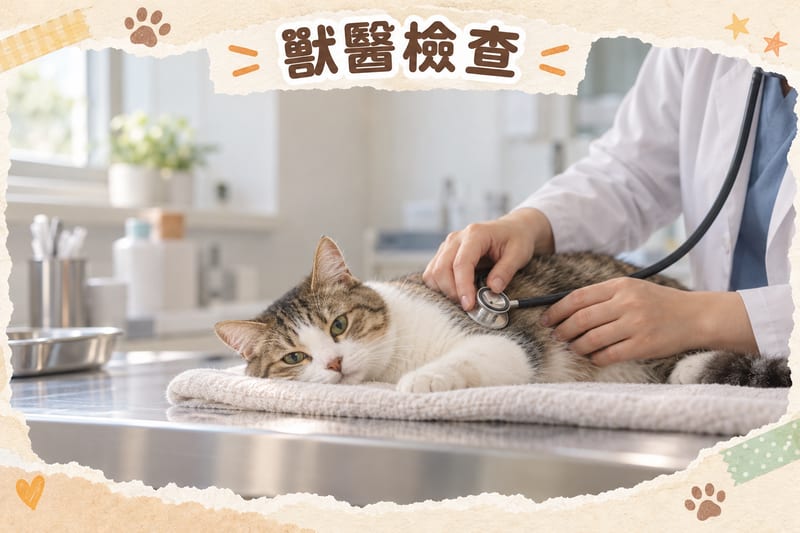
Physical examination: coat, otoscope, oral cavity, auscultation. Don't underestimate it—many clues come from here.
Palpation: The book Cat Family Medicine Encyclopedia describes the vet's hands as 'tools accumulated through experience'. Palpation can find: surface lumps (early sign of tumour), kidney size and shape (shrunken and small = possible end-stage kidney disease; irregular enlargement = possible polycystic kidney or tumour), distended bladder (urinary blockage), intestinal faecal accumulation (constipation), enlarged liver and spleen. For limping cats, palpation can locate the source of pain and determine fractures or patellar dislocation.
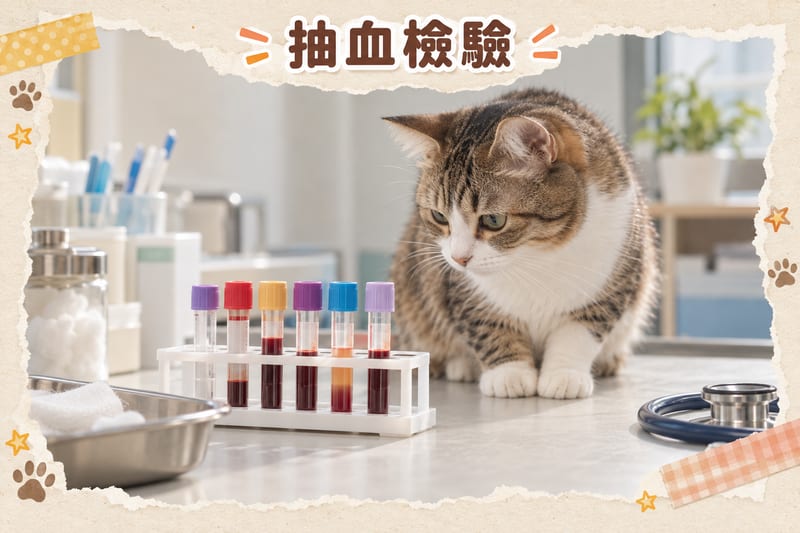
Blood tests: complete blood count (anaemia, inflammation) + biochemistry (kidney function BUN/creatinine, liver indices, blood glucose, electrolytes, total protein).
Thyroid T4: essential for senior cats. Hyperthyroidism is one of the most common endocrine diseases in senior cats; symptoms (eating more but losing weight, crying at night) are easily mistaken for 'normal ageing'.
Urinalysis: an important clue for kidney disease and diabetes; low specific gravity is an early sign.
Blood pressure: hypertension is common in senior cats and has no obvious symptoms; if left untreated, it can damage the eyes (retinal detachment leading to blindness), kidneys, and heart.
Imaging: X-ray (heart and lungs, skeleton) and abdominal ultrasound (organ structure) added as needed; cardiac ultrasound arranged when a heart murmur is heard.
Home observation checklist before the checkup
Whether a checkup is useful depends half on what information you bring. The geriatric symptoms listed in the book—note them down for comparison:
- Drinking more water: possible kidney disease, liver disease, diabetes, or pancreatitis
- Urinating more: same as above; litter clumps become larger and more numerous
- No appetite, refusing food: common cause is gum inflammation (caused by tartar)
- Gradual weight loss: chronic gastroenteritis, hyperthyroidism, or even tumours (the book reminds: many cancers initially present only as weight loss)
- Incontinence: urethral or bladder problems
- Limited mobility: arthritis
- Timid or sudden aggression: possible decline in vision or hearing
There are also behavioural clues: no longer greeting you at the door, giving up their favourite high spot, hissing at another cat in the house. Note the start date, frequency, and trend—'started last month, two or three times a week' is ten times more useful than 'he seems a bit off lately'. For communication tips for follow-up visits, see Checklist for Preparing to Take Your Cat for a Follow-up Visit.
How to read the checkup report: key indicators in plain language
You don't need to understand every item on the report, but these five indicators are worth noting for comparing trends:
| Indicator | What to look at | Why it matters |
|---|---|---|
| BUN/Creatinine | Kidney function | A continuous rise is a sign of kidney degeneration; a single mild elevation should be interpreted together with urine specific gravity |
| Urine specific gravity (USG) | Kidney concentrating ability | Persistently low specific gravity is a clue to early kidney disease, often earlier than blood indicators exceeding the threshold |
| T4 (thyroid) | Thyroid function | Above range = hyperthyroidism; if in the high-normal range but continuously climbing, also pay attention |
| Blood glucose | Diabetes screening | Stress can cause a temporary rise in blood glucose; a single high reading may not be diabetes—recheck or test fructosamine |
| ALT/ALP | Liver indices | Abnormal liver enzymes require finding the cause; early liver disease in cats is very hidden |
Remember the book's principle: trends are more important than single numbers. That's why it's best to test at the same clinic with the same machine for comparability.
Practical checkup arrangements in Hong Kong
- State that it's a senior cat checkup when booking: the clinic will allow more time; ask clearly what the package includes
- Ask about the full price: blood tests, urinalysis, and imaging are usually charged separately; blood pressure often needs to be specifically requested
- Bring a cat carrier + familiar towel: senior cats have low stress tolerance; the smoother the car ride, the better
- Ask clearly about fasting arrangements: most blood tests recommend fasting for 6-12 hours (water allowed)
- Get copies of all reports: build your own health file so you can continue if you change clinics
After the checkup, if a chronic disease is found (kidney disease, hyperthyroidism, diabetes), diet and daily management are covered in dedicated articles: Cat Kidney Disease Guide, Cat Hyperthyroidism Guide, Cat Diabetes Guide, Senior Cat Food Guide. For early warning signs comparison: Early Warning Signs of Chronic Disease in Cats; for the senior cat master list: Senior Cat Care Full Guide.
Walkthrough of the checkup day
Cat owners who have never been to a checkup can preview the process to reduce confusion on the day: upon arrival at the clinic, first weigh and take temperature, the vet performs a physical examination and palpation, then blood is drawn (mostly from the neck or front leg, takes a few minutes), urine is collected (some clinics will teach you to collect it at home using special litter beforehand). Imaging tests can mostly be done the same day, but if sedation is used, allow an extra hour or two for observation. Some report items are available the same day (blood count, biochemistry), others take a few days (pathology, bacterial culture). When getting the report, don't just listen to 'normal or not'—also ask 'is it up or down compared to last time'; trends are the soul of senior cat checkups.
References
- Agriculture, Fisheries and Conservation Department (Hong Kong Government) — Pet Keeping Information
- Veterinary Surgeons Board of Hong Kong
- The knowledge points in this article are compiled from cat encyclopedia books such as My First Cat Book and Cat Family Medicine Encyclopedia.
Related products (available in Hong Kong)
If the vet recommends switching to senior cat food after the checkup, these are in stock in Hong Kong:
- Royal Canin FHN Senior Cat 11+ Nutritional Formula 2kg ($256, checked 2026-10-12)
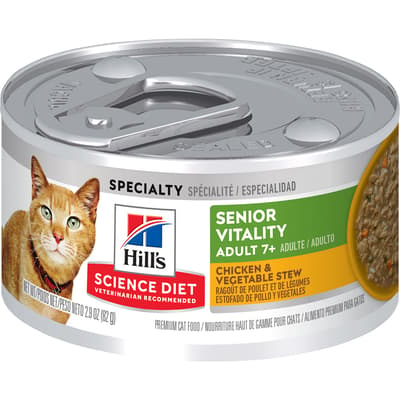
- Hills Senior Cat 7+ Complete Wet Food Stewed Chicken and Vegetables 2.9oz ($21, checked 2026-10-12)
The above content is for reference only and cannot replace veterinary diagnosis and treatment. Please arrange checkup items and frequency according to veterinary advice; if a senior cat has any abnormality, seek medical attention as soon as possible.
📌 Key Summary
- ✅ From age 7, checkups every 6 months; over 10, every 3-6 months
- ✅ Basic pillars: blood count and biochemistry + T4 + urinalysis + blood pressure
- ✅ Bring home observation records; the vet can see trends in a minute
- ❌ Assuming a normal checkup means no worries for a year—a checkup only reflects a few weeks' condition
- ❌ Waiting until the cat 'looks unwell'—cats hide discomfort until very late
 Royal Canin full guide →