Quick answer: When a senior cat has a poor appetite, the common causes listed in the books are: food pieces too big to chew, reduced sense of smell, inflamed gums, plus possible diseases such as kidney disease, hyperthyroidism and tumours. Practical tips: cut into small pieces, choose strongly scented food, warm slightly, soft textures, three meals a day. But remember: if poor appetite lasts more than 24-48 hours, see a vet—cats that don't eat for too long can develop fatty liver, so don't wait.
8 Common Causes of Poor Appetite in Senior Cats
1. Gingivitis / tartar. The book The Complete Book of Cat Care points out: a common cause of loss of appetite in senior cats is gingivitis. Years of plaque buildup makes gums red, swollen and inflamed; eating hurts, so the cat would rather not eat. For more on oral problems, see Senior Cat Dental Care.
2. Food pieces too big. Senior cats have worn teeth and receding gums, so they can't chew large pieces. The book suggests: food for senior cats should be cut into small pieces to make eating easier.
3. Reduced sense of smell. The book notes that as cats enter old age, their sense of smell often becomes less sharp, so interest in food naturally declines—if they can't smell it, they don't want to eat.
4. Oral tumours / stomatitis. Persistent bad breath, drooling, chewing on one side—have a vet examine deep in the mouth. Stomatitis is a very stubborn problem, so don't delay.
5. Chronic kidney disease. Declining kidney function causes toxins to accumulate; nausea and poor appetite are among the early signs. Accompanying clues: drinking more, urinating more. See Cat Kidney Disease Guide.
6. Hyperthyroidism. In the early stages, hyperthyroid cats actually eat more, but as the disease progresses their appetite becomes unstable and they lose weight. Clues: eating more but thin, yowling at night. See Cat Hyperthyroidism Guide.
7. Diabetes. Early stage: eating more; later stage: no appetite, along with drinking and urinating more. See Cat Diabetes Guide.
8. Tumours. The book My First Cat Book reminds us: the only symptom in the early stages of many cancers is weight loss. After age 7, cancer incidence rises significantly—if a senior cat keeps losing weight, you must find the cause; don't just dismiss it as 'old age'.
When to See a Vet Immediately
| Situation | Action |
|---|---|
| Completely not eating for more than 24-48 hours | See a vet immediately—risk of fatty liver |
| Poor appetite + vomiting/diarrhoea | See a vet the same day |
| Poor appetite + lethargy, hiding | See a vet the same day |
| Intake down by more than 20% for a week | Book a check-up, bring weight records |
| Eating more but losing weight | Book blood tests (thyroid, blood glucose) |
| Picky about texture (only eating soup, not meat) | Check the mouth, examine gums |
Why so serious: Cats are different from dogs—after a few days without eating, the body mobilises large amounts of fat to the liver; if it exceeds the liver's capacity, it becomes fatty liver (hepatic lipidosis)—which can be fatal. So a cat refusing food is an emergency, not 'it'll eat after missing a couple of meals'.
Practical Tips to Boost Appetite
Texture
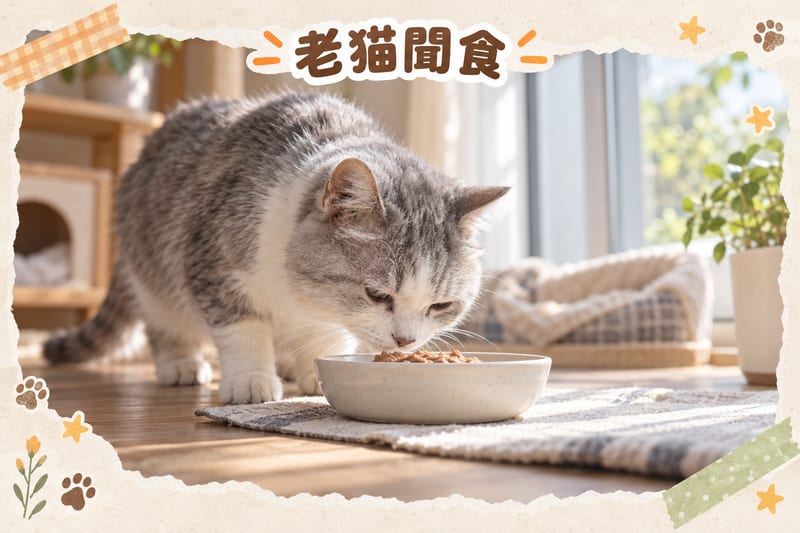
- Cut into small pieces or choose pâté or mousse textures—minimal chewing needed
- Soup pouches, soup cans: high moisture, strong smell, double bonus
- Dry food can be softened by soaking in warm water (but don't leave it long—it spoils easily)
Temperature
- Warm to about 35-40°C (around cat body temperature) for the strongest aroma
- Wet food taken from the fridge must be warmed—cold food doesn't release smell, and senior cats with a reduced sense of smell are even less likely to eat it
Smell
- Choose strongly scented ingredients: tuna, bonito are generally well accepted by senior cats
- Rotate different brands to find the flavour they currently like
Routine
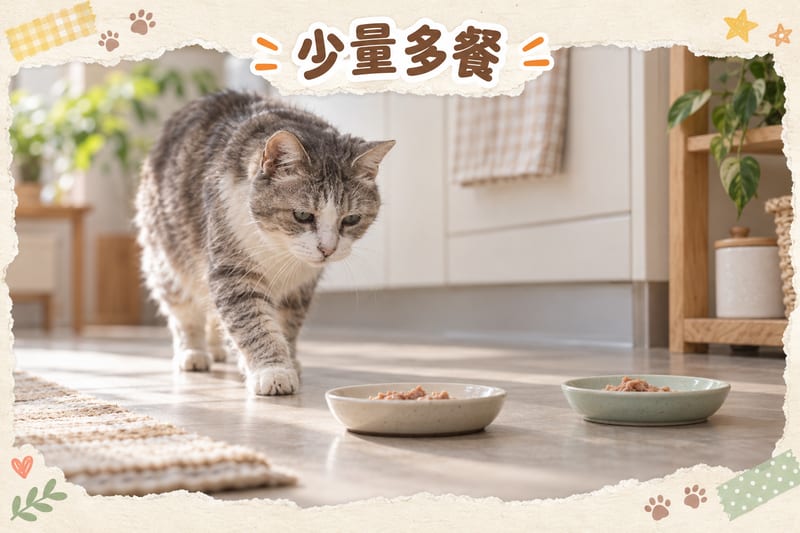
- The book suggests three meals a day for cats over 10—small, frequent meals; smaller portions per meal are easier on the senior cat's digestion
- Feed at fixed times; the cat's body will develop a 'mealtime hunger' rhythm
Environment
- Place the food bowl in a quiet spot that doesn't require climbing up or down
- In multi-cat households, feed separately—senior cats can't compete with younger cats and may simply stop eating
- Shallow dishes are better than deep bowls: whiskers don't touch the sides, making eating more comfortable
What Not to Do
- ❌ Switch to a completely new food all at once—transition over 7-14 days
- ❌ Add human seasonings (salt, soy sauce, oil)—harmful to kidneys and cardiovascular health
- ❌ Use treats as meal replacements—nutritionally unbalanced and makes them even pickier
- ❌ Wait for them to 'get hungry enough to eat'—cats are not dogs; refusing food is a danger signal
How to Keep Records That Are Actually Useful
The trickiest thing about appetite problems is that 'I feel like he's eating less' is not data. When the vet asks 'how much less is he eating?', you need to give specifics:
- Weight: weigh once a week at the same time (you can weigh yourself holding the cat and subtract your own weight), record on your phone
- Intake: for dry food, use a kitchen scale to measure how many grams you give each day and how many grams are left; for wet food, note what fraction was eaten
- Water intake: add a fixed amount of water to the bowl daily, take a photo of the water level
- Abnormal behaviour: vomiting, drooling, hiding—note the date and time
Two weeks of records and the vet can see the trend in a minute. Without records, you're left with useless descriptions like 'seems worse'.
Two Common Scenarios
Scenario 1: 13-year-old cat, intake dropped by half, but still drinking and playing. Order: lift the lip and check gums (red? swollen? bad breath?) → switch to soft, strongly scented food for three days → weigh and track trend → if no improvement, blood tests (kidney, thyroid). Dental problems are the most common answer in this script.
Scenario 2: 15-year-old cat, suddenly not eating at all this morning, hiding under the bed. Don't wait—complete food refusal + behaviour change is an emergency signal; see a vet the same day. At this age, pancreatitis, acute worsening of kidney disease, and gastrointestinal obstruction are all possible; the cost of delay is fatty liver on top of everything else.
What to Bring When Talking to the Vet
- Weight records (as far back as you have them)
- Current food: brand, daily amount, how much is eaten
- Any food changes, moves, new family members (cat or human)
- Vomiting / stool situation (photos are fine—vets really do look at them)
A prepared owner can multiply the value of a ten-minute consultation several times over. For more on follow-up communication, see Checklist for Bringing Your Cat to a Follow-Up Visit.
Related Articles
- Senior Cat Dental Care: the number one thing to check for poor appetite
- Senior Cat Food Guide: choosing food, actual prices, daily cost
- Senior Cat Check-Up Guide: blood tests to find the cause
- Early Warning Signs of Chronic Disease in Cats: telling normal from illness
- Complete Senior Cat Care Guide: the master table for senior cat care
Special Notes for Multi-Cat Households
Many Hong Kong households have two or more cats; in multi-cat homes, a senior cat's appetite problem can be masked: the younger cat eats everything and you think 'they've all eaten'. So you must feed separately and record separately—how much each cat ate must be attributed to that cat. Place the senior cat's bowl where the younger cat can't bother them (e.g., a room with the door closed, or a high corner the younger cat can't be bothered to reach). Open the door after eating. This arrangement also solves another problem: younger cats eating the senior's high-calorie food get fat, and senior cats eating the younger's food don't get enough nutrition—separate feeding is a win-win.
References
- Agriculture, Fisheries and Conservation Department (Hong Kong Government) — Pet Care Information
- Veterinary Surgeons Board of Hong Kong
- The knowledge points in this article are compiled from cat encyclopaedias such as My First Cat Book and The Complete Book of Cat Care
Related Products (Available in Hong Kong)
Soft, strongly scented, senior cat formulas:
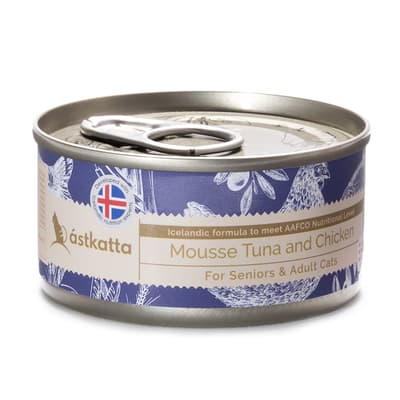
- Astkatta Mousse Series Senior Cat Tuna + Chicken 80g ($14, checked 2026-10-12)
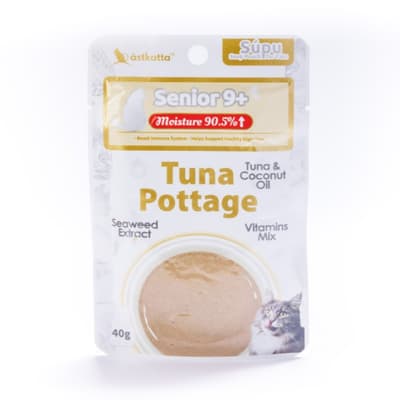
- Astkatta Free-Range Chicken + Duck Senior Cat Soup Pouch 40g ($8.5)
- AIXIA 15+ Senior Cat Can Tuna 40g ($6.6)
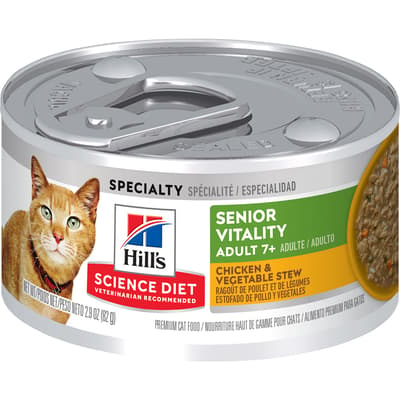
- Hills Senior Cat 7+ Complete Wet Food Stewed Chicken and Vegetables 2.9oz ($21)
The above is for reference only and cannot replace veterinary diagnosis and treatment. A cat not eating for more than 24-48 hours is an emergency; please see a vet as soon as possible; consult your vet about dietary adjustments.
 Astkatta full guide →
 AIXIA full guide →