Quick answer: In a senior cat's final years, what matters most is quality of life, not length of days. Assess using five dimensions: eating, drinking, mobility, pain, happiness. The 'time has come' signals listed in books: stopping eating, no longer using the litter box, no longer grooming, sleeping most of the time, and pain that cannot be controlled even with medication. The purpose of euthanasia is to avoid further suffering when there is no cure—the process is calm and painless, a final act of kindness.
From 'How to Treat' to 'How to Accompany'
The journey of caring for a senior cat roughly divides into three stages:
- Health management stage: regular check-ups, controlling chronic diseases, adjusting diet—the goal is to 'extend healthy days'
- Palliative care stage: the disease can no longer be controlled, and the goal shifts to 'one comfortable day at a time'—pain relief, nutritional support, environmental adjustments
- Farewell stage: quality of life can no longer be maintained, and you need to make the final decision for her
This article is about the second and third stages. Changing stages is not giving up—it's shifting focus from 'length of days' to 'quality of days'.
Quality of Life Assessment: Five Dimensions
Take five minutes each week to do a simple assessment with her (you can note it in your phone's memo app and watch the trend):
| Dimension | Ask yourself | Poor signals |
|---|---|---|
| Eating | Is she still interested in food? | Won't even eat her favourite treats |
| Drinking | Is water intake normal? | Not drinking, or needs syringe feeding |
| Mobility | Can she get to where she wants to go? | Can't even walk to the litter box |
| Pain | Is the current pain relief controlling it? | Pain relief doesn't help; restless even in sleep |
| Happiness | Does she still have moments she enjoys? | No response to grooming, sunbathing, or your company |
One or two occasional poor results may just be an off day; most dimensions consistently poor means her body is telling you she's struggling. Bring this record to your veterinarian—the conversation will be much more concrete.
Daily Palliative Care
The goal is simple: keep her comfortable and dignified.
Pain relief and medication: Give medication on schedule as prescribed by your veterinarian; don't wait until she's in pain—chronic pain management is about 'maintaining blood levels', not 'rescue when it hurts'.
Food: Give her whatever she wants to eat (within veterinary approval). This is not the time to worry about nutritional balance—eating is winning. Soft, strong-flavoured, slightly warm are the three key points.
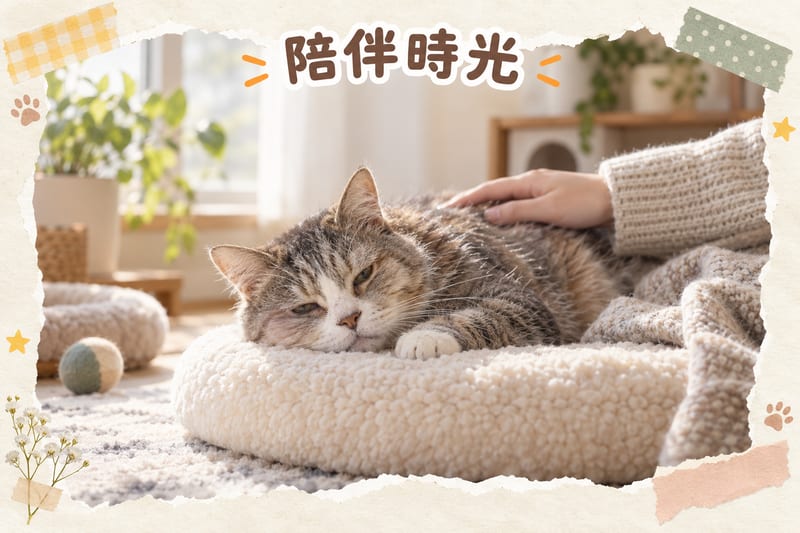
Housing: Thicken sleeping pads and place in a quiet corner; put the litter box close to her; place multiple water bowls. If she can't move, bring the world closer to her.
Companionship: Spend quiet time with her—stroke the places she likes, talk to her, let her sleep next to you. These moments are precious for both of you.
Record: Capture the moments she still enjoys. This isn't for sadness, but so you can later tell yourself: her final days were surrounded by love.
The Hardest Decision
The principle from the book Cat Health Encyclopedia is clear: the purpose of euthanasia is to avoid further suffering when the animal cannot be cured. The premise of this decision is always: the veterinarian confirms the disease is irreversible and the cat is suffering from unrelievable pain.
The 'time has come' signals listed in the book:
- Stopping eating
- No longer using the litter box (incontinence or unable to move)
- No longer grooming
- Sleeping most of the time
- Pain that cannot be controlled even with medication
How to make this decision:
- Talk openly with your veterinarian: Are there any viable treatment options left? What is the prognosis?
- Use the five-dimension assessment above; look at trends, not single days
- Ask yourself one question: 'Am I keeping her alive for her, or for my own unwillingness to let go?'—this question is cruel, but it is the core of love
- After deciding, arrange for it to happen in a familiar environment or at a clinic you trust most
The book's description of the process: the whole process is calm and painless; the cat simply falls asleep gradually. You can choose to be present—many veterinarians and people who have been through it say that accompanying her on her final journey is the last gift you can give her.
Afterwards
Regarding body handling, methods mentioned in the book: cremation arranged by a veterinary clinic, pet aftercare services (individual cremation allows you to retrieve the ashes), legal burial. In Hong Kong, pet aftercare companies offer pickup and farewell ceremonies; for details see Hong Kong Pet Aftercare Guide.
Grief is normal—you have lost a family member of over a decade. Don't rush to 'recover', and don't let anyone dismiss your feelings with 'it was just a cat'.
Common Practical Questions During Palliative Care
What if she won't eat? First confirm with your veterinarian whether it's the disease or mouth pain/nausea. Things to try: hand-feeding, slightly warmed meat paste, syringe feeding of liquids (only after your veterinarian has shown you how). But if she has reached the stage of 'eating nothing at all', that itself is part of the assessment.
What about incontinence? Use thick pads plus waterproof pads underneath, change frequently to keep dry; gently wipe the hindquarters and back legs with warm water to keep clean and prevent urine scalding. She's not being 'naughty'; she can't control it.
She's sleeping very deeply—should I wake her for medication? Ask your veterinarian—some medications are important for maintaining blood levels, others can be slightly delayed. Stick the medication schedule on the fridge so the whole family can see it.
Should I still take her for check-ups? During palliative care, check-ups shift from 'finding new treatments' to 'assessing whether she is comfortable now'. If the car ride is a burden for her, ask the clinic if they can follow up by phone or offer home veterinary services.
Talking About This with Family (Especially Children)
If there are children at home, don't avoid it. Use words they understand: 'The cat's body is very tired, and the doctor can't make her pain go away. What we can do is make her last days comfortable and let her fall asleep peacefully with us by her side.' Let them participate—draw a picture for the cat, say thank you—these are ways children process grief and a valuable lesson in life education.
Related Articles in This Cluster
Each step of this journey has a dedicated article in the cluster:
- Senior Cat Care Guide: overview of senior cat care
- Senior Cat Check-up Guide: check-ups during the health management stage
- What to Do About Poor Appetite in Senior Cats: troubleshooting eating problems
- Cognitive Dysfunction in Senior Cats: understanding behavioural decline
- Cat Kidney Disease Guide: managing advanced chronic disease
- Senior Cat Care × Breed Differences: ageing characteristics of different breeds
What to Keep for Her
While she is still healthy, take more photos and videos—her yawning face, her belly sunbathing, her meow when she wants your attention. Many cat owners later regret 'not taking more photos'. You can also capture her paw print and keep a lock of fur. This isn't tempting fate; it's preserving her well while she's still here. On the day of farewell, you will thank your present self.
References
- Agriculture, Fisheries and Conservation Department (Hong Kong Government) — Pet Care Information
- Veterinary Surgeons Board of Hong Kong
- The knowledge points in this article are compiled from cat encyclopaedia books such as Cat Health Encyclopedia and My First Cat Book.
Related Products (Available in Hong Kong)
Feeding principle during palliative care: eating is winning. Soft, strong-flavoured options:
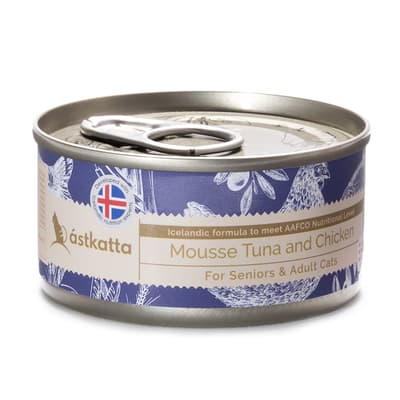
- Astkatta Mousse Series Senior Cat Tuna + Chicken 80g ($14, checked 2026-10-12)
- AIXIA 15+ Senior Cat Can Tuna 40g ($6.6)
The above content is for reference only and cannot replace veterinary diagnosis and treatment. For palliative care and any end-of-life decisions, please consult your veterinarian—they are the professional partners walking this journey with you.
 AIXIA full guide →
 Astkatta full guide →
 Fuji One full guide →