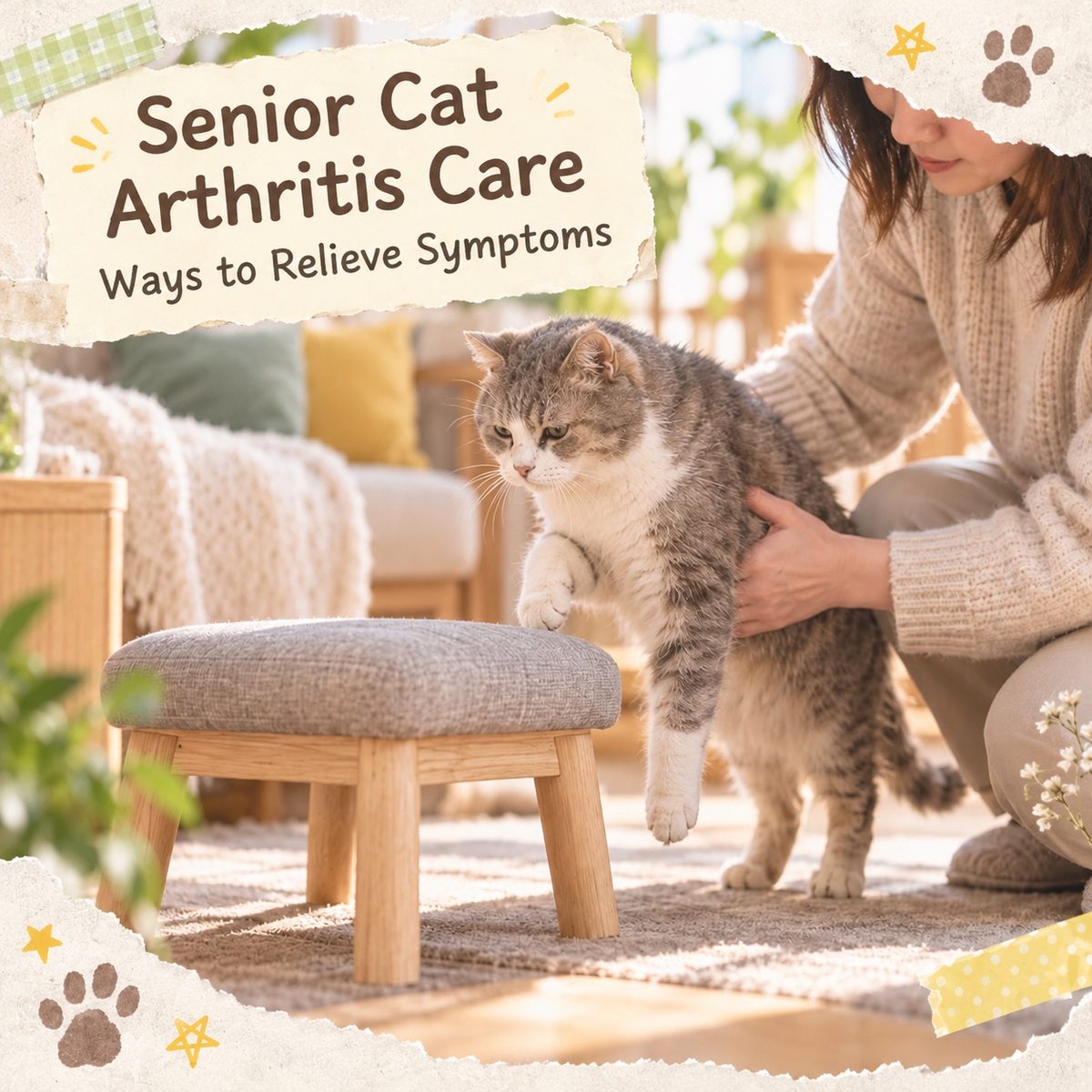
Quick answer: Books note that arthritis is less common in cats than in dogs, but the cartilage that protects joints decreases with age in senior cats, and overweight cats are at higher risk. Signals: not jumping high, not grooming, slowing down on stairs. The three pillars of daily management: weight loss, environmental modification (low-sided litter tray, steps), veterinary follow-up. Joint supplements (glucosamine, chondroitin) are nutritional support, not medication; their effects require more research—ask your veterinarian before buying.
How senior cat joints degenerate
The cartilage in joints acts as a shock absorber. The book My First Cat Book states clearly: the cartilage that protects joints decreases with age—young cats have thick, elastic cartilage; senior cats' cartilage wears thin, reducing cushioning between bones, making movement uncomfortable.
Another book (Cat Health Encyclopedia) adds: arthritis is less common in cats than in dogs, but there are two types—acute cases are mostly related to trauma (injuries from jumping down, collisions), while chronic cases are due to ageing degeneration. During acute inflammation, the veterinarian may use anti-inflammatory pain relief medication; chronic degeneration relies on long-term management.
It is worth noting: cats have a very high pain tolerance and will not limp as obviously as dogs. Their way of expressing pain is by not doing things—not jumping, not playing, not grooming. These subtle changes can be cross-referenced with the home modification checklist in Five Major Signs of Cat Arthritis.
Signs of joint degeneration (from a senior cat perspective)
| Sign | Underlying reason |
|---|---|
| No longer jumps onto windowsill or cabinet top | Jumping requires hind leg strength; pain stops jumping |
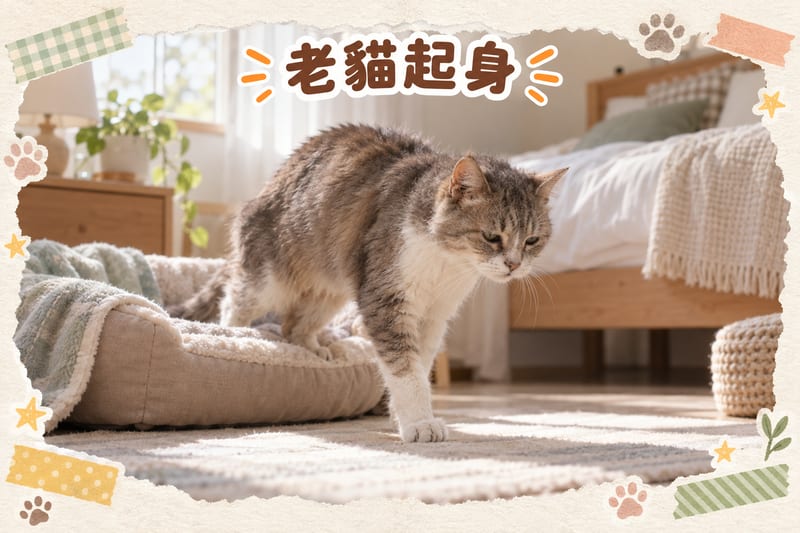
| Slower or hesitant on stairs/sofa | Reduced range of joint movement |
| Not grooming, matted fur on back | Turning and twisting to groom is painful |
| Not using high-sided litter tray, urinating outside the box | Cannot step over high sides |
| Flinches or gets angry when hind legs or lower back are touched | Touch sensitivity |
| Sleeps more, less willing to play | Overall reduced activity |
Note: these signs overlap with heart disease, anaemia, and cognitive decline. First have a check-up to rule out other problems before concluding "arthritis". For senior cat check-up procedures, see Senior Cat Check-up Guide.
The three pillars of daily management
Pillar 1: Weight loss. The book's numbers are direct: exceeding ideal body weight by 15% is obesity, and obese cats are prone to arthritis and diabetes. Losing one kilogram for a four-kilogram cat is equivalent to a human losing over ten kilograms—joint burden is immediately reduced. But senior cats must not lose weight quickly: no more than 1% of body weight per week; too fast risks fatty liver. Calorie targets and diet plans should be set by a veterinarian; for dietary basics see Senior Cat Food Guide.
Pillar 2: Environmental modification.
- Change to a low-sided litter tray, with entrance no higher than one cat paw
- Add steps or ramps to high places the cat likes (stacked cardboard boxes work)
- Place food and water bowls on the cat's level, so it doesn't have to climb up and down
- Lay non-slip mats on slippery floors—senior cats are most afraid of slipping when crouching and getting up
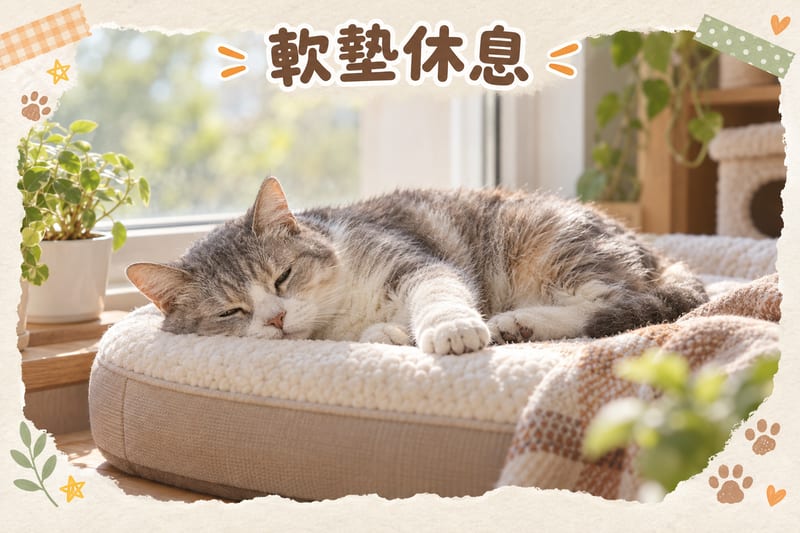
- Sleeping mats should be thick and warm: cats with joint pain are especially sensitive to cold, hard floors
Pillar 3: Veterinary follow-up. Chronic joint degeneration cannot be cured, but it can be managed. The veterinarian may suggest pain relief plans, physical therapy (the book mentions acupuncture, laser, etc.), and regular quality-of-life assessments. Remember: human painkillers (such as certain common antipyretic analgesics) are highly toxic to cats and must never be given.
Joint supplements: clarifying their role and limitations
The book's description of glucosamine and chondroitin is worth remembering verbatim:
- How they work: Glucosamine is one of the raw materials for cartilage matrix, theoretically helping cartilage retain moisture and elasticity; chondroitin is an important component of cartilage, helping to maintain it during degeneration.
- Not medication: The book explicitly states these ingredients are not essential medications for treating arthritis—they are health supplements/nutritional support and cannot replace veterinary diagnosis and treatment.
- Effects are uncertain: The book reminds that how much is actually absorbed and reaches the joints after oral administration, and the actual effects in cats, still require research. Some cat owners find them helpful, but do not expect them to be a "take it and no more pain" solution.
So practical advice: if you want to try, consult your veterinarian before buying, choose cat-specific formulas (dog formulas have different dosages), and do not stop weight loss and environmental modification just because you are giving supplements—those two are the mainstay.
Specific home modification checklist (can do today)
- Litter tray: Change to a low-sided one, or build a small ramp at the entrance of the old tray using plastic board. In multi-cat households, place one on each floor.
- Steps: Stack two levels using cardboard boxes or storage boxes next to the sofa/bed, cover the top with non-slip cloth.
- Food and water bowls: Place all on the floor level, raise bowls slightly (5-10cm) to reduce bending.
- Sleeping area: Thick mat + blanket, place in a sunny spot but not one that gets too hot; in winter add a pet heating pad (low temperature).
- Non-slip: Lay non-slip mats or carpet strips along main walking routes on tiled or wooden floors.
Physical therapy options
The book mentions: acupuncture, laser therapy, gentle massage. Hong Kong has clinics offering pet physical therapy and acupuncture, but they must be performed or referred by a registered veterinarian—do not seek unqualified "pet masseurs". What you can do at home: gently stroke the limbs and lower back daily (if the cat does not resist) to promote blood circulation; if it moves away or meows, stop—do not force.
Coordination with other articles
- Cat Arthritis Guide: five major signs + complete home modification checklist
- Senior Cat Check-up Guide: how to check joints during check-ups
- Senior Cat Care Full Guide: summary table of ageing warning signs
- Early Warning Signs of Chronic Disease in Cats: distinguishing normal ageing from disease
- Senior Cat Food Guide: weight loss food and water management
Details of weight management
Weight loss is the mainstay of joint management, but senior cat weight loss has its own considerations: first, calorie reduction should not exceed 20%, take it slowly; second, protein must not be reduced along with it—reduce calories by cutting fat and carbohydrates, not meat; third, weigh once a week, ideal rate is 0.5-1% of body weight per week, which for a four-kilogram cat is 20-40 grams—slow enough to seem like no change is safe. Losing too fast risks fatty liver, which is as dangerous as starvation. Veterinarians often recommend switching to a senior weight management formula, with lower calorie density but protein maintained. Weighing tip: weigh yourself holding the cat, then subtract your own weight, using the same scale at the same time of day for accuracy.
References
- Agriculture, Fisheries and Conservation Department (Hong Kong Government) — Pet Care Information
- Veterinary Surgeons Board of Hong Kong
- Knowledge points in this article are compiled from cat encyclopedia books such as My First Cat Book and Cat Health Encyclopedia.
Related products (available in Hong Kong)
Cat-specific joint health supplements (nutritional support, not medication; consult your veterinarian before feeding):
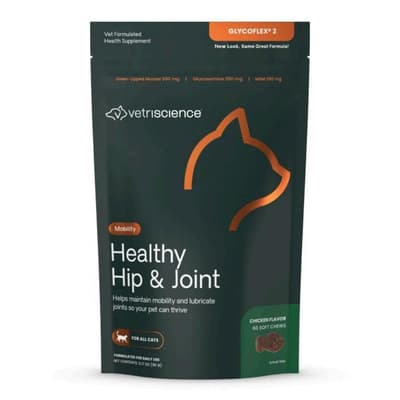
- VetriScience Cat Stage 2 Joint Support 60 capsules ($158, checked 2026-10-12)
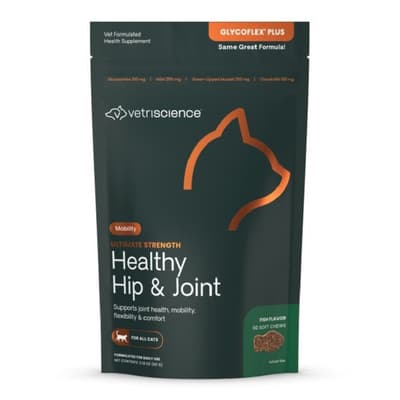
- VetriScience Cat Extra Strength Joint Health Chewable Tablets 30 tablets ($158)
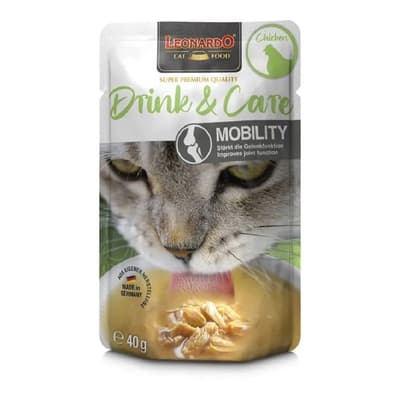
- Leonardo Grain-Free Senior Cat Food Joint Care Chicken Soup Pouch 70g ($9.3)
The above content is for reference only and cannot replace veterinary diagnosis and treatment. For joint pain medication and supplement choices, please consult your veterinarian; if a senior cat's mobility suddenly deteriorates, seek medical attention promptly.
📌 Key Summary
- ✅ Signals are "not doing": not jumping, not grooming, not using high-sided litter tray
- ✅ Weight loss is the most effective joint management
- ✅ Supplements are nutritional support, not medication
- ❌ Giving human painkillers—highly toxic to cats
- ❌ Assuming supplements solve everything—weight loss and environment are the mainstay