

Quick answer: Cat purring doesn't only mean happiness; it's also an instinctive tool for self-soothing and pain relief. To distinguish true emotions, you must combine ear position, pupils, body tension, and overall body language—don't jump to conclusions based on sound alone.
The most common meaning of cat purring is relaxation and contentment, but it's not exclusive to happiness—cats also purr to self-soothe when in pain or stressed. The key to telling the difference isn't the sound but the overall state of the ears, eyes, and body. This article breaks down the three meanings of cat purring and the self-healing mechanism, teaching you to judge item by item so you no longer mistakenly think "if there's a purr, everything's fine."
What Does Cat Purring Mean? Three Interpretations
Cat purring is a low-frequency vibrating sound produced by rhythmic contractions of the larynx and respiratory muscles. It can be heard on both inhalation and exhalation, and is most noticeable when you place your hand on the cat's chest. Generally, it can be understood on three levels:
- Relaxed and comfortable—the most common. When you pet them, they lie in a warm spot, or around mealtimes, you'll easily hear a continuous, soft purr; this kind of purr is usually steady and sustained.
- Expression of contentment—when the environment is safe and they're well-fed and rested, cats purr to express "things are good right now," as if telling themselves and you "I have no guard up." Kittens purr while nursing to report to their mother "I'm feeding, I'm okay."
- Self-soothing—the most overlooked layer: cats may purr when stressed, scared, in pain, or even near death, similar to how humans take deep breaths to calm down or softly comfort themselves.
So "cat purring = happy" is only half true. Purring is an emotional tool, not a happiness timer—to know their current state, you must look at full-body signals before concluding. And precisely because purring has this self-soothing layer, judging a cat's physical and mental state by sound alone makes misjudgment very easy.
At What Age Do Cats Start Purring?
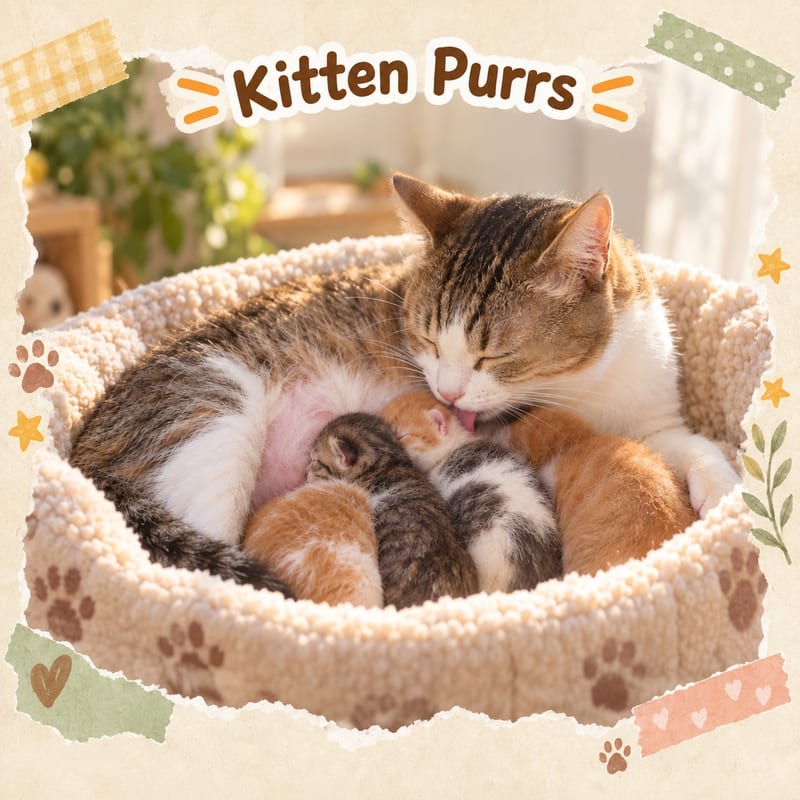
Many cat owners don't know: kittens can purr within days of birth. Born blind and deaf, kittens rely on the vibration and scent of purring to find the nipple; purring also signals to the mother "I'm feeding, I'm okay." This infant habit stays with the cat for life—so when an adult cat purrs in your arms, in a sense they're reliving the security of being with their mother. And because purring is such an early instinct, it's not a "learned behavior" but a communication and soothing tool written into their genes—which is why both pain and contentment trigger the same sound.
Why Do Cats Purr to Self-Heal?
Research has observed that cat purring frequency is roughly in the low range of 25–150Hz, and vibrations in this range are thought to help bone and soft tissue repair and reduce pain. This explains a puzzling phenomenon: many cats purr softly when injured, after surgery, or even at the end of life—not because they're "not in pain," but because the body is activating a self-soothing and repair mechanism, a cat's innate self-healing instinct.
However, to be clear: the self-healing effect of purring cannot replace veterinary treatment. It's an instinctive aid, not a therapy. If you suspect injury or illness, the first step is always to seek veterinary care—don't expect them to "purr it out in a few days." Even more caution: purring may mask pain, causing owners to notice problems late—a cat's ability to cry in pain while pretending everything's fine is stronger than you think.
Comfort Purr or Pain Purr? Use Body Language to Tell
Two cats may both "purr purr," but the meaning can be completely opposite. Use the table below to compare item by item:
| Observation area | Comfortable/relaxed | Stressed/pain |
|---|---|---|
| Body | Soft, lying on side or limbs relaxed | Tense, curled into a ball |
| Ears | Forward, naturally upright | Flat back (airplane ears) |
| Eyes | Squinted or slow blinking | Dilated pupils, staring fixedly |
| Tail | Relaxed or gently swishing | Tucked or swishing forcefully on the ground |
| Attitude to people | Wants to be petted, approaches actively | Hides, avoids, won't let you touch |
The principle is simple: same sound, different body, different meaning. Ears forward + soft body + wants to be petted = comfort purr; if purring but hunched and hiding, stiffening all over when touched, treat it as discomfort—first observe eating and elimination, then decide if a vet visit is needed. Keep this table in mind; whenever you assume "they're still purring, so they must be fine," re-check each item.
How to Observe Purring Context in Small Homes?
Most Hong Kong homes are small, and the close distance between cat and owner actually makes it easier to observe the context of purring. Recording the context will make judgment more accurate:
- Purring while lying next to you or sunbathing by the window—a typical contentment signal; petting them then usually brings a louder purr.
- Purring before a vet visit or when confined in a carrier—often stress self-soothing, not enjoyment.
- Hiding all day but still purring softly—be alert; they may be uncomfortable and want quiet.
- Suddenly purring at midnight and unable to settle in one spot—watch for pain, abdominal pain, or inability to urinate.
In multi-cat households, also observe: if one cat suddenly purrs frequently and avoids other cats, it may be stressed or targeted. Check whether resources (food bowls, litter boxes, high spots) are insufficiently distributed. In small homes where separate rooms aren't possible, use cardboard boxes, sofa backs, and wall heights to create "individual routes" for each cat, reducing friction from crowding, and the context of purring will be easier to interpret.
When to See a Vet?
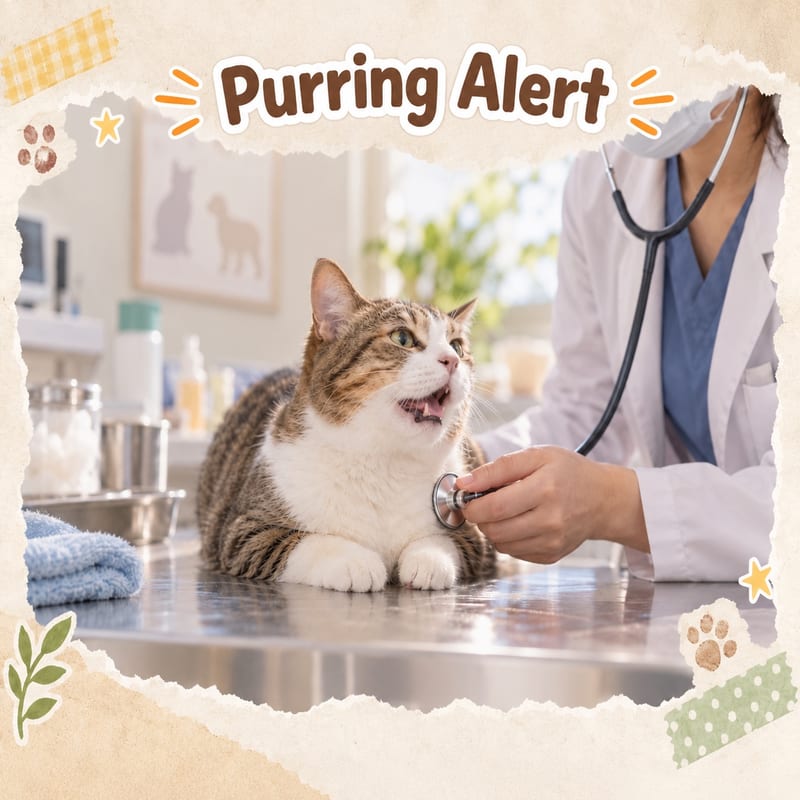
Purring itself is not a symptom, but if the following occur along with purring, book a registered veterinarian as soon as possible:
- Significant decrease in appetite, constantly hunched and hiding, not coming out
- Noisy breathing, open-mouth breathing, purr becoming harsh
- Constantly licking the same spot, shrinking or growling softly when touched
- Short-term weight loss, sudden change in elimination habits
- Senior cat newly showing persistent soft purring and hesitant walking
Special reminder: cats are very good at hiding pain. They won't wail loudly; often they just "go quiet, hide, and purr more." When you feel "something seems off," it's usually already worth checking—don't wait for obvious symptoms.
What You Can Do Starting Today
- Next time your cat purrs at you, spend ten seconds checking ears, eyes, and body relaxation to build the habit of judgment
- Take photos of your cat when "comfortable" and "stressed" as a baseline for your own home
- When touching ears, paws, or belly, notice if they suddenly purr and withdraw—you may be touching a painful spot
- Record the time and context of each intense purring session; after two weeks you'll usually see a pattern: comfort, stress, or masking discomfort
- If purring is accompanied by hiding, poor appetite, or breathing changes, don't hesitate—book a vet directly
A cat's purr is one of the few languages they're willing to "speak" with humans; understanding it is the beginning of trust. To learn how cat food can support health needs, visit petfood.com.hk for reviews and buying guides.
This article is for reference only; consult a registered veterinarian for any concerns. PetChill Cat Behavior Team — Hong Kong's most authoritative pet knowledge platform