
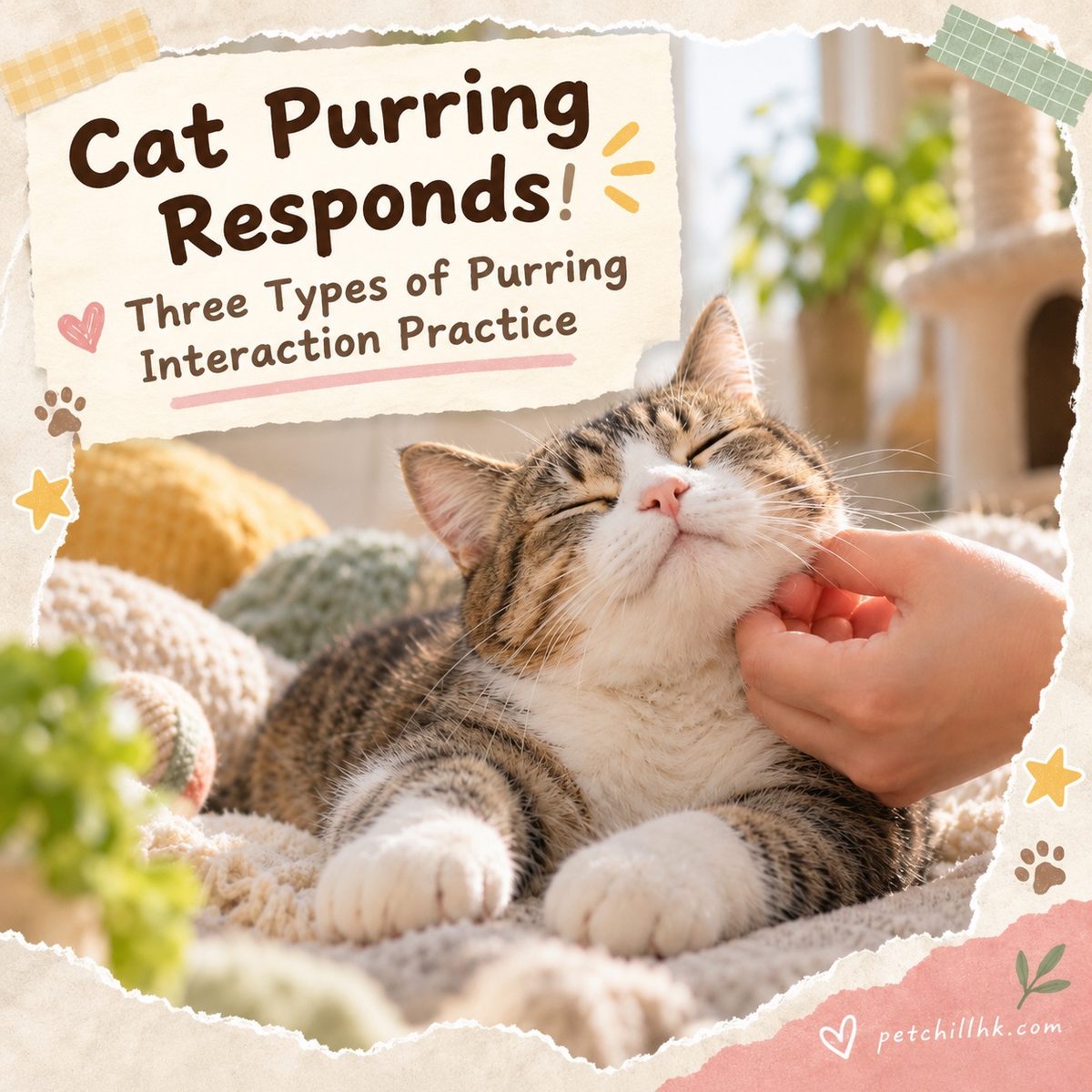
Quick answer: When you hear your cat purr, pause for three seconds and check the ears, pupils, and body posture: if relaxed and sprawled, gently pet the chin and behind the ears for ten seconds and slow-blink back; if sleepy, don't disturb; if tense, stop immediately, dim the lights, leave an exit, and give space—that's true comfort.
When a cat purrs, the best response depends on the type of purr: a content, pet-me purr calls for immediate interaction, while a tense, self-soothing purr calls for giving space. This article won't repeat the theory of "what purring means" (see the other article ), but directly teaches you what to do when you hear different purrs: where to pet, what to say, when to stop, so every "purr-purr" becomes a chance to strengthen your bond.
Step 1: Determine the Purr Type in Three Seconds
Before responding, take three seconds to see which category your cat falls into:
- Relaxed-sprawled type: body soft and sprawled, eyes squinty, ears forward, maybe even coming over to head-bump your hand—wants petting, wants interaction.
- Sleepy type: purring while asleep, occasional gentle leg twitch—so comfortable it's half-asleep, best not to disturb.
- Tense type: curled up in a ball, ears flat (airplane ears), pupils dilated, purring but won't let you touch—self-soothing, and this is the worst time to force-hold.
The handling for these three is completely opposite: the first type needs "engage," the second needs "guard," the third needs "release." If you pounce and kiss as soon as you hear a purr, you'll push the second and third types further away. Newly homed cats and adopted cats often start as the second or third type; at this stage, holding back from petting is actually the shortcut to building trust.
Misjudging the type will make all subsequent actions wrong. Get this step right, and your success rate is already half won.
How to Respond to a Content Purr: Three-Step Interaction Method
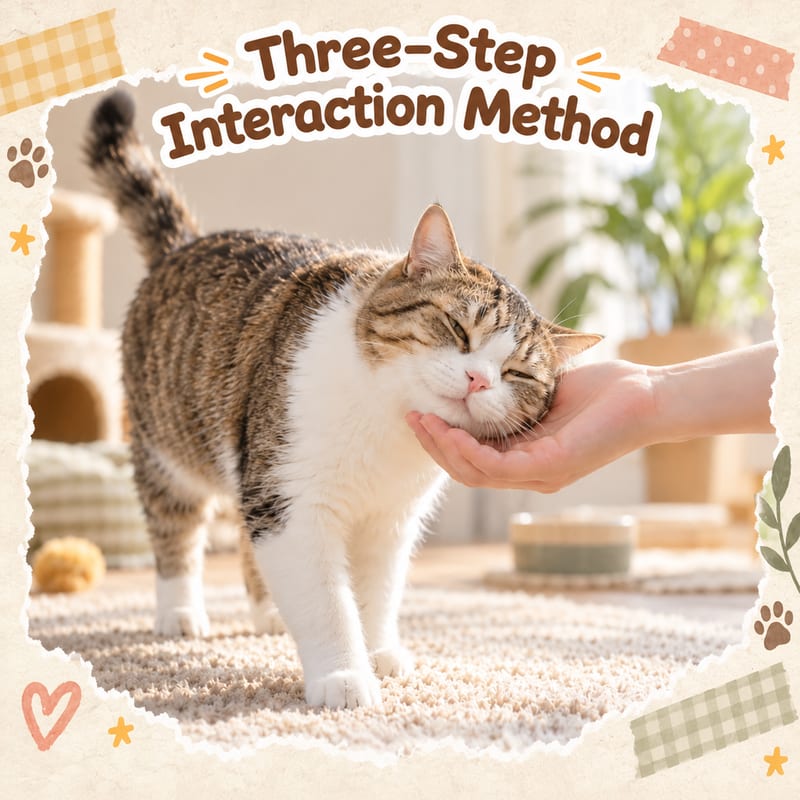
- First extend your hand and pause in mid-air—wait for the cat to actively head-bump or cheek-rub your hand; this is its "consent button."
- Only pet safe zones—chin, cheeks, behind the ears are safest; belly, paws, tail, and tail base depend on the cat—many cats "lie showing belly but bite when touched."
- Respond softly + slow blink—speak a few words in a calm tone, slow-blink at it; the cat will read your goodwill; if the purr gets louder, it's saying "continue."
The rhythm of petting should be "short and frequent": 10–20 seconds each time, stop when it stops or walks away, don't drag it out. Many cats like being petted awake but not petted tired—knowing when to stop is the expert move. Another detail is pressure: use fingertips, not fingernails, and stroke slowly in the direction of the fur; most cats dislike reverse rubbing or belly pats. If mid-pet it suddenly purrs loudly and head-bumps your hand back, congratulations, you can continue.
What to Do with a Tense Purr: Don't Do the Opposite
Cats often purr softly in the vet room, new environments, or after loud noises—this is self-soothing, not an invitation. Correct approach:
- Stop petting—don't touch, don't hold, move your fingers out of its sight
- Reduce stimulation—dim the lights, lower the volume, stop talking, move away from high-noise areas
- Provide an exit—don't block its hiding corner; if it wants to leave, let it leave
- Lower your body threat—lie down or sit at its level, don't stand over it looking down, let it walk to hide on its own
- Use food as a bridge—after a tense situation, put down treats and back away, building the link "here = good things happen"
The most common mistake is "the more it purrs, the more you kiss": owners think the cat is scared and needs comfort, so they chase, hold, and pet; the cat doesn't get the space it needs, the purr only gets louder, and stress piles up. Remember: when tense, the cat needs quiet and choice, not body warmth.
| Situation | You should | Never |
|---|---|---|
| Purring during vet visit | Stay quietly, touch the back of the neck once | Pick up and kiss all the time |
| Purring and hiding in new home first few days | Put food, water, litter box in fixed spots | Force-drag out to "adapt" |
| Purring during thunder or firecrackers | Play soft music, leave hiding spot | Force into a house to "get used to it" |
| Purring after confrontation with other cats | Separate them, add resources | Immediately pull apart and hold |
Want More Purrs? Build a "Purr Routine"
Purring can't be forced, but you can create conditions for it to happen more often:
- Fixed schedule—feeding, grooming, play at set times; cats feel safest with predictability
- Twice-daily energy burn—15 minutes of wand toy play, then eat and sleep; purring is most likely before sleep. Play should have "prey and result": let the cat catch the toy at the end for satisfaction
- Grooming ritual—most cats like gentle brushing in the direction of the fur; purring during brushing is normal
- High spots and window views—window perches, cat trees, sunny spots are natural "purr switches"
- Sleep next to you—if it chooses to sleep by your head, don't move it, let it purr on its own
How to Handle Food-Soliciting Affectionate Purrs?
Empty food bowl, closed door, 5 a.m.—many cats use a combo of "purr + short meow + head-bump your hand" to beg for food. This type of purr has a clear purpose; the principle is respond to the signal, not the threat:
- Fixed feeding times—once the cat learns "dinner at seven," the 5 a.m. soul-calling disappears
- Automatic feeder—shift the "cat vs you" standoff to a machine; the frequency of affectionate purring usually drops noticeably
- Don't add food immediately when it calls—otherwise you teach it: purr long enough and you'll get a reward
- Keep the after-meal ritual—groom and play a little after eating, complete the "hunt–eat–groom–sleep" cycle; it will sleep much more soundly
Some cats also like "chatty purring": you talk to them, they answer with a vibrating short purr, maybe even slowly raise a paw to rest on your hand. This interaction can be enjoyed fully, but remember to read the signs—if it's already tail-swishing, ears back, pupils dilated, that means "enough talking"; silence is the highest respect.
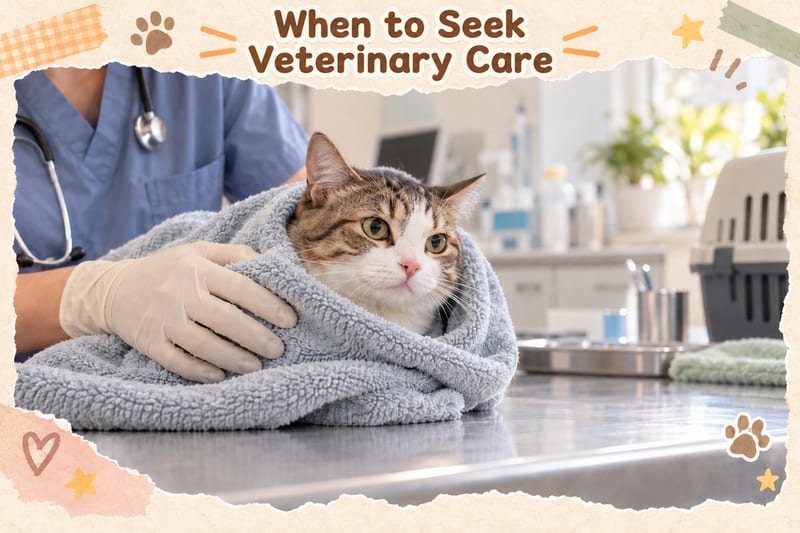
When to See a Vet?
Purring itself doesn't need medical treatment, but purring combined with the following requires booking a registered veterinarian promptly:
- Appetite or water intake changes noticeably for more than two days
- Hiding time increases day by day, no longer seeks you out
- Rapid breathing, open-mouth breathing, purring with abnormal sounds
- Constantly licking or biting the same area, avoiding jumping
- Sudden change in litter box habits (urinating in wrong places, unable to urinate)
"The more it purrs, the stranger it gets" is an important warning sign: a cat that usually purrs little suddenly purrs low for a long time and seems lethargic—the "change" in behavior is more important than the purring itself. Watch for new, prolonged, or contextually inappropriate purring.
What You Can Do Starting Today
- Next time your cat purrs at you, pause for three seconds to check ears, eyes, and body before deciding to pet
- Practice slow-blinking at your cat three times a day for two weeks and see the change
- Establish a fixed evening routine of "grooming + energy burn + feeding"
- Reserve at least one quiet hiding spot at home; don't force it out when tense
- Set "behavior change for more than two days" as your bottom line for seeing a vet
- Spend one minute each night listening: is tonight's purr relaxed-sprawled, sleepy, or tense? Once you're used to it, you'll be the person who knows your cat best in all of Hong Kong
Purring is the conversation starter your cat offers you; if you know how to respond, your bond grows fast. To help your cat choose the right food for health, visit pet
food.com.hk for reviews and shopping guides.
This article is for reference only; consult a registered veterinarian for any concerns. PetChill Cat Behavior Team — Hong Kong's most authoritative pet knowledge platform