
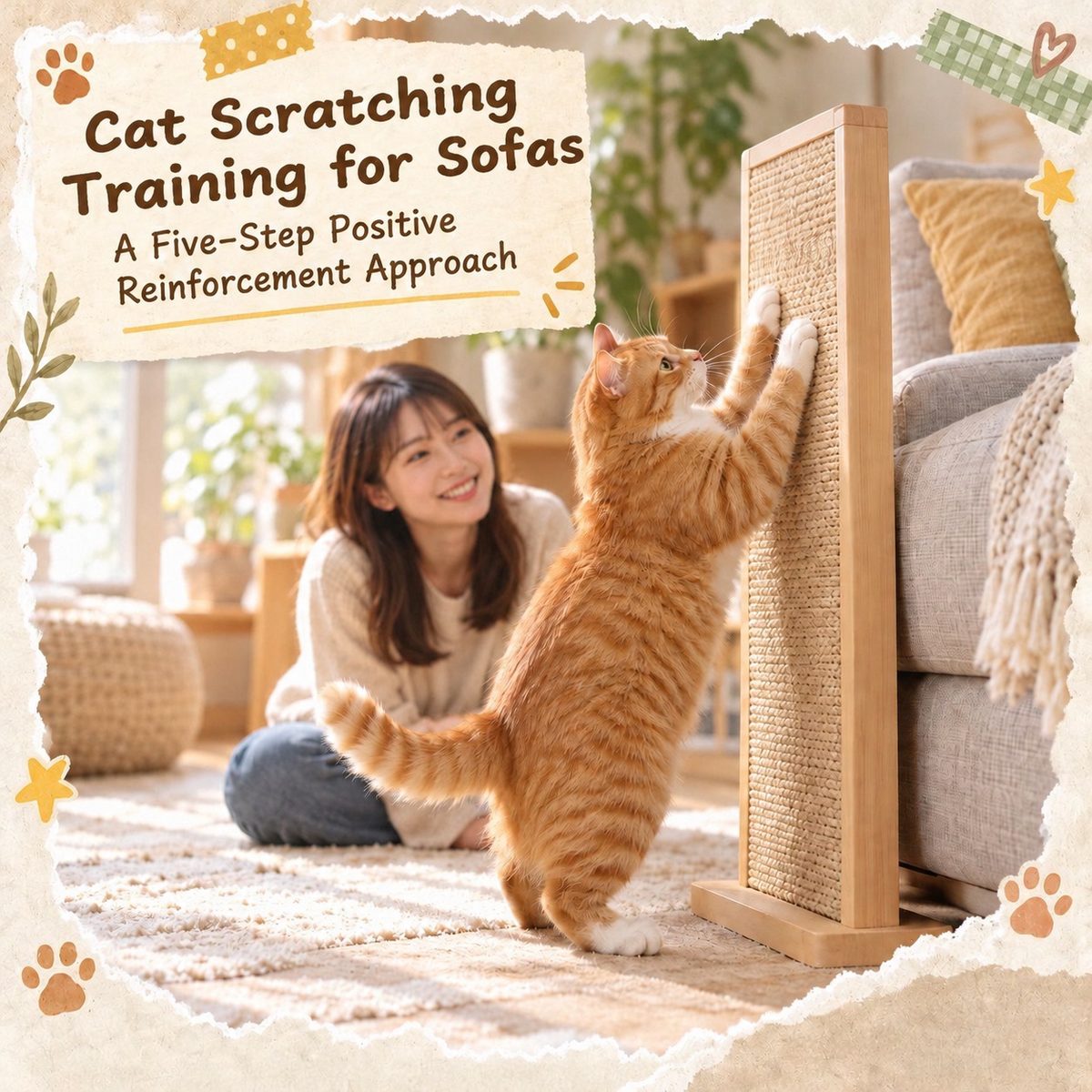
Quick answer: To stop your cat scratching the sofa, the key is a "three-step approach": choose a heavy-duty sisal post taller than your cat's full stretch and place it next to the sofa arm, use anti-scratch tape to make the sofa "boring", and reward immediately when the cat's paws touch the scratcher. Stick with it for four to six weeks and the old habit will naturally shift.
To stop your cat scratching the sofa, it's not about stopping but replacing + reinforcing: create a better scratching target, protect the old target, and reward immediately. This article is a practical five-step correction training method; follow it and you'll see results in four to six weeks.
Step 1: Choose a scratcher that "beats the sofa"
When cats don't use a scratcher, it's usually because the scratcher loses out on claw feel and stability. When choosing, check these criteria:
| Criterion | Requirement | Reason |
|---|---|---|
| Height | Tall enough for the cat to stretch fully | Stretching is the main purpose of scratching |
| Stability | Doesn't move or tip when scratched | Wobbling = immediate abandonment |
| Material | Sisal rope / corrugated cardboard | Easy to dig into, fibrous feel |
| Orientation | One vertical post + one flat pad | Different cats have different preferences |
A heavy-duty floor-standing sisal post is the most reliable choice; corrugated cardboard flat scratchers are cheap, suitable for placing next to sleeping spots, and very cost-effective to replace entirely when worn out.
One easily overlooked detail is height. Many owners buy small tabletop scratchers only a few tens of centimeters tall; when the cat stretches, it exceeds the top, and the cat gives up after a couple of scratches. The principle is simple: the scratcher must be taller than the cat's full stretched length from nose to paws, meaning at least 60 cm for large cats. The reason sofa arms are so popular is precisely because their height is just right.
If you already have a flat cardboard scratcher but the cat ignores it, it doesn't mean the cat "doesn't need to scratch"—it means the cat doesn't accept that texture and angle. This is exactly the problem that the placement and replacement strategies below will solve.
Step 2: Placement – put it right at the "scene of the crime"
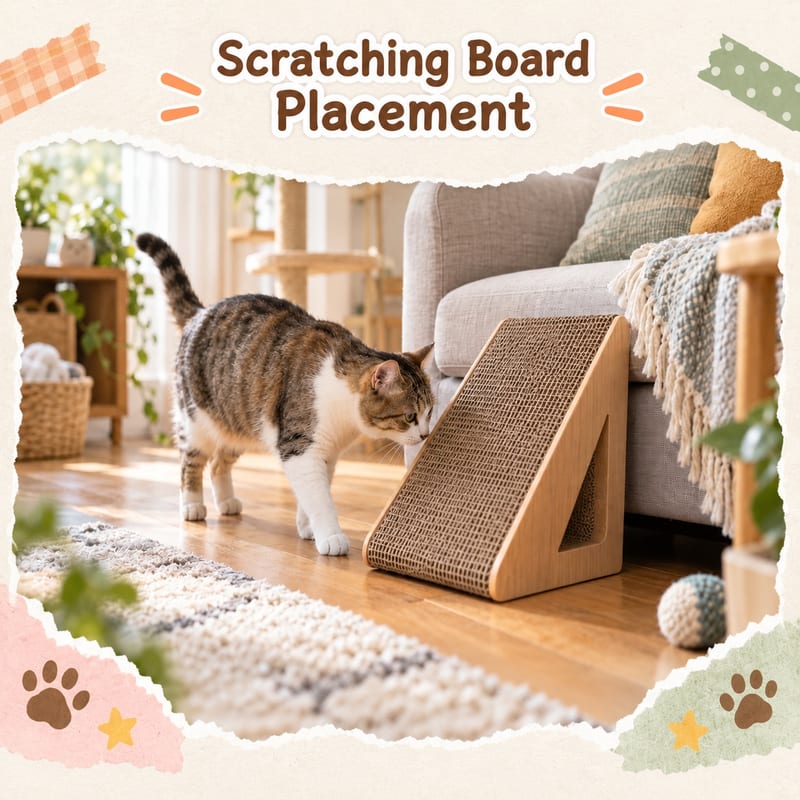
Placement is the key to success, far more important than the price of the scratcher itself. The correct approach:
- First place it right next to the sofa arm the cat most often scratches, as close as possible
- Add another one where the cat passes by first thing after waking up (usually opposite the sofa or beside the bed)
- In multi-cat households, have one on every floor and in every area to avoid "queueing" causing disputes
- After the cat has used it consistently for two weeks, gradually move it little by little each day to the final desired location—move about ten centimeters at a time; moving too fast and the cat won't follow, and the old habit will return immediately
By the way, don't place water or food bowls on the floor next to the scratching post: cats don't like to perform marking behavior right next to their eating area. When two tasks compete for the same spot, the result is usually that the scratcher gets neglected.
Step 3: Protect the sofa – cut off the old reward of the old habit
Cats choose targets based on "where it feels good to scratch", so you need to make the sofa a "boring target":
- Anti-scratch tape / double-sided tape: cats hate the sticky feel under their paws; applying it to the damaged area is most effective
- Aluminum foil / clear plastic curtain: texture and sound are both unpleasant to cats; place on the sofa surface
- Anti-scratch spray: citrus and mint smells have a repellent effect; effectiveness varies, needs regular re-spraying
- Physical barrier: when you can't supervise, use a sofa cover or a flat blanket to cover the damaged area—zero cost but direct effect
This step only "blocks the old path"; it must be combined with "opening a new path" above, otherwise the cat will just move on to the next piece of furniture.
Also note: the smell of anti-scratch tape and spray weakens over time. In the first two weeks, re-spray every three days and check weekly whether the tape is covered in dust and lost its stickiness. If the damaged area already has old scratch marks during the protection period, first wash away the old scent with an enzymatic cleaner—cats follow their own scent back to the same spot to continue marking; removing the scent is like erasing their "map".
Step 4: Positive reward – catch the "right moment"
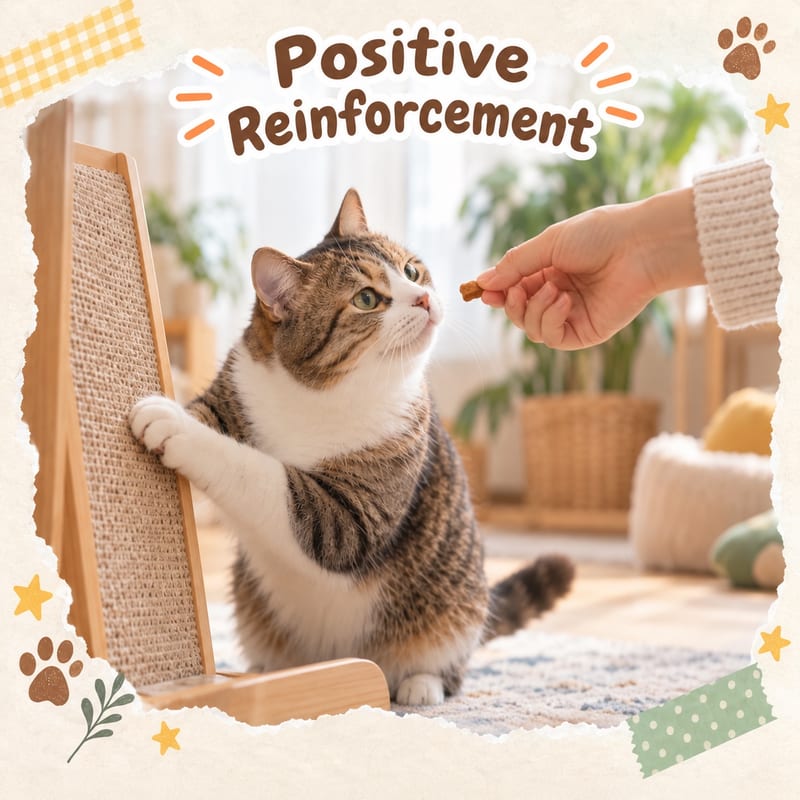
Reward timing is measured in seconds: the moment the cat's paws touch the scratcher, immediate feedback is needed to make the connection.
- Seeing the cat use the scratcher: immediately praise verbally or place a small treat at the base of the scratcher
- Play with a wand toy near the scratcher at set times each day to make the scratcher a "happy zone"
- Seeing the cat about to scratch the sofa: calmly pick it up and take it to the scratcher, then encourage it to scratch a couple of times—no scolding, no water spraying
- Never punish after the fact—cats cannot link punishment to an action that happened minutes ago; they only link it to you, damaging trust
Some households use "environmental self-punishment" like water spray bottles or canisters with coins, theoretically to make the cat associate "scratching the sofa" with "getting sprayed for no reason", but in practice, if the timing is slightly off, it links to the wrong subject (e.g., being afraid when you come home). For the vast majority of Hong Kong households, rewarding the use of the scratcher is far more stable and effective than punishing scratching the sofa; at least for the first four weeks, focus on the positive part.
Step 5: Consistent execution and regular maintenance
- Claw trimming: trim claw tips every two to four weeks to reduce the depth of damage; don't cut into the quick
- Replace: replace corrugated cardboard when it's completely worn out—besides holding old scent, it can also snag claws
- Maintain for at least four to six weeks before removing anti-scratch tape; removing too early and the old habit will rebound
- More cats, more scratchers: number of scratchers = number of cats + 1, to prevent one cat from monopolizing
No progress after two or three weeks? Troubleshoot item by item
Check against this list:
- Scratcher too light and wobbles—switch to a heavy-duty floor-standing post, or wedge the post firmly in a corner and try for another week
- Placed too far or too hidden—move it back right next to the sofa, keep it there for two weeks before slowly moving
- Anti-scratch tape removed too early—reapply for another two weeks, and observe whether the cat returns to the sofa on the day you remove it
- Wrong claw feel—provide both a vertical post and a flat corrugated cardboard scratcher, let the cat vote with its behavior
- Only prohibition, no reward—there must be immediate feedback the moment the cat's paws touch the scratcher; even three seconds late and it fails
- Inconsistent household rules—some allow the cat on the sofa, some don't; the cat gets confused, so the whole family must act consistently
When to see a veterinarian
If your cat's scratching behavior suddenly increases dramatically, or changes from fixed spots to scratching everywhere, and is accompanied by red, swollen, bleeding paws, pain when walking, inappropriate urination, poor appetite, or hiding, it could be a claw injury, joint pain, or severe anxiety. In such cases, don't rely on training—see a veterinarian as soon as possible. Older cats that suddenly scratch less and are slow to get up also warrant a joint check. This article is for reference only; consult a registered veterinarian for any concerns.
Common Q&A during training
Q: The scratcher has been out for two weeks and still no use—is my cat untrainable? No. The most common reason is simply insufficient height or a wobbly base. First switch to a heavy-duty post taller than the cat's full stretch, then reassess. Q: My cat only likes to scratch where I sleep—what should I do? The mattress is the target with your strongest scent. The approach is the same: place a flat corrugated cardboard scratcher beside the bed, and play with the cat before bedtime to lure it onto the cardboard before sleeping.
What you can do starting today
- Buy a floor-standing sisal post this weekend and place it next to the sofa arm
- Apply double-sided anti-scratch tape to the damaged area immediately
- Set a daily playtime of ten to fifteen minutes twice a day next to the scratcher, and after play, gently guide the cat to the scratcher
- Note the date and review progress after four weeks; the whole family should use the same rules—no one secretly allowing the cat on the sofa
To learn about the instinctive reasons why cats must scratch, see PetChill's "Cats Scratching Furniture" science article; for how to choose scratchers and anti-scratch products, you can compare product reviews on petfood.com.hk.
Further reading
- Causes of cats scratching furniture →
- Cat behavior psychology →
- Cat scratchers →
- Signs your cat trusts you →
- Cat behavior course →
PetChill Cat Behavior Team — Hong Kong's most authoritative pet knowledge platform
- 5 health insights from cat purring →
- Distinguishing meanings of cat purring →
- How to respond to cat purring →
- 5 tips for cat scratching training →
- The secret of cat purring →
📌 Key takeaways
- ✅ The scratcher must be taller than the cat's full stretch for adequate stretching
- ✅ Place it close to the "scene of the crime"; move it little by little after two weeks
- ✅ Anti-scratch tape + odor removal: block the old path while opening a new one
- ❌ Punishing with a water spray afterwards only makes the cat fear you, not change behavior
- ❌ Removing protection too early and the old habit rebounds immediately
 Fuji One full guide →

