
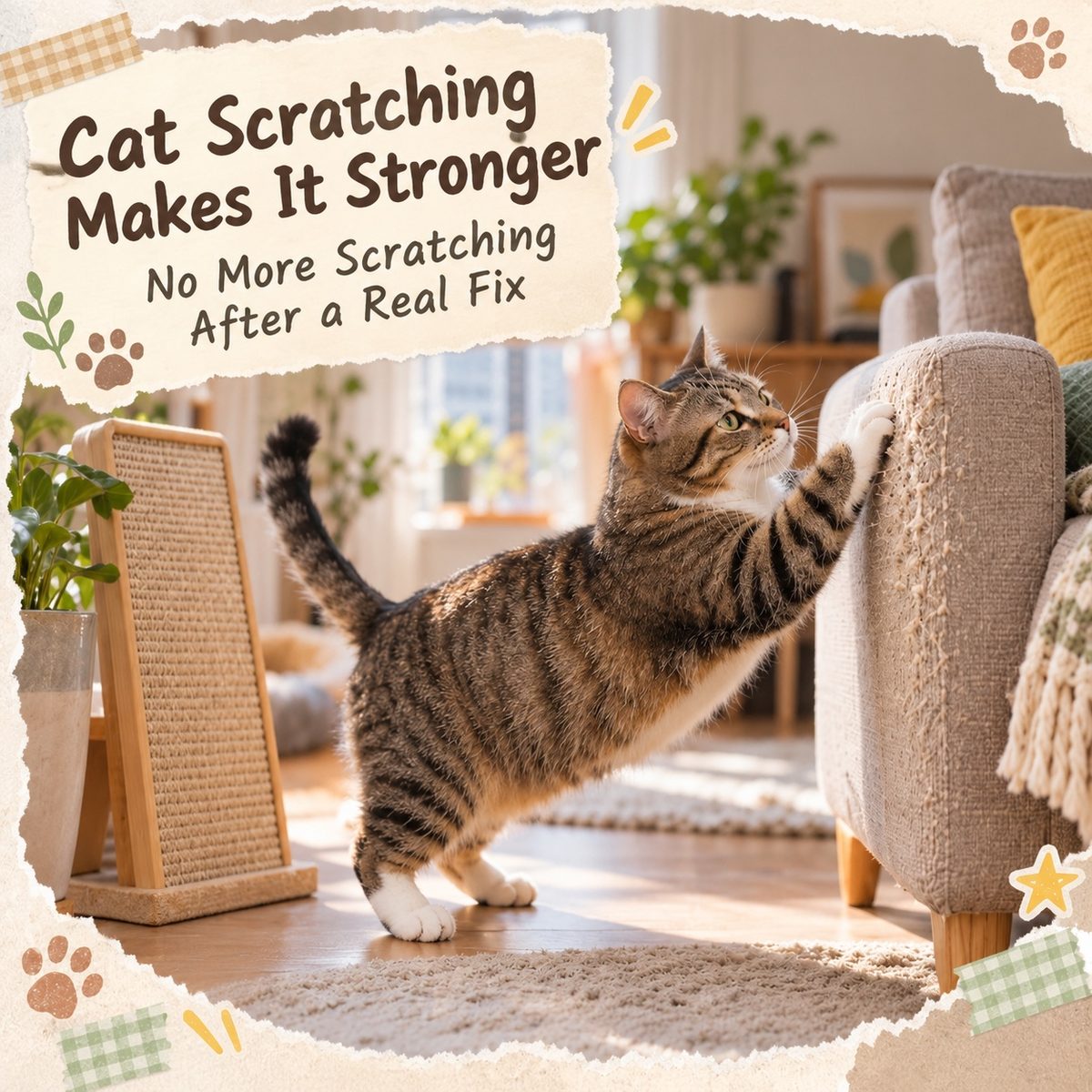
Quick answer: Cats scratching the sofa is instinct, not revenge: they need to sharpen claws, leave scent, stretch, and relieve stress. The sofa happens to have the right location, height, claw feel, and stability, making it the top victim. The only way out is to provide a "more attractive scratching post" to redirect them, not to force them to stop.
Cats scratching furniture is instinct: four major reasons—sharpening claws, scent marking, stretching, and stress relief—make it impossible for them to stop. The only viable strategy is to "redirect to the right place." This article explains the causes and prevention ideas; for practical training, see the companion piece.
The Four Instinctive Reasons Cats Scratch Furniture
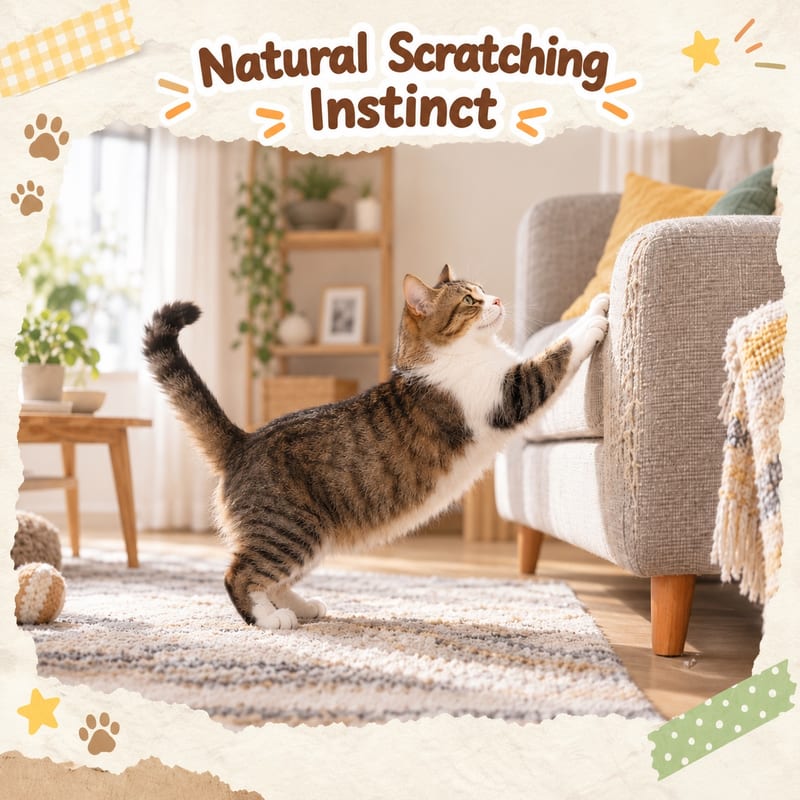
To understand why they scratch, you first need to understand what scratching does for a cat. Cats scratching furniture is never "revenge"; it simultaneously satisfies four physiological and psychological needs:
- Claw maintenance: Cat claws grow in layers; old sheaths must be shed to reveal sharp new claws. Scratching resistant surfaces like sofas and fabric curtains is their "exfoliation" tool.
- Dual scent and visual marking: Cat paw pads have scent glands that leave odour when scratching; the scratch marks themselves are visual signals, like posting a notice at home saying "this is my territory."
- Muscle stretching: After waking, cats stretch their whole body; gripping a vertical surface and pulling back stretches shoulder and back muscles—sofa armrests are just the right height, making them hotspots.
- Stress regulation: When unhappy, overexcited, or after being scolded, cats will scratch for a while. Scratching is an emotional outlet; the more restricted, the more anxious they become.
These four needs arise throughout the day, so cats won't "stop scratching"—they'll just choose the wrong target. The core of prevention is to provide a target more appealing than the sofa for them to choose.
It's worth noting that scratching frequency and scenarios follow patterns: after waking up, after eating, and when you come home are the three daily peak scratching times. After waking they need to stretch; after eating they continue the ritual with "teeth and claw sharpening"; when the owner returns, it's a high-profile territory marking display. Understanding this schedule helps you know when to particularly watch your cat's movements, and explains why placing scratching posts near sleeping and eating spots is especially effective.
Why the Sofa is the Cat's "Top Victim"
Many owners think cats deliberately choose the sofa to annoy them, but the sofa meets all the "perfect scratching spot" criteria:
| Criterion | Why the sofa fits | Other places at home |
|---|---|---|
| Location | Owner often sits there, strongest scent | Back alley, storage room, few people |
| Height | Standing on cushions to scratch armrests, right angle | Too low or no vertical surface |
| Claw feel | Fabric easy to dig into, good resistance | Leather, wood hard to grip |
| Stability | Heavy, doesn't move when scratched | Light posts tip over easily |
| Traffic | First stop after waking | Posts placed in cold corners |
The more "important" the object for paw pad scent marking, the better—so the sofa carrying your scent is the prime marking target. Similarly, the bedside wooden cabinet you see when you turn your head after waking, and the dining chair you sit on daily, are high-risk spots.
This also explains why many owners complain "I sprayed deterrent but they still scratch"—because for cats, leaving their scent in the most valuable territory is a daily necessity. If the deterrent spray isn't accompanied by an alternative location to complete the task, the cat will simply wait for the spray scent to fade and then scratch again. Understanding this logic, you see why the first rule of all anti-scratching methods is always "first put down a better scratching post."
Which Materials Are Most Easily Damaged
In practice, different furniture materials suffer to varying degrees. Use this list to prioritise prevention:
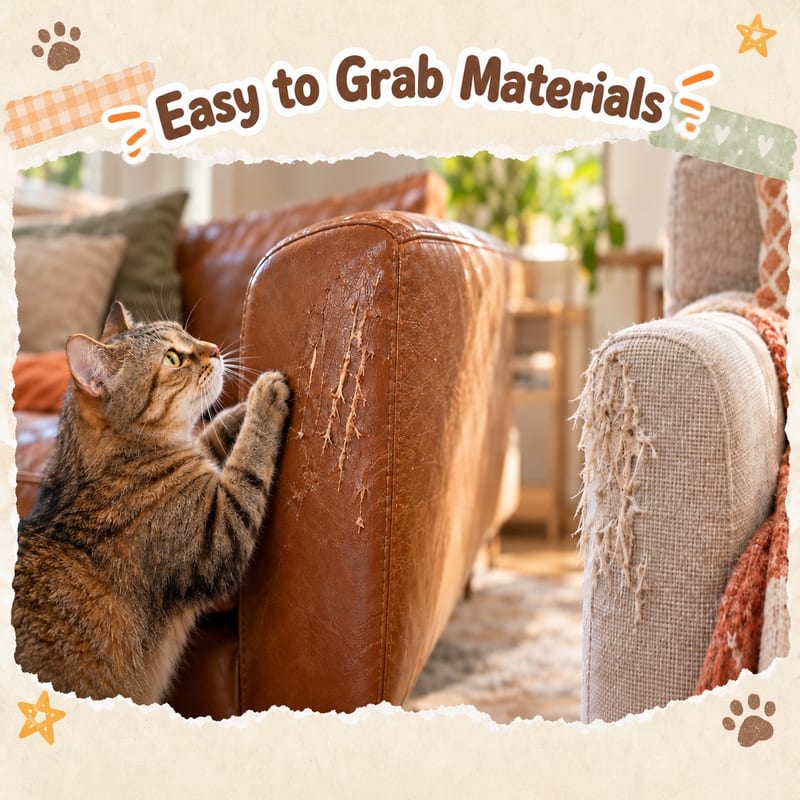
- Fabric sofas / rattan chairs—best claw feel, deepest damage, highest risk
- Linen curtains—vertical, move, perfect for practising "capture-style scratching"
- Wooden dining chair legs—texture catches claws easily, and scratching also marks territory
- Carpet edges—convenient spot for stretching after waking
- Leather sofas—relatively harder to scratch, but once damaged, harder to repair
Prioritise anti-scratch stickers or placing posts at the top locations; although the last two are lower risk, still watch for individual preferences—some cats specifically like the "slippery resistance" of leather.
Leather and smooth surfaces offer poor claw grip, so damage rates are noticeably lower. If you're renovating or replacing your sofa, choose short-pile, tightly woven, no mesh fabrics (e.g., microfibre) so claws can't hook into the fibres—this lowers the risk level by one grade, a low-cost prevention in itself.
When to See a Vet: Warning Signs of Abnormal Scratching
Generally, scratching doesn't require a vet visit, but if the behaviour changes suddenly, be alert:
- Sudden frantic scratching, many times more than usual—possible pain or stress
- Limping after scratching, red swollen bleeding paws—possible claw sheath tear or nail bed infection
- Accompanied by inappropriate urination, poor appetite, hiding—typical stress/illness signals
- Senior cats suddenly scratching less and walking stiffly—possible joint issues; book a vet check
A "sudden change" in behaviour often warrants more attention than "always been like that." Also, in multi-cat households, if one cat suddenly scratches frantically at territory, it may be stressed by another cat—review resource allocation rather than just correcting the scratching behaviour. This article is for reference only; consult a registered veterinarian for concerns.
Prevention Approach: Placement, Quantity, Quality
Getting these three things right in preventive setup can greatly reduce sofa damage (see separate article for detailed training steps):
- Quantity: number of cats plus one. Two cats need more than three litter boxes; same for scratching posts—every space the cat frequents should have something to scratch, so they don't have to share the "sofa" option.
- Placement: put them at the "scene of the crime". Place directly next to the sofa armrest they always scratch, so the first thing they encounter after waking is the post, not the temptation.
- Quality: heavy, tall, right claw feel. Large vertical posts (tall enough for an adult cat to stretch fully), sisal or corrugated cardboard, stable base that doesn't wobble. Thin flat cardboard pieces are simply not an option for many cats.
You can add extra appeal: rub a little catnip on the post, or hang their favourite toy, giving the post a "fun" attribute beyond "function." Check daily for the first two weeks after setting up; if the cat uses it, immediately give a small treat. Once the habit starts forming, reduce to weekly checks.
A common mistake is placing posts on the balcony or back alley where they're "out of sight"—to the cat, that's like asking them to walk far away to stretch, so they'd rather scratch the sofa on the spot.
What You Can Do Starting Today
- Observe for a day and note when and where your cat scratches (after waking? after eating? when you come home?)
- Check existing posts: tall enough for full stretch? Stable base?
- Add a sturdy vertical sisal post next to the most damaged sofa
- Check for high-risk items at home: rattan chairs, curtain edges, wooden chair legs—protect these first
- If your cat suddenly scratches frantically with signs of pain, book a vet appointment
Want to learn the practical five-step correction training and product recommendations? See PetChill's "Anti-Scratch Furniture" practical guide and cat scratching post buying guide; for product reviews, check petfood.com.hk for detailed comparisons.
Further Reading
- Cat Behaviour →
- Anti-Scratch Furniture Practical Training →
- Cat Scratching Posts →
- Multi-Cat Households →
- Cat Behaviour Course →
PetChill Cat Behaviour Team — Hong Kong's most authoritative pet knowledge platform