Quick answer: Dog daily calories = 70 × body weight (kg)^0.75 × activity factor. Table 15-4 in the book 'Nutrient Requirements of Dogs and Cats' uses metabolic weight expression: active pet dogs about 130 kcal/kg^0.75, inactive about 95, senior or overweight about 105, young adult dogs about 140, hunting dogs about 180. Example: a 10kg average family dog needs about 530-730 kcal/day, which converts to about 150-210g of dry food at 3.5 kcal/g. The above are reference values; actual amounts should be based on your veterinarian's advice and packaging recommendations.
Step 1: Weigh your dog (don't guess)
The book points out that animals' energy requirements are most closely related to metabolic weight (body weight^0.75), not directly proportional to body weight. The reason is simple: fat tissue has lower metabolic activity than lean tissue, so for dogs of the same weight, a fat dog's actual requirement will be lower than a lean dog's.
The book gives a very concrete example: a beagle at normal weight (about 25% fat) has an energy requirement of about 130 kcal/kg^0.75; when the same dog is fed to 38% fat, the requirement drops to about 107 kcal/kg^0.75. But converted to 'per kg lean tissue', it's 157 kcal, essentially unchanged.
So: besides weighing, you must also do body condition scoring. Ribs palpable, waist visible = average; ribs not palpable, belly sagging = overweight, use a lower factor.
Step 2: Calculate RER
RER (kcal/day) = 70 × body weight (kg)^0.75
| Weight | RER |
|---|---|
| 5 kg | 234 |
| 10 kg | 394 |
| 20 kg | 662 |
| 30 kg | 897 |

Step 3: Multiply by activity factor (two common standards from the book)
(A) Book Table 15-4: Adult dog daily metabolizable energy maintenance requirements
| Type | kcal × kg^0.75 |
|---|---|
| Inactive pet dog | 95 |
| Older/overweight dog | 105 |
| Average (active pet dog) | 130 |
| Young adult dog | 140 |
| Hunting dog | 180 |
| Great Dane (experimental kennel) | 200 |
(B) FEDIAF 2016 activity level factors cited in the book (also based on kg^0.75)
| Activity level | Factor |
|---|---|
| Resting | 70 |
| Indoor resting | 85 |
| Low activity | 95 |
| Active | 110 |
| Very active | 125 |
| Extremely active | 150 |
| Working dog | 175 |
Calculated reference table (average family dog, between 95-130):
| Weight | Inactive (95) | Average (110) | Active (130) | Dry food grams (average, 3.5 kcal/g) |
|---|---|---|---|---|
| 5 kg | 318 | 368 | 435 | About 105g |
| 10 kg | 534 | 618 | 731 | About 177g |
| 20 kg | 899 | 1,041 | 1,229 | About 297g |
| 30 kg | 1,218 | 1,410 | 1,666 | About 403g |
Key reminder: The gram amount depends entirely on your food's calorie density. Dry food is generally 2,800-4,050 kcal/kg, i.e. 2.8-4.05 kcal/g; for the same 10kg dog, food at 2.8 kcal/g requires 221g, while food at 4.05 kcal/g requires only 153g. Check the kcal ME/kg on the packaging and do the math yourself.
Step 4: Practical Hong Kong living
- Timed and measured feeding: fixed time, fixed portion daily, use the same bowl and scale
- One or two meals a day is fine: the book states adult dogs can achieve optimal health with one meal per day; two meals make it easier to monitor appetite
- Don't leave food out: book data shows free feeding causes 30-40% of dogs and cats to overeat
- Count treats in the total: treats should be within 10% of daily calories, don't treat them as 'not counted'
- Weigh every two weeks: if weight goes up, reduce by 5-10%; if down, increase; don't make drastic changes at once
- Senior dogs don't necessarily need less food: the book indicates that to maintain net protein balance, senior dogs may need up to 50% more crude protein; weight loss in senior dogs is usually muscle loss, so don't blindly reduce food

Hong Kong examples: four common situations
Case A: 8kg poodle, two walks a day Average activity factor 110 → 110 × 8^0.75 = 110 × 4.76 ≈ 524 kcal/day, i.e. about 150g of 3.5 kcal/g dry food. Important reminder: Table 15-4 and FEDIAF factors are absolute values of 'kcal × kg^0.75', not multipliers on top of RER. Just use 110 × 8^0.75 directly, no need to multiply by RER again.
Case B: 25kg Labrador, low activity 95 × 25^0.75 = 95 × 11.18 ≈ 1,062 kcal/day → about 303g of 3.5 kcal/g dry food, split into morning and evening meals.
Case C: 4kg toy dog, senior Use 105 for senior: 105 × 4^0.75 = 105 × 2.83 ≈ 297 kcal/day. Senior dogs should not have their food blindly reduced; instead ensure sufficient protein (the book indicates senior dogs may need up to 50% more to maintain net protein balance).
Case D: 30kg working dog (search dog, cart dog) 175 × 30^0.75 = 175 × 12.82 ≈ 2,244 kcal/day, which is 1.5-2 times that of an average family dog; sled dogs can be more than 5 times. Feeding for these dogs should be adjusted weekly according to training volume.
Practical portion adjustment table
| Situation | Adjustment direction | Amount |
|---|---|---|
| Weight increasing (body condition 4) | Reduce food | 5-10% each time |
| Weight decreasing (body condition 2) | Increase food | 5-10% each time |
| Switching to new brand/formula | Recalculate based on new food kcal/kg | Recalculate entirely |
| Cold weather, increased outdoor activity | Increase food | 5-10% |
| After neutering | Observe for 2-4 weeks then decide | Usually needs slight reduction |
| Senior dog (7 years+) | Maintain protein, fine-tune calories | Based on body condition score |
Measuring tool recommendations
- Electronic scale (1g precision): much more accurate than a measuring cup, especially for small dogs
- Same bowl, same location: reduce behavioral variables
- Record sheet: date, weight, daily grams, feces, energy level, all on one page
- Weigh treats: one small treat can already be 10-20 kcal
Relationship between water intake and feeding amount
The book's water chapter provides several practical numbers to help you judge whether feeding arrangements are reasonable:
- Dogs' maintenance water requirement is about 50-60 mL/kg body weight/day (simple estimate); the book also mentions measured average of about 72.9 mL/kg for indoor large dogs, and another estimate of about 37.5 mL/kg, with differences due to activity level and food intake
- For a 10kg dog, that's about 500-600 mL of water per day
- Another estimation method: daily water intake ≈ 2-3 times dry matter, or 1 mL/kcal metabolizable energy
- Dry food has only 8-10% moisture, canned food over 75%—so dogs eating canned food will drink noticeably less water, which is normal
Practical observation: If your dog eats dry food but drinks very little (chronically below 40-50 mL/kg), or suddenly drinks a lot more, both directions are worth discussing with your veterinarian.
How to measure dry food most accurately
| Tool | Accuracy | Notes |
|---|---|---|
| Measuring cup | Low (can differ 20-30%) | Kibble size affects density |
| Electronic scale (1g) | High | Recommended |
| Food container with measuring cup | Medium | For rough reference only |
Starting point for puppy portions
There is no single formula for puppies (weight changes weekly, expected adult weight undetermined). Practical approach:
- Use the age table on puppy-specific food packaging as the first reference
- Use RER × 2.0-2.5 as a cross-check
- Weigh every two weeks and compare with growth curves (see breed page weight charts)
- Observe body condition: puppies should have palpable ribs but bones should not be visibly protruding
Common mistakes
| Mistake | Consequence | Correction |
|---|---|---|
| Using the same cup across brands | 20-30% calorie difference | Use electronic scale and measure by grams |
| Using 'breed standard' instead of weighing | Individual variation can be 50% | Base on your own dog's weight |
| Assuming enough when the bowl is empty | Overeating, obesity | Count kcal, not look at the bowl |
| Constantly adding treats 'can't bear it' | Main food calories replaced by treats | Treats ≤10% of total calories |
| Halving food at once for weight loss | Nutrient deficiency, muscle loss | Fine-tune 5-10% each time, ask your veterinarian |
Coordination with cluster
- Calorie formula and cat version calculation → Cat Calorie Calculation
- Want to know how to choose between canned and dry food → Wet vs Dry Food
- Food transition method → Cat Food Transition Guide
- How to read labels, calculate carbs → Dog Food Label Interpretation
- Difference between complete and complementary → Complete vs Complementary
- Old portion guide → Dog Feeding Portion
References
- National Research Council (NRC) 'Nutrient Requirements of Dogs and Cats' (2006): Energy, Protein chapters
- FEDIAF 2016 adult dog activity level and energy requirement standards (cited in the book)
- Agriculture, Fisheries and Conservation Department (AFCD) pet care information: AFCD
- Veterinary Surgeons Board of Hong Kong: VSBHK
Related products (available in Hong Kong, checked 2026-10-12)
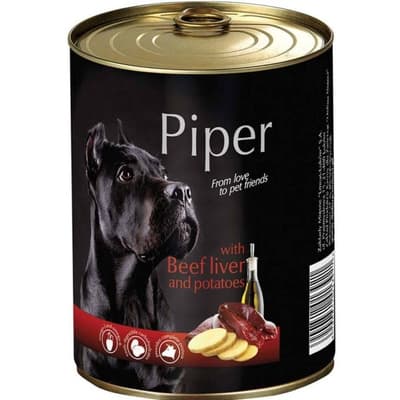
- Piper Black Diamond Dog Canned Food Series Adult Formula Beef Liver + Potato 400g — reference price HK$18/can
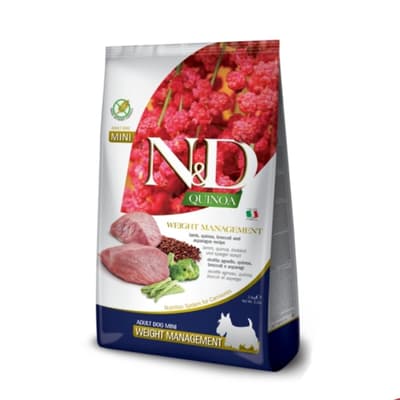
- Farmina N&D Quinoa Functional Natural Dog Food Weight Control Formula Small Kibble Lamb 2.5kg — reference price HK$392
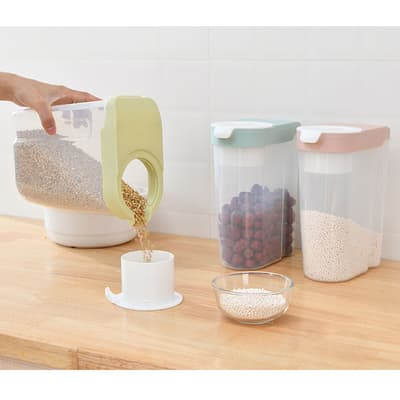
- Japanese Moisture-proof Sealed Twist-top Food Container with Measuring Cup for Cat/Dog Food — reference price HK$45
The above content is for reference only and cannot replace veterinary diagnosis and treatment. Feeding amount is a highly individual matter; please consult your veterinarian and use the recommendations on the food packaging as the final basis.
📌 Key Summary
- Daily calories = 70 × body weight (kg)^0.75 × activity factor
- Book Table 15-4: inactive 95 / senior overweight 105 / average 130 / young adult 140 kcal/kg^0.75
- FEDIAF activity factors 70-175, working dogs and sled dogs calculated separately
- Gram amounts must be converted according to the food's kcal/kg, cannot apply other brands
- Free feeding causes 30-40% of dogs and cats to overeat; senior dogs may need 50% more protein

 K9 Natural full guide →
 Feline Natural full guide →
 Fuji One full guide →